
Providence Real-Time AQI Tracker


Get Alerts For Unhealthy AQI In Your Area
When air quality in your area reaches unhealthy levels, we'll send you a quick alert, along with expert tips on how to reduce your exposure.
What's Actually In Providence Air Today?
What High AQI Means for Your Lungs in Providence
How to Read AQI
The Air Quality Index (AQI) measures how polluted the air is and how it may affect your health.
0–50 (Good): Air quality is satisfactory.
51–100 (Moderate): Acceptable, but some pollutants may pose minor concerns.
101–150 (Unhealthy for Sensitive Groups)
151–200 (Unhealthy)
201–300 (Very Unhealthy)
301+ (Hazardous)
Moderate
Still okay for most, but if you have asthma or allergies, take it easy and avoid long outdoor workouts.
Shop MERV 11 filters→What's the Right Filter for Your AQI Level?

Check Today's Live Real Time Air Quality Index AQI Map in Providence, RI Now
Author: Michelle Wan, Brand Manager and Air Quality Writer | Reviewed by: David Clark, Licensed HVAC Technician, Filterbuy | Published: July 31, 2026 | Updated: July 31, 2026
TL;DR
Providence air quality shifts hour to hour, and the number on Filterbuy’s live map above blends two separate local problems. Ground-level ozone climbs on hot, sunny afternoons and arrives largely on winds from upwind states. Fine particles and air toxics concentrate along the Interstate 95 corridor and near the Port of Providence throughout the year. Check the live reading, then match your response to whichever pollutant is driving it.
Key Takeaways
The Rhode Island Department of Environmental Management and Department of Health jointly operate the monitoring network behind the official Providence AQI, and RIDEM reports it to AirNow.gov.
RIDEM attributes much of Rhode Island’s ozone problem to transport of ozone and ozone precursors from more polluted upwind regions, so a Providence ozone spike can happen on a clear, calm day.
RIDEM has operated a near-road monitoring site on the east side of Interstate 95 near downtown Providence since April 2014, measuring nitrogen dioxide, carbon monoxide, PM2.5, and black carbon.
Rhode Island rarely exceeds the daily PM2.5 standard, though RIDEM records several days each year when fine particles reach well into the Moderate AQI range.
A MERV 13 pleated filter captures fine airborne particles including smoke, and no MERV-rated filter removes ground-level ozone, because ozone is a gas rather than a particle.
Author’s Note
As Air Quality Writer for Filterbuy, a U.S. air filter manufacturer, I pull AQI readings for cities across the country every morning, and the number itself is rarely the interesting part. What I watch for is what sits behind it. Providence is a good example of why that matters. A reading of 90 on a hot July afternoon here almost always traces back to ozone that formed upwind and drifted in. The same 90 on a still January morning is far more likely to be particles hanging along the Interstate 95 corridor. The dial looks identical either way, and the two situations call for different decisions. That distinction is what this page is built around.
Michelle Wan, Brand Manager & Air Quality Writer, Filterbuy
What's Actually In Providence Air Today?
Two pollutants matter most for health in Providence, ground-level ozone and fine particulate matter measured as PM2.5. The live map reports whichever is worse right now, which is why one number can hide what you need to know.
Ground-level ozone forms when nitrogen oxides and volatile organic compounds react in sunlight. RIDEM reports Rhode Island still sees several days each spring and summer when ozone exceeds the 2015 federal standard and reaches the Unhealthy AQI range, though the two-decade trend shows improvement. RIDEM attributes much of that burden to pollution transported from upwind regions, which is why Providence can record its worst ozone reading of the month on a still, cloudless morning.
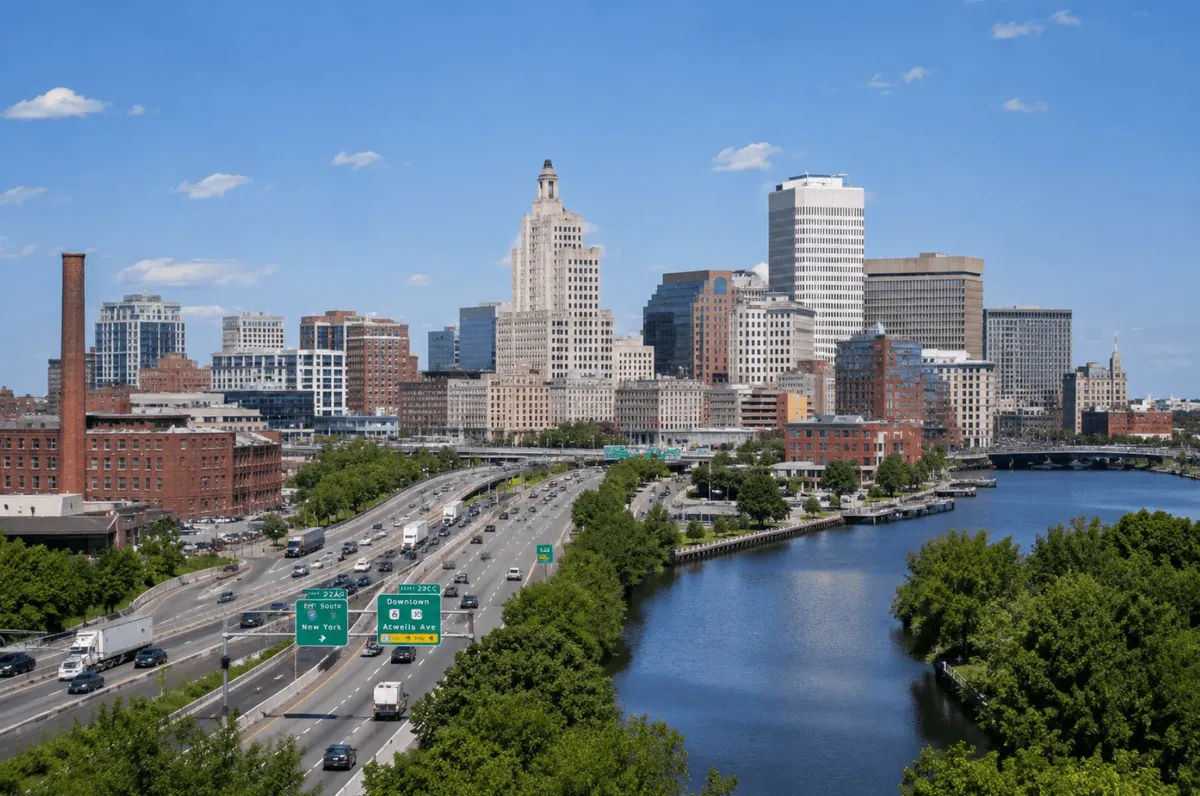
Fine particles behave differently. RIDEM reports that Rhode Island rarely exceeds the daily PM2.5 standard, but that several days each year push fine particles well into the Moderate range. The agency also notes growing evidence that fine particles, ultra-fine particles, and air toxics run higher alongside major highways, the same pattern that makes nitrogen dioxide concentrate near busy roads. Providence sits astride Interstate 95, and RIDEM has monitored the east side of that highway near downtown since April 2014 to characterize traffic pollutants. The American Lung Association notes that living or working near a busy highway raises health risk. Filterbuy fields its most detailed filter questions from households along truck routes and beside highways, a pattern that tracks with what RIDEM’s near-road monitoring shows.
South Providence carries an additional load. RIDEM’s community-scale air toxics monitoring project at the Port of Providence, funded by an EPA grant, has measured volatile organic compound levels around the port and nearby neighborhoods. In 2010, RIDEM monitoring at Vartan Gregorian Elementary School found particle counts significantly higher on the side of the school downwind of the port.
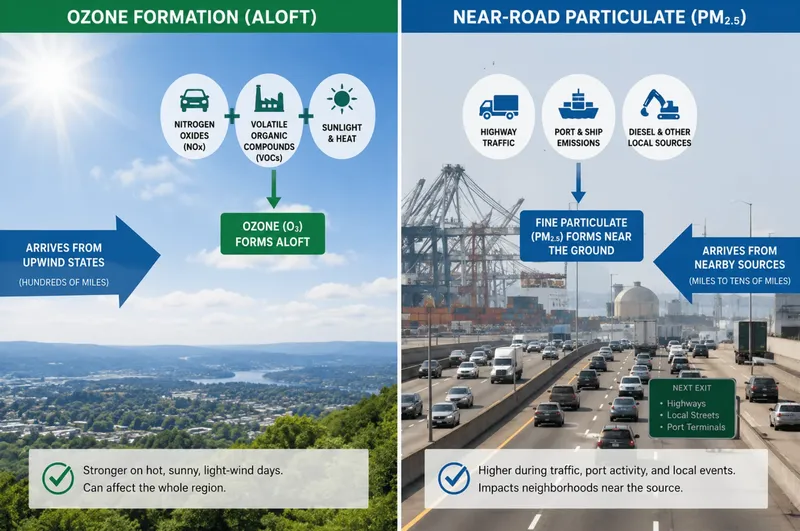
Providence Has Two Different Air Quality Problems
Providence has one air quality problem that arrives from outside the state and another that the city generates itself. Ozone drifts in on summer afternoons, while traffic and port particulate sits along the corridors year-round. The three patterns below differ in when they peak and in what actually helps.
Source: Rhode Island Department of Environmental Management air monitoring data and U.S. EPA pollutant guidance.
The filtration row is the one that changes behavior, because timing and windows address ozone while the filter addresses particles.
What High AQI Means For Your Lungs In Providence
An AQI above 100 marks air unhealthy for sensitive groups, and the Asthma and Allergy Foundation of America notes people with asthma can see worse symptoms even in the Moderate range. Ozone irritates the airway lining directly, and CDC guidance separates ozone from particle pollution, which call for different precautions. The American Lung Association compares the ozone effect to a sunburn inside the lungs, and notes risk rises when you breathe harder from exercise or outdoor work.
Rhode Island has particular reason to take those thresholds seriously. RIDEM’s monitoring network plan cites Rhode Island Department of Health data showing 10.9 percent of Rhode Island children have asthma against 8.4 percent nationally, with pediatric asthma hospitalization rates elevated in the state’s core cities. Guidance a national page treats as generic caution applies to more Providence households.
Particles carry a separate risk profile. Small enough to bypass the body’s natural defenses, fine particles reach deep lung tissue, and not all are equivalent. A 2021 study in Nature Communications found respiratory hospitalizations rose 1.3 to 10 percent for each 10 microgram per cubic meter increase in wildfire-specific PM2.5, against 0.67 to 1.3 percent for PM2.5 from other sources.
What To Do Right Now, By AQI Level
Providence rarely reaches the top of the AQI scale, so most decisions here happen in the 51 to 150 band where the guidance is easiest to dismiss. That middle range is exactly where people with asthma notice the difference first. The table below pairs each band with the action that helps most in this city.
Source: U.S. EPA Air Quality Index categories and Rhode Island Department of Environmental Management alert guidance.
RIDEM issues Air Quality Alerts when levels are forecast to reach unhealthy ranges, and publishes recess guidance for schools. Rhode Island residents can sign up through RIDEM’s air quality forecast and alert notifications so a forecast reaches them before a symptom does. AirNow also explains how to use an AQI forecast to plan outdoor activity. Readings above 300 fall into the Hazardous AQI range.
Where You Live In Providence Changes What You Breathe
A citywide AQI reading is one number for the whole city, and Providence does not breathe uniformly. RIDEM has documented two local exposure patterns that a single value cannot resolve, one along Interstate 95 and one around the port.
Original Filterbuy synthesis of Rhode Island Department of Environmental Management near-road and Port of Providence monitoring programs. Neighborhood patterns are directional and do not replace a monitor at your address.
What Today’s AQI Number Does Not Tell You
The AQI reports the single worst pollutant at that hour, not a blend of everything in the air.
A clear sky can accompany an unhealthy reading, because ozone is invisible.
Street-level exposure beside Interstate 95 can run higher than the citywide value suggests.
None of that makes the reading useless. It does mean you should read it alongside where you actually live.
How Indoor Filtration Fits Each Providence Pollutant
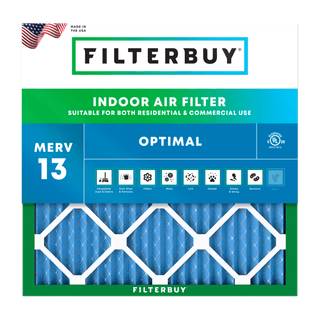
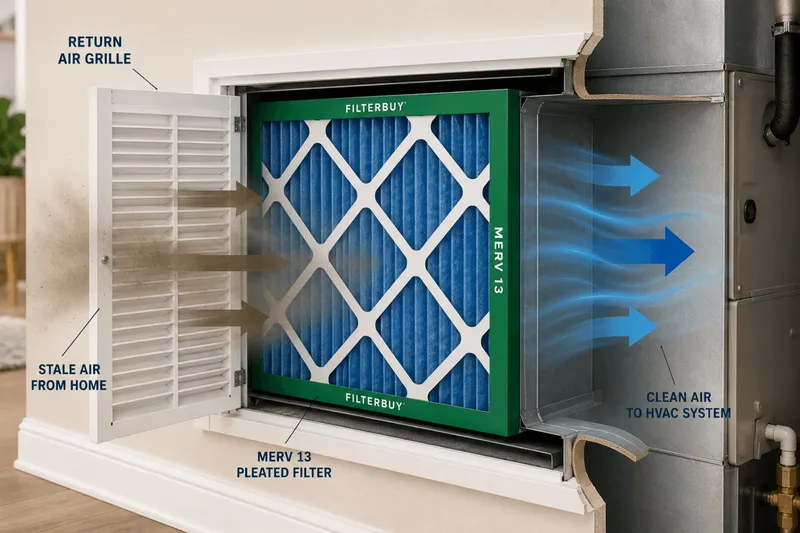
Filtration addresses the particle half of Providence’s picture. A Filterbuy MERV 13 pleated filter captures fine particulate matter including smoke, which is why the EPA recommends MERV 13, or the highest rating your system tolerates, during smoke events. A MERV 13 filter is not a HEPA filter, and it does not remove surface mold or fix a moisture problem.
On high-ozone afternoons, a pleated particle filter does nothing to the ozone itself, because ozone is a gas. Your ozone exposure drops when you close windows during peak hours and shift exertion to early morning. Activated carbon media addresses odors and some gaseous compounds, which makes odor eliminating carbon filters a reasonable addition for households near the Port, though carbon is not an ozone control device.
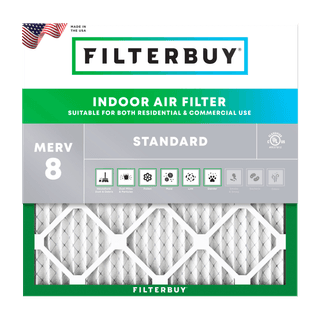
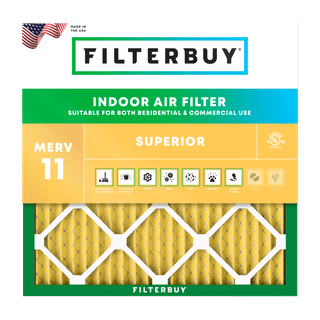
For everyday conditions, MERV 8 filters handle dust and pollen, MERV 11 filters add finer dust and pet dander, and MERV 13 filters cover smoke and high-particulate days. Before upgrading, check which MERV rating your system can handle, since a filter too restrictive for the blower reduces airflow. A filter replacement subscription keeps a fresh filter on hand ahead of ozone season rather than during it.
For statewide conditions beyond the city, see the Rhode Island air quality index and AQI map.
Filterbuy Insight: Because Filterbuy manufactures these filters, we field the pressure-drop question constantly. A bad AQI reading prompts a rushed upgrade, and the MERV rating chosen often exceeds what the blower can actually move air through. That first check is the step most homeowners skip.
Expert Perspective
After manufacturing filters for over a decade and serving more than two million households, we have learned that people reach for a filter upgrade the moment they see a bad AQI number. That instinct helps on smoke and traffic-particle days, though it does nothing for ozone. Once you know which one Providence is dealing with, the number becomes a decision.
David Heacock, Founder and CEO, Filterbuy
Frequently Asked Questions About Providence Air Quality
Seven Essential Resources For Tracking Providence Air Quality
Filterbuy works from these same primary sources when customers call about a smoke event or a stretch of bad air.
Learn Exactly What Your Providence AQI Number Means
EPA’s official AQI scale and category breakdown defines the six color bands and the thresholds every other source here refers back to.
See Where Rhode Island Actually Measures Its Air
RIDEM’s air monitoring network and pollutant trends maps every state monitoring site and charts two decades of ozone and PM2.5 data.
Understand What Ozone Does To Your Airways
The American Lung Association’s ozone health summary covers short-term and long-term effects and names the groups at highest risk.
Get Asthma-Specific Thresholds For Bad Air Days
AAFA’s asthma and air pollution guidance gives the AQI numbers at which people with asthma should change plans and check medication readiness.
Check Whether Your Filter Choice Matches The Standard
ASHRAE’s ventilation and indoor air quality standards set how filtration performance is measured, including the MERV scale used throughout this page.
Know What To Do When An Alert Is Issued
The National Weather Service’s air quality safety resources explain what an air quality alert means and which steps to take.
Read A Local Breakdown Of Providence Monitoring Data
The Providence Eye’s review of local monitoring results walks through RIDEM’s VOC sampling sites and the Port of Providence findings.
Supporting Statistics
1. Rhode Island Reports The Highest Adult Asthma Rate In The Nation
Providence households carry above-average asthma risk.
12.6 percent of Rhode Island adults had current asthma in 2021.
That is the highest rate among all states and U.S. territories measured.
The median across those jurisdictions was 9.8 percent.
Guam reported the lowest rate at 4.7 percent.
Nationally, 25 million people had asthma, or 7.7 percent of the population.
Source: CDC National Center for Environmental Health, Asthma Surveillance in the United States, 2001–2021
2. Wildfire Smoke Particles Harm Lungs More Than Other Fine Particles
The source of a particle spike changes how much harm it does.
Wildfire PM2.5 raised respiratory hospitalizations 1.3 to 10 percent per 10 micrograms per cubic meter.
Non-wildfire PM2.5 at the same level raised them only 0.67 to 1.3 percent.
Current regulations assume PM2.5 toxicity does not vary by source.
Source: Aguilera, Corringham, Gershunov, and Benmarhnia, Nature Communications 12:1493 (2021), via PubMed
3. Federal Air Toxics Funding Targeted The Port Of Providence
Federal regulators treat this corridor as a documented concern.
EPA awarded RIDEM 263,502 dollars to measure air toxics near the port.
The award came from a 5 million dollar pool shared by eleven agencies.
EPA regulates 187 listed air toxic pollutants under the Clean Air Act.
Glossary Of Terms On This Page
AQI (Air Quality Index): The EPA’s 0 to 500 scale for outdoor air quality, in six color-coded categories, where 50 or below is good and above 300 is hazardous.
PM2.5: Fine particulate matter, airborne particles 2.5 micrometers in diameter or smaller, small enough to reach deep lung tissue.
Ground-level ozone: A gas formed when nitrogen oxides and volatile organic compounds react in sunlight, and the main component of summer smog.
RIDEM: The Rhode Island state agency that operates the air monitoring network, issues Air Quality Alerts, and reports air quality data to AirNow.gov.
RIDOH: The Rhode Island Department of Health, whose laboratory performs continuous monitoring at urban, suburban, and coastal sites and reports to RIDEM.
Near-road monitoring: Monitoring conducted beside a major highway to characterize traffic pollutants, which RIDEM has performed alongside Interstate 95 near downtown Providence since April 2014.
Air toxics: Hazardous air pollutants linked to cancer or other serious health effects, of which the EPA regulates 187 under the Clean Air Act.
MERV: Minimum Efficiency Reporting Value, the ASHRAE filter performance scale running 1 to 16 in residential systems, where a higher number captures smaller particles.
HEPA: High Efficiency Particulate Air, a classification more efficient than MERV 16 and distinct from MERV 13.