
Joliet Real-Time AQI Tracker


Get Alerts For Unhealthy AQI In Your Area
When air quality in your area reaches unhealthy levels, we'll send you a quick alert, along with expert tips on how to reduce your exposure.
What's Actually In Joliet Air Today?
What High AQI Means for Your Lungs in Joliet
How to Read AQI
The Air Quality Index (AQI) measures how polluted the air is and how it may affect your health.
0–50 (Good): Air quality is satisfactory.
51–100 (Moderate): Acceptable, but some pollutants may pose minor concerns.
101–150 (Unhealthy for Sensitive Groups)
151–200 (Unhealthy)
201–300 (Very Unhealthy)
301+ (Hazardous)
Moderate
Still okay for most, but if you have asthma or allergies, take it easy and avoid long outdoor workouts.
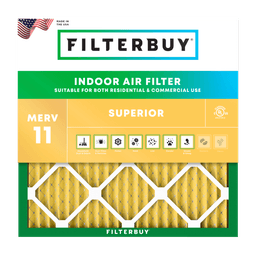
Shop MERV 11 filters→What's the Right Filter for Your AQI Level?
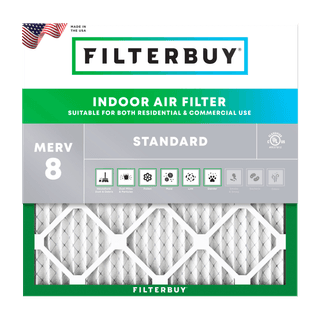
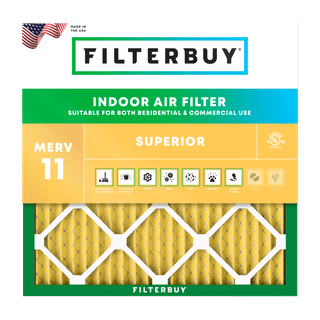
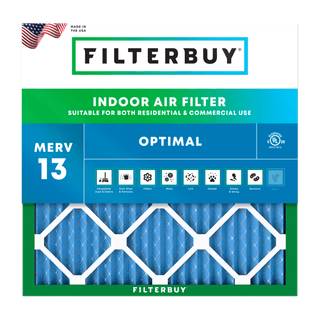


Check Today's Live Real Time Air Quality Index AQI Map in Joliet, IL Now
By Michelle Wan · Technically reviewed by David Clark, Licensed HVAC Technician · Updated August 18, 2026
Live AQI map embed: server-rendered map centered on Joliet, IL (41.5250, -88.0817), radius about 25 miles to include Elwood, Shorewood, Plainfield, Crest Hill and Rockdale. Displays current numeric AQI, category color, dominant pollutant and monitor timestamp. Source: AirNow (U.S. EPA) and Illinois EPA.
TL;DR
Joliet’s air quality index (AQI) is the EPA’s 0-to-500 score for outdoor pollution, and the real-time air quality map above shows the reading right now. At or below 50 is good. At 101 or higher, sensitive groups should limit outdoor exertion, close the windows and let the HVAC system filter the air. Three things drive Joliet’s number that most air quality pages never separate: diesel from North America’s largest inland port, summer ozone and imported wildfire smoke.
Key Takeaways
The Chicago nonattainment area, including all of Will County, was reclassified to Serious for the 2015 federal ozone standard effective January 16, 2025 (U.S. EPA).
The CenterPoint Intermodal Center in Joliet/Elwood handles up to 20,000 trucks a day across 6,400 acres, a particle profile closer to a port city than a Chicago suburb (FHWA).
AQI 101 is the line where sensitive groups should limit outdoor exertion: children, older adults and anyone with asthma or heart disease (EPA AQI categories).
Americans spend about 90% of their time indoors, where pollutants often run two to five times higher than outdoors (EPA). A bad AQI day outside is an indoor air quality event.
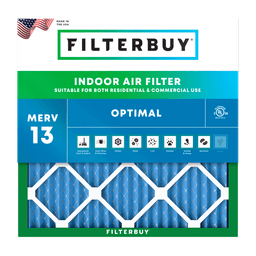
A MERV 13 filter with the HVAC fan running continuously can cut indoor PM2.5 by roughly half during smoke events (EPA).
What Is the Air Quality in Joliet Today?
The air quality index in Joliet today is the number on the live map above, scored on the EPA’s 0-to-500 scale. Readings of 0 to 50 are Good, 51 to 100 Moderate, 101 to 150 unhealthy for sensitive groups, and 151 or higher unhealthy for everyone. The live air quality map draws hourly readings from Illinois EPA monitors reported through AirNow.
The AQI is not one pollutant. It is the worst score among several, usually fine particulate matter (PM2.5) or ground-level ozone in Joliet. The map names the dominant pollutant, which matters: the two peak at different times and call for different responses indoors.
Source: U.S. EPA Air Quality Index categories.
Why Joliet’s Air Quality Is Different From the Rest of Chicagoland
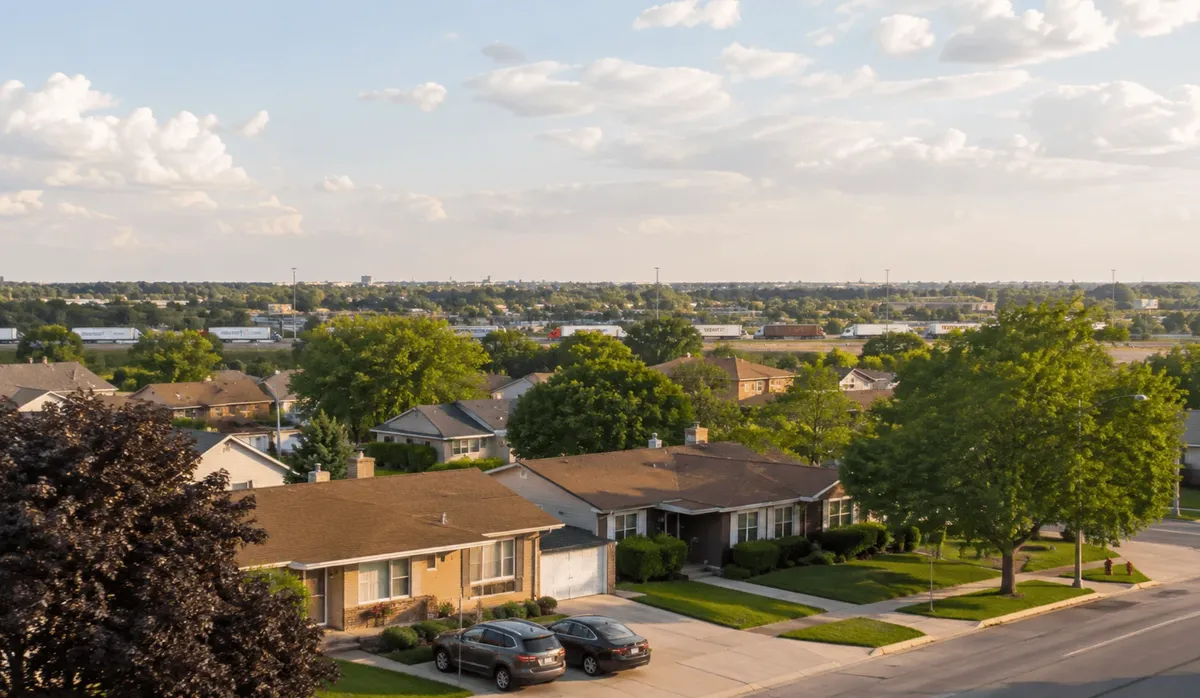
Joliet’s air pollution comes from three separate sources, which is why its number should not be read like Naperville’s. The city sits at the I-55/I-80 junction and hosts the largest inland port in North America.
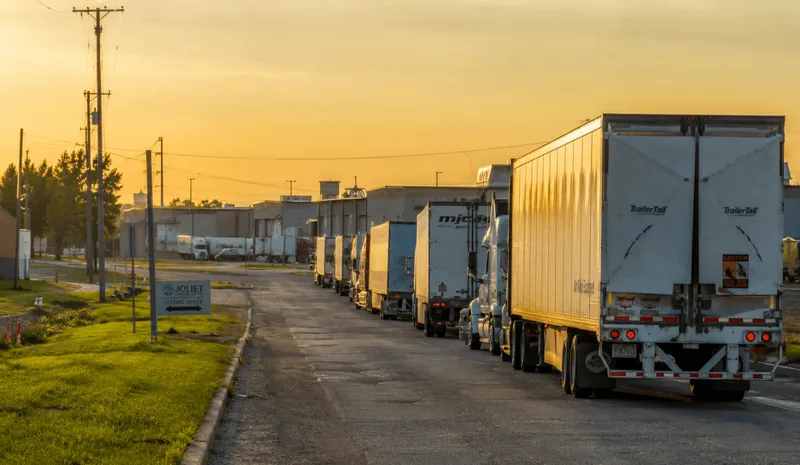
1. Freight and diesel, the local year-round source. The CenterPoint Intermodal Center covers 6,400 acres and moves up to 20,000 trucks daily, and diesel emits PM2.5 and nitrogen oxides directly. In 2023, Warehouse Workers for Justice measured PM2.5 above federal and World Health Organization guidelines near the Joliet and Elwood yards; one participant counted more than 1,000 trucks at a single intersection in two hours. Strongest near the corridors, on weekdays.
2. Ground-level ozone, the regional summer source. Ozone forms when nitrogen oxides and volatile organic compounds react in sunlight, so it peaks on hot, still afternoons from May through September. EPA reclassified the Chicago area to Serious nonattainment effective January 16, 2025, covering Cook, DuPage, Kane, Lake, McHenry and Will counties plus parts of Grundy and Kendall. In State of the Air 2026 neighboring Cook County ranked 23rd worst county in the nation for ozone.
3. Wildfire smoke, the imported source. Joliet’s highest recent readings were not local at all. Canadian and western smoke travels thousands of miles and settles over northern Illinois, pushing PM2.5 into red and purple for days. Track active plumes on our live wildfire and smoke map.
What Today’s Joliet AQI Means Inside Your Home
Outdoor air becomes indoor air, because your home is not sealed. The EPA reports Americans spend about 90% of their time indoors, where some pollutants run two to five times higher than outside. The ladder below is the Filterbuy Joliet AQI Action Ladder, our own framework matching each band to the cause most likely driving it here. The middle column is what you will not find on a general-purpose AQI site.
Filterbuy original framework. Ozone is a gas and is not captured by an HVAC filter; on ozone days, keep windows closed during afternoon peaks.
The fan setting is the most useful line in that table. Most thermostats sit on AUTO, so the blower runs only during heating or cooling. Switching to ON filters continuously at no equipment cost, and EPA estimates MERV 13 plus continuous fan can cut indoor PM2.5 by about half during a smoke event. One caveat: a running blower uses more electricity, older PSC motors noticeably more. Run it through the high-AQI hours and an hour afterward, not around the clock.
Most cities we serve have one air quality problem. Joliet has three, and they do not overlap. Ozone peaks on still summer afternoons. Smoke arrives from a thousand miles away with no warning. Diesel runs underneath both of them every weekday. A household that only reacts to smoke headlines is unprotected for most of the year. The Joliet homes that handle all three well are the ones already running the right filter with the fan on before anyone issues an alert.
Filterbuy Air Quality Team
When Joliet’s Air Quality Is Usually Worst
Joliet’s three pollution sources peak at different times of year, which is why generic 90-day filter advice misses. The calendar below shows when each arrives.
Highest-value filter change of the year in Joliet: late April, going into ozone and smoke season with a fresh MERV 13.
How to Protect Your Indoor Air on a High-AQI Day in Joliet
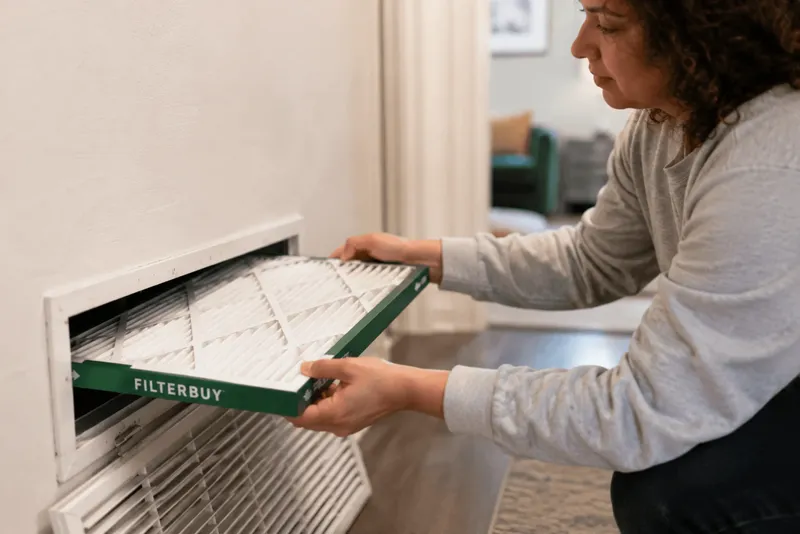
Check the map, close the windows above AQI 100, and run the fan continuously through the highest MERV filter your system supports. In order:
Check the live map before you open anything.
Close windows and exterior doors above AQI 100.
Set the thermostat fan to ON, not AUTO.
Install a MERV 13 filter if your system supports it. MERV 11 is a solid middle option for ordinary orange days. See which MERV rating you should use.
Skip candles, incense and high-heat frying on red days. An Odor Eliminator with activated carbon handles smoke odor a pleated filter cannot.
Change the filter after a multi-day smoke event, even if it is early.
Filterbuy makes over 600 sizes plus custom dimensions. Shop MERV 13 air filters, built and shipped free from our U.S. factories, or set up auto-delivery.
What the Joliet AQI Number Does Not Tell You
The reading is accurate but narrower than most people assume. Four limits matter.
It comes from a fixed monitor, not your block. Illinois EPA runs exactly two near-road monitoring sites statewide, on the Kennedy in Chicago and the Kingery in Lansing. Neither is in Joliet, which moves more truck freight than either. If you live or work within a few hundred feet of I-80, I-55, Houbolt Road or the intermodal yards, treat the posted number as a floor, not a ceiling.
A filter cannot remove ozone. Ozone is a gas, so no MERV rating captures it. On a hot, still afternoon when ozone dominates, a better filter changes nothing that day. Closing the windows during the afternoon peak is what works.
Pollen is not in the AQI. The index covers five pollutants only. A green day in May can still be miserable with tree pollen, so check a pollen count separately.
The reading is a blend, not a snapshot. AirNow uses NowCast, which weights recent hours. When smoke arrives fast the map lags. If the sky looks wrong, act on that and let the number catch up.
When a Better Filter Is Not the Answer
A better filter will not help on ozone days, when your system already struggles to move air, when the house leaks badly, or when the pollution is generated indoors. We sell filters, so take that in the spirit it is meant.
Ozone days: close the windows and shift outdoor exercise to the morning.
Old or undersized systems: a blower already running hot or noisy may not pull enough air through denser media, and a restricted system filters less air, not more.
Leaky houses: a filter cleans duct air, not the gap under an exterior door. Sealing costs less than a year of filters.
Indoor sources: frying, candles, an unvented gas range and vacuuming without sealed filtration add particles directly.
Supporting Statistics
The federal PM2.5 bar tightened in 2024. EPA cut the annual standard from 12.0 to 9.0 micrograms per cubic meter on February 7, 2024, holding the 24-hour standard at 35 (U.S. EPA). Ordinary moderate days now count against Will County.
No level of fine particle pollution is considered safe. PM2.5 is linked to more than 50,000 premature U.S. deaths a year, with no safe threshold identified (American Lung Association). Filter on green and yellow days, not just orange ones.
Living near freight is its own risk category. More than 45 million Americans live, work or attend school within 300 feet of a major road, railroad or airport, and EPA ties that proximity to asthma onset, cardiovascular disease and impaired lung development in children (U.S. EPA). A large share of Joliet sits inside that zone.
Sources: U.S. EPA and the American Lung Association. Full citations with links appear above this table.
Joliet Air Quality FAQ
Glossary
AQI (Air Quality Index): The EPA’s 0-to-500 scale for outdoor pollution, color-coded across six categories from Good to Hazardous.
PM2.5: Fine particulate matter 2.5 micrometers or smaller, small enough to penetrate deep lung tissue and enter the bloodstream.
Ground-level ozone: A gas formed when nitrogen oxides and volatile organic compounds react in sunlight. The main component of summer smog. Not filterable by an HVAC filter.
MERV: Minimum Efficiency Reporting Value, the ASHRAE 52.2 scale (1 to 16) rating filter capture efficiency. MERV 13 is the EPA-recommended baseline for wildfire smoke.
Nonattainment area: A region the EPA has determined does not meet a National Ambient Air Quality Standard. Will County is in the Chicago nonattainment area for ozone.
Near-road monitor: A monitoring site placed close to a busy roadway to measure traffic pollution. Illinois EPA operates two, in Chicago and Lansing. Neither is in Joliet.
NowCast: The weighting method AirNow uses for current air quality. It blends recent hourly readings, so it can lag a fast-moving smoke plume.