
Live Wildfire Smoke Map
Get Alerts For Wildfires In Your Area
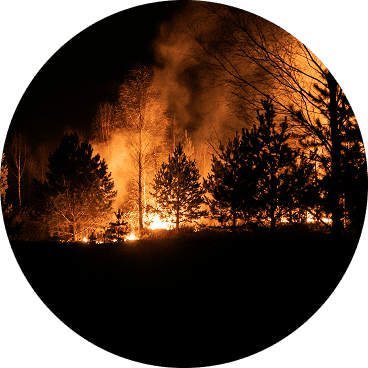
The moment a wildfire starts near you, you'll get an instant alert and simple tips to reduce your smoke exposure.
What's In The Smoke
30xSmaller than a human hair
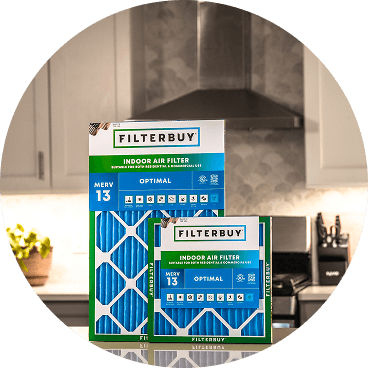
Fine enough to reach deep into the lungs. A MERV 13 is built to capture it.
How Far It Travels


It Doesn't Stay Local
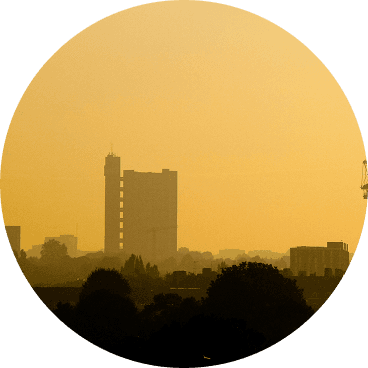
Smoke rides the wind far downwind — you can get smoky air with no fire nearby.
What To Do During A Smoke Event
Simple steps to reduce indoor exposure.
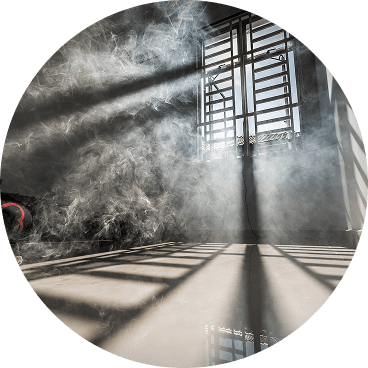
- Stay In, Close UpShut windows and doors to keep smoke out.
- Set Fan To "On"Keeps air cycling through your filter, not just when heating or cooling.
- Recirculate AirSwitch off fresh-air intake so you're not pulling smoke in.
- Run A MERV 13Built to capture the fine PM2.5 in smoke.
- Add A PurifierExtra filtration for the room you use most.
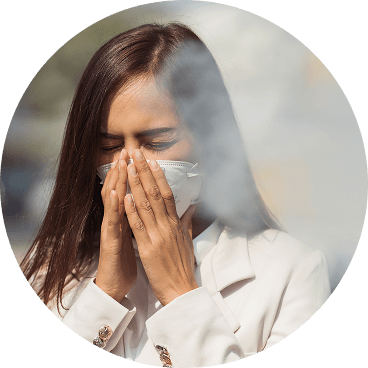
- Wear an N95 if OutsideFits snug to block fine particles — a cloth mask won't.


The Best Air Filter For Wildfire Smoke
During smoke events, the EPA recommends upgrading to a MERV 13 filter — or the highest-rated filter your system can handle — to help reduce the fine particles smoke brings indoors. MERV 13 is the level most home HVAC systems can run while still capturing PM2.5, the fine particulate that makes up the bulk of wildfire smoke.
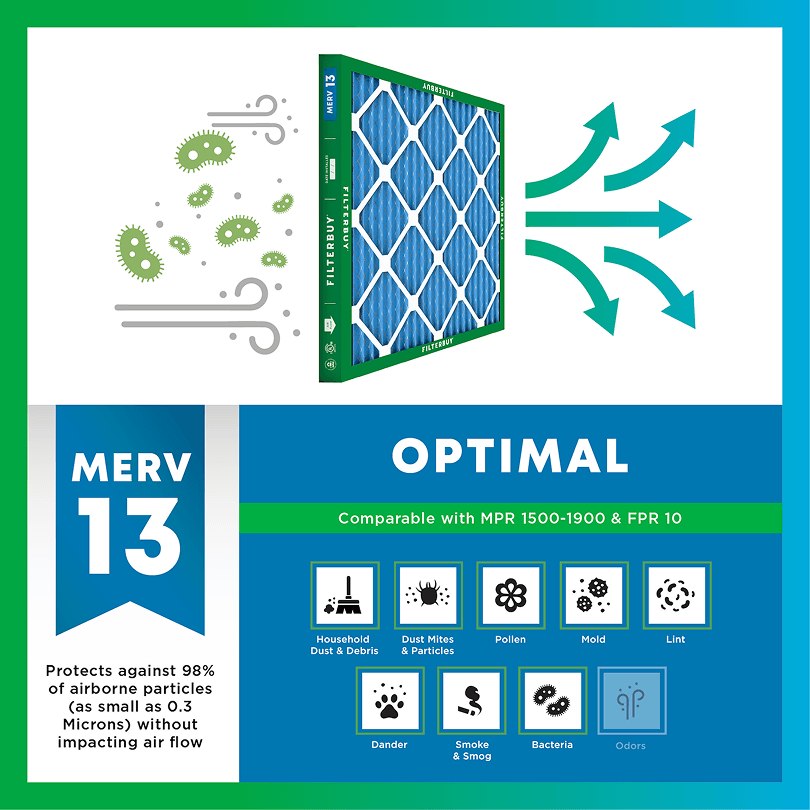
- Captures PM2.5 particles
- Blocks ash, soot, and smoke odor
- Keeps your indoor air safe—even when the outdoor air is dangerous
- Meets the EPA's recommended rating for filtering fine wildfire smoke particles.

Wildfire Smoke FAQs
Facts About Wildfires
Over 70,000 wildfires burn in the U.S. every year.
Wildfire smoke can travel 1,000+ miles, affecting states that aren't even near the blaze.
Exposure to wildfire smoke can worsen asthma, trigger heart issues, and lead to ER visits.
Indoor air can hold more fine particles during wildfire events unless it's properly filtered.
The EPA advises using MERV 13 filters or portable HEPA air cleaners during wildfire smoke events.
Don't Wait Until The Smoke's Inside.
Use the live wildfire smoke tracker and upgrade your air filters today to protect your lungs and your home.
Shop Filters For Smoke Protection
Current Live Wildfire And Smoke Map Chicago Today From Filterbuy.com
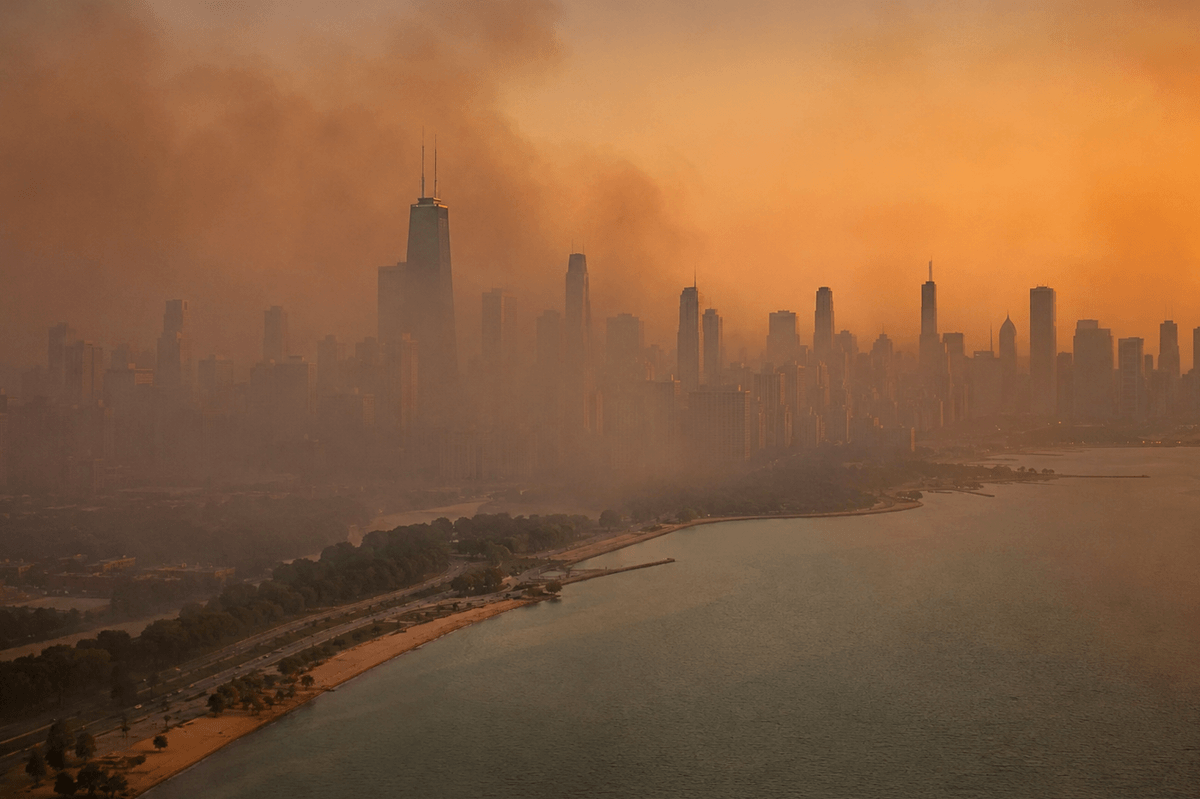
Chicago's air can turn unhealthy with no fire burning anywhere in Illinois, since most of what reaches the city drifts in from wildfires burning hundreds of miles north in Canada. Filterbuy tracks that pattern every smoke season, in AQI readings and in the spike of filter orders from Chicago customers that follows within hours.
TL;DR
Chicago sits far from any forested wildland, so its wildfire smoke risk is almost entirely a transported-smoke story rather than a local-fire story. Smoke typically travels hundreds or thousands of miles from Canadian wildfires in Ontario, Quebec, Manitoba, or Saskatchewan, and it often compounds with locally generated ground-level ozone on hot, sunny days. Use Filterbuy's live map above to check today's active fires and smoke plumes, then cross-reference the Illinois EPA's daily Air Pollution Action Day forecast for the clearest local read on whether today calls for staying indoors. Filterbuy has tracked five Chicago smoke seasons, and the worst air quality consistently shows up in late June and July, when Canadian fire activity peaks alongside Chicago's ozone season.
Key Takeaways
Chicago's wildfire smoke almost always arrives from Canadian wildfires in Ontario, Quebec, Manitoba, or Saskatchewan, not a nearby fire.
The Illinois EPA and Illinois Department of Public Health jointly issue an Air Pollution Action Day forecast when AQI is expected to reach Orange or worse for two or more days.
Chicago has ranked among the most polluted major cities in the world during past Canadian smoke events.
Children, older adults, pregnant women, and people with asthma, COPD, or heart disease face the highest risk on smoky days.
A MERV 13 filter captures meaningfully more fine PM2.5 than a standard MERV 8 filter.
Checking Filterbuy's live Fire and Smoke Map before outdoor plans is the fastest way to know today's real risk.
Why Chicago's Skies Turn Hazy: The Canadian Wildfire Smoke Connection
Chicago has no meaningful wildland fire risk of its own. The city sits hundreds of miles from the nearest forested terrain capable of sustaining a large wildfire, so when the skyline turns the color of weak tea, the cause traces back to large wildfire seasons in Ontario, Quebec, Manitoba, and Saskatchewan, with fine particulate matter riding the jet stream south for hundreds or thousands of miles before settling over Illinois.
On June 27, 2023, AQI readings in Chicago climbed past 200 and touched 250 at some AirNow monitors, putting the city among the worst air quality of any major city on Earth that day. The Illinois EPA issued public health guidance, an unusual step for a city with no wildfires of its own.
Chicago's lakefront adds a wrinkle most inland cities do not face. A summer lake breeze off Lake Michigan can hold smoke close to the shoreline while western suburbs clear, and transported smoke often compounds with ground-level ozone from Chicago's own summer heat and industrial emissions. Filterbuy's own order data shows filter reorders from Illinois customers climbing on Air Pollution Action Days even when no smoke is visible, telling us households react to the alert rather than the view out the window. Check the live map and the Illinois EPA's forecast together, since either alone can miss half the story.
How To Read The Live Wildfire And Smoke Map Above
The interactive map combines two layers. Red and orange dots mark active wildfire locations detected by satellite, sized by fire intensity, while gray and brown shaded regions show the modeled smoke plume. Read Filterbuy's guide on how to read a wildfire smoke map for the full legend walkthrough.
Zoom into the Chicago metro area for the current AQI reading at the nearest station, a number from 0 to 500 with a color from green (Good) through maroon (Hazardous). A downtown reading often does not match a specific block in Logan Square, Beverly, or Hyde Park, so zoom to your nearest station and re-check before extended outdoor plans, especially after a wind shift. Compare Chicago's reading against the national live wildfire and smoke map to see how the Midwest stacks up.
Table 1: AQI Category & Action Table (Chicago)
Categories and thresholds follow the EPA Air Quality Index used by AirNow.gov. Always confirm today's reading using the live map above.
Who Faces The Highest Risk In Chicago
Children, older adults, and people with asthma, COPD, or heart disease face the sharpest increase in emergency visits and hospitalizations once AQI crosses into the Unhealthy for Sensitive Groups range. Pregnant women are included in every major advisory since fine particulate exposure has been linked to adverse birth outcomes, and outdoor workers carry higher exposure since avoiding outdoor air is not an option during a shift.
More than two million children across Illinois already breathe air that fails at least one federal air quality standard in an average year, according to the American Lung Association's State of the Air report, before any wildfire smoke adds to that baseline.
Protecting Your Chicago Home When Smoke Rolls In
Once the AQI in your neighborhood crosses 100, treat your home as the primary line of defense. Close windows and doors, switch your HVAC fan setting from Auto to On, and avoid frying food, burning candles, or vacuuming with a bare-floor attachment, which all add particles indoors.
Filtration makes the difference. A MERV 13 filter captures meaningfully more PM2.5 than a standard MERV 8 filter. Confirm your system can handle the added airflow resistance before upgrading, and check the filter more often during an active smoke stretch. Consider designating one clean room, sealed with weatherstripping and run with a properly sized portable HEPA air cleaner, as a reliable retreat.
Many of Chicago's two-flats, three-flats, and bungalows run on window or through-wall AC instead of central HVAC, so there is no whole-home filter working at all. If that describes your building, a portable HEPA air cleaner sized to your bedroom becomes the primary defense, not a backup, so have it ready before smoke season.
Chicago families are used to checking the weather before they check the air, and wildfire smoke has flipped that habit. After manufacturing filters for over a decade and serving more than two million households, we built this map so a Chicago parent can make a same-day call on whether it's safe to send the kids outside.
David Heacock, Founder and CEO, Filterbuy
Essential Resources
Filterbuy curated these seven trusted sources for a fully informed call on your household's air quality.
See Every Active Fire And Smoke Plume Near Chicago In Real Time
The same live map at the top of this page, built by the EPA and U.S. Forest Service.
Source: AirNow Fire and Smoke Map Guide
Get Chicago's Official Air Pollution Action Day Forecast
The Illinois EPA explains the program and how to sign up for free daily forecasts.
Source: Illinois EPA Outdoor Air and Air Pollution Action Days
Follow Official Air Quality Alerts From Chicago's Local Forecast Office
The National Weather Service's Chicago office issues air quality alerts alongside weather watches and warnings.
Source: National Weather Service Chicago Forecast Office
Understand Exactly How Wildfire Smoke Affects Your Body
The CDC breaks down the health effects of wildfire smoke exposure and who faces the greatest risk.
Source: CDC Wildfire Smoke Risk Factors
Learn Who Faces The Highest Risk During A Smoke Event
The American Lung Association outlines precautions during a wildfire smoke event.
Source: American Lung Association Wildfire Smoke Guidance
Build A Complete Wildfire Preparedness Plan For Your Household
Ready.gov's federal guidance covers the full wildfire timeline, before, during, and after.
Source: Ready.gov Wildfire Preparedness Guide
Follow A Trusted Wildfire Safety Checklist For Your Family And Pets
The American Red Cross publishes step-by-step safety guidance, including provisions for pets.
Source: American Red Cross Wildfire Safety Checklist
3 Supporting Statistics
1. More than 3.5 million acres have burned nationally this year, the scale of activity that generates smoke drifting into the Midwest.
Source: National Interagency Fire Center Wildfire Statistics
2. The EPA tightened the national PM2.5 standard to 9.0 micrograms per cubic meter in 2024, down from 12.0, adding protection against fine particle pollution like wildfire smoke.
Source: EPA National Ambient Air Quality Standards for PM2.5
3. Wildfire smoke sends more people to the hospital than ordinary air pollution. Respiratory hospitalizations rose 1.3 to 10 percent per 10-microgram increase in wildfire-specific PM2.5, versus 0.67 to 1.3 percent for other sources.
Frequently Asked Questions
Protect Your Chicago Home Today
Wildfire smoke does not wait for a convenient time. Shop Filterbuy MERV 13 air filters and have the right filter in place before the next Canadian wildfire reaches Chicago.
Glossary
AQI: A 0-to-500 EPA scale translating pollutant levels into a number and color indicating health risk.
PM2.5: Fine particulate matter 2.5 micrometers or smaller, the primary pollutant in wildfire smoke.
MERV: A 1-to-16 rating of how effectively an HVAC filter captures particles. MERV 13 is the recommended baseline for wildfire smoke.
HEPA: A High Efficiency Particulate Air standard used mainly in portable air cleaners.
Air Pollution Action Day: Illinois EPA's designation for a day when Chicago air quality is forecast to reach Orange or worse for two or more days.
Fire and Smoke Map: The free AirNow map showing wildfire locations and PM2.5 readings at the zip-code level.
Lake Breeze: A wind pattern off Lake Michigan that can trap smoke near the shoreline while inland areas clear.
About The Author
Michelle Wan is Filterbuy's Brand Manager and Air Quality Writer, covering wildfire smoke and indoor air protection.
Reviewed by David Clark, Licensed HVAC Technician.
Subscribe to wildfire smoke alerts for Chicago to get a heads-up before the next event reaches your area.