
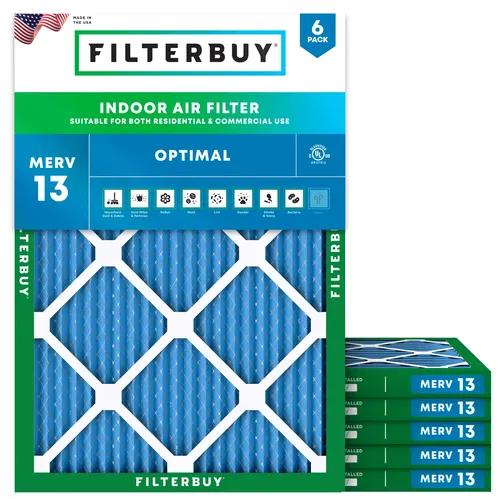
18x28x1 MERV 13 Pleated Air Filter
Actual Size: 18.0x28.0x0.75
 Free Delivery
  Factory-Direct Low Prices, Made in the USA
 Hassle-Free Returns & Free Exchanges
RESIDENTIAL AND/OR COMMERCIAL USE
Change Every 3 Months
18x28x1 MERV 13 Pleated Air Filter
Actual Size: 18.0x28.0x0.75
Free Delivery Factory-Direct Low Prices, Made in the USAHassle-Free Returns & Free ExchangesRESIDENTIAL AND/OR COMMERCIAL USE
Change Every 3 Months
18x28x1 MERV 13 Pleated Air Filter
Actual Size: 18.0x28.0x0.75
Free Delivery Factory-Direct Low Prices, Made in the USAHassle-Free Returns & Free ExchangesRESIDENTIAL AND/OR COMMERCIAL USE
Change Every 3 Months
About
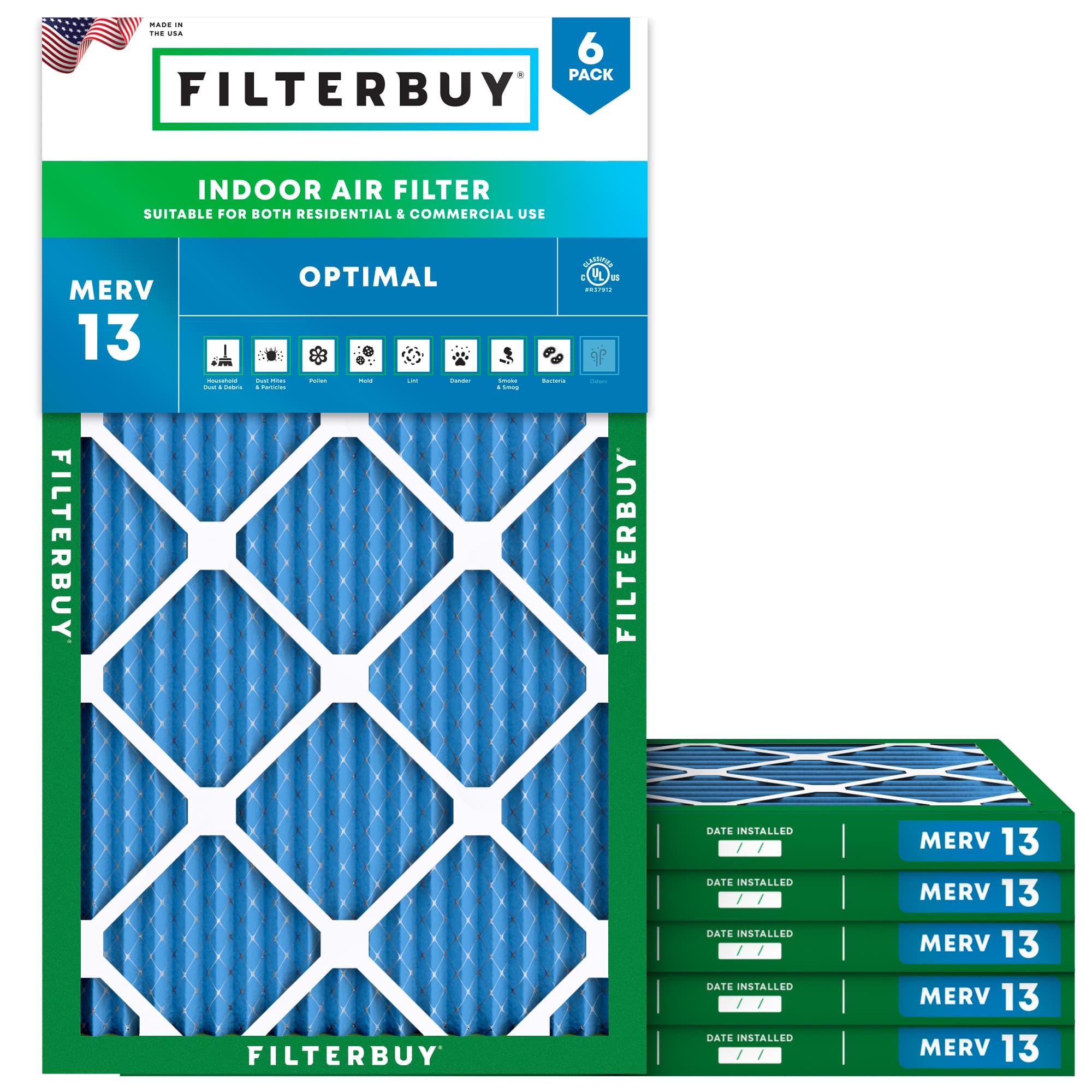
- This is a list 18x28x1 MERV 13 air filter replacement for your furnace, air conditioner, heat pump, or HVAC system
- Actual air filter size: 18.0x28.0x0.75
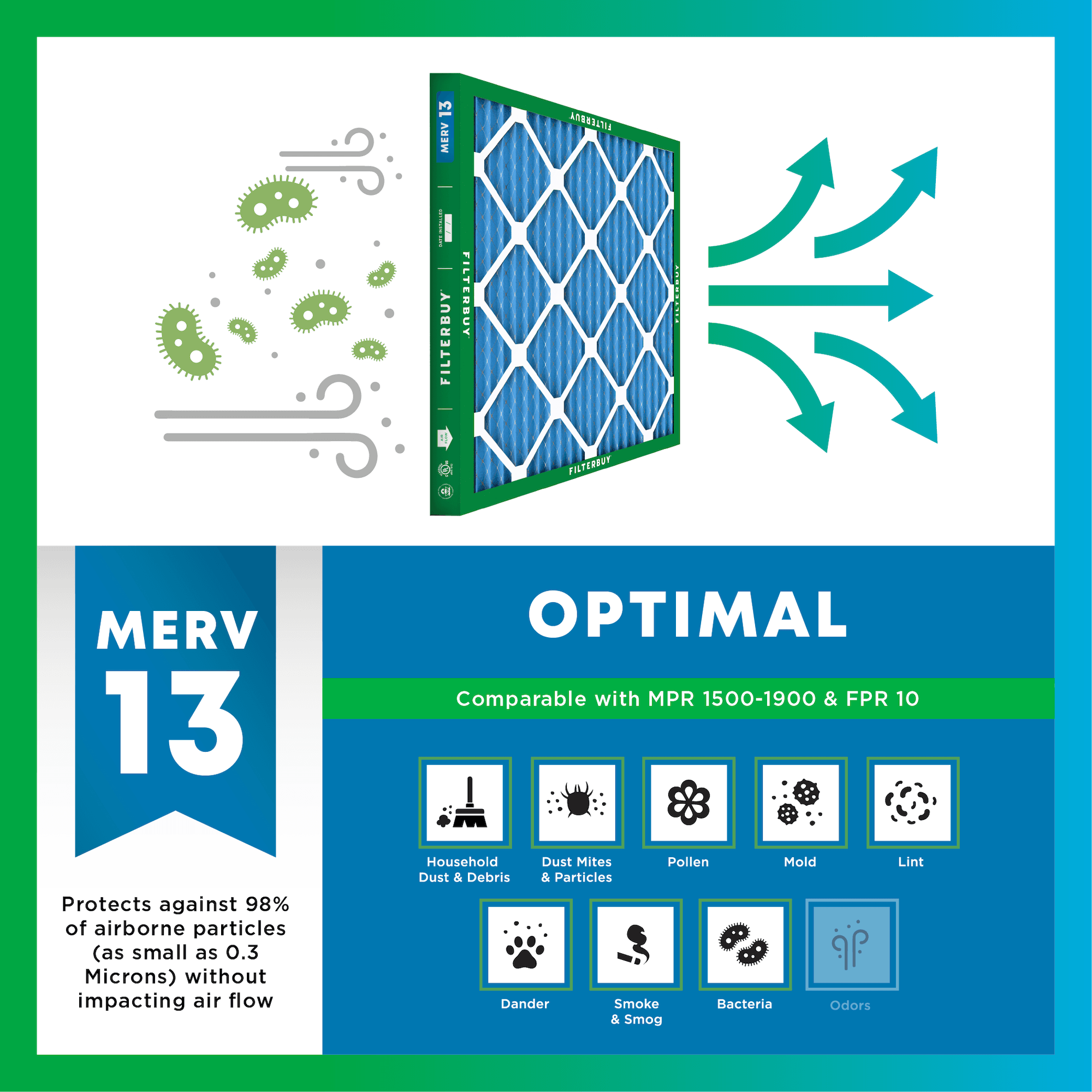
- MERV 13 synthetic media (comparable with MPR 1500/1900 and FPR 10) offers the best protection from dust, pollen, pet dander, mold, smog, bacteria, and virus carrying particles by trapping 98% of airborne particles without impacting air flow.
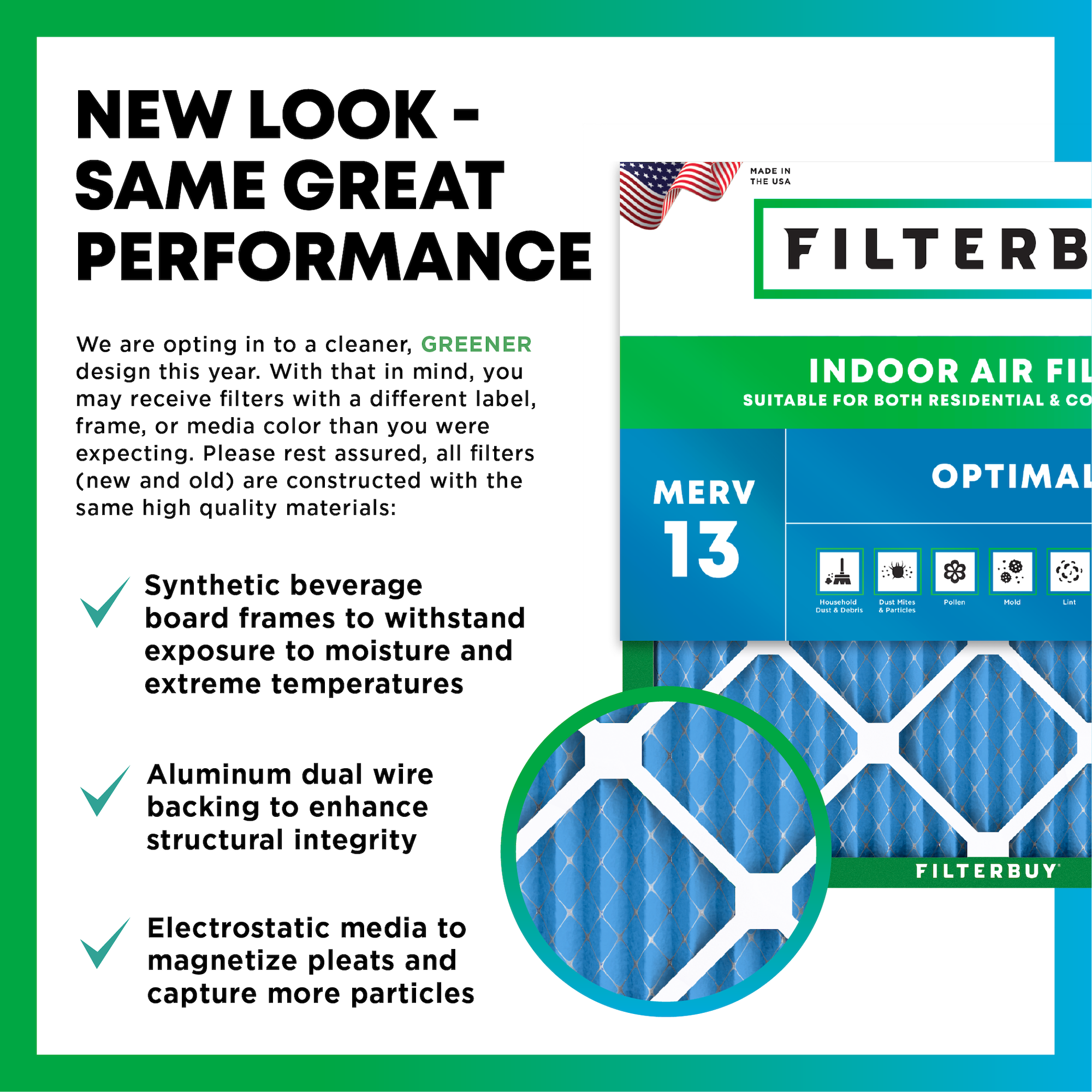
- High-quality construction means electrostatically charged pleated filter media, reinforced wire backing for structural integrity, and a durable frame to resist heat and humidity
- Built to last 3 months. 300% longer than fiberglass models
- 100% manufactured in the United States and designed with recyclable materials
- Learn more about 18x28x1 Air Filters
Top-Rated Filters. American Made. Delivered Free.
At Filterbuy, we don't cut corners—we craft high-quality air filters right here in the USA and ship them to your doorstep for free. No delays, no gimmicks—just clean air, made easy. With thousands of five-star reviews and filters built for real life & every HVAC system, it's no wonder why over 4 million families trust Filterbuy.

Proudly Made In The USA

Fast, Free Shipping on Every Order

Premium Materials That Go The Distance

85,000+ 5-Star Reviews From Happy Customers

Save Up to 70% Per Filter with Packs
Things to Know About Filter Sizes

Nominal Size
- The rounded size printed on your filter or HVAC unit (e.g., 18x28x1).
- Usually whole numbers to make identifying and ordering easier.
- A label for compatibility—not the exact measurement.

Actual Size
- The true, trimmed dimensions of the filter (e.g., 18.0x28.0x0.75 inches).
- Filters are manufactured slightly smaller so they slide into the filter slot without forcing.
- If you don't know your nominal size, measure your filter to get the actual size, then round up to find the nominal size to search on our site.

Why the difference?
- Nominal sizes simplify shopping and standardize categories.
- Actual sizes ensure the filter fits properly inside your HVAC's filter rack.
How To Find Your Nominal Size When You Don't Know It


Measure length × width × depth with a tape measure to find the actual size.

Round up each dimension to the nearest whole number to get the nominal size. Example: 18.0x28.0x0.75 in → 18x28x1 nominal.

Search by nominal size on our site for the best fit.

Why Getting the Right Size Matters
- Too small? Air can bypass the filter, reducing air quality and efficiency.
- Too big? It won't fit—risking bent frames and airflow issues.
- Just right? You get maximum performance, better filtration, and cleaner air.

Free Exchange Policy
If the filter you buy doesn't fit, we'll send you a better size.

What's a MERV Rating?
MERV stands for Minimum Efficiency Reporting Value—but don't let the technical name fool you. It's just a way to rate how well an air filter traps stuff like dust, pollen, pet dander, and smoke. The higher the MERV number, the more particles it catches—and the cleaner your air will be.

Merv 8
Comparable to:FPR: 4-7
MPR: 600-1000
 Dust & Debris
 Dust Mites & Particles
 Pollen
 Mold
Mold Lint
Lint Dander
Merv 11
Comparable to:FPR: 6-9
MPR: 1200-1550
Dust & DebrisDust Mites & ParticlesPollenMoldLintDander Smoke & Smog
Merv 13
Comparable to:FPR: 10
MPR: 1900-2800
Dust & DebrisDust Mites & ParticlesPollenMoldLintDanderSmoke & Smog Bacteria
MERV 8
Comparable to:FPR: 4-7MPR: 600-1000


MERV 11
Comparable to:FPR: 6-9MPR: 1200-1550

MERV 13
Comparable to:FPR: 10MPR: 1900-2800
What Makes Our Filters Last 90 Days? Quality, From the Inside Out
We build every Filterbuy filter to deliver reliable 90-day performance—thanks to smart design and premium materials that do the heavy lifting. Here's what makes the difference:
Pleated Design
More pleats = more surface area to capture dust and debris, keeping your air cleaner longer.
Electrostatically Charged Media
Pleats are magnetized to attract and trap microscopic particles—like pet dander, pollen, and smoke.
Synthetic Beverage Board Frame
Engineered to resist warping in extreme temperatures and high humidity.

Aluminum Dual Wire Backing
A layer of metal reinforcement keeps pleats evenly spaced and structurally sound—no sagging, even at high airflow.
Made in the USA
Assembled with care. Built to perform. Ships fast, free, and reliably from our U.S. facilities.
How to Install Your Filter in 4 Simple Steps

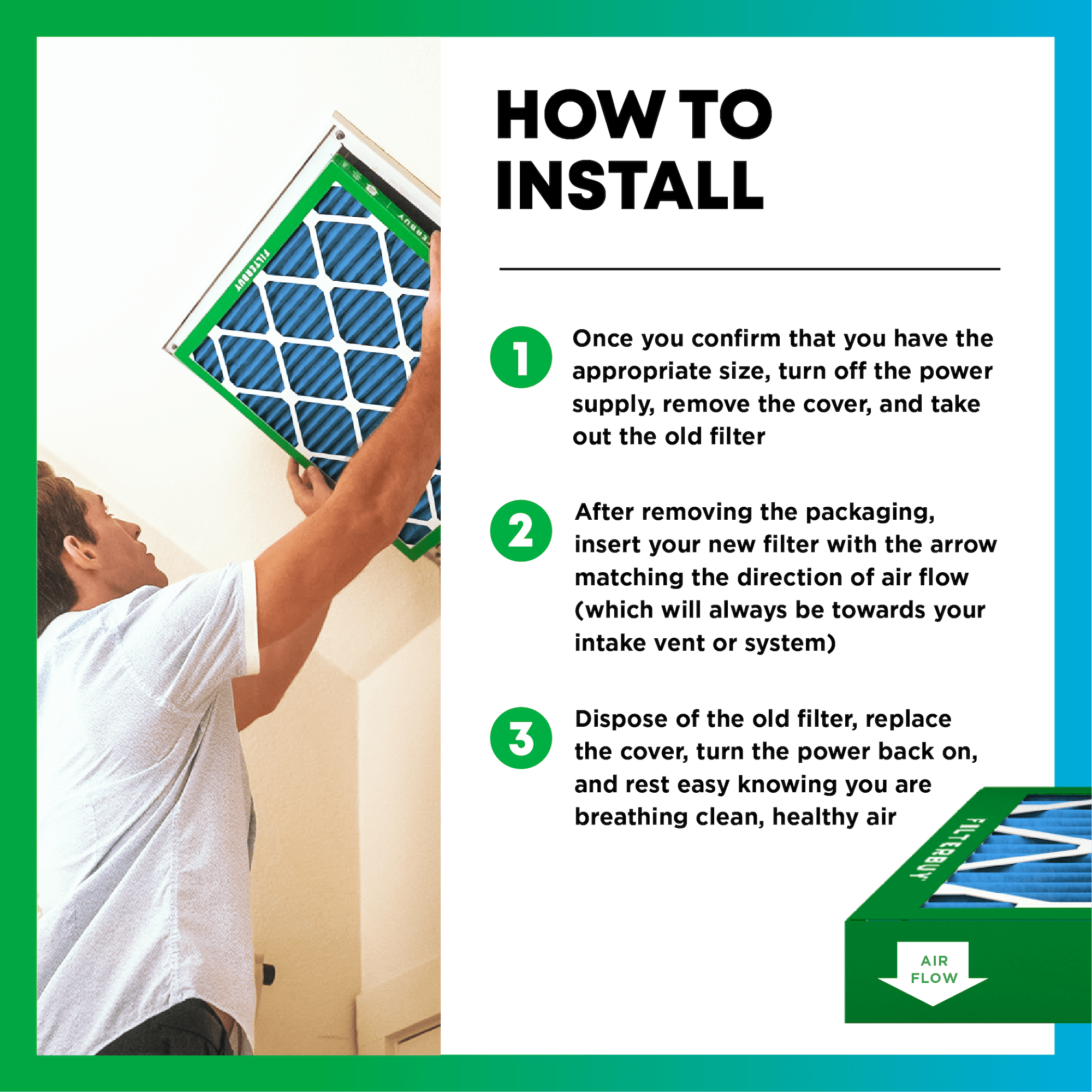
Turn Off Your HVAC SystemSafety first.

Remove The Old FilterLook for the airflow arrow and make note of the direction.

Slide In Your New FilterArrow should point toward the system (same direction as before).

Turn Your System Back OnAnd enjoy the fresh, clean air.

Never forget to replace your air filter again.
- Save 5% on every order
- Choose Your Delivery Schedule
- Edit, Skip, or Cancel Anytime.
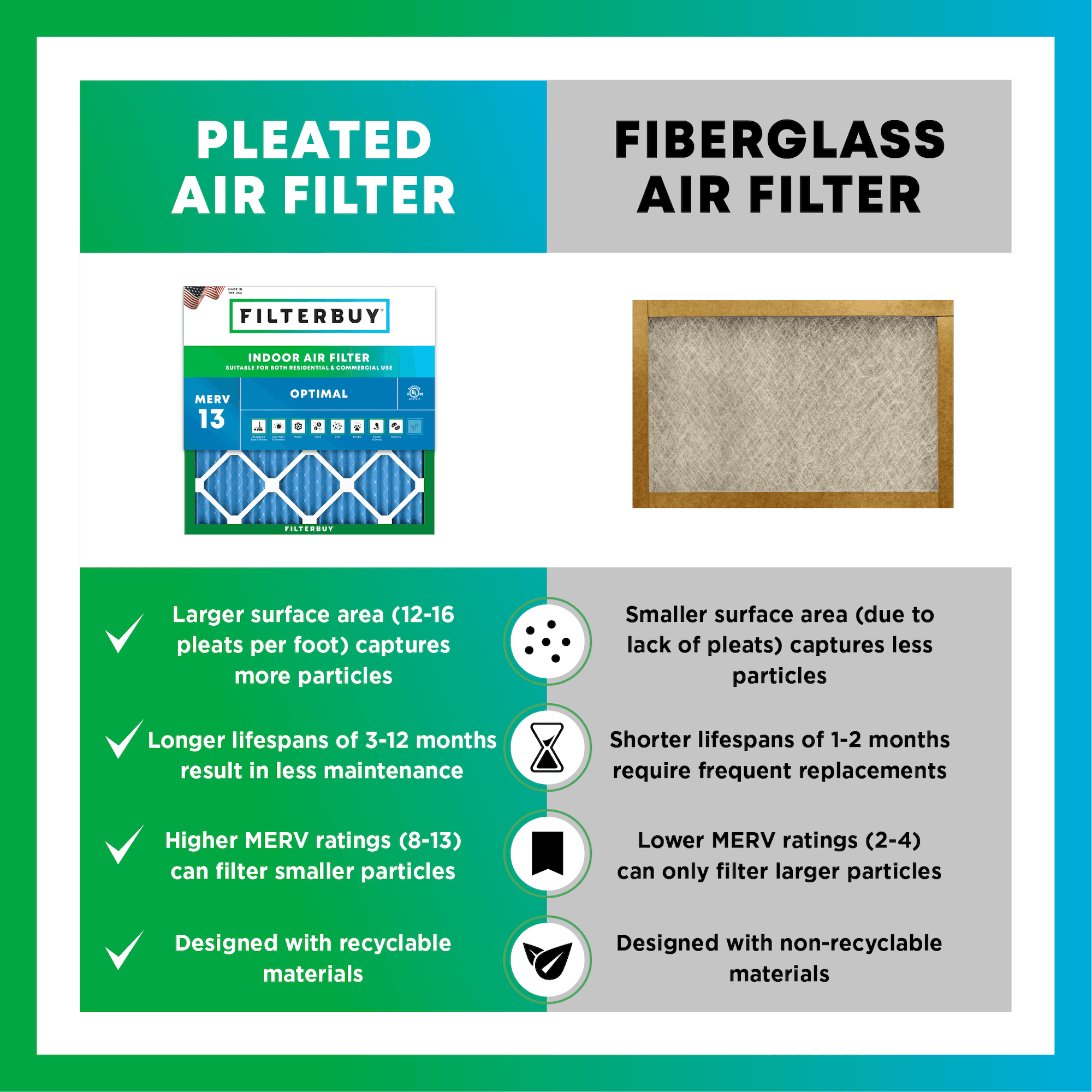
Pleated Filters vs. Fiberglass—What's the Difference?
Not all air filters are created equal. Pleated filters don't just last longer—they actually clean your air better. Here's how they stack up:

Pleated Filters
Efficiency:
High (MERV 8–13) – Traps more particles
Lifespan:
90 days – Long-lasting performance
Air Quality:
Excellent – Cleaner, healthier air
Materials:
Recyclable and durable

Fiberglass Filters
Efficiency:
Low (MERV 4 or less) – Misses small stuff
Lifespan:
30 days or less – Replace often
Air Quality:
Minimal – Basic protection only
Materials:
Thin, flimsy, and not recyclable
Pleated filters are a no-brainer—more protection, less hassle, and better air for your home.
How Often Should You Change Your Filter?
Changing your filter on time keeps your HVAC system running efficiently—and helps protect your lungs from dust, allergens, and airborne irritants. Here's how often to swap it out based on your needs:

Every 90 Days
Standard ScheduleFor most homes without pets or special air quality concerns. Great for general upkeep and energy efficiency.

Every 60 Days
If You Have Pets or AllergiesShedding fur, dander, and allergy triggers can build up fast. Changing your filter every two months helps keep the air fresher and symptoms at bay.

Every 30 Days
If You Have Respiratory Concerns or Live in Smog/Wildfire ZonesFor households affected by smoke, pollution, or respiratory conditions, monthly changes ensure maximum protection.

Want to stay on track? Set a reminder—or skip the stress with auto-delivery so fresh filters show up right when you need them.
Don't Just Take Our Word For It...
Got More Questions? We've Got Answers.
Product Specifications
| Nominal Size | 18 x 28 x 1 inches |
| Actual Size | 18.0 x 28.0 x 0.75 inches |
| Filter Type | Pleated |
| Media | Electrostatically Charged |
| Frame | Beverage Board |
| MERV Ratings Available | 8, 11, 13 |
| Lifespan | Up to 90 Days |
| Origin | Made in USA |
Signs Your HVAC System Is Straining Because of a Clogged 18x28x1 Air Filter
If your HVAC system seems to be working overtime, the cause might be simpler than you think— a clogged 18x28x1 air filter. At FilterBuy, we've seen firsthand how this often-overlooked component can create a domino effect of issues, from diminished airflow to rising energy bills. As experts who specialize in air quality solutions, we’ve identified the critical signs that indicate your filter is restricting airflow and causing undue strain on your HVAC system. By recognizing these warning signs early, you can take proactive steps to protect both your system and your wallet. Let us guide you through how to spot the trouble before it becomes a costly repair.
Quick Answers
What is an 18x28x1 air filter?
The 18x28x1 air filter is a standard HVAC filter size, measuring 18 inches by 28 inches with a 1-inch thickness. It traps dust, allergens, and debris, ensuring optimal airflow and improving indoor air quality. Regularly replacing this filter helps maintain HVAC efficiency and extend system life.
Top Takeaways:
Replace your filter regularly (every 1-3 months) to ensure optimal airflow and system efficiency.
Clogged filters increase energy bills by forcing your HVAC system to work harder.
Neglecting filters leads to system wear, causing costly repairs over time.
Simple filter maintenance saves money and extends your HVAC system’s lifespan.
Improve indoor air quality with regular filter changes, reducing allergens and promoting a healthier home.
Decreased Airflow
When HVAC systems struggle with airflow, something might be off. One typical problem is airflow restriction, often caused by a dirty or clogged filter. Neglecting filter maintenance allows debris to build up, leading to reduced airflow throughout the home.
Why Does This Matter?
Comfort: Poor airflow can create uneven temperatures, making living spaces uncomfortable.
Efficiency: A system that struggles works harder, which can lead to wear over time.
To avoid these issues, check air filters regularly and replace them every one to three months. Keeping up with filter maintenance helps maintain optimal airflow while ensuring the HVAC system operates smoothly.
Increased Energy Bills
Higher energy bills often indicate that your HVAC system is working harder than necessary. This struggle usually stems from hidden issues, like a clogged air filter. When airflow gets blocked, efficiency drops, leading to increased energy consumption just to keep temperatures comfortable.
Important Points to Keep in Mind:
Filter Care: Changing or cleaning air filters regularly keeps the HVAC system running smoothly, reducing strain and improving efficiency.
Performance Matters: A clean filter allows for better airflow, which lightens the load on the system and leads to lower energy expenses.
Noticing a sudden rise in energy bills? Checking that air filter is a smart move. Taking care of filters not only helps save cash but also enhances the lifespan of the HVAC system.
Frequent System Cycling
Frequent cycling of your HVAC system can be a clear indicator of trouble. If you notice your unit turning on and off more often than usual, chances are high that inefficiency plays a role. A clogged air filter might be causing airflow issues, making your system work harder than necessary. This added strain not only reduces efficiency but can also lead to more repairs, as components wear out faster.
Signs to Watch For:
Short cycling: The system fails to run long enough to heat or cool effectively.
Temperature fluctuations: Some rooms feel warmer or cooler than others.
Clearing out that clogged filter can help resolve these problems, enabling your system to operate smoothly and efficiently.
Unusual Noises From the HVAC Unit
Unusual noises from your HVAC unit can signal hidden problems needing attention. Hearing banging, clanking, or hissing sounds might mean loose or damaged parts. Such noises, along with strange vibrations, can disrupt operation, leading to further damage if ignored.
If any odd smells accompany those sounds, investigating is vital. A burning odor may indicate electrical issues, while a musty scent could suggest mold growth within the system.
To keep HVAC units running efficiently, check and replace air filters regularly. If noises continue, reach out to a professional technician for diagnosis and repairs. Tackling these concerns quickly can save both time and money later on.
Poor Indoor Air Quality
Poor indoor air quality can really affect comfort and health, often without us even noticing. When HVAC systems struggle due to clogged air filters, air circulation suffers, causing dust, allergens, and pollutants to pile up. This buildup can worsen health issues like asthma, allergies, and respiratory problems.
Signs of Poor Indoor Air Quality:
Dust collects on surfaces
Coughing or sneezing happens often
Unpleasant smells linger indoors
To enhance indoor air quality, regularly inspect and change air filters. Proper ventilation along with clean air ducts can make a difference too. By taking these steps, we create a healthier living space for everyone.
Essential Resources for Choosing and Maintaining Your 18x28x1 Air Filter
At FilterBuy, we believe that clean air starts with the right air filter. Whether you’re just getting started or looking to improve your home’s air quality, these resources will guide you every step of the way. With our expertise and passion for air quality, we’re here to help you make the best choice for your home and family.
1. EPA: Air Cleaners and Air Filters in the Home
https://www.epa.gov/indoor-air-quality-iaq/air-cleaners-and-air-filters-home
This resource from the EPA explains why choosing the right air filter, like the 18x28x1, is crucial to your home's air quality. With decades of experience in the air filtration industry, we know that the right filter traps harmful particles, giving your family the clean air they deserve.
2. EPA: Guide to Air Cleaners in the Home (2nd Edition)
Need help picking the perfect air filter? This guide is a must-read. It explains filter features like MERV ratings and how they impact your HVAC system's performance. At FilterBuy, we always recommend the right fit for your system, ensuring you get the best balance of efficiency and air quality.
3. U.S. Department of Energy: Air Conditioner Maintenance
https://www.energy.gov/energysaver/air-conditioner-maintenance
Proper maintenance is key to a healthy HVAC system, and the air filter plays a huge part. This guide from the Department of Energy shows you how regular filter changes, like with your 18x28x1 filter, keep your system running efficiently while helping lower your energy bills—something we’ve seen time and again with our customers.
4. EPA: Selecting the Right Filter (Indoor AirPLUS Technical Bulletin)
https://www.epa.gov/sites/default/files/2020-06/documents/2019.11_tech_bulletin_filtration.pdf
This detailed technical bulletin dives deep into selecting the perfect air filter for your home. With years of expertise, we know that choosing the right filter means balancing efficiency, airflow, and air quality. This guide helps you make the right decision—just like we do at FilterBuy.
5. Trane HVAC Air Filter Maintenance Guide
https://www.trane.com/residential/en/resources/blog/hvac-air-filter-maintenance-guide/
Trane’s guide offers hands-on advice for inspecting, cleaning, and replacing your air filter. Here at FilterBuy, we’ve seen how a little maintenance can go a long way in extending the life of your HVAC system and improving your air quality. It's about staying proactive, so your system stays at its best.
6. North Carolina State Government: HVAC Air Filter Specifications
https://www.doa.nc.gov/pc-stc-031a-s4130-1pdf-standard-specification-air-filters/open
This official state document provides the specs for HVAC air filters, including the 18x28x1 size. At FilterBuy, we always recommend using the right size and specifications to ensure the best fit for your system, which leads to optimal performance and air quality.
7. Complete Guide to HVAC Air Filters
This comprehensive guide covers everything from different filter types to MERV ratings, helping you understand how each element affects your HVAC system. At FilterBuy, we’ve seen firsthand how choosing the right filter can enhance both system efficiency and your home’s air quality—leading to a healthier, more comfortable space.
"At FilterBuy, we've seen firsthand how simple, yet often overlooked, task like changing your air filter can prevent a cascade of HVAC problems. Regular maintenance is the key to efficiency, longer system life, and lower energy bills. It’s not just about replacing a filter; it’s about protecting your home, your wallet, and your peace of mind."
Supporting Statistics: Why a Clogged 18x28x1 Air Filter Strains Your HVAC System
At Filterbuy, we’ve seen firsthand how a clogged air filter impacts HVAC systems. Here’s the data that backs up what we experience in homes:
1. DOE Stats: Reduced Airflow & Efficiency
“Dirty, clogged filters reduce airflow and system efficiency.” (energy.gov)
In our experience: Restricted airflow means systems work harder, causing strain and early wear.
2. EPA Filtration Guidelines: Increased Energy Use & Wear
“A dirty filter can increase furnace run time, motor wear, and energy consumption.” (epa.gov)
What we see: Neglecting filters forces systems into overdrive, burning out motors and causing long-term damage.
3. Energy Reports: 15% More Energy Use
Homes with clogged filters can see a 15% increase in energy consumption. (entergy.com)
From our fieldwork: That 15% increase means higher utility bills. Regular filter replacement can prevent this.
Final Thought & Opinion: Protecting Your HVAC System Starts with the Air Filter
At FilterBuy, we see clogged air filters causing:
Increased energy bills
Reduced airflow
Premature wear on HVAC parts
These aren’t just numbers — they’re problems we see every day in homes across the country
Why It Matters
Maintenance is Power: Regularly replacing your 18x28x1 air filter is an easy way to keep your HVAC system running efficiently.
Save Money: Changing your filter prevents unnecessary energy consumption and costly repairs.
Extend System Life: Keeping your filter clean helps prolong the life of your HVAC system and keeps it running smoothly.
FilterBuy’s Perspective
The air filter is the unsung hero of your HVAC system.
Small maintenance steps, like changing your filter, can save you time, money, and headaches down the line.
Don’t wait for your system to struggle — take action now and enjoy a more comfortable, energy-efficient home.
Next Steps: Take Control of Your HVAC System
Follow these simple steps to keep your system running smoothly:
Check Your Air Filter
Inspect for dirt and damage.
Replace if clogged or 1-3 months old.
Replace Your Filter Regularly
Set a reminder to change it every 1-3 months for optimal performance.
Schedule HVAC Maintenance
Book an annual tune-up to keep your system in top shape.
Monitor Your Energy Bills
If bills rise, check your filter first.
Upgrade to High-Quality Filters
Invest in high-performance filters for better airflow and efficiency.
FAQ on 18x28x1 Air Filter
Q: What is an 18x28x1 air filter?
A:
Standard size: 18" x 28" x 1"
Traps dust, allergens, and debris
Keeps HVAC system running efficiently and improves air quality
Q: How often should I replace my 18x28x1 air filter?
A:
Replace every 1-3 months
More frequently if you have pets or live in a dusty area
Regular replacements keep your HVAC system running smoothly
Q: Can I use any air filter size in my HVAC system?
A:
No, filters must match your HVAC system’s specifications
Using the wrong size can restrict airflow and cause system damage
Q: What happens if I don’t replace my 18x28x1 air filter?
A:
Clogged filters block airflow, causing strain on your HVAC
Can lead to higher energy bills, breakdowns, and costly repairs
Q: How can I tell if my 18x28x1 air filter needs replacing?
A:
Look for dirt, discoloration, or damage
Weak airflow, increased energy bills, or longer system runtimes indicate it’s time for a replacement