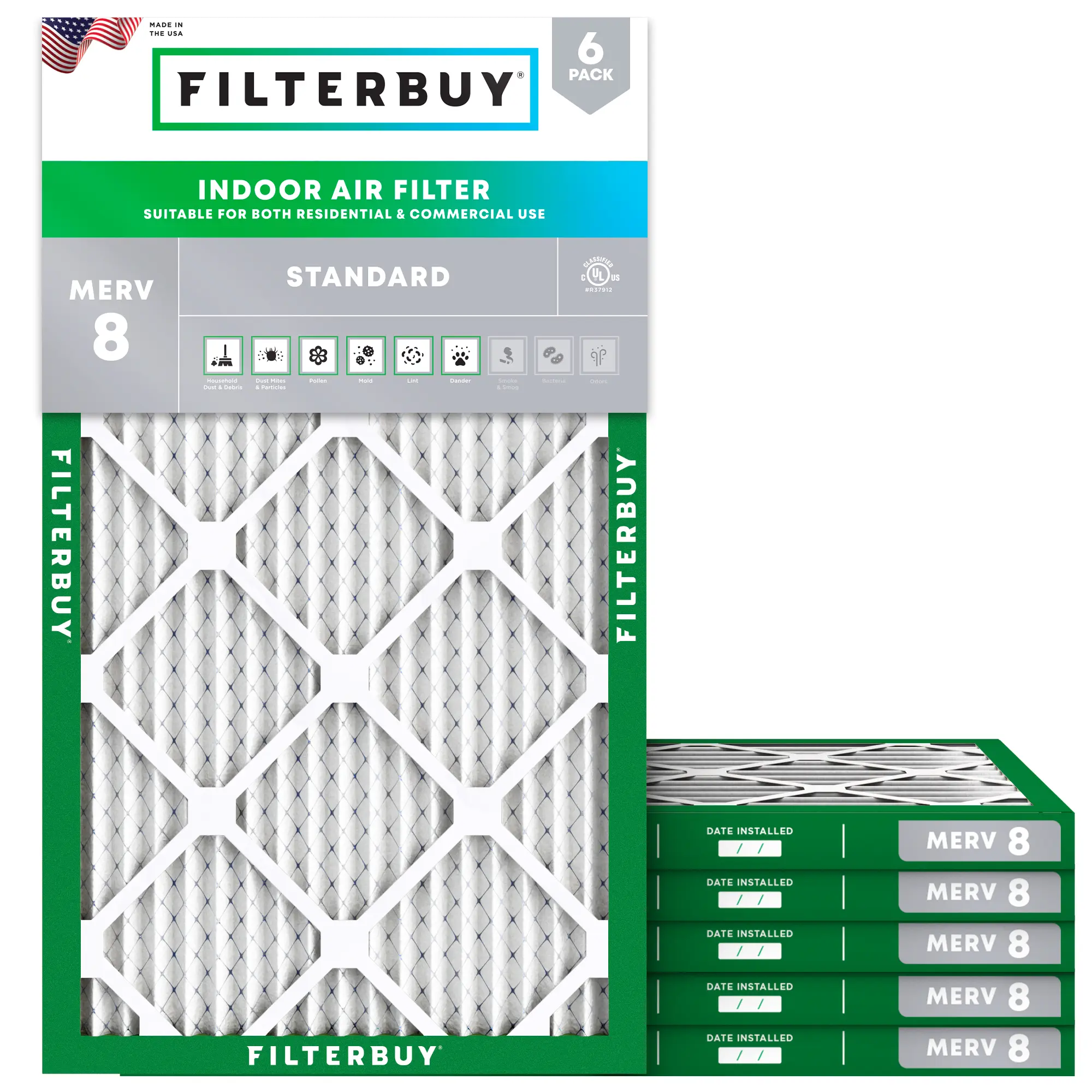
Actual Size: 18x28x1
 Free Delivery
  Factory-Direct Low Prices, Made in the USA
 Hassle-Free Returns & Free Exchanges
RESIDENTIAL AND/OR COMMERCIAL USE
Change Every 3 Months
Actual Size: 18x28x1
Free Delivery Factory-Direct Low Prices, Made in the USAHassle-Free Returns & Free ExchangesRESIDENTIAL AND/OR COMMERCIAL USE
Change Every 3 Months
Actual Size: 18x28x1
Free Delivery Factory-Direct Low Prices, Made in the USAHassle-Free Returns & Free ExchangesRESIDENTIAL AND/OR COMMERCIAL USE
Change Every 3 Months
At Filterbuy, we don't cut corners—we craft high-quality air filters right here in the USA and ship them to your doorstep for free. No delays, no gimmicks—just clean air, made easy. With thousands of five-star reviews and filters built for real life & every HVAC system, it's no wonder why over 4 million families trust Filterbuy.

Proudly Made In The USA

Fast, Free Shipping on Every Order

Premium Materials That Go The Distance

85,000+ 5-Star Reviews From Happy Customers

Save Up to 70% Per Filter with Packs


Measure length × width × depth with a tape measure to find the actual size.

Round up each dimension to the nearest whole number to get the nominal size. Example: 18x28x1 in → 18x28x1 nominal.

Search by nominal size on our site for the best fit.


If the filter you buy doesn't fit, we'll send you a better size.
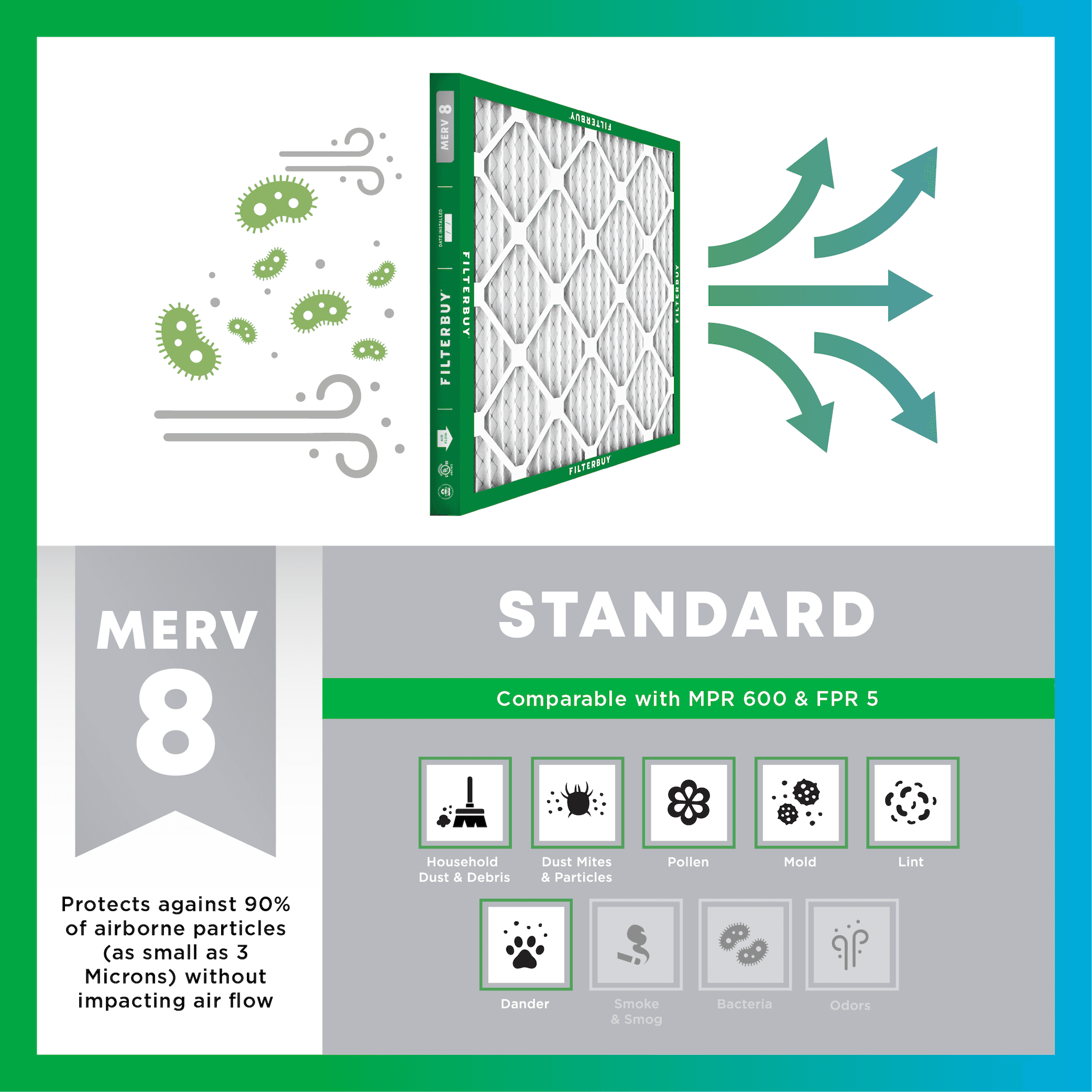
MERV stands for Minimum Efficiency Reporting Value—but don't let the technical name fool you. It's just a way to rate how well an air filter traps stuff like dust, pollen, pet dander, and smoke. The higher the MERV number, the more particles it catches—and the cleaner your air will be.

Comparable to:FPR: 4-7
MPR: 600-1000
 Dust & Debris
 Dust Mites & Particles
 Pollen
 Mold
Mold Lint
Lint Dander
Comparable to:FPR: 6-9
MPR: 1200-1550
Dust & DebrisDust Mites & ParticlesPollenMoldLintDander Smoke & Smog
Comparable to:FPR: 10
MPR: 1900-2800
Dust & DebrisDust Mites & ParticlesPollenMoldLintDanderSmoke & Smog Bacteria


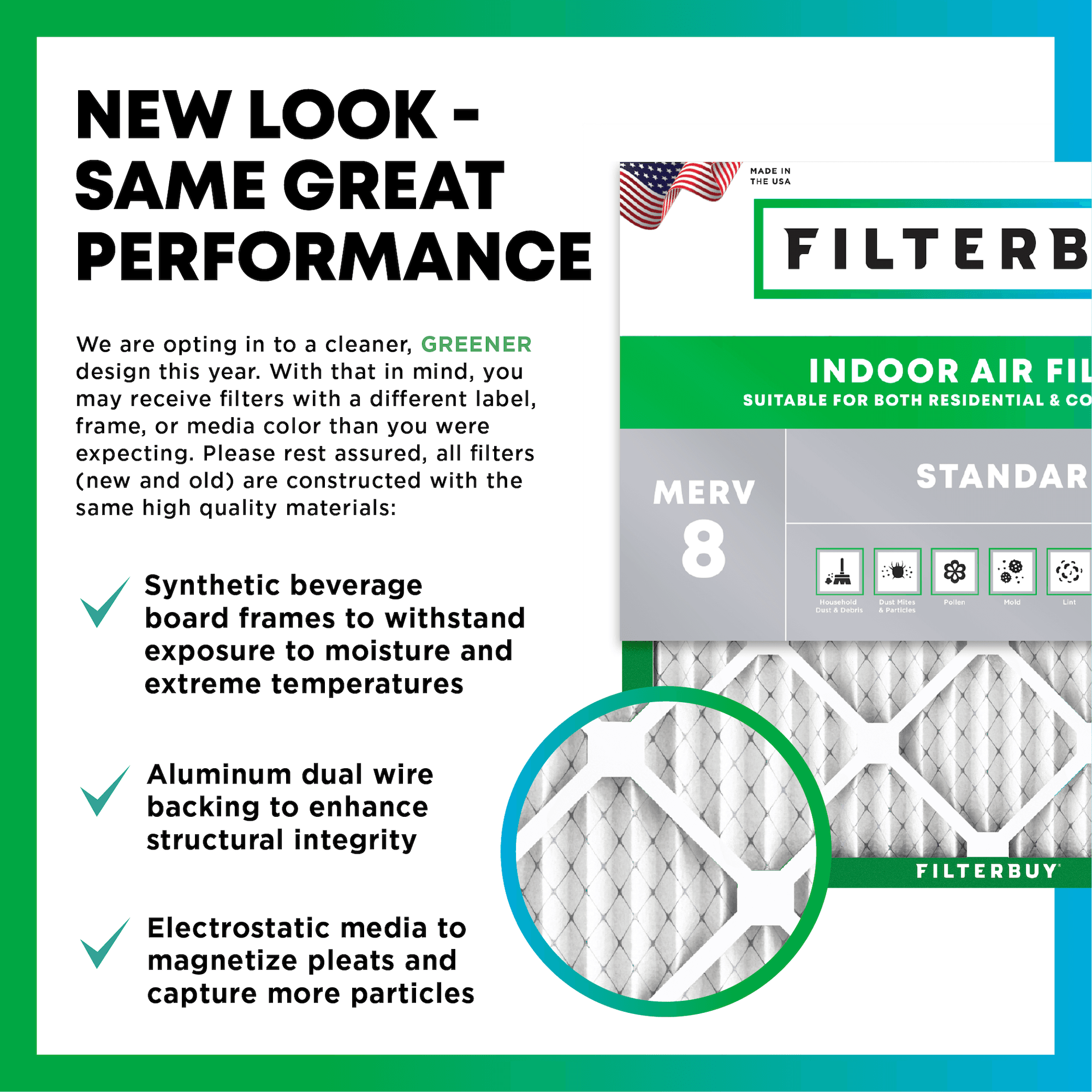
We build every Filterbuy filter to deliver reliable 90-day performance—thanks to smart design and premium materials that do the heavy lifting. Here's what makes the difference:
More pleats = more surface area to capture dust and debris, keeping your air cleaner longer.
Pleats are magnetized to attract and trap microscopic particles—like pet dander, pollen, and smoke.
Engineered to resist warping in extreme temperatures and high humidity.

A layer of metal reinforcement keeps pleats evenly spaced and structurally sound—no sagging, even at high airflow.
Assembled with care. Built to perform. Ships fast, free, and reliably from our U.S. facilities.

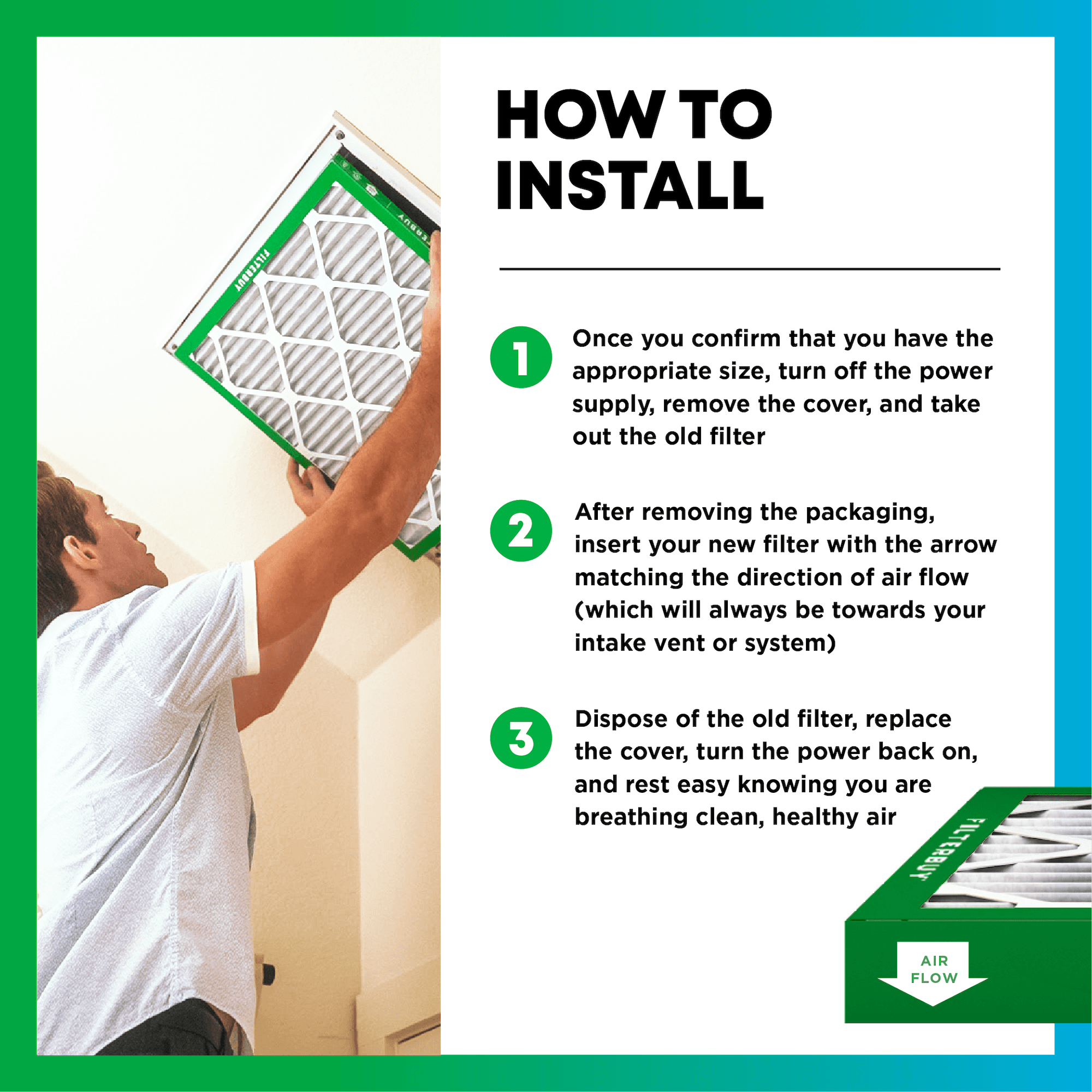
Turn Off Your HVAC SystemSafety first.

Remove The Old FilterLook for the airflow arrow and make note of the direction.

Slide In Your New FilterArrow should point toward the system (same direction as before).

Turn Your System Back OnAnd enjoy the fresh, clean air.

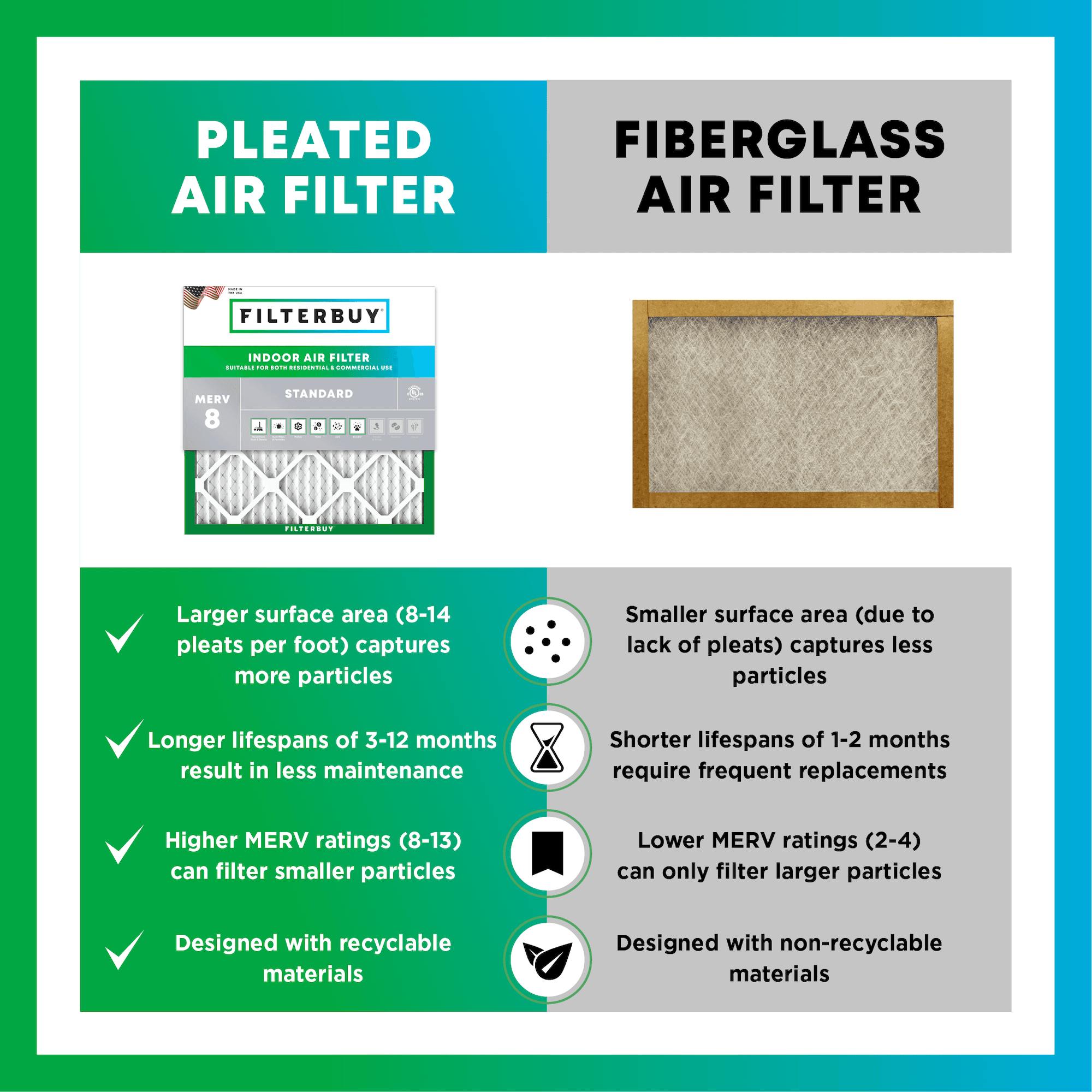
Not all air filters are created equal. Pleated filters don't just last longer—they actually clean your air better. Here's how they stack up:

Efficiency:
High (MERV 8–13) – Traps more particles
Lifespan:
90 days – Long-lasting performance
Air Quality:
Excellent – Cleaner, healthier air
Materials:
Recyclable and durable

Efficiency:
Low (MERV 4 or less) – Misses small stuff
Lifespan:
30 days or less – Replace often
Air Quality:
Minimal – Basic protection only
Materials:
Thin, flimsy, and not recyclable
Pleated filters are a no-brainer—more protection, less hassle, and better air for your home.
Changing your filter on time keeps your HVAC system running efficiently—and helps protect your lungs from dust, allergens, and airborne irritants. Here's how often to swap it out based on your needs:

For most homes without pets or special air quality concerns. Great for general upkeep and energy efficiency.

Shedding fur, dander, and allergy triggers can build up fast. Changing your filter every two months helps keep the air fresher and symptoms at bay.

For households affected by smoke, pollution, or respiratory conditions, monthly changes ensure maximum protection.

| Nominal Size | 18 x 28 x 1 inches |
| Actual Size | 18 x 28 x 1 inches |
| Filter Type | Pleated |
| Media | Electrostatically Charged |
| Frame | Beverage Board |
| MERV Ratings Available | 8, 11, 13 |
| Lifespan | Up to 90 Days |
| Origin | Made in USA |
As asthma and allergy sufferers know, the air you breathe at home plays a crucial role in your health. At FilterBuy, we’ve seen firsthand how a high-efficiency 18x28x1 air filter can significantly reduce allergens like dust, pollen, and pet dander—creating a safer, more comfortable living space. Unlike standard filters, these high-efficiency models capture even the smallest particles, helping you breathe easier and reducing the frequency of flare-ups. From our extensive experience with air quality solutions, we’ve found that upgrading to a high-efficiency filter isn’t just a quick fix—it’s a long-term investment in better health. In this guide, we’ll walk you through how this filter can make a measurable difference, backed by real-world results and insights from our commitment to improving indoor air quality.
Quick Answers
What is an 18x28x1 Air Filter?
An 18x28x1 air filter is a standard size filter used in most residential and commercial HVAC systems. It helps trap airborne allergens like dust, pollen, and pet dander, improving indoor air quality and ensuring your HVAC system runs efficiently. This size fits many popular HVAC models and is designed to provide long-lasting filtration, keeping your home air clean and your system functioning at its best.
Traps Smaller Particles: High-efficiency 18x28x1 filters capture dust, pollen, and pet dander, improving air quality for asthma and allergy sufferers.
Choose the Right MERV Rating: MERV 8, 11, or 13 provides the appropriate filtration for your needs.
Correct Sizing is Key: Ensure your filter fits perfectly by measuring or using a sizing guide.
Regular Replacement: Change your filter every 1–3 months to maintain air quality and HVAC performance.
Long-Term Investment: Upgrading to a high-efficiency filter enhances your home’s air quality for lasting health benefits.
Airborne allergens and asthma triggers can have a big effect on health, especially for those who are sensitive. Knowing about these factors plays a key role in managing asthma effectively.
Key Allergens:
Pollen Sources: Trees, grasses, and weeds release pollen that can make asthma symptoms worse during peak seasons.
Indoor Pollutants: Common allergens found indoors include dust mites, pet dander, mold, and smoke. Accumulation of these pollutants in homes makes identifying and reducing them essential.
Considering how much time is spent indoors makes it clear that good air quality is vital for health, especially for those with asthma or allergies. Clean living spaces are crucial; poor air can worsen symptoms and cause discomfort. Indoor pollution often arises from dust, pet dander, mold, plus other allergens circulating throughout the home. Investing in effective air filtration significantly reduces irritants, fostering a healthier environment.
Regularly changing air filters while keeping living areas tidy helps minimize indoor pollution's impact. This approach supports overall well-being, creating a more comfortable and inviting space.
High-efficiency 18x28x1 air filters bring several key features that greatly improve indoor air quality.
Filter Efficiency: Designed to capture numerous airborne particles like dust, pollen, and pet dander, these filters boast high MERV ratings. This superior efficiency results in cleaner air for everyone.
Size Compatibility: With dimensions of 18x28x1, these filters fit most standard HVAC systems easily. This ensures a smooth installation process, promoting optimal performance.
Longer Lifespan: Many of these filters offer extended life spans, which means less frequent replacements. Enjoying better air quality for longer periods becomes a reality.
Energy Efficiency: Improved airflow leads to better HVAC system performance, potentially reducing energy costs.
Investing in a high-efficiency air filter serves as a simple way to boost home air quality.
For asthma and allergy sufferers, using a high-efficiency air filter can truly transform indoor air quality. These filters work wonders at capturing airborne pollutants, leading to relief from symptoms. Here are some significant benefits to consider:
Better filter performance: High-efficiency options catch smaller particles that standard filters often overlook.
Fewer allergens: Dust mites, pollen, and pet dander can be reduced significantly within your living space.
Cleaner air: Improved air quality frequently results in fewer asthma attacks and allergy flare-ups.
Less irritation: Breathing becomes easier, which helps decrease coughing and sneezing.
Extended filter life: These efficient filters usually last longer, meaning replacements are needed less often.
Investing in a high-efficiency air filter can lead to a healthier environment for everyone at home.
How can we ensure air filters are effective and last long? First, select the right types for our needs, such as HEPA or pleated filters, which capture smaller particles efficiently. Checking the MERV rating is also important; higher ratings indicate better filtration.
After making a choice, remember these maintenance tips:
Change filters regularly: Every 1-3 months works best.
Keep areas clean: Dust and debris can reduce performance.
Look for leaks: A tight fit in the air handler prevents unfiltered air from bypassing the filter.
Monitor air quality: Using an air quality monitor helps determine when to change filters.
Following these steps will help maintain optimal air quality.
At FilterBuy, we know that choosing the right air filter for your home isn’t just about picking a product off the shelf. It’s about understanding what truly matters—like cleaner air, fewer allergens, and a healthier living environment. We’ve put together these trusted resources to guide you on your journey to better air quality and comfort. Whether you’re protecting your family from asthma or allergy triggers, these insights will help you make an informed decision.
1. Perfect Fit, Every Time: The Guide to Size and Compatibility
A filter that fits properly is essential for maximum efficiency. This resource breaks down the difference between nominal and actual filter sizes, ensuring you find the perfect 18x28x1 filter for your HVAC system. With the right fit, you’ll avoid air bypass and get the full benefit of cleaner air. Resource: FilterBuy Size Guide
2. MERV Ratings Demystified: Select the Right Level of Filtration Power
Your air filter’s MERV rating determines how well it captures allergens and pollutants. This comparison resource helps you understand which MERV rating (8, 11, 13) is best for your needs—whether you're dealing with dust, pollen, or pet dander. Choose the right level of filtration to breathe easier and reduce flare-ups.
3. Filter Options and Features: Find the Quality You Can Trust
Not all filters are created equal. Dive into a comprehensive selection of 18x28x1 filters, each with unique features like enhanced filtration and longer-lasting performance. This resource helps you compare brands and find the best option to support your family’s health and comfort.
4. Budget-Friendly Choices: Pricing and Pack Options
Quality air filtration doesn’t have to break the bank. This resource provides real-world pricing, pack options, and subscription models for 18x28x1 filters. It’s an easy way to make sure you’re getting great value while protecting your family’s health.
5. Durability and Performance: What to Expect from Your Filter
A filter should do more than just trap dust—it should last. Learn about the construction, performance claims, and extended lifespans of 18x28x1 filters. This resource ensures you’re investing in a filter that performs at its best for longer. Resource: FilterBuy Product Details
6. Customization for Your Home: Find the Right Filter for Specific Needs
From pet dander to smoke, certain filters are better suited to specific needs. Explore various 18x28x1 filter options, including carbon and mini-pleat varieties, to find the perfect fit for your home’s unique air quality challenges. Resource: NordicPure Fit Compatibility
7. Understanding Filter Efficiency: How Ratings Affect Your HVAC System
Choosing the right filter is not just about air quality; it’s also about maintaining your HVAC system’s efficiency. This resource helps you understand how MERV ratings impact airflow and system performance, so you can keep your home’s air clean without overburdening your system.
"After years of helping families improve their indoor air quality, we’ve seen firsthand how a high-efficiency 18x28x1 air filter can make a transformative difference. It's not just about cleaner air—it's about creating a healthier home where you can breathe easy, knowing you’ve invested in your family’s well-being. The right filter can reduce asthma flare-ups, ease allergy symptoms, and provide lasting comfort—all while boosting the efficiency of your HVAC system."
At Filterbuy, we’ve seen how the right air filter can make a measurable difference for asthma and allergy sufferers. These key U.S.–based statistics highlight why high-efficiency filtration matters:
We spend ~90% of our time indoors (EPA).
Indoor air has the biggest impact on daily breathing.
A high-efficiency 18x28x1 filter helps clean the air you’re exposed to most.
65.9% of U.S. children with asthma also have allergies (CDC).
Asthma and allergies often overlap.
Better filtration reduces triggers for both conditions.
EPA recommends improved HVAC filtration to reduce asthma-triggering pollutants (EPA).
High-efficiency filters capture the fine particles standard filters miss.
This leads to fewer irritants circulating through your home.
Source: https://www.epa.gov/indoorairplus/indoor-airplus-and-asthma
Bottom line: Real data—and our firsthand experience—show that upgrading to a high-efficiency filter is a proven way to reduce allergens, ease asthma symptoms, and create a healthier indoor environment.
Choosing the right air filter is an investment in your family’s health and comfort. At FilterBuy, we’ve seen firsthand how a high-efficiency 18x28x1 air filter can improve indoor air quality for asthma and allergy sufferers. Here’s a quick summary of why it matters:
High-efficiency filters trap small particles: These filters capture allergens like pollen, dust, and pet dander, which standard filters often miss. This results in cleaner air and fewer symptoms for asthma and allergy sufferers.
Long-term benefits: Upgrading your air filter isn’t just a quick fix—it leads to long-term improvements in air quality and overall well-being.
My Opinion:
The 18x28x1 filter size is crucial: While it may seem like a technical detail, selecting the right size and MERV rating ensures optimal filtration and system performance.
Healthier home environment: A good filter doesn’t just clean the air—it can reduce asthma flare-ups and allergy symptoms, giving you peace of mind.
In my experience, investing in a high-efficiency air filter has the potential to transform your home’s air quality. It’s not just about cleaner air; it’s about creating a space where your family can breathe easy. FilterBuy is here to help you make that choice with confidence.
Follow these quick, actionable steps to improve your home’s air quality with the right 18x28x1 air filter:
Confirm Your Filter Size
Check your current filter or HVAC manual.
Use this size guide if needed: https://www.filterbuy.com/air-filters/18x28x1/merv-8/
Choose Your MERV Rating
MERV 8: Basic protection
MERV 11: Enhanced allergen control
MERV 13: Maximum filtration for asthma/allergy relief
Compare Filter Options
Look at lifespan, build quality, and filtration performance.
Review Pricing & Value Packs
Check multi-packs for better savings.
Purchase & Install Your Filter
Order the filter that fits your needs.
Install in your HVAC system and ensure a tight fit.
Maintain Regular Replacements
Replace every 1–3 months.
Replace more often if you have pets or high allergen exposure.
A:
A standard size filter (18 inches x 28 inches x 1 inch) used in HVAC systems.
Traps dust, pollen, pet dander, and other airborne particles to improve air quality.
Ensures efficient HVAC performance and cleaner indoor air.
A:
Check the size of your current filter or HVAC manual.
Use a sizing guide to confirm the correct fit.
A:
MERV 8: Traps larger particles like dust.
MERV 11: Captures smaller allergens, ideal for homes with pets.
MERV 13: Filters the smallest particles, great for asthma and allergy relief.
Higher MERV ratings improve air quality, but choose based on your needs.
A:
Replace every 1–3 months, especially with pets or allergies.
Regular checks prevent clogging and maintain filter efficiency.
A:
Yes, but ensure your HVAC system can handle it.
Higher MERV ratings provide better filtration but may reduce airflow in some systems.

