
Blizzard Warning vs Winter Storm Warning: What's the Difference?
October 2, 2026
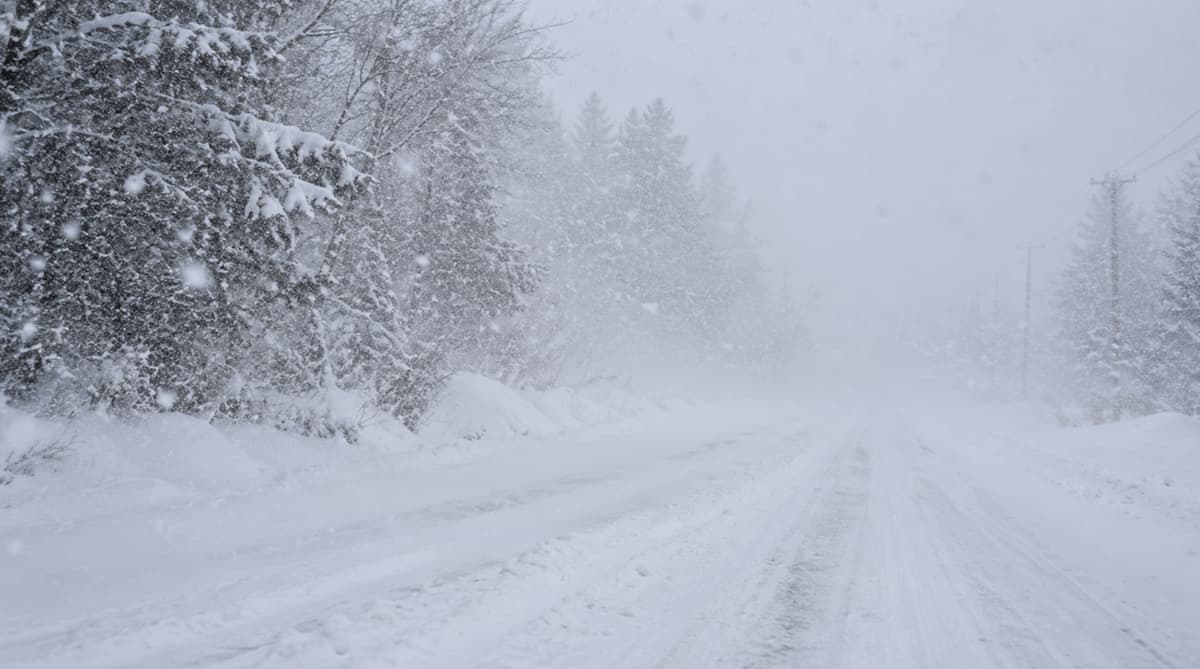
A blizzard warning is about wind and visibility. A winter storm warning is about how much snow, sleet, or ice piles up. Neither one is automatically worse. Think of a blizzard warning as a vent problem and a winter storm warning as a power problem.
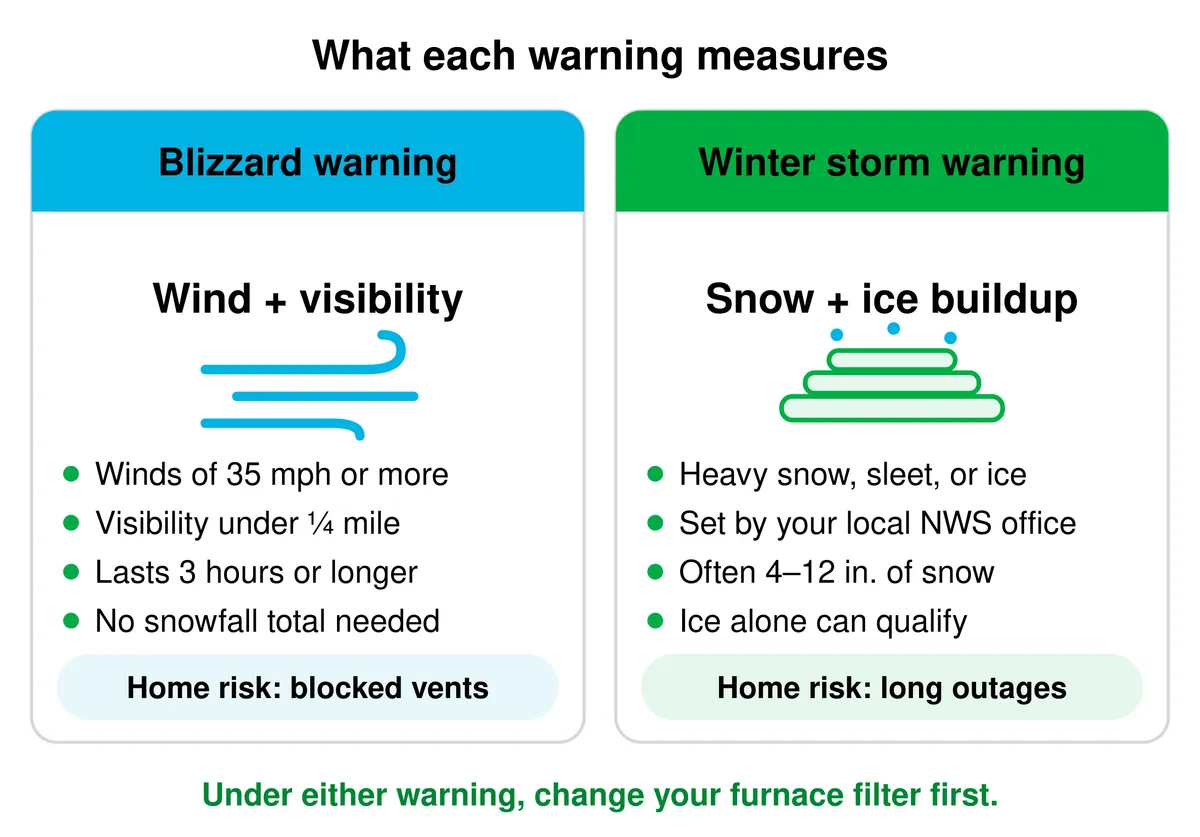
- Blizzard warning: 35 mph+ winds and visibility under ¼ mile for 3+ hours. Drifts can bury your furnace vents.
- Winter storm warning: heavy snow, sleet, or ice that meets your local threshold. Plan for long outages.
Either way, your furnace will run hard. Take the quick quiz below to find the right filter before the roads close.
Shop air filters Find my filter match
600+ sizes plus custom cuts. Most orders ship within 24 hours.
Match your filter before the storm
Answer a few quick questions and we'll match you to the right filter for your home.
TL;DR
A blizzard warning is about wind and visibility, while a winter storm warning is about how much snow, sleet, or ice piles up. The National Weather Service (NWS) issues a blizzard warning when winds of 35 mph or more and falling or blowing snow cut visibility below a quarter mile for at least three hours. Winter storm thresholds are set by each local NWS office. Either way, finish preparing your home now.
Key Takeaways
A blizzard warning is defined by wind and visibility: sustained winds or frequent gusts of 35 mph or more that keep visibility under ¼ mile for 3 hours or longer.
A winter storm warning is defined by accumulation: heavy snow, sleet, freezing rain, or a mix that meets local thresholds, often 4 to 12 inches of snow, depending on the region.
Both warnings raise risks inside the home: power outages, carbon monoxide (CO) from blocked vents or misused generators, and a furnace that barely shuts off.
What Is A Blizzard Warning?
A blizzard warning is a National Weather Service alert that blizzard conditions are expected or already happening. It requires sustained winds or frequent gusts of 35 mph or more, plus falling or blowing snow that often drops visibility below a quarter mile, for at least three hours (NWS Boston).
Notice what's missing from that list: snowfall totals. A blizzard warning is really about visibility, which is why blowing snow can trigger one even when nothing new is falling. When wind picks up snow already on the ground, the result is a whiteout under clear skies, something forecasters call a ground blizzard.
What a blizzard warning means for your home: wind finds every gap in your home, so the furnace runs long, steady cycles to keep up. A clean air filter keeps those cycles from overheating it.
What Is A Winter Storm Warning?
A winter storm warning means heavy snow, significant freezing rain, heavy sleet, or some combination is expected and will be dangerous. The NWS Philadelphia/Mount Holly office says these warnings usually go out 6 to 18 hours before the weather arrives (NWS Mount Holly).
How much snow it takes depends on where you live, because each NWS forecast office sets thresholds to fit what its communities can handle. Central Indiana's office, for example, uses 4 to 6 inches in a single event, depending on the county (NWS Indianapolis).
These warnings can also cover mixed hazards, such as snow with sleet or ice (NWS Boston). When ice dominates, many offices issue a separate ice storm warning, often at ¼ inch or more.
What a winter storm warning means for your home: heavy, wet snow and ice bring down trees and power lines, so outages tend to last longer.
Blizzard Warning Vs Winter Storm Warning: Side-By-Side
The difference comes down to what each warning measures. A blizzard warning tracks wind and visibility over time, while a winter storm warning tracks how much snow, sleet, or ice accumulates.
Sources: National Weather Service forecast office criteria (Boston, Burlington, Indianapolis, Mount Holly).
Which Is Worse: A Blizzard Warning Or A Winter Storm Warning?
Neither one is automatically worse. For anyone outdoors or on the road, a blizzard warning is the more dangerous alert, since near-zero visibility makes travel nearly impossible. In North Dakota, the Department of Emergency Services calls blizzards the state's deadliest winter events (NDDES).
For homes and the power grid, though, a winter storm warning can do more damage. Two feet of wet snow or half an inch of ice can keep the power off for days.
Our rule of thumb at Filterbuy: treat a blizzard warning as a vent problem and a winter storm warning as a power problem. Blizzard winds pile drifts over the intake and exhaust pipes on a home's side wall, while heavy snow and ice can knock out power, and the furnace with it, for days. Prepare for the warning you're under first, then cover the other.
"In my experience, winter storm warnings bring more no-heat calls than blizzards, because ice takes the power out for days and a furnace with a clogged filter often trips its limit switch the moment it restarts. During any winter warning, stick with the MERV rating your system is built for, usually MERV 8 to 11, and save a first-time jump to MERV 13 for a mild week when you can watch how it runs."
— David Clark, Licensed HVAC Technician
Blizzard Warning Vs Winter Storm Warning Vs Winter Weather Advisory
Each NWS alert level calls for a different response at home.
Blowing snow with winds under 35 mph earns an advisory, not a blizzard warning. Source: NWS Burlington.
How To Read Your Alert In 30 Seconds
NWS warning text is organized under WHAT, WHERE, WHEN, and IMPACTS. If the WHAT line leads with wind gusts and visibility, focus on vents and drifts. If it leads with snow and ice totals, plan for an outage and backup heat. The WHEN line tells you how long you have.
What To Do During A Blizzard Warning Or Winter Storm Warning
When either warning is issued, you have two jobs at home: keep the heat running safely, and keep carbon monoxide out while the house is sealed up. Filterbuy doesn't forecast weather, but we make air filters to order in our own U.S. plants, and a winter warning marks the week a home's heating system works hardest. For more prep, see how to protect your furnace during a cold snap.
"Most storm checklists stop at batteries and bottled water. I read a winter warning from the furnace closet, because the filter is the one part you can fix in two minutes before the roads close."
— Michelle Wan, Brand Manager and Air Quality Writer, Filterbuy
Before The Storm Hits: A 30-Minute HVAC Checklist
Replace your furnace air filter. A clogged filter chokes airflow, makes the furnace run longer, and can trip its high-limit safety switch. Order replacements when the watch goes out, not the warning. Filterbuy ships most orders within 24 hours, but deliveries stall once the roads close. Filterbuy's guide shows how to measure your air filter.
Measure and mark your exterior vents. Most high-efficiency furnaces vent through two PVC pipes on a side wall (see the 12-inch rule below).
Test your CO and smoke alarms. Keep a battery-operated CO alarm on every level and outside each sleeping area.
Hold the thermostat steady at 68°F or higher. Deep setbacks force long recovery cycles in extreme cold.
Stage generator gear outdoors, not in the garage, with outdoor-rated extension cords.
During The Storm: Keep Vents Clear And CO Out
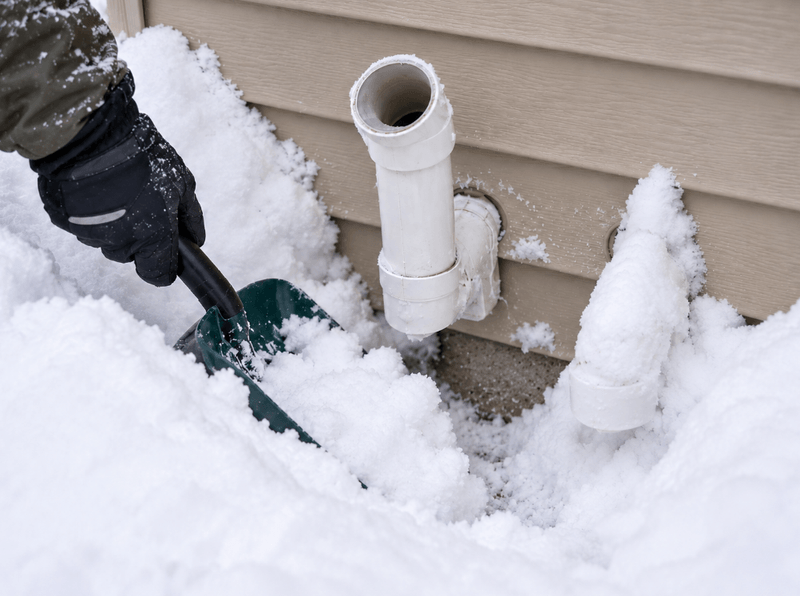
After heavy snow or drifting, clear the outside vents for your furnace, water heater, and dryer. The U.S. Consumer Product Safety Commission (CPSC) warns that blocked vents let carbon monoxide build up indoors (CPSC), and many high-efficiency furnaces will also shut down when the intake pipe is blocked, leaving you without heat.
The 12-inch rule: furnace manufacturers typically require these pipes to end at least 12 inches above the highest expected snow level (HVAC maker Trane's installer guide). Blizzard drifts can top that clearance even when snowfall totals look modest. Measure the gap from pipe to ground, and if it's close to the expected drift height, mark the spot with a tall stake. If the furnace won't restart after you've cleared them, call a technician.
If the power goes out, run a portable generator outside only, at least 20 feet from the house with the exhaust pointed away. According to the CPSC, opening doors or windows won't provide enough ventilation to prevent a lethal CO buildup. Never heat your home with a gas oven, grill, or camp stove.
After The Storm: Reset Your Indoor Air
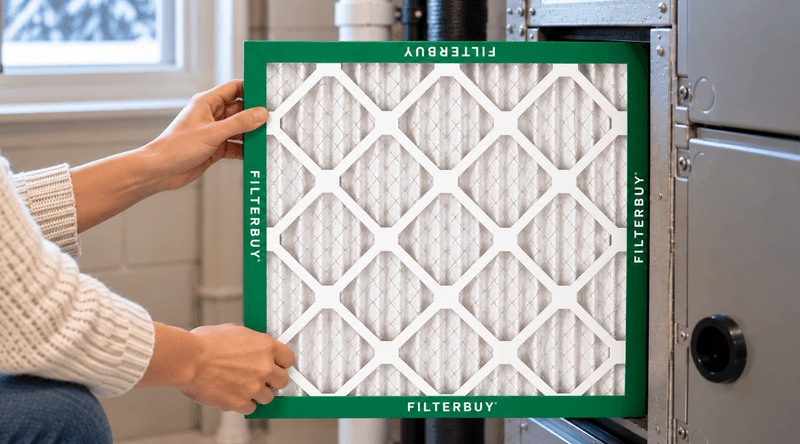
A blizzard or winter storm can keep a home shut tight for days, and cooking, candles, wood stoves, and pets all add particles to the stale air. Once the storm passes, pull the filter and hold it up to the light. If you can't see through it, it's done. A furnace that ran nonstop for days loads a filter faster than any calendar predicts, which is why Filterbuy recommends checking your furnace filter monthly all heating season. A Filterbuy air filter subscription puts a spare on your shelf before the next storm.
For more from the Filterbuy resource library, read about why indoor air quality gets worse in winter and how HVAC airflow affects carbon monoxide safety.
Supporting Statistics
More than 100,000 ER visits a year: Unintentional carbon monoxide poisoning also claims more than 400 American lives annually. (CDC)
Over half of product-related CO deaths happen November through February: Portable generators are linked to an estimated 765 of them since 2009. (CPSC)
About 7 hours without power: That was the average U.S. customer's total in 2021, versus about 2 hours a year without major events like snowstorms. (U.S. Energy Information Administration)
Frequently Asked Questions
Can a winter storm warning be upgraded to a blizzard warning?
Yes. If forecast winds rise to 35 mph or more with visibility below ¼ mile for three hours, the NWS can upgrade it to a blizzard warning.
What's the difference between a blizzard watch and a blizzard warning?
A blizzard watch means blizzard conditions are possible, often a day or two out. A blizzard warning means they're expected or already happening, so it's time to finish prep and stay home.
How long does a blizzard warning last?
It stays in effect for as long as blizzard conditions are expected, which must be at least three hours. The WHEN line of the alert lists the start and end times.
What should I do if my carbon monoxide alarm goes off during a storm?
Get everyone outside to fresh air right away and call 911. Don't go back in until responders say it's safe, and don't restart the furnace or generator until the source is found.
Should I change my air filter before a blizzard?
Yes, if it looks gray or you can't see light through it. A clean filter keeps the furnace from overheating and short-cycling during long run times, and supplies or service may be out of reach once the roads close. Since Filterbuy stocks 600+ sizes plus custom cuts, you can match whatever filter you pull out.
Glossary
National Weather Service (NWS): The federal weather agency, part of NOAA, that issues watches, warnings, and advisories.
Blizzard warning: An NWS alert for 35 mph+ winds and snow cutting visibility below ¼ mile for 3+ hours.
Winter storm warning: An NWS alert for heavy snow, sleet, freezing rain, or a mix that meets local thresholds.
Winter weather advisory: An NWS alert for disruptive winter weather below warning criteria.
Ground blizzard: Blizzard conditions from wind-blown snow already on the ground.
Ice storm warning: An NWS alert for damaging ice accumulation from freezing rain, often ¼ inch or more.
Carbon monoxide (CO): A colorless, odorless gas from burning fuel that can be deadly indoors.
High-efficiency furnace vents: The PVC pipes a condensing furnace uses to draw in outside air and vent exhaust through a side wall.