Quick answer: Protecting your home during cold and flu season means combining filtration, ventilation, humidity control, and targeted cleaning to cut down on shared exposure to respiratory particles. No single step removes the risk, but together, a fresh HVAC air filter, better airflow, indoor humidity between 30% and 50%, and regular cleaning of high-touch surfaces create a healthier indoor environment for your household.
Key takeaways:
- ✓Filtration: A high-efficiency HVAC filter, ideally MERV 13 if your system supports it, captures more of the fine particles circulating in your home.
- ✓Ventilation: Opening windows briefly and running exhaust fans brings in fresh air and dilutes what's floating around indoors.
- ✓Humidity: Keeping indoor humidity between 30% and 50% supports comfort and helps prevent mold and dust mites.
- ✓Cleaning: Wiping down doorknobs, light switches, and remotes regularly lowers the chance of germs spreading by touch.
- ✓Layering: These steps work best together. No single one is enough on its own.
Your home can look spotless and still be working against you. You can vacuum daily, wipe the counters, and stay on top of laundry, and still have a household that passes colds and flu back and forth all winter. A clean-looking home and healthy indoor air aren't the same thing.
This guide walks through a practical, room-by-room approach to indoor air quality and flu season cleaning, so you can build habits that fit your household instead of chasing a "germ-free" home that doesn't exist.
What Does Protecting Your Home During Cold and Flu Season Actually Mean?
Colds, flu, and RSV spread mainly through respiratory droplets and smaller airborne particles when people are close to each other, and sometimes through hands that touch contaminated surfaces. In fall and winter, your family spends more time indoors with the windows shut and the heat running, which gives those particles more chances to build up and circulate.
Protecting your home means tackling all three ways illness spreads indoors: through the air, through surfaces, and through close contact. Filtration and ventilation lower the amount of airborne particles. Cleaning cuts down on surface spread. Handwashing, keeping sick family members apart, and staying current on flu vaccines handle close contact. Humidity control mainly supports comfort. None of these steps can promise that no one gets sick, but together they lower your household's everyday exposure.
It helps to know what each measure can realistically do, and where it falls short.
| Home Protection Measure | What It Helps With | What It Can't Do |
|---|
| HVAC air filtration | ✓Captures airborne particles, including some that carry viruses, as air moves through your system | ✗Can't clean air that doesn't pass through your HVAC system, or air when the system isn't running |
|---|
| Ventilation (fresh air) | ✓Dilutes indoor air by bringing in outdoor air and lowering the concentration of indoor particles | ✗Can't remove germs that have already landed on surfaces |
|---|
| Humidity control (30% to 50%) | ✓Supports respiratory comfort and helps prevent mold and dust mites | ✗Can't prevent flu from spreading on its own |
|---|
| Surface cleaning and disinfecting | ✓Reduces germs on frequently touched objects | ✗Doesn't address airborne spread |
|---|
| Portable HEPA air purifier | ✓Captures extra airborne particles in a single room, rated by its clean air delivery rate (CADR) | ✗Can't replace whole-home filtration or fresh air |
|---|
Each measure plays its own role. The strongest approach layers them together instead of relying on just one.
8 Ways to Protect Your Home During Cold and Flu Season
1
Check Your HVAC Air Filter Before the Season Gets Busy
Your HVAC system moves air through every connected room in your home, and your air filter decides how much it catches along the way. The EPA recommends a MERV 13 filter, or the highest rating your system can handle, to capture more airborne particles, including those linked to respiratory viruses.
Before the season picks up, check your filter and replace it if it's dirty or overdue. Filterbuy offers pleated filters in MERV 8, MERV 11, and MERV 13, so you can choose the highest rating your system supports. Not every system can handle MERV 13, since denser filters can restrict airflow, so check your manufacturer's specifications or ask an HVAC technician first.
2
Improve Ventilation in the Rooms You Use Most
Filtration works best alongside fresh air. Bringing in outdoor air dilutes whatever is circulating inside, including respiratory particles. In cold weather, that can feel like a tradeoff between comfort and air quality, but you don't need to throw every window open to see a benefit.
Short bursts work well. Open windows for 10 to 15 minutes a day in the rooms you use most, or open windows on opposite sides of the house for a few minutes to create a quick cross-breeze. Running bathroom and kitchen exhaust fans also pushes stale air outside. Your HVAC fan, on the other hand, recirculates the air already inside, so it helps with filtration but doesn't bring in fresh air.
3
Keep Indoor Humidity in a Comfortable Range
Humidity affects more than comfort. Very dry air can irritate your nose and throat and make cold symptoms feel worse, while too much moisture encourages mold and dust mites. The EPA recommends keeping indoor relative humidity between 30% and 50%.
Some lab research suggests flu viruses survive longer in very dry air, but humidity control hasn't been proven to prevent flu at home. Think of it as a comfort and air quality measure first. Use a hygrometer to check your levels, adjust with a humidifier or dehumidifier as needed, and clean your humidifier regularly so it doesn't spread mold or bacteria.
4
Focus Your Cleaning on High-Touch Surfaces
Flu viruses can survive on hard surfaces for up to 48 hours, and high-touch spots like doorknobs, light switches, remotes, faucet handles, and phones are where touch-based spread is most likely. Instead of overhauling your whole cleaning routine, give these spots extra attention during flu season.
A simple flu season routine includes wiping down shared surfaces daily, washing hands often with soap and water for at least 20 seconds, and disinfecting shared electronics like tablets and game controllers. Just remember that cleaning surfaces does nothing for germs in the air.
5
Make Bedrooms Comfortable and Well Ventilated
Your family spends roughly a third of each day in bedrooms, often with the doors closed and little airflow. When several people share a stuffy bedroom, the air they breathe becomes more concentrated.
Open a window briefly during the day when the weather allows, and keep healthy family members' bedroom doors open when you can so air can circulate through the house. If someone is sick, keep their door closed instead to limit spread, and consider a portable HEPA air purifier in their room.
6
Keep Bathrooms and Kitchens Well Vented
Bathrooms and kitchens produce a lot of moisture, which can push your indoor humidity too high if it isn't vented properly. Run exhaust fans during and for about 20 minutes after showers and cooking, and make sure the vents aren't blocked or caked with dust. These rooms also have plenty of hard surfaces that are easy to wipe down, so they're good candidates for frequent cleaning.
7
Set Up a Recovery Room Before Someone Gets Sick
It's much easier to set up a recovery space ahead of time than to scramble once someone is already running a fever. Pick a room with a door that closes and decent ventilation where a sick family member can rest away from everyone else. Ideally, it has its own bathroom or one the rest of the family can avoid.
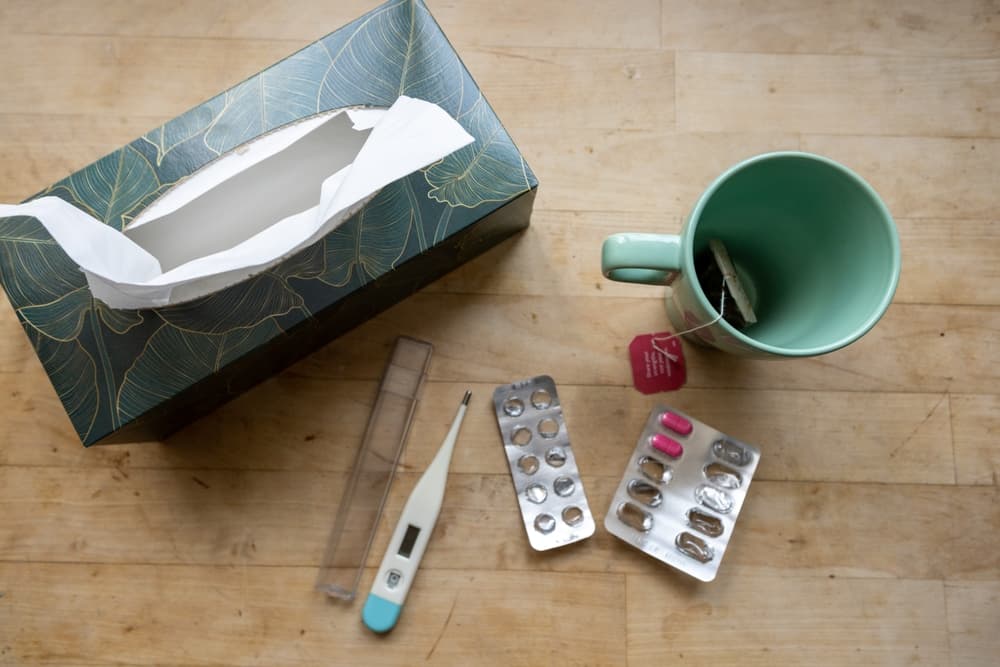
Stock it in advance with tissues, a thermometer, a lined trash can, water or electrolyte drinks, and any medications you usually keep on hand. If you have a portable air purifier, this is the room to put it in.
8
Cut Down on Indoor Air Irritants
Smoke, strong fragrances, and other airborne irritants can aggravate a cough or congestion and make being sick feel worse. During cold and flu season, go easy on scented candles, aerosol sprays, and plug-in air fresheners, especially in rooms where someone is already under the weather. Cutting back won't prevent illness, but it makes your indoor air easier to breathe while your household recovers.
Your Room-by-Room Cold and Flu Season Plan
| Room | Priority Actions |
|---|
| Living room | Vacuum and dust regularly, ventilate briefly when the weather allows, and wipe down remotes and shared surfaces |
|---|
| Bedrooms | Keep healthy family members' doors open for airflow, consider a HEPA air purifier, and wash a sick person's bedding and towels often |
|---|
| Kitchen | Run the exhaust fan while cooking, disinfect counters and handles daily, and keep cooking steam from pushing humidity too high |
|---|
| Bathrooms | Run the exhaust fan during and after showers, disinfect faucet handles, toilet handles, and light switches, and make sure vents aren't blocked |
|---|
| Home office | Ventilate now and then, wipe down keyboards and phones, and keep tissues and hand sanitizer nearby |
|---|
| Recovery room | Prioritize fresh air and filtration, keep the door closed, limit foot traffic, and stock supplies ahead of time |
|---|
What Should You Change When Someone in Your Home Gets Sick?
Add Filtration Where They're Resting
Once someone is sick, add extra filtration in the room where they spend most of their time. A portable HEPA air purifier sized for the room can capture more airborne particles there. As a rule of thumb, choose one with a smoke CADR of at least two-thirds of the room's square footage, so a 150-square-foot bedroom needs a CADR of about 100 or higher. A purifier only cleans the air in its own room, so it works alongside your HVAC filter rather than replacing it.
Step Up Cleaning and Shared-Space Routines
Clean high-touch surfaces in shared spaces more often, especially in bathrooms and kitchens. If you can, give the sick person their own towels, cups, dishes, and utensils until they recover, and have everyone wash their hands often. Cleaning alone won't stop a respiratory illness from spreading, but it's an important layer.
Support Recovery While Limiting Exposure
Encourage rest and fluids, and keep the sick person apart from others when possible, especially in the first 3 to 4 days, when people with the flu are usually most contagious. Keep fresh air moving in shared areas, and limit back-and-forth between the recovery room and common spaces. If a family member is at higher risk of complications, such as a young child, an older adult, a pregnant woman, or someone with a chronic health condition, contact their doctor early.
Common Cold and Flu Season Mistakes to Avoid
| Mistake | Better Approach |
|---|
| ✗Relying only on surface cleaning | ✓Pair cleaning with filtration and fresh air |
| ✗Keeping the house sealed shut all winter | ✓Ventilate briefly and strategically, even in cold weather |
| ✗Forgetting to change your HVAC filter | ✓Check it monthly and replace it per the manufacturer's guidance |
| ✗Using an ozone-generating air cleaner | ✓Choose a HEPA purifier instead, since ozone irritates the lungs |
| ✗Assuming humidity alone prevents flu | ✓Treat humidity as one supporting factor, not a cure |
| ✗Waiting until someone is sick to prepare | ✓Set up a recovery room and stock supplies before flu season |
How Often Should You Check Your Home During Cold and Flu Season?
| How Often | What to Do |
|---|
| Daily | Wipe down high-touch surfaces and ventilate briefly if the weather allows |
|---|
| Weekly | Wash bedding and towels, and deep clean kitchen and bathroom surfaces |
|---|
| Monthly | Check your HVAC filter and replace it if it's dirty |
|---|
| As needed | Adjust humidity based on your hygrometer readings |
|---|
| When someone is sick | Run an air purifier in their room, keep their dishes and linens separate, and increase ventilation in their space |
|---|
A Healthier Home Starts With Better Everyday Habits
Protecting your home during cold and flu season isn't about creating a sterile environment. It's about layering a few manageable habits into a routine your household can keep up with all winter. Start with the easy wins: check your HVAC filter, open a window for a few minutes each day, and keep an eye on your indoor humidity. From there, build a room-by-room routine that fits how your family actually lives.
If your filter is overdue for a change, now's a good time to swap it out. Filterbuy's pleated MERV 8, MERV 11, and MERV 13 filters give you options for whatever your system can support, making it easy to take one of the simplest steps toward a healthier home this season.
Shop Pleated Air Filters
Frequently Asked Questions
How can I protect my home from colds and flu?
Use a good HVAC air filter, ventilate regularly, keep indoor humidity between 30% and 50%, and clean high-touch surfaces often. Pair those home habits with handwashing and annual flu vaccines, since layering several steps works better than relying on just one.
Can HVAC filters help reduce flu particles in the air?
Yes, to a degree. A MERV 13 filter, or the highest rating your system can handle, captures more airborne particles as air moves through your HVAC system. But filtration alone can't eliminate exposure, especially when people are in close contact.
Should I open my windows during cold and flu season?
Yes, briefly. Opening windows for 10 to 15 minutes a day helps dilute indoor air and lowers the concentration of shared particles, with only a small effect on your heating bill.
What is the ideal indoor humidity during flu season?
The EPA recommends keeping indoor relative humidity between 30% and 50%. This range supports comfort and helps prevent mold and dust mites, though it isn't a proven way to stop the flu from spreading.
Is cleaning surfaces enough to stop the flu from spreading?
No. Cleaning cuts down on spread by touch, but it does nothing for germs in the air. Pair it with filtration, fresh air, and handwashing for better protection.
Is an air purifier worth using when someone at home has the flu?
Yes. A portable HEPA air purifier sized for the room adds an extra layer of filtration where the sick person is resting, on top of your home's HVAC filtration. Just avoid models that produce ozone.