
Someone at Home Has the Flu? How to Set Up Your Home While They Recover
November 17, 2026
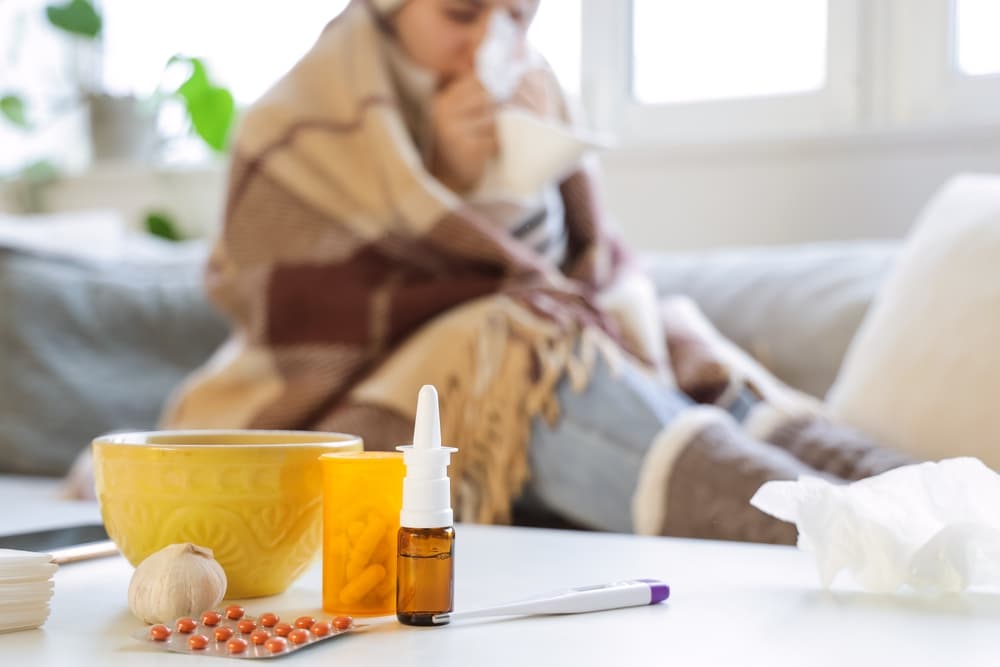
When someone in your home has the flu, the goal is to keep the virus from traveling through shared air and shared surfaces while they rest.
Give the sick person their own room with the door closed, pick one caregiver, bring in outdoor air when you can, run exhaust fans, use a MERV 13 filter if your HVAC system can handle one, and wipe down high-touch surfaces every day.
Call a doctor early for anyone at higher risk of complications, since flu antivirals work best when started within two days of symptoms. None of this guarantees that nobody else gets sick, but these steps lower everyone's exposure and give you a plan for the week ahead.
What to Do First When Someone Gets the Flu
You don't need everything figured out in the first hour. Start with these six steps, then fill in the details below.
Choose a recovery space. Pick a room with a door where the sick person can rest away from everyone else.
Gather supplies. Put tissues, a lidded trash can, water, a thermometer, and any medications within reach before they settle in.
Plan meals and fluids. Bring food and drinks to the room so the sick person isn't walking through shared spaces several times a day.
Check ventilation and filtration. Look at windows, exhaust fans, and the condition of your HVAC filter.
Choose one caregiver. Fewer people in close contact means fewer chances for the virus to spread. If you can, pick someone who isn't at higher risk of flu complications.
Call a healthcare provider if needed. This matters most for anyone in a higher-risk group, covered later in this guide.
Set Up a Separate Flu Recovery Room
Choose a Room With a Door
A spare bedroom with a door that closes is the easiest setup. A closed door limits how much air moves between the sick room and the rest of the house, and the CDC advises people with flu to stay home and avoid contact with others while they're sick. A dedicated room makes that realistic for several days instead of a few hours.
Timing matters, too. People with flu are most contagious during the first three days of illness, so the early stretch is when separation does the most good.
Stock the Room Before They Settle In
Every item already in the room is one less trip through the door, for the patient and the caregiver.
What If There's No Spare Bedroom?
Apartments, smaller houses, and multigenerational homes often don't have a room to spare. These workarounds still help:
Create a recovery zone.
Set the sick person up at one end of a larger room and keep everyone else at the far end as much as the layout allows.
Stagger shared spaces.
Have the sick person use the bathroom and kitchen at different times than the rest of the household.
Air out the shared bathroom.
Run the exhaust fan while the sick person uses the bathroom and keep it going afterward. The EPA suggests running bathroom fans continuously when possible. Wipe the faucet and flush handle after each visit.
A curtain, sheet, or room divider gives the sick person some privacy, but it won't stop airborne respiratory particles. Treat it as a visual screen, not a barrier.
Improve Airflow Without Sending Germs Into Other Rooms
Bringing outdoor air inside keeps virus particles from building up indoors, according to the EPA. The trick is to dilute or remove the air from the recovery room, not push it down the hallway toward everyone else.
Three terms come up a lot here, and they aren't interchangeable:
Ventilation
swaps indoor air for outdoor air, which dilutes whatever is floating around inside.
Recirculation
moves indoor air from one spot to another without removing or diluting anything.
Filtration
pulls particles out of the air as it passes through a filter, like your HVAC filter or a portable air cleaner.
A good plan uses ventilation and filtration together and keeps recirculation pointed away from people.
Open a Window When Weather and Outdoor Air Allow
If it's mild outside and air quality is good, crack a window in the recovery room. Even with a single window, the EPA notes that opening both the top and bottom sash a little can improve airflow. Skip this when outdoor air quality is poor or it's too cold to keep the room comfortable. That's when filtration has to carry more of the load.
Run Bathroom and Kitchen Exhaust Fans
Bathroom fans and range hoods that vent outdoors send air out of the house instead of moving it around inside. Run the bathroom fan whenever the sick person uses a shared bathroom, and leave it on for a while afterward.
Keep Fans From Blowing Air Toward Others
A box fan blowing out of the sick room door just moves the problem into the hallway. The EPA recommends using fans in a way that reduces the direct flow of air between people. If you use a portable fan in the recovery room, aim it out an open window rather than toward the door.
Check Your HVAC Filter and Fan Setting
Look at the Filter You Already Have
Before buying anything or changing settings, pull out your current filter. Note how dirty it looks, when it was last changed, and its MERV rating. That gives you a baseline for deciding what, if anything, needs to change.
Use the Highest MERV Rating Your System Can Handle
The EPA recommends a furnace filter rated MERV 13, or as high as your system will accommodate, to help limit virus particles in indoor air. A MERV 13 filter captures more fine particles than the MERV 8 filters many homes use by default, including particles in the size range of respiratory droplets.
Not every system is built for one, though. Higher-MERV filters are denser, and in a system that isn't designed for them they can restrict airflow, strain the blower motor, and lower efficiency. Check your system's specifications or ask an HVAC professional before you upgrade. If MERV 13 isn't an option, MERV 11 is a reasonable step up from a standard filter.
Should You Switch the Furnace Fan From AUTO to ON?
Your HVAC system only filters air while the blower is running. The fan setting on your thermostat decides how often that happens.
The EPA specifically recommends setting the fan to ON to keep air moving through the filter while you're trying to limit virus particles. The trade-offs are more wear on the blower motor and a bit more electricity. Many households switch to ON while someone is sick, then go back to AUTO once things return to normal. If your thermostat has a CIRCULATE setting, it's a reasonable compromise.
Should You Put an Air Purifier in the Sick Room?
A portable air cleaner with a true HEPA filter can lower airborne particles in the room where it sits, which makes it a good match for a recovery room. Size it by its Clean Air Delivery Rate (CADR). The EPA's sizing chart works out to a CADR of about two-thirds of the room's square footage for 8-foot ceilings, so a 150-square-foot bedroom needs a CADR of roughly 100 or more. Rooms with higher ceilings need more.
Placement counts, too. Leave space around the unit so air can flow in and out freely, away from walls and furniture.
Skip any device that makes ozone. The EPA warns that ozone generators sold as air cleaners intentionally produce ozone, which can irritate the lungs. Be wary of marketing terms like "activated oxygen" or "super oxygen." The California Air Resources Board keeps a list of air cleaners certified to meet its ozone emission limit, which is a handy check wherever you live.
Here's how the two filtration options compare:
Using both, one for the whole house and one aimed at the recovery room, gives you two layers instead of one.
Keep Humidity Comfortable Without Creating New Problems
The EPA recommends keeping indoor humidity below 60%, and ideally between 30% and 50%. That range isn't a flu defense on its own. Very dry air can feel rough on a congested, coughing patient, though, and air that's too humid encourages mold.
A hygrometer from any hardware store tells you your real indoor humidity, so you're not guessing. If you run a humidifier in the recovery room, clean it as the manufacturer directs and refill it with fresh water daily, since standing water can grow bacteria and mold. Condensation on windows or walls is a sign the room is too humid.
Keep Shared Spaces Clean and Reduce Close Contact
Wipe High-Touch Surfaces Every Day
Doorknobs, light switches, remotes, faucet handles, and shared counters deserve a daily wipe while someone is sick. You don't need an elaborate routine, just steady attention to the spots everyone touches. Follow the label directions on your cleaning products, and never mix cleaners, since some combinations release dangerous fumes.
Don't Share Personal Items
Give the sick person their own cup, utensils, and towels for the length of the illness. It's an easy habit that closes off one more route for germs.
Handle Tissues, Laundry, and Dishes the Normal Way
A lined trash can in the recovery room makes tissue disposal simple. You don't need to wash the sick person's dishes or laundry separately. Health officials say these items just shouldn't be shared until they've been washed thoroughly. Use the dishwasher or hot, soapy water for dishes. Wash bedding and towels with regular detergent and dry them completely, on a hot setting if the fabric allows. Wash your hands after handling dirty laundry or used tissues.
Help the Sick Person Recover While Protecting Everyone Else
Rest and fluids are still the core of flu recovery. Beyond that, watch how symptoms change and know when to bring in a professional.
If the sick person is at higher risk of complications, call their healthcare provider early. Prescription flu antivirals work best when started within two days of getting sick, though starting later can still help higher-risk patients. Antibiotics won't help, because flu is caused by a virus, and antibiotics only work on bacteria.
Get medical care right away for any of these emergency warning signs:
In adults
trouble breathing or shortness of breath, ongoing pain or pressure in the chest or belly, ongoing dizziness or confusion, seizures, not urinating, severe muscle pain, or severe weakness
In children
fast or labored breathing, bluish lips or face, ribs pulling in with each breath, chest pain, signs of dehydration, or a fever above 104°F that medicine doesn't bring down; any fever in a baby younger than 12 weeks
In anyone
fever or cough that gets better, then comes back or gets worse
If the sick person has to leave the recovery room, a well-fitting mask helps cut down on the respiratory droplets they spread. For everyone else in the house, an annual flu vaccine adds another layer of protection, and it's not too late to get one once flu season has started.
Who Needs Extra Protection at Home?
According to the CDC, these groups face a higher risk of serious flu complications:
- !Adults 65 and older
- !Children younger than 5, especially those under 2
- !Pregnant people
- !People of any age with chronic conditions such as asthma, diabetes, or heart disease
- !People with a BMI of 40 or higher
- !People with weakened immune systems
If anyone in your home is on this list, keep them out of the caregiver role if possible, limit their contact with the sick person, and call a doctor sooner if they start showing symptoms.
When Can Your Household Return to Normal?
The CDC no longer uses a fixed number of days. Under its current guidance, a person can go back to normal activities once, for at least 24 hours, their symptoms are improving overall and they haven't had a fever without using fever-reducing medicine. Not everyone with flu runs a fever, so steady improvement in symptoms is the main signal to watch.
The CDC then recommends extra precautions for five more days, because a person can still spread the virus during that window. Those precautions include cleaner air, good hygiene, a well-fitting mask, and some distance from others.
Before you go fully back to your routine:
- ✓Keep running exhaust fans and opening windows when you can for a few more days.
- ✓Wash the bedding and towels from the recovery room with your regular laundry.
- ✓If you switched the furnace fan to ON, decide whether to keep it there or return it to AUTO.
- ✓Check the HVAC filter's condition. There's no need to replace it just because someone was sick. Go by how dirty it looks, how long it's been in, and the manufacturer's replacement interval.
A Simple Daily Checklist While Someone Has the Flu
A Calmer Recovery Starts With a Few Changes at Home
A closed door, fresh air, a filter matched to your system, and a daily wipe-down won't stop the flu at one person's bedroom door every time. Together, though, they make the house easier to recover in and lower the exposure for everyone else. Add early medical advice for anyone at higher risk, and your household will be in good shape to get back to normal.
Keep Your Home's Air Filtration Ready With Filterbuy
A well-fitting HVAC filter that suits your system is one part of cleaner indoor air, not a cure or a guarantee against illness. If it's time to check your filter's size, MERV rating, or replacement schedule, shop Filterbuy's pleated air filters at Filterbuy.com, made to fit your system properly.
Shop Pleated Air FiltersFrequently Asked Questions
Should I keep the bedroom door closed if someone has the flu?
Yes. A closed door limits how much air, and the respiratory droplets in it, moves between the recovery room and the rest of the house. Pair it with ventilation inside the room, like a cracked window when the weather allows.
Can an HVAC filter remove flu viruses from the air?
It can help. The EPA recommends MERV 13, or the highest rating your system can handle, because higher-efficiency filters trap more fine particles, including those in the size range of respiratory droplets. A filter only cleans air that actually passes through the system, so it works alongside ventilation, distance, and hand hygiene, not in place of them.
Is it better to open windows or run an air purifier?
They do different jobs. An open window brings in outdoor air and dilutes particles across the space, while a HEPA air purifier cleans the air in the one room where it sits. When you can, use both.
Should I run the furnace fan continuously when someone is sick?
The EPA recommends it. Setting the fan to ON keeps air moving through your HVAC filter around the clock instead of only during heating or cooling cycles. Expect a little more blower wear and energy use while it runs.
Should I change my HVAC filter after someone has the flu?
Not automatically. Base the decision on how dirty the filter looks, how long it's been in service, and the manufacturer's recommended replacement interval.
How often should I clean the house when someone has the flu?
Wipe shared high-touch surfaces, like doorknobs, light switches, remotes, and faucet handles, at least once a day while someone is sick. Follow product labels and never mix cleaning chemicals.
Can the flu spread through central air conditioning?
Central systems move air between connected rooms, which is why filter efficiency and fan settings matter. A well-maintained, higher-efficiency filter can reduce the particles moving through the system, but ventilation and distance still do much of the work.
How long should someone with the flu stay away from family members?
Under current CDC guidance, until their symptoms have been improving for at least 24 hours and they've had no fever for 24 hours without fever-reducing medicine. After that, they should keep taking precautions, like masking and good ventilation, for five more days.