
What’s the Ideal Indoor Humidity in Winter? (Chart by Outdoor Temperature)
October 28, 2026
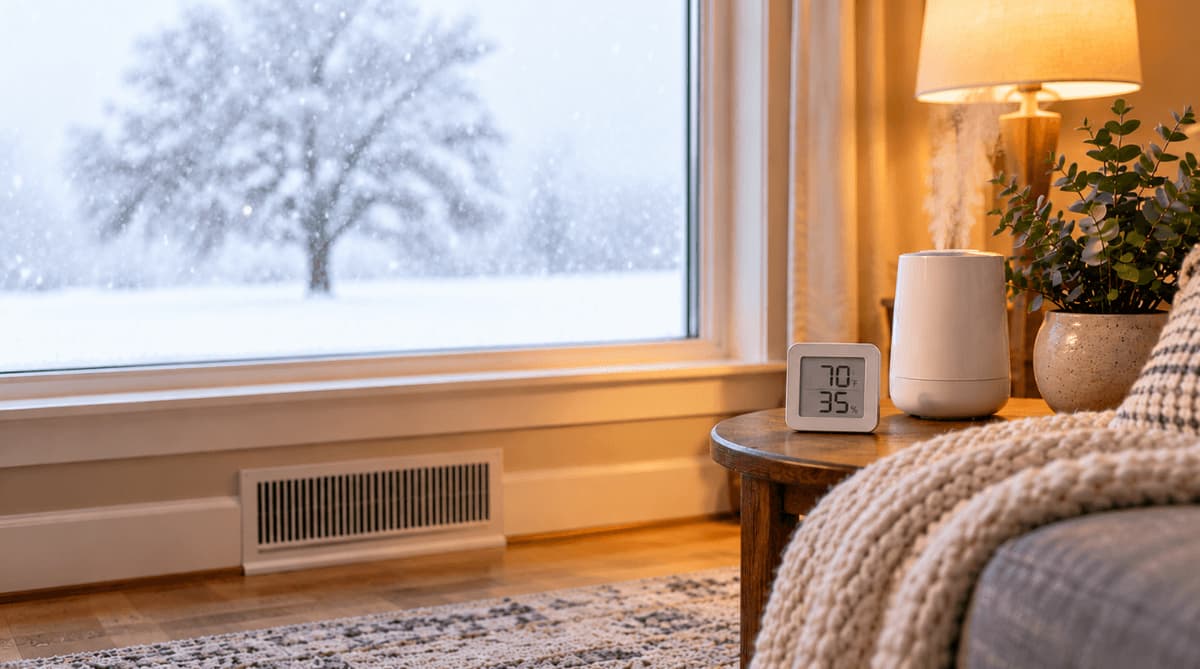
Aim for 30–40% humidity indoors this winter. Your furnace adds heat but no moisture, so many homes drift down to 15–25% from December through February. The colder it gets outside, the lower your target should be, as the chart below shows. Your air filter won’t change humidity, but your furnace runs longer in winter, so take the quick quiz to find the right filter for your home.
Colder outside?
Lower your indoor humidity.
Max indoor humidity for a home heated to 70°F
| Outdoor temp | Max indoor humidity |
|---|---|
| 20 to 40°F |
40%
|
| 10 to 20°F |
35%
|
| 0 to 10°F |
30%
|
| −10 to 0°F |
25%
|
| −20 to −10°F |
20%
|
| Below −20°F |
15%
|
Dial down about 5 points per 10°F colder.
Foggy or frosty windows? It’s too high.
Source: FGIA, indoor temperature 70°F
Find Your Winter Filter Match
Answer a few quick questions and we’ll match you to the right filter for your home.
TL;DR
For most U.S. homes, the ideal indoor humidity in winter is 30–40% relative humidity. Stay near the top of that range on mild days, then ease down toward 25–30% once it drops below 10°F outside so moisture doesn’t condense on windows or inside walls. Fog or frost on the glass is your sign that humidity is too high for the weather.
Key Takeaways
The EPA recommends keeping indoor humidity below 60%, ideally between 30% and 50%. In winter, the lower half of that range is safer.
As the temperature outside falls, your indoor target should fall with it. At 0–10°F, window manufacturers recommend no more than 30% with the thermostat at 70°F.
Dust mites struggle to survive below 50% humidity, so a winter target of 30–40% helps allergy sufferers too.
You can’t know your real number without a digital hygrometer, which the EPA’s mold and moisture guide says costs about $10–$50 at hardware stores. Check the bedroom and the room with the most windows.
Your air filter won’t change humidity, but your furnace works harder in winter, so check the filter monthly and replace it once it looks gray.
What Is the Ideal Indoor Humidity in Winter?
The ideal indoor humidity in winter is 30–40% relative humidity (RH). That falls within the 30–50% range the U.S. Environmental Protection Agency and Mayo Clinic recommend year-round, though it deliberately leans low. Cold glass and exterior walls turn extra moisture into condensation, so winter has a lower ceiling than summer.
Cold outdoor air holds very little water, and heating it sends relative humidity plunging. Humidifier maker Aprilaire’s published conversion chart shows how far it can fall: 10°F outdoor air at 70% RH drops to about 6% RH once it’s warmed to 70°F inside. Because your furnace or heat pump adds heat but no moisture, many homes can sit at 15–25% from December through February. That dry, sealed-up air is also one reason indoor air quality gets worse in winter.
Ideal Indoor Humidity in Winter by Outdoor Temperature
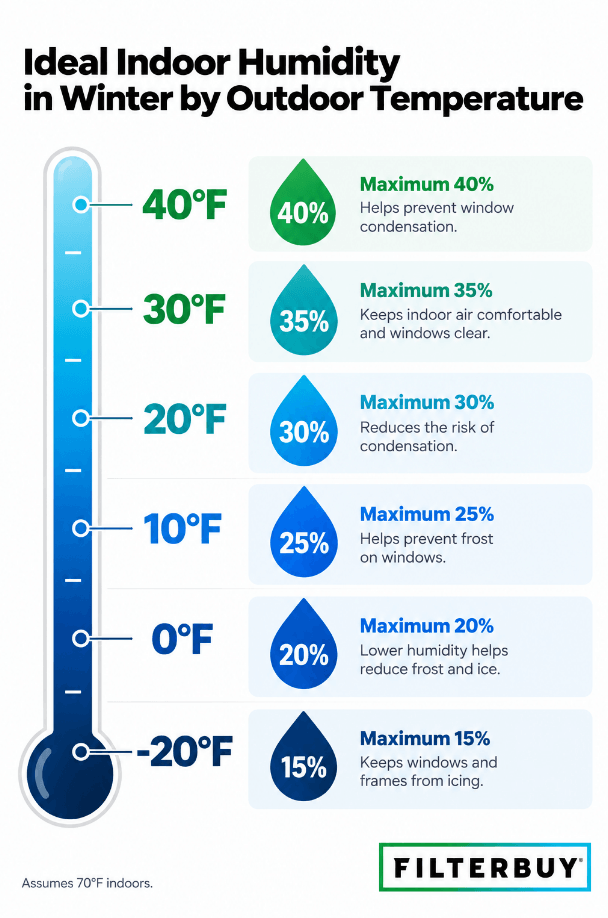
Your indoor target depends on the weather, because window glass and wall surfaces get colder as the outdoor temperature drops. The chart below lists the maximum indoor humidity levels published by the Fenestration and Glazing Industry Alliance (FGIA) for a home heated to 70°F.
| Outdoor Temperature (°F) | Outdoor Temperature (°C) | Maximum Indoor Humidity |
|---|---|---|
| 20 to 40°F | −7 to 4°C | 40% |
| 10 to 20°F | −12 to −7°C | 35% |
| 0 to 10°F | −18 to −12°C | 30% |
| −10 to 0°F | −23 to −18°C | 25% |
| −20 to −10°F | −29 to −23°C | 20% |
| Below −20°F | Below −29°C | 15% |
Source: FGIA, assuming an indoor temperature of 70°F. Treat each figure as a ceiling, not a target, since showers, cooking, and overnight breathing add moisture on top of your setting.
Filterbuy’s dial-down rule turns the chart into one easy habit. Start at 40% when it’s above 20°F outside, and for every 10°F the temperature drops below that, lower your target by about 5 points. From there, let your windows referee. Clear glass in the morning means you’re in range, while fog or frost means dial down again.
Is 30–40% Humidity Healthy in Winter?
Yes. For most people, 30–40% is a healthy winter range and far more comfortable than the 15–25% many heated homes reach. Mayo Clinic notes that dry air can parch skin and irritate your sinuses and eyes.
You may also see 40–60% recommended. That range traces back to a widely cited 1986 review by Arundel and colleagues in Environmental Health Perspectives, which found the fewest indirect health effects in mid-range humidity. In cold climates, though, 40% or higher can soak windows and wall cavities on the coldest nights.
Filterbuy’s take is that health research and building science aren’t really at odds. Run as close to 40% as your windows allow, then step down as the temperature drops.
“Most people treat humidity as a set-it-and-forget-it number. In winter it’s a moving target. Your windows tell you when you’ve gone too far, and your skin tells you when you haven’t gone far enough,” says Michelle Wan, Brand Manager at Filterbuy.
Ideal Indoor Humidity in Winter for Sleeping
The best bedroom humidity for winter sleep is 30–40%, but watch what happens when you turn the heat down at night. Relative humidity climbs as air cools, even with no moisture added. By our math, air that reads 35% at 72°F will read about 45% once the bedroom cools to 65°F, which is why bedroom windows often fog first on setback nights. Set your humidifier with that nighttime temperature in mind, and keep a hygrometer on the nightstand.
Ideal Indoor Humidity in Winter for Allergies
For allergy and asthma households, the ideal indoor humidity in winter is 30–40%, and never above 50%. House dust mites absorb water through their bodies, and University of Kentucky entomology research shows they cannot survive well below 50% humidity. Here, humidity and filtration work as a team. Keeping humidity in check holds mite populations down, while a MERV 11 air filter, the rating Filterbuy suggests for most allergy households, captures mite debris and pet dander as air cycles through your HVAC system.
Ideal Indoor Humidity in Winter for Babies
The ideal indoor humidity in winter for babies is 30–40%, the low end of the 30–50% range recommended for adults. If the nursery needs moisture, use a cool-mist humidifier. Mayo Clinic’s humidifier guide advises against steam vaporizers around children because spilled hot water can cause burns. Clean the unit daily and keep it out of reach of the crib, and if your baby has asthma or a breathing condition, check with your pediatrician first.
Ideal Indoor Humidity in Winter for Wood Floors and Older Homes
Hardwood floors do best at 30–50% humidity, the range the National Wood Flooring Association lists in its installation guidelines, and many flooring warranties call for 35–55%, so check yours. Once winter air drops below about 30%, boards shrink and small gaps open between them. Those gaps usually close again in spring, but holding 30–40% keeps the movement in check.
Older homes need more care. Single-pane windows and walls without a vapor retarder run colder on the inside, so moisture condenses at a lower humidity. In a pre-1980 home, start at the low end of the chart above and watch your windows for a week before turning anything up.
How to Prevent Condensation While Keeping Humidity Healthy
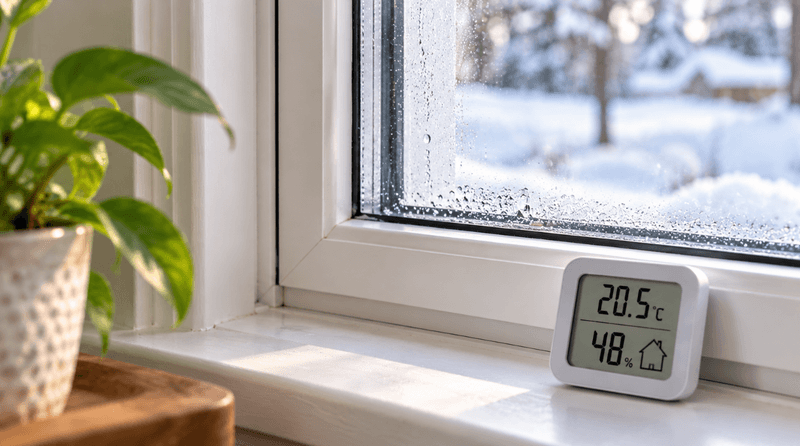
Window condensation is the clearest sign your indoor humidity is too high for the outdoor temperature, because it means moisture is reaching its dew point on the cold glass. To clear it:
Lower the humidifier setting by about 5 points whenever temperatures fall into a colder band on the chart.
Run bath and kitchen exhaust fans while you shower or cook and for 15–20 minutes afterward.
Open blinds by day and run ceiling fans on low to keep warm room air moving across the glass.
Check hidden spots such as closets on exterior walls and attic hatches, where condensation you can’t see can lead to mold.
How to Use a Humidifier to Reach the Ideal Winter Humidity
A humidifier with a built-in humidistat makes it easy to hold winter humidity at 30–40%.
Measure first. Check your humidity with a digital hygrometer before buying anything, since some tight, newer homes stay above 30% on their own. To test the gauge’s accuracy, seal it in a zip-top bag with a small dish of damp table salt for 8–12 hours. It should read 75%, so note any difference.
Size it for your space. By our estimate, keeping a 2,000-square-foot home at 35% on a 10°F day takes roughly 3–7 gallons of water a day, depending on how drafty the house is. Most tabletop units hold a gallon or two, which is enough for a single room. For whole-house systems, choose automatic outdoor-temperature control so the unit applies the dial-down rule for you.
Keep it clean. Mayo Clinic warns that dirty humidifiers can release bacteria and mold into the air, so empty and dry portable tanks daily and replace whole-house humidifier pads at least once a season. Filterbuy’s humidifier filter cleaning and replacement guide walks through each step.
Use distilled water in ultrasonic and cool-mist units to avoid the white mineral dust they can leave behind.
Keep your furnace filter fresh. Your furnace runs longer in winter and pulls more air through the filter. Check it monthly (see how often to change your furnace filter in winter), or set up a Filterbuy air filter subscription so a new, made-in-USA filter arrives on schedule.
“The mistake I see most on winter calls is a humidifier nobody has touched since fall. Either it’s still set too high and fogging the windows, or the pad is so caked with minerals it barely adds any moisture,” says David Clark, the licensed HVAC technician who reviewed this guide.
— David Clark, Licensed HVAC Technician
Supporting Statistics
Three findings from U.S. government and nonprofit sources support Filterbuy’s guidance.
Americans spend about 90% of their time indoors. The EPA’s Report on the Environment adds that some indoor pollutants run 2 to 5 times higher than typical outdoor levels, so your home’s air shapes most of what you breathe.
20 million people in the U.S. have a dust mite allergy. The Asthma and Allergy Foundation of America recommends keeping home humidity between 30% and 50% to help control dust mites, the range this guide works within.
Live dust mites fell from 401.2 to 8.2 per gram of dust. In an EPA-funded Wright State University study, homes that kept indoor humidity below 51% saw that drop by the end of their first heating season.
Frequently Asked Questions
Is 25% Humidity Too Low in Winter?
25% is lower than ideal but appropriate when the outdoor temperature is 0–10°F. Allow up to 35% at 10–20°F and 30–40% above 20°F.
Is 50% Humidity Too High in Winter?
Yes, for most homes. At 50% indoor humidity, windows are likely to condense once outdoor temperatures fall below about 40°F, and dust mites start to thrive above that level.
What Should I Set My Humidifier to in Winter?
Set it to 35–40% when it’s above 20°F outside, then lower it about 5 points for each 10°F drop. Go by a hygrometer reading rather than the dial.
What Humidity Is Best for Sleeping in Winter?
Aim for 30–40%. If you wake up with a dry throat or nosebleeds, a small cool-mist humidifier can help. Just set it with your nighttime thermostat in mind, since cooler air reads higher.
Does My Air Filter Affect Indoor Humidity?
No. An HVAC air filter captures airborne particles like dust and pet dander, but it doesn’t add or remove moisture. Humidifiers and exhaust fans handle that job. A clean filter still matters, since your furnace moves more air through it in winter.
Glossary
Relative humidity (RH): Water vapor in the air as a percentage of the most the air can hold at that temperature.
Dew point: The temperature at which water vapor condenses into liquid or frost.
Condensation: Water or frost that forms on a surface colder than the air’s dew point, such as winter window glass.
Hygrometer: An inexpensive gauge that measures indoor relative humidity.
Humidistat: A control that turns a humidifier on and off to hold a set humidity level.
Whole-house humidifier: A furnace-mounted humidifier that serves the whole house.
Cool-mist humidifier: A portable humidifier that releases unheated water vapor; recommended for children’s rooms.
MERV rating: Minimum Efficiency Reporting Value, a 1–16 scale that rates how well an HVAC air filter captures particles.
Thermostat setback: Turning the heat down at night or while away.
Vapor retarder: A material layer in walls that slows moisture from moving into cold wall cavities.
EPA: The U.S. Environmental Protection Agency.
AAFA: The Asthma and Allergy Foundation of America, a U.S. patient nonprofit.
NWFA: The National Wood Flooring Association, the U.S. wood flooring trade group.
FGIA: The Fenestration and Glazing Industry Alliance, a U.S. window standards group.
Sources
Arundel et al., Indirect health effects of relative humidity in indoor environments (1986)
University of Kentucky Entomology, House Dust Mites (ENTFACT-646)
Aprilaire, Relative Humidity Defined (manufacturer conversion chart; cited, not linked)
Hardwood Floors magazine (NWFA), Handling Regional Differences in Humidity Levels