
Can Bad Air Quality Make You Sick? Symptoms, Risks, and What to Do
June 29, 2026

Author: Michelle Wan
Reviewed by: David Clark, Licensed HVAC Technician
Published: June 30, 2026 Updated: September 3, 2026
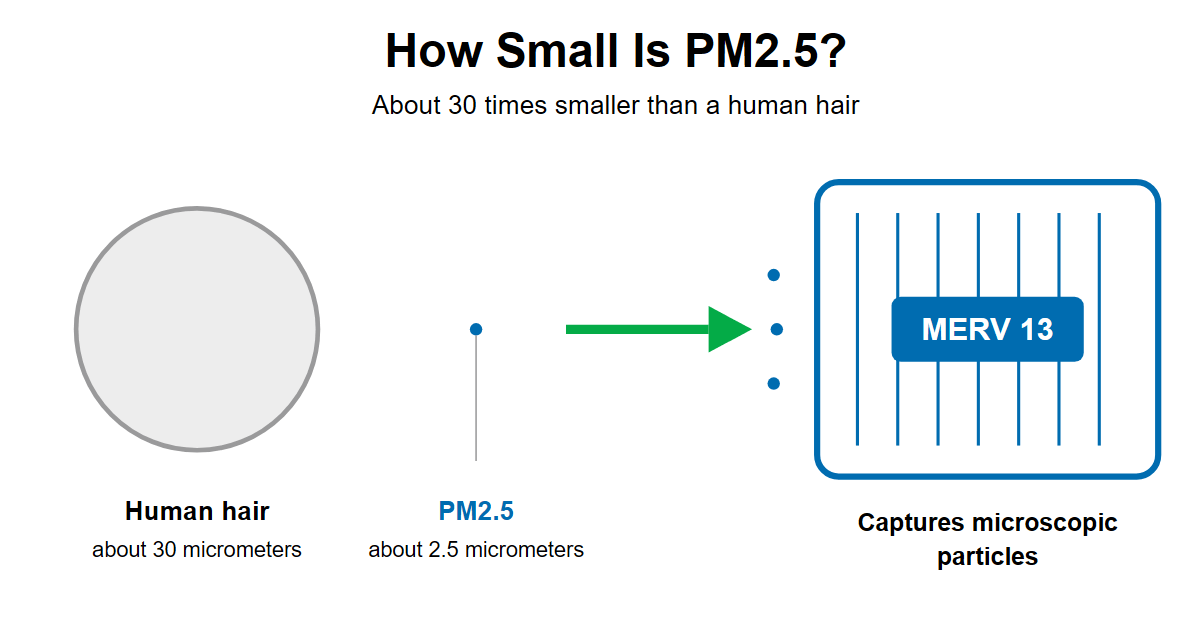
Yes — breathing polluted air can make you sick. Tiny particles called PM2.5 slip past your body’s defenses and reach deep into your lungs, which can set off coughing, irritated eyes, headaches, and far more serious effects for children, older adults, and anyone with a heart or lung condition. You control your indoor air, though. Seal the house, run your HVAC fan, and fit a MERV 13 filter that captures these microscopic particles. Use the options below to get set up.
Answer a few quick questions and we will match you to the right filter for your home.
Quick answer: Yes, bad air quality can make you sick. According to the EPA, fine particle pollution (PM2.5) and ground-level ozone can irritate the eyes, nose, throat, and lungs, trigger coughing and wheezing, and worsen conditions like asthma and heart disease. But symptoms alone can't confirm that air is the cause. The real clues are where and when your symptoms happen, who else feels them, and whether they ease once you leave the space.
A scratchy throat, a nagging headache, watery eyes that won't quit. These symptoms are easy to blame on a cold, allergies, or a poor night's sleep. Sometimes the real culprit is the air around you.
This guide walks you through the symptoms linked to poor air quality, how to spot the patterns that point to air as the cause, which pollutants tend to cause trouble, and who faces the highest risk. You'll also get a clear, step-by-step plan for what to do when the air makes you feel unwell, plus a simple home checklist to keep on hand.
One thing to keep in mind before we start: this article is for general information and isn't a substitute for medical advice. If you're worried about your health or someone else's, talk to a doctor.
What Are the Symptoms of Bad Air Quality?
Poor air quality can affect your body in several ways, and symptoms often show up within hours of exposure. According to the EPA and CDC, the most common effects fall into a few groups.
Eye, Nose, Throat, and Skin Irritation
One of the first things many people notice is irritation. Your eyes may burn, water, or feel gritty. Your nose might run or feel stuffy. Your throat can turn scratchy or sore. Some people also report itchy or irritated skin. These reactions are common when fine particles, smoke, or ozone are in the air, according to the EPA.
Respiratory Symptoms
The lungs take a direct hit from polluted air. Coughing, wheezing, chest tightness, and shortness of breath are all common, especially during physical activity. The CDC notes that these symptoms can appear the same day exposure happens, and they often feel worse when you exert yourself outdoors.
Headaches, Dizziness, Nausea, and Fatigue
Bad air can affect more than your airways. Headaches, unusual tiredness, dizziness, and nausea are frequently reported during wildfire smoke events and high-pollution days. These symptoms can be vague, which is part of why air quality is easy to overlook as the cause.
Worsening of Existing Health Conditions
For people who already live with asthma, COPD, or heart disease, poor air quality can push symptoms over the edge. The American Lung Association explains that ground-level ozone irritates the airways much like a sunburn, and PM2.5 can travel deep into the lungs. This can mean more frequent inhaler use, tighter breathing, or serious cardiac events in vulnerable people.
How Can You Tell If Air Quality Might Be the Cause?
Here's the important part: symptoms alone cannot confirm that air quality is making you sick. A cough could be a cold. A headache could be dehydration. So instead of relying on symptoms by themselves, look for patterns. Three questions can help you connect the dots.
Where do your symptoms happen? Do they flare up in one specific room, at home but not at work, or outdoors on hazy days? A symptom tied to a place points more strongly toward the air in that place.
When do they happen? Do they line up with a wildfire smoke event, a smoggy afternoon, cooking, or running a certain appliance? Timing matters. Symptoms that appear during high-pollution days or a specific activity are worth a closer look.
Who else is affected? If other people or even pets in the same space feel unwell at the same time, that shared pattern is a stronger signal than one person feeling off.
The clearest clue of all: do your symptoms improve after you leave the environment? If you feel better within hours of getting to cleaner air, and worse again when you return, the air is a likely suspect. None of this replaces a medical opinion, but it gives you and your doctor useful information to work with.
Which Air Pollutants Can Make You Feel Sick?
Not all air pollution is the same. A few pollutants are behind most air-related symptoms.
Fine particulate matter (PM2.5) is the big one. These particles measure 2.5 micrometers or less, roughly thirty times smaller than a human hair. The EPA reports that PM2.5 reaches deep into the lungs, and some particles can pass into the bloodstream, affecting both the heart and the lungs. Wildfire smoke, vehicle exhaust, and cooking all produce PM2.5.
Ground-level ozone is the main ingredient in smog. The American Lung Association compares its effect to a sunburn inside your airways, which is why it causes coughing and chest tightness.
Larger particles (PM10), such as dust and pollen, can irritate the eyes, nose, and throat, though they don't travel as deep into the lungs as PM2.5.
Volatile organic compounds (VOCs) come from paints, cleaning products, and some furnishings, and can cause headaches and irritation indoors.
Then there's carbon monoxide, which deserves its own warning.
Carbon monoxide is a life-threatening emergency, not just an air-quality issue. Carbon monoxide (CO) is a colorless, odorless gas produced by furnaces, gas appliances, generators, and cars. According to the CDC, symptoms include headache, dizziness, weakness, nausea, confusion, and loss of consciousness. If several people in a home suddenly feel these symptoms, or if you suspect a CO leak, get everyone outside to fresh air immediately and call 911. Install CO detectors on every level of your home and test them regularly. An HVAC filter does not remove carbon monoxide and offers no protection against it.
Carbon monoxide is a life-threatening emergency, not just an air-quality issue. Carbon monoxide (CO) is a colorless, odorless gas produced by furnaces, gas appliances, generators, and cars. According to the CDC, symptoms include headache , dizziness, weakness, nausea, confusion, and loss of consciousness. If several people in a home suddenly feel these symptoms, or if you suspect a CO leak, get everyone outside to fresh air immediately and call 911. Install CO detectors on every level of your home and test them regularly. An HVAC filter does not remove carbon monoxide and offers no protection against it.
Can Outdoor Air Quality Make You Sick Indoors?
Yes. It's easy to assume that closing your doors seals you off from smog or smoke, but outdoor pollution routinely makes its way inside. Fine particles slip through gaps around windows and doors, and they come in every time someone opens an exterior door. The EPA notes that indoor PM2.5 levels often track a meaningful share of outdoor levels when a home isn't well sealed.
Wildfire smoke is a clear example. When smoke settles over a region, homes downwind can see indoor particle levels climb even with the windows shut. This is exactly why sealing the home and filtering indoor air matters so much on bad-air days, and it's the one part of the equation you can actually control.
Who Is Most Likely to Get Sick From Poor Air Quality?
Anyone can feel the effects of a high-pollution day. Some groups feel it sooner and more severely. According to the CDC and EPA, the higher-risk groups include:
● Infants and children, whose lungs are still developing and who breathe more air relative to their body size
● Older adults, who are more likely to have existing heart or lung conditions
● Pregnant people, since pollution has been linked to low birth weight and preterm birth
● People with asthma or COPD, whose airways are already inflamed and reactive
● People with heart disease or diabetes, who face higher cardiovascular risk
● Outdoor workers, who are exposed for longer stretches at higher breathing rates
● Pet owners should also watch their animals, since pets can show symptoms like coughing or lethargy in poor air
If you or someone in your household is in one of these groups, it's wise to act earlier and monitor symptoms more closely on bad-air days.
When Should You Seek Medical or Emergency Help?
Most air-related symptoms in healthy people ease within a day or two once the air clears. Some situations call for prompt medical attention. Seek care if you have:
● Trouble breathing or shortness of breath that doesn't improve in cleaner air
● Chest pain or pressure
● A cough that won't stop
● Wheezing that doesn't respond to your usual medication
● Confusion, severe dizziness, or fainting
Call 911 for any medical emergency, including severe breathing difficulty, chest pain, or a suspected carbon monoxide leak. If you have asthma, COPD, or a heart condition, follow the action plan your doctor gave you, and don't wait to reach out if symptoms escalate. When in doubt, call your healthcare provider.
What Should You Do If Bad Air Quality Is Making You Feel Sick?
If you suspect the air is the problem, work through these steps in order. Source control comes first, because stopping pollution at the source is more effective than trying to filter it out afterward.
1. Move Away From the Suspected Exposure
Start by getting away from whatever you think is causing symptoms. If the air outside is smoky, head indoors. If a specific room or activity seems to trigger you, leave that space and see whether you feel better. This step doubles as a test: improvement after leaving is a strong clue.
2. Check Outdoor Air Conditions
Look up your local Air Quality Index (AQI) at AirNow, the EPA's official tool, or in your weather app. According to AirNow, a reading of 101 to 150 (orange) is risky for sensitive groups, 151 to 200 (red) affects everyone, and anything above 200 (purple or maroon) is a health alert for the whole household. This tells you how aggressively to act.
3. Identify and Control Indoor Sources
Before you filter or ventilate, cut the pollution you're creating inside. Avoid smoking and vaping indoors. Skip frying or broiling that produces heavy smoke. Hold off on candles, incense, wood-burning stoves, and aerosol sprays. Controlling these sources often makes the biggest difference, and it costs nothing.
4. Ventilate When Outdoor Air Is Cleaner
If your AQI check shows the outdoor air is clean, open windows and doors to flush out indoor pollutants. This works well after cooking or cleaning. On smoky or smoggy days, do the opposite: keep the home sealed and set your HVAC system to recirculate rather than pulling in outside air.
5. Improve Particle Filtration
Once sources are under control and the home is sealed, filtration lowers what's left in the air. Running your HVAC system with a high-efficiency filter, and adding a properly sized portable air cleaner, helps capture fine particles. Filtration is one part of a broader strategy, not a cure for any illness. It reduces exposure; it doesn't treat a medical condition.
Can a Dirty HVAC Filter Make You Sick?
A dirty HVAC filter won't make you sick on its own, but it can quietly work against you. When a filter is clogged, it captures fewer new particles and can restrict airflow through your system, which means your HVAC does a worse job of cleaning the air your family breathes. During a smoke event, filters load up faster than usual and need more frequent changes.
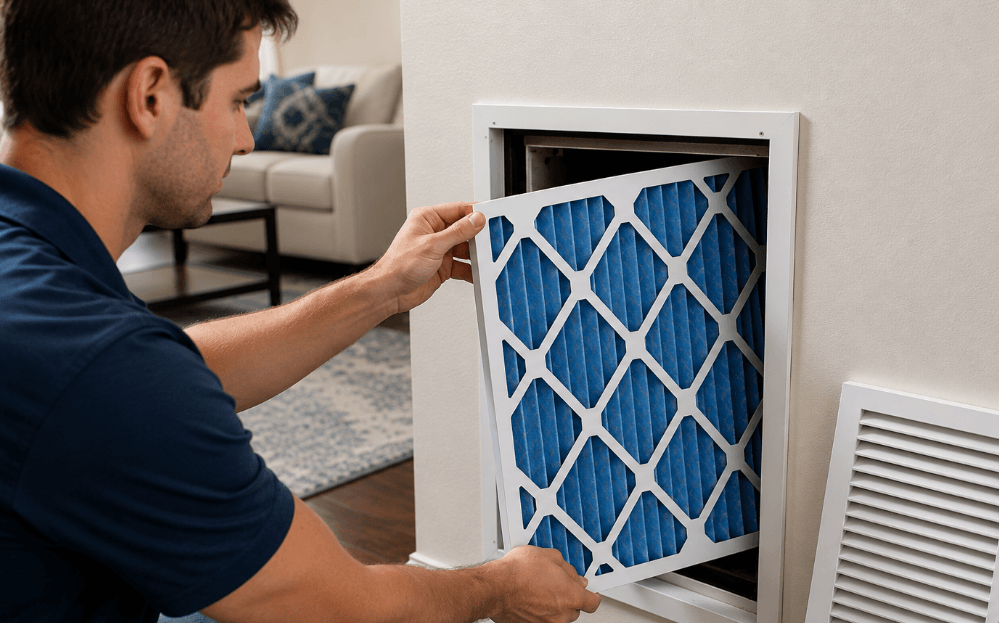
Keeping a clean, well-fitted filter in place is simple home maintenance. Check your filter regularly, and replace it as soon as it looks dirty, especially during wildfire or high-pollution stretches.

Which Filterbuy Filter Can Help With Airborne Particles?
If you want to improve how well your HVAC system captures airborne particles, the filter's MERV rating is what matters. MERV stands for Minimum Efficiency Reporting Value, and a higher number means the filter traps smaller particles. Filterbuy offers a range of options:
● MERV 8 captures common household particles like dust, lint, and some pollen. A solid choice for everyday air quality in homes without specific concerns.
● MERV 11 captures finer particles, including some pet dander and mold spores. A good middle ground for pet owners and allergy-prone households.
● MERV 13 captures very fine particles, including much of what's in wildfire smoke. The EPA recommends MERV 13 or higher for smoke.
Before upgrading, confirm your system can handle a higher-MERV filter, since some older systems aren't built for the airflow a denser filter requires. Filterbuy makes filters in more than 600 sizes, so you can match your exact system. Remember, a filter reduces the particles you breathe indoors; it is not a medical device and doesn't treat or cure any illness.
A Simple Home Air-Quality Checklist
Keep this list handy for the next bad-air day:
● Check the AQI at AirNow before deciding how to act
● On smoky or smoggy days, close windows and set HVAC to recirculate
● Stop indoor pollution sources (smoking, frying, candles, aerosols)
● Ventilate with open windows only when outdoor air is clean
● Run your HVAC fan continuously so air keeps cycling through the filter
● Use a MERV-appropriate filter and replace it when it looks dirty
● Add a properly sized HEPA portable air cleaner for one clean room
● Install and test carbon monoxide detectors on every level
● Keep an N95 respirator on hand for essential trips outdoors
● Know your household's higher-risk members and watch them closely
Take Control of the Air You Can Actually Change
The air outside is out of your hands. The air inside your home isn't. Once you know how to spot the patterns that point to air quality, when to seek help, and which indoor steps make a real difference, a bad-air day becomes something you can manage calmly rather than something that catches you off guard.
Start simple. Bookmark AirNow, learn your household's higher-risk members, and make sure your home is ready before the next smoky or smoggy stretch arrives. A clean, well-matched HVAC filter running continuously is one of the easiest ways to lower what your family breathes indoors. When you're ready to upgrade, Filterbuy can help you find the right MERV filter for your system.
And always remember: this guide supports your decisions, but it doesn't replace medical advice. When your health is on the line, talk to a doctor.
Frequently Asked Questions
Can Bad Air Quality Make You Sick Even If You're Healthy?
Yes. According to the EPA and CDC, even healthy adults can develop coughing, eye and throat irritation, headaches, shortness of breath, and fatigue during high-pollution or wildfire-smoke days. For most healthy people these effects are short-lived, but repeated exposure over time can raise the long-term risk of heart and lung disease.
How Do I Know If My Symptoms Are From Air Quality Or Something Else?
Symptoms alone can't confirm the cause. Look for patterns instead: where symptoms happen, when they happen, whether others around you feel them too, and whether they improve after you leave the space. If you feel better in cleaner air and worse when you return, air quality is a likely suspect. A doctor can help rule out other causes.
What's The Difference Between A Cold And Air-quality Symptoms?
A cold usually comes with fever, body aches, and symptoms that progress over several days regardless of where you are. Air-quality symptoms tend to track with your environment, easing when you reach cleaner air and returning when you don't. When you're unsure, check the AQI and consult a healthcare provider.
Can Carbon Monoxide Be Filtered Out With An Air Filter?
No. An HVAC filter or portable air cleaner does not remove carbon monoxide. CO is a colorless, odorless gas that requires a dedicated CO detector. If you suspect a leak, get everyone outside to fresh air and call 911 immediately.
Which MERV Rating Should I Use For Wildfire Smoke?
The EPA recommends MERV 13 or higher to capture the very fine particles in wildfire smoke. Confirm your HVAC system can handle a MERV 13 filter first, then replace it more often than usual during a smoke event, since it will load up faster.
How Long Do Air-pollution Symptoms Usually Last?
For most healthy people, symptoms ease within hours to a day or two after the air clears and exposure stops. If you have a heart or lung condition, symptoms may last longer or become serious. Seek medical care if breathing trouble, chest pain, or a persistent cough doesn't improve.
Can Poor Air Quality Affect My Pets?
Yes. Pets can experience coughing, lethargy, watery eyes, and breathing trouble on high-pollution days, much like people do. Keep pets indoors during smoke events and contact a veterinarian if symptoms seem serious.