
Is Bad Air Quality Bad for Dogs? What Owners Need to Watch
September 14, 2026
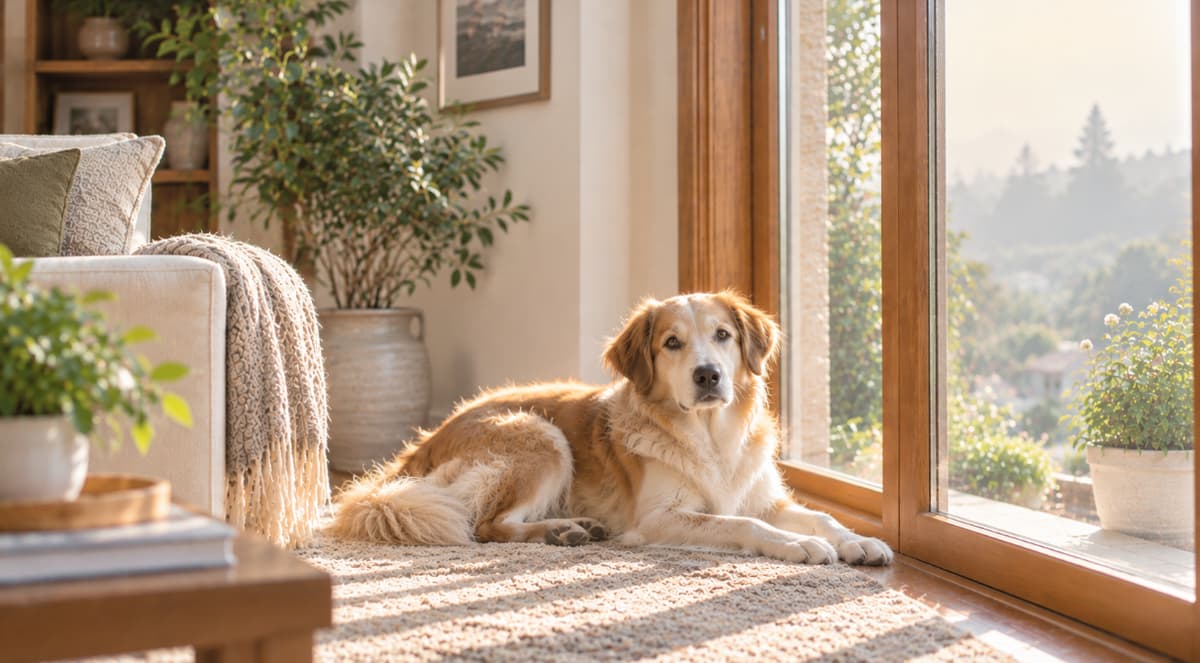
Yes, and the risk is not the same for every dog. Wildfire smoke and fine particles irritate a dog’s eyes and airway, and the EPA reports the greatest risk falls on animals that are older, younger, pregnant, or living with heart or lung disease. Short-nosed breeds such as pugs and bulldogs need extra caution. Dogs cannot wear masks, so reducing what they breathe indoors is the whole strategy.
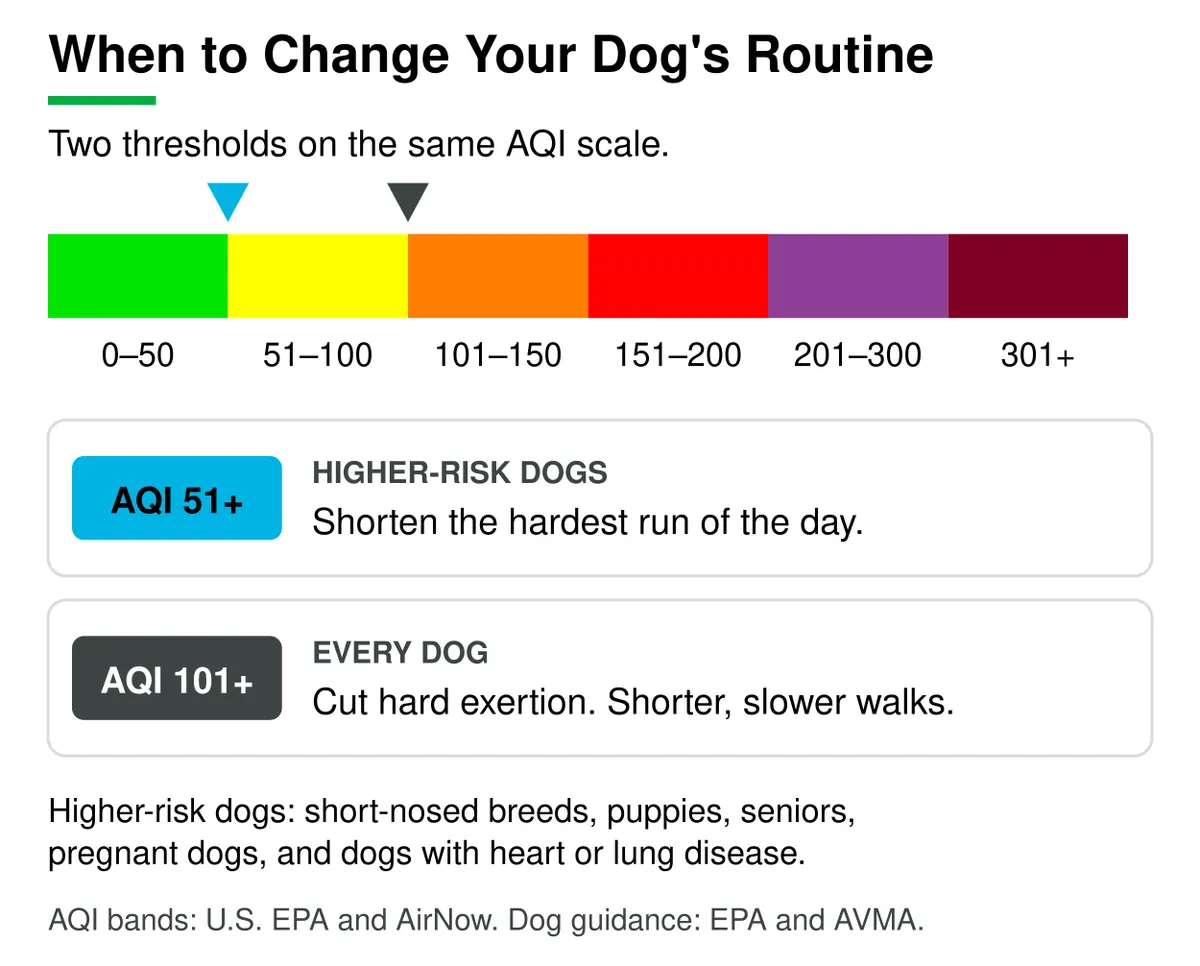
AQI 51 and above: higher-risk dogs should shorten the hardest run of the day.
AQI 101 and above: every dog should cut hard exertion and take shorter, slower walks.
Indoors is where you have control, and that starts with the filter your system already runs air through.
Answer 3 quick questions and we’ll match you to the right filter for your home.
TL;DR
Bad air quality is bad for dogs. Wildfire smoke and fine particles irritate a dog's eyes and airway, and the EPA reports that the greatest risk falls on animals who are older, younger, pregnant, or have heart or lung disease. Short-nosed breeds such as pugs and bulldogs need extra caution. Dogs cannot wear masks, so reducing what they breathe is the whole strategy.
Key Takeaways
The EPA names short-nosed dogs, including pugs and bulldogs, as breeds that can struggle to breathe in smoke or heat.
The AVMA says animals with heart or lung disease are especially at risk and should be watched closely whenever air quality is poor.
A dog's normal resting rate runs about 15 to 30 breaths per minute, so an unexplained rise is an early measurable signal.
During air quality alerts the AVMA advises brief bathroom breaks only, and no intense outdoor exercise until smoke settles.
Dogs spend a smoke event indoors, so sealing the house and filtering the air already moving through it is the practical control.
Why Dogs Take In More Of The Same Air Than You Do
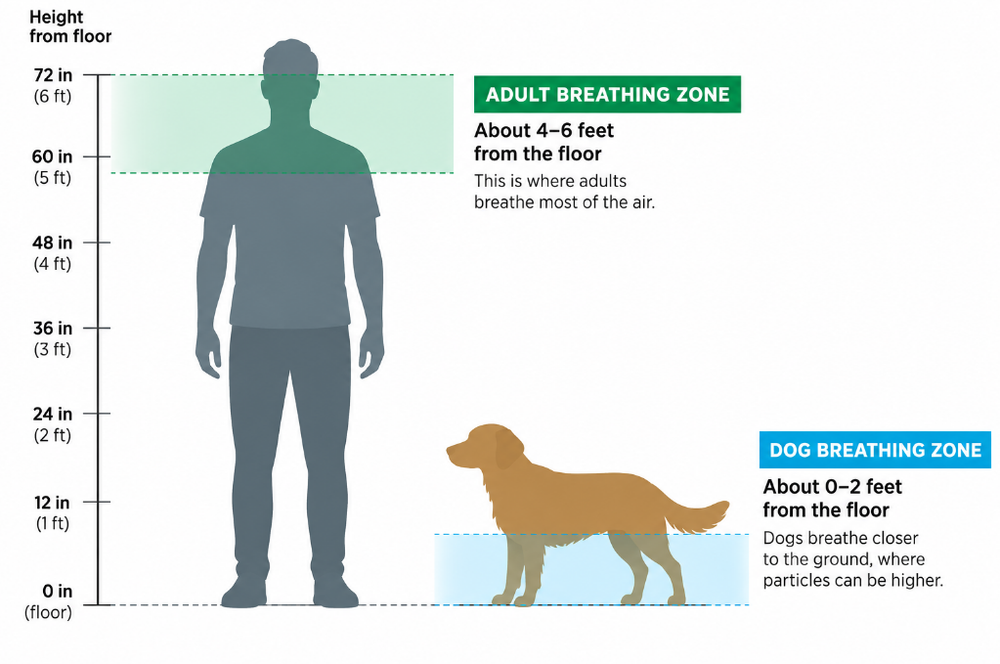
Dogs take in more of a polluted airstream than the people they live with. A resting dog breathes roughly 15 to 30 times a minute at ankle height, faster than a resting adult and much closer to the ground. Covering the muzzle is no help either, because that blocks panting.
The EPA notes in Protect Your Pets from Wildfire Smoke that smoke and heat together are much worse than smoke alone in humans, and that the same is likely true for pets. Los Angeles County Public Health adds in its pet safety fact sheet that a human N95 can choke a pet or block its ability to breathe through the nose. Exposure reduction is the only real lever owners have.
Which Dogs Face The Highest Risk From Poor Air Quality
Risk is not spread evenly across dogs. The EPA flags animals that are older, younger, or pregnant, and any animal with heart or lung disease, and singles out short-nosed dogs. Cornell's guidance on dog safety during poor air quality alerts names brachycephalic breeds alongside geriatric and pediatric dogs.
Table 1. Higher-Risk Dogs And What Changes For Them
The Warning Signs Veterinarians Tell Owners To Watch For
The AVMA names these signs of smoke or dust irritation in wildfire smoke and animals, and attaches one instruction: consult your veterinarian if any appear.
Coughing or gagging
Difficulty breathing, open-mouth or noisy
Eye irritation and watering
Throat or mouth inflammation
Nasal discharge
Asthma-like symptoms
Increased breathing rate
Fatigue or weakness
Disorientation or stumbling
Reduced appetite or thirst
Several of those look like ordinary dog behavior, which is why a number beats a judgment call. Count your dog's resting respiratory rate while it sleeps on a clear-air day, across several days, and note it down. After that, a rise during smoke is information rather than a guess.
What Each AQI Level Actually Means For Your Dog
The Air Quality Index is a six-band EPA scale, and AQI Basics explains that values above 100 are unhealthy, first for sensitive groups. No agency publishes an AQI for dogs, so Filterbuy mapped each band to the pet guidance the EPA and the AVMA already give.
Table 2. AQI Bands Translated Into Dog Decisions
Check the number before the walk, using the AirNow Fire and Smoke Map the EPA points pet owners to.
Protecting Your Dog Indoors When The Air Turns Bad
Indoors is where the protection happens, because indoors is where the dog will be.
Check the AQI before you open the door. Decide the routine from the number, not the sky.
Close windows and doors. If you run central air, set your HVAC fan for smoke so it keeps filtering instead of sitting idle.
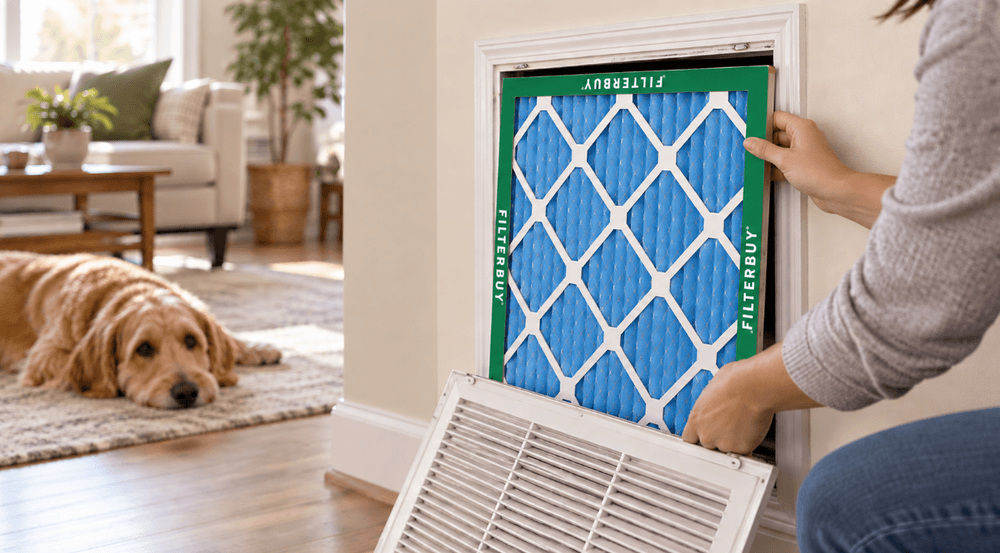
Filter the air the system already moves. A clean, correctly sized pleated filter in the return is the piece most households own and neglect.
Set up one cleaner air room. The EPA recommends filtering a single room, giving an anxious dog somewhere to settle.
Stop adding particles. The EPA advises against frying, vacuuming, candles, fireplaces, and smoking or vaping while smoke is present.
Keep water available. Smoke and heat both push dehydration.
A higher MERV number describes finer particle capture, not a health outcome, and pushing past what a blower is built for costs airflow. furnace filters for homes with pets covers the year-round dander problem, and MERV 13 pleated filters are the finest residential option Filterbuy makes for systems built to handle them. MERV 13 is not True HEPA, and no filter treats a medical condition in a dog.
What To Do With A Dog That Cannot Go Outside
Replace the walk instead of only cancelling it. Cornell's Riney Canine Health Center recommends indoor enrichment during air quality alerts, naming puzzle feeders and chews, because a dog denied its usual outlet finds problems of its own. Scatter a meal across a rug and let the dog hunt for it.
If you rent, or run window units or a ductless mini split, there is no filter slot and half the advice above does not reach you. Defend one room rather than the house, ideally the one the dog sleeps in. Pick the space with the fewest openings, close any vent lever, and run a portable air cleaner sized for it.
After The Smoke Clears
Ash outlasts the smoke, and a dog collects it. Los Angeles County Public Health advises wiping paws and coat with a damp cloth after outdoor trips, checking for limping or licking, and keeping animals away from puddles and anything on the ground.
Then replace the filter, because smoke-loaded media restricts airflow. Keep counting the resting rate for a few days, and watch for a number that does not come back down.
What We See From The Filter Side Of This Problem
Filterbuy is a family-owned air filter manufacturer in Talladega, Alabama, building pleated HVAC filters in the US since 2013. We are not veterinarians, and none of the clinical guidance above is ours. Two patterns we do see are worth passing on.
Owners Order The Filter After The Dog Starts Coughing
Filterbuy order data shows the same sequence every fire season. A fire ignites and regional orders climb within hours, while shipping slows and the sizes homeowners need run short first. Signs in a dog surface a day or two in, so the moment an owner acts is the moment supply is backed up. Buying before the season is the one step here that cannot be done the same day.
The Rating Is Rarely The Problem. The Age Of The Filter Is.
The question Filterbuy fields most often is whether a higher MERV will strain the system, and the pattern points somewhere else. A filter left past its useful life restricts airflow more than a clean higher-rated one, and smoke loads media fast. One that runs 90 days normally wants checking every few weeks through fire season.
"In a smoke week I pull filters that look like they have been in for a year. People upgrade the rating and then leave it in, which is backwards. A clean mid-range filter moves more air than a loaded high-end one."
— David Clark, Licensed HVAC Technician
Supporting Statistics
The observations above are Filterbuy's, and the three measurements below are deliberately not.
America's Most Popular Breed Is Brachycephalic
The French Bulldog has been the most registered breed in the US for four consecutive years, ending the Labrador Retriever's 31-year run in 2022. The breed group the EPA singles out for extra caution is the most common purebred dog in America.
Source: American Kennel Club, AKC registration statistics, updated March 18, 2026.
AQI 101 Is Where Measured Harm Begins
The CDC found asthma-associated emergency visits ran 17 percent higher than expected across 19 wildfire smoke days in 2023. A smoke day there meant fine particles reaching an AQI of 101 or above, the same threshold at which owners of higher-risk dogs should stop outdoor exercise.
Source: McArdle CE, et al., CDC wildfire smoke surveillance analysis, CDC MMWR 2023, volume 72, number 34.
Particle Spikes Reach Tens Of Millions
The American Lung Association's 2026 report, on 2022 through 2024 monitoring data, found 61.5 million people in U.S. counties graded F for short-term particle spikes, the category wildfire smoke drives, and dogs live in those same counties.
Source: American Lung Association, State of the Air 2026.
Two of those figures describe human patients, because no federal system tracks veterinary emergency visits during smoke.
Frequently Asked Questions
Is Wildfire Smoke Bad For Dogs?
Yes. Smoke irritates a dog's eyes and airway and can contribute to worse complications. The EPA is direct about the threshold: if you feel the effects of smoke, your pet probably does too. Dogs with heart or lung disease carry the highest risk.
Can I Walk My Dog When The AQI Is Over 100?
Keep it short and drop the intensity. At 101 to 150 the air is unhealthy for sensitive groups, and the AVMA advises brief bathroom breaks during alerts. A five-minute walk is a different exposure than a thirty-minute run.
What Are The First Signs Of Smoke Irritation In A Dog?
Coughing or gagging, watery or reddened eyes, nasal discharge, and a faster breathing rate, alongside fatigue, stumbling, and reduced appetite. Any of these after smoke exposure is a reason to call your veterinarian.
Does An Air Filter Help Protect A Dog From Bad Air Quality?
A clean filter reduces the particles circulating through a home's ductwork, and the EPA recommends high-efficiency filters and portable air cleaners for smoke. Filterbuy builds those filters, so treat this as an interested answer: filters capture particles and do not treat any condition in a dog.
Are Some Breeds More Affected By Air Pollution Than Others?
Yes. The EPA flags short-nosed dogs such as pugs and bulldogs. Beyond breed, age and existing disease matter more, with puppies, senior dogs, and those with heart or lung conditions all at elevated risk.
Glossary
AQI (Air Quality Index): The EPA's six-band scale for daily outdoor air quality. Above 100 is unhealthy, first for sensitive groups.
PM2.5: Particles 2.5 micrometers or smaller, the dominant fraction in wildfire smoke, small enough to reach deep lung tissue.
Brachycephalic: The veterinary term for short-nosed breeds such as pugs and bulldogs, whose compressed airways leave less breathing margin.
MERV (Minimum Efficiency Reporting Value): The scale for how effectively an HVAC filter captures particles. It measures capture capability only, not health outcomes.
Cleaner air room: One room where air is filtered and outdoor air kept out, recommended by the EPA in smoke events.
Resting respiration: Breaths per minute while an animal rests or sleeps, about 15 to 30 in dogs, used by veterinarians as an early warning.
Fire and Smoke Map: The EPA and U.S. Forest Service map on AirNow combining monitor readings with smoke plumes.