
Top 5 MERV Filter Mistakes Homeowners Make
January 20, 2026
Most homeowners don't think about their air filter until something goes wrong, and by then, the damage is already done. The good news is that the most common filter mistakes are easy to avoid once you know what to look for. Here are five that come up again and again, and exactly how to fix each one.
Quick Answers
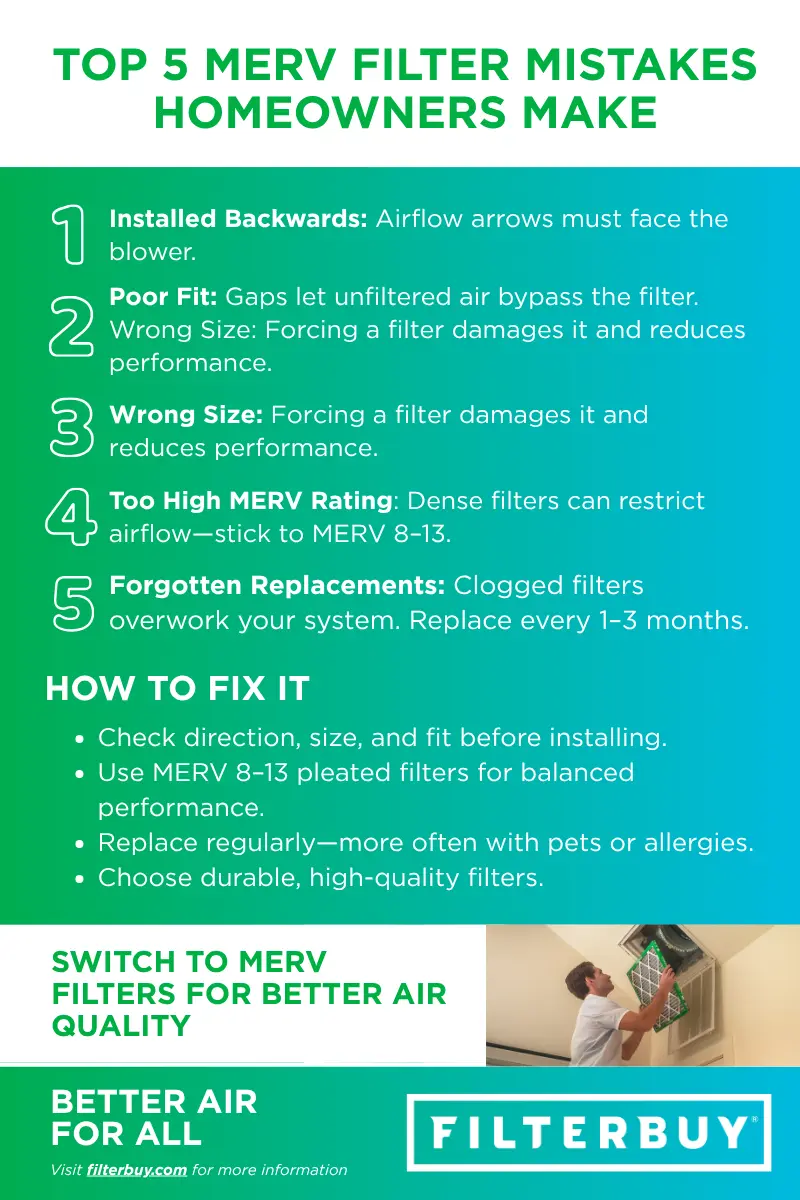
Top 5 MERV Filter Mistakes Homeowners Make
Choosing too high a MERV rating — MERV 13+ filters can restrict airflow and strain your HVAC system if it wasn't designed for them.
Forgetting to check filter size — Installing a filter that doesn't fit properly lets unfiltered air bypass the filter entirely.
Waiting too long to replace — Most filters need changing every 30-90 days, not "when you remember."
Ignoring your system's specifications — Your HVAC manual lists the maximum MERV rating your system can handle—exceeding it reduces efficiency and increases energy costs.
Assuming higher MERV always means better air — A MERV 8-11 filter often strikes the ideal balance between filtration and airflow for residential systems.
Bottom line: Match your filter to your system's capabilities, not just your air quality goals.
Key Takeaways
Many homeowners install their air filters backward, which reduces airflow and weakens filtration.
A filter that doesn’t fit snugly allows dust and allergens to bypass the system entirely.
Forcing the filter into place can bend or damage it, limiting its effectiveness.
Choosing a MERV rating that is too high for the system can restrict airflow and strain the HVAC unit.
Forgetting to replace filters regularly is one of the biggest causes of poor air quality and higher energy costs.
1. Installing the Air Filter Backwards
One of the most common MERV filter mistakes is installing it backward. Every air filter has arrows printed on its frame indicating the correct airflow direction. These arrows should always point toward the HVAC unit's blower motor, not away from it.
When an air filter is installed backwards, the filter's layers can't capture particles as designed. This restricts airflow, forcing your HVAC system to work harder and consume more energy. Over time, this strain can lead to costly damage to the blower motor. Unlike flimsy fiberglass filters, high-quality pleated air filters from Filterbuy are designed with a sturdy frame that makes it easy to see the directional arrows and ensure a proper fit every time.
2. Poor Fit (Gaps Around the Filter)
Even a correctly oriented filter will not work if it does not sit snugly in the slot. Gaps around the edges allow dust, pollen, and other pollutants to bypass the filter entirely. This leads to poor indoor air quality and unnecessary strain on your HVAC system. Choosing the correct size ensures a tight seal and proper filtration.
Also, to avoid this problem, always check the filter dimensions before buying a replacement. A proper fit means no gaps. Trusted by thousands of homeowners across the U.S., Filterbuy offers a wide range of perfectly sized Filterbuy air filters for nearly every system, ensuring a tight seal for maximum filtration.
3. Using the Wrong Size (Forcing the Filter In)
Sometimes, a filter that's the wrong size or not aligned correctly gets forced into place. An improperly installed air filter can become bent or damaged, which compromises its structural integrity and filtration media. A filter should always slide smoothly into its housing and sit flush against the frame.
If you have to bend, crush, or jam the filter to make it fit, it's either the wrong size or not positioned correctly. Forcing it can create tears in the filter media, allowing contaminants to pass through. The sturdy construction of quality pleated air filters is designed for easy installation, but only when you have the correct size.
4. Choosing a MERV Rating That Is Too High
This mistake goes beyond just direction. An air filter installed incorrectly can also mean using the wrong type of filter for your system. Many homeowners assume a higher MERV rating is always better, but that's not necessarily true. A filter with a MERV rating that is too high for your residential HVAC system can severely restrict airflow.
This restriction puts unnecessary strain on your system, much like a clogged filter does. It can lead to reduced efficiency, increased energy costs, and potential long-term damage. For most homes, MERV 8–13 filters offer the ideal balance between excellent filtration and healthy airflow. Filterbuy’s range of MERV 8, MERV 11, and MERV 13 filters provides homeowners with effective and safe options for their systems.
5. Forgetting to Replace the Filter
Finally, the biggest mistake in HVAC air filter maintenance is simply forgetting to change the filter. Over time, a filter becomes clogged with dust, dander, and debris. This blockage forces your system to work much harder to pull air through, leading to a significant increase in energy consumption and higher utility bills.
A clogged filter also reduces your home’s air quality and can cause your HVAC system to overheat or freeze up, resulting in expensive repairs. Experts recommend replacing your air filter every 1–3 months. The frequency depends on factors like having pets, living with allergy sufferers, or local air quality. To make life easier, consider a subscription service. Filterbuy's auto-delivery ensures you never forget to replace your filter again, with fresh filters arriving at your door right when you need them.
Choose the Right Filter for Your Home
Selecting the right filter doesn't have to be complicated. For most residential settings, a pleated filter with a MERV rating between 8 and 13 is the perfect choice. These filters are far more effective than basic fiberglass filters at capturing smaller particles like pollen, mold spores, and pet dander.
Their pleated design provides a larger surface area for trapping contaminants without significantly hindering airflow. When you're ready to buy, choose a trusted supplier that offers quality products. Filterbuy provides a wide range of high-quality, USA-made pleated air filters to help you maintain clean air and an efficient HVAC system.
Keep Your Air Clean and System Healthy With Filterbuy
By avoiding these five common MERV filter mistakes, you can protect your HVAC system, improve your home’s air quality, and even lower your energy bills. It all comes down to choosing the right filter, installing it correctly, and replacing it on schedule. Taking these simple steps ensures your system runs efficiently for years to come.
Ready to replace your filter the right way? Breathe cleaner air and protect your HVAC system with filters made for your home. Visit Filterbuy.com to find your perfect MERV 8–13 pleated filter today.
Frequently Asked Questions
What happens if an air filter is installed backwards?
If an air filter is installed backwards, it restricts airflow, causing your HVAC system to work harder, increasing energy bills, and potentially damaging the blower motor.
How do I know if my air filter is installed properly?
A properly installed filter will slide in smoothly, fit snugly without any gaps around the edges, and have the airflow arrows on the frame pointing toward the HVAC unit.
Can a MERV filter be too strong for my HVAC system?
Yes. A MERV rating that is too high for your system can restrict airflow, leading to inefficiency and strain on the components. Most residential systems work best with MERV 8–13 filters.
How often should I replace a pleated air filter?
It is recommended to replace pleated filters every 1–3 months, depending on your household environment (e.g., pets, allergies, smokers).
Are pleated filters better than fiberglass ones?
Yes, pleated air filters are more effective at capturing smaller airborne particles and have a larger surface area, providing better filtration and durability than standard fiberglass filters.
What MERV rating should most homeowners choose?
Most homeowners should choose a filter with a MERV rating between 8 and 13, as this range offers an excellent balance of filtration efficiency and adequate airflow for residential systems.
How can I tell which way the filter should face?
Look for the arrows printed on the filter’s cardboard frame. These arrows indicate the direction of airflow and should point toward your HVAC unit’s main body or blower motor.
What are the signs my air filter needs replacing?
Signs include a visible layer of dust on the filter, reduced airflow from your vents, an increase in dust around your home, and higher-than-usual energy bills.
Does using the wrong filter damage my HVAC system?
Yes, using a filter that is the wrong size or has an inappropriate MERV rating can cause restricted airflow, strain components, and lead to costly damage over time.
Where can I buy quality MERV 8–13 pleated filters?
You can purchase high-quality, American-made MERV 8–13 pleated filters directly from Filterbuy.com, which offers a wide selection of sizes to fit almost any system.