Adding a Mini Split AC System in Vermont
2026 Rebates, Costs, and How to Qualify
By Michelle Wan · Reviewed by David Clark, Licensed HVAC Technician · Published July 21, 2026 · Updated July 21, 2026
Adding a ductless mini split in Vermont costs about $2,000 to $6,000 for a single zone, and Efficiency Vermont takes up to $475 off per indoor head right at the register. Income-eligible households can stack up to $2,000 more per outdoor unit through Green Mountain Power, or about $1,000 in VPPSA areas. The federal heat-pump tax credit expired December 31, 2025, so Vermont's state and utility rebates are where the savings are now.
- Efficiency Vermont: $375 to $475 off per indoor head, any income.
- Green Mountain Power: up to $2,000 per outdoor unit, income-eligible.
- Going ducted instead: up to $2,200 per system.

Once your system is in, every indoor head holds a washable filter that needs attention every 60 to 90 days. That is what protects the efficiency your rebate paid for.
Answer 3 quick questions and we'll match you to the right filter for your mini split.
Know what you need already?
Shop mini split filtersTL;DR
Adding a ductless mini split in Vermont typically costs $2,000–$6,000 for a single zone and about $2,000–$7,000 per additional zone. In 2026, Efficiency Vermont gives an instant discount of up to $475 per indoor head on a qualifying cold-climate mini split, and income-eligible households can stack a utility bonus worth hundreds to a couple thousand dollars more. The federal heat-pump tax credit expired at the end of 2025, so Vermont's state and utility rebates are now the main savings.
Key Takeaways
Efficiency Vermont pays up to $475 per indoor head (some models $375) on a qualifying ductless mini split heat pump, applied as an instant point-of-sale discount through a joint program with your electric utility.
Income-eligible Vermonters can stack a bonus rebate of roughly $200 to $2,200 on top, depending on utility and income. Green Mountain Power offers up to $2,000 per outdoor unit for qualifying low-income customers.
The federal 25C and 25D tax credits expired December 31, 2025. There is no federal heat-pump tax credit for systems installed after that date, so budget around state and utility incentives only.
The equipment must be on Efficiency Vermont's Qualified Products List (cold-climate certified) and installed to qualify. Confirm eligibility before you buy or sign a contract.
Weatherizing first can shrink the system you need, and Vermont is offering up to 90% cash back on weatherization through the end of 2026 or while funding lasts.
Rental-property owners and Burlington Electric Department customers are not eligible for the income bonus, and heat pumps bought or leased from VGS don't qualify for it either.
The fastest way to lose the efficiency you just bought is a neglected filter. In the field, the mini splits that underperform almost always have a clogged indoor-head filter. Clean or replace it every 60 to 90 days to protect your rebate payback.
“Vermont's rebate stack is one of the better ones in the country, but the paperwork scares people off, and nobody tells you the part that decides whether that efficient system stays efficient after the installer drives away. Closing both of those gaps is why I wrote this the way I did.”
— Michelle Wan, Brand Manager & Air Quality Writer, Filterbuy
How Much Does Adding A Mini Split AC System Cost In Vermont?
Adding a single-zone ductless mini split in Vermont generally runs $2,000 to $6,000 installed, with the national average for a standard single-zone job sitting near $3,000. Each additional zone (indoor head) typically adds $2,000 to $7,000, so a whole-home multi-zone setup for an older Vermont house often lands in the $8,000–$18,000 range before rebates.
National ranges before rebates; Vermont's rural labor rates can run higher. Get two to three itemized written quotes.
A ductless mini split is a heating-and-cooling system with one outdoor compressor connected by refrigerant lines to one or more indoor heads, each controlling its own room, with no ductwork required. That zoned design is why mini splits fit Vermont's older, duct-free homes so well.
In the itemized mini split invoices our Filterbuy HVAC Solutions team reviews, three factors move the price most: the number of zones, the system's efficiency (SEER2 and cold-climate rating), and installation complexity like long refrigerant lines or an electrical panel upgrade. Labor alone is usually 30–50% of the total, and Vermont's rural labor rates can run above the national average, so get two or three itemized written quotes before committing. For a deeper breakdown, see our guides to mini split cost and mini split installation cost.
What Vermont Mini Split Rebates Can You Get In 2026?
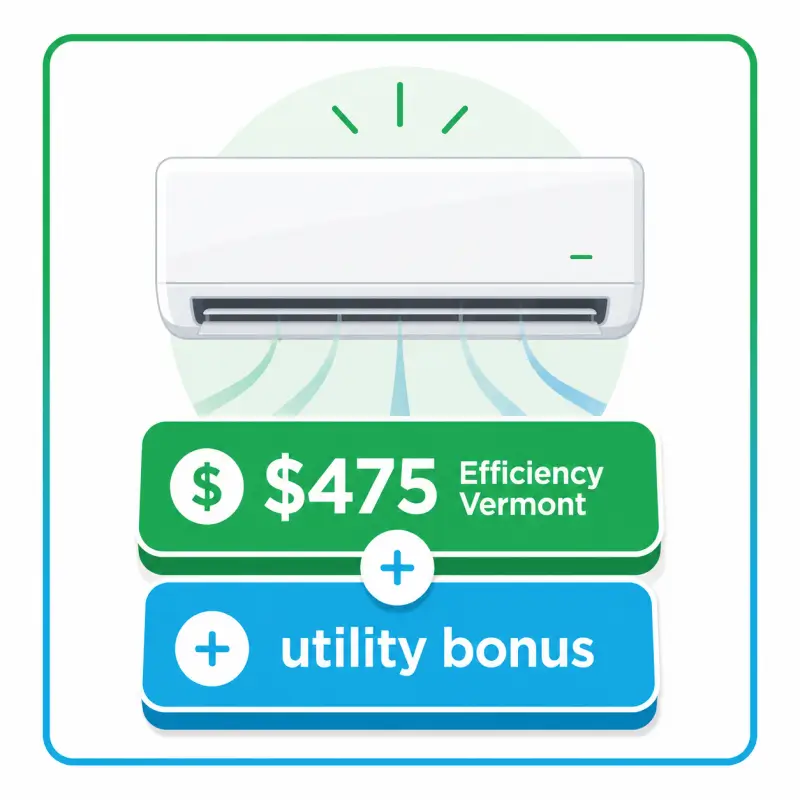
In 2026, the main incentive is an Efficiency Vermont instant discount of up to $475 per indoor head on a qualifying cold-climate ductless mini split, delivered at the point of sale through a joint program with your local electric utility. Income-eligible households can stack a utility bonus on top. The current Vermont mini split rebates compare like this:
Rebate amounts and income limits change and funding is limited. Verify current 2026 figures with Efficiency Vermont and your electric utility before purchasing.
The Efficiency Vermont Instant Discount
Efficiency Vermont, the nation's first statewide energy-efficiency utility, offers this rebate to Vermont homeowners regardless of income. One catch to plan around: the equipment must be on Efficiency Vermont's Qualified Products List, which means a cold-climate-certified model, and the discount is typically applied by a participating contractor at purchase. Working with an installer in Efficiency Vermont's Efficiency Excellence Network keeps the paperwork simple, since applications are processed through Efficiency Vermont.
Income-Eligible Utility Bonuses You Can Stack
Vermont lets you stack the Efficiency Vermont rebate with a utility income bonus, which is where the savings get real. Green Mountain Power offers qualifying low-income customers up to $2,000 per outdoor condenser, and VPPSA-area utilities offer around $1,000. Eligibility depends on your utility and household income relative to the annually updated limits. Two exclusions to note: rental-property owners and Burlington Electric Department customers are not eligible for the income bonus, and heat pumps purchased or leased from VGS don't qualify for it.
What About the Federal Tax Credit?
There is no federal heat-pump tax credit for systems installed after December 31, 2025. The Section 25C and 25D energy tax credits were terminated by the One Big Beautiful Bill Act (signed July 4, 2025) for installations after that date. If you see older articles promising a $2,000 federal credit on a mini split, they're out of date. Income-qualified households may have access to state-administered federal rebate programs like HEAR, but Vermont's HEAR program is paused as of mid-2026, so don't count on it for this year's project. Confirm current availability with Efficiency Vermont. These programs are separate from the expired tax credits.
What You'd Actually Pay After Rebates: A Vermont Example
Ranges are useful, but they hide the number you actually care about. This example runs the math all the way through. Take a mid-range two-zone system (two indoor heads on one outdoor unit) installed for about $9,000. This is what stacking the rebates does to that price for an income-eligible Green Mountain Power household versus one that qualifies for the base discount only:
Illustration only. Assumes a mid-range two-head system installed at about $9,000; Efficiency Vermont's discount is up to $475 per indoor head (some models $375); Green Mountain Power's $2,000 bonus applies per outdoor condenser for income-eligible customers at or below 80% AMI. Your quote and eligibility will differ, so verify current figures with Efficiency Vermont and your utility.
For an income-eligible household, that's roughly a third off the installed price, real savings that can move a project from someday to this year. It also shows why confirming your income bracket and your utility before you shop matters as much as choosing the unit: the exact same system can cost two very different amounts depending on who's buying it.
How To Qualify For And Claim Your Vermont Mini Split Rebate
To claim a Vermont mini split rebate, confirm your income eligibility with Efficiency Vermont before you buy, choose a cold-climate model from the Qualified Products List, and hire a contractor in Efficiency Vermont's Efficiency Excellence Network. The discount is then applied to your invoice at purchase, and your contractor files the application for you. One nice surprise most states can't match: the Vermont ductless discount comes off at the register rather than arriving as a mail-in check months later. Handle these steps upfront, in this order:
Confirm eligibility before you buy. Check your household income against Efficiency Vermont's current limits and confirm your utility offers a bonus. Don't sign a contract first.
Choose a qualifying model. Pick a cold-climate ductless mini split that appears on Efficiency Vermont's Qualified Products List. Non-listed equipment won't earn the rebate.
Hire a participating contractor. Use an installer in Efficiency Vermont's Efficiency Excellence Network so the instant discount is applied at purchase and the application is filed for you.
Take the point-of-sale discount. For most ductless rebates, the savings come off your invoice directly rather than as a mail-in check.
Apply for any income bonus. If you qualify, submit your utility's low-income bonus form (GMP customers can apply online or by form) to stack the extra savings.
Keep your paperwork. Save the invoice, model number, and rebate confirmation for your records and any future utility programs.
Weatherize First To Shrink Your System (And Your Cost)
A practical Vermont rule of thumb: weatherize before you size the heat pump. Air-sealing and insulating your home first lets you install a smaller, less expensive mini split that still keeps up on cold nights, and a smaller system costs less to buy and run. It's a real lever here because Vermont is offering up to 90% cash back on weatherization through the end of 2026 or while funding lasts. Better-sealed homes also hold conditioned air longer, which eases the load on your new system and keeps the air inside cleaner, the side of home comfort Filterbuy has specialized in for more than a decade.
How Often To Clean A Mini Split Filter (And Why It Protects Your Rebate)
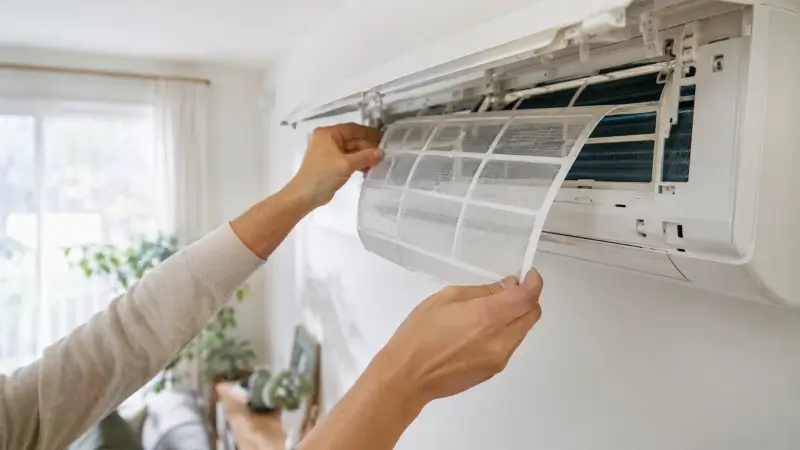
Clean or replace the filter inside each mini split indoor head every 60 to 90 days. A ductless mini split's rebate value and its efficiency rating both assume the same thing: that the unit keeps breathing freely. Every ductless mini split has a washable filter inside each indoor head, and it clogs faster than almost anyone expects. This is the part most Vermont rebate guides skip, and it's the one we know best.
Across the mini splits our Filterbuy HVAC Solutions team installs and services in Florida and Texas, the most common reason a system underperforms isn't the equipment or the install. It's a filter left in place for a year or more. A cold climate doesn't change that pattern; a Vermont heating season that runs the system hard for months just makes a choked filter cost you sooner. A clogged filter chokes airflow, quietly erases the efficiency you paid a premium and claimed a rebate to get, and recirculates dust, pollen, and pet dander through the rooms you use most.
“I've opened up mini splits barely three years old that were running like they were ten, and almost every time no one had ever cleaned the filter in the indoor head. You claimed a rebate to get an efficient system; a five-minute filter rinse every couple of months is how you keep it that way.”
— David Clark, Licensed HVAC Technician, Filterbuy HVAC Solutions
The fix is cheap and boring: rinse or replace each head's filter every 60 to 90 days, and monthly during heavy allergy or wildfire-smoke stretches. Those thin mesh screens trap hair and lint but do little for fine particles, so if your home also runs central HVAC, a quality MERV 13 filter catches the PM2.5 and wildfire smoke a mini split's stock screen misses. We've manufactured filters in the USA since 2013, in 600+ standard sizes plus custom, and auto-delivery puts the right one on your doorstep right when it's due, so protecting that rebate payback never rides on memory.
Frequently Asked Questions
7 Resources To Bookmark Before You Add A Mini Split In Vermont
You don't need an HVAC license to get this right. You just need to know where the honest answers live. These are the seven sources we'd point a neighbor to before they spend a dollar: what you'll actually get back, whether your unit qualifies, and how to keep from leaving money on the table.
1. See Exactly What You'll Get Back: Efficiency Vermont
This is the state's official rebate page, and it's your first stop. It spells out the $375–$475 back per indoor head, which models qualify, and how the discount comes right off your invoice instead of making you wait for a check.
https://www.efficiencyvermont.com/rebates/list/heat-pump-heating-cooling-system
2. Find Out If You Qualify for $2,000 More: Green Mountain Power
If Green Mountain Power is your utility, income-eligible households can stack up to $2,000 per outdoor unit on top of the Efficiency Vermont rebate. Check the income limits by county here. It takes about a minute, and for an eligible household it adds up fast.
https://greenmountainpower.com/rebates-programs/home-and-yard/heat-pump/
3. Know What the State Offers Before You Budget: Vermont Department of Public Service
Vermont's official page on weatherization help and the federal HOMES and HEAR programs. Give it a look before you count on any federal dollars. HEAR is paused right now, and this is where you'll find out if that changes.
4. Make Sure Your Unit Actually Qualifies: NEEP Cold-Climate List
Rebates only cover cold-climate-rated systems, and this is the searchable list Vermont's programs check against. Before you settle on a specific model, make sure it shows up here.
https://neep.org/heating-electrification/ccashp-specification-product-list
5. Grab the Certificate Your Rebate Needs: AHRI Directory
Your rebate paperwork needs an AHRI certificate, and this is where it lives. Ask your installer for the certificate number, then look it up here so there are no surprises when you file.
https://www.ahrinet.org/certification/ahri-directory
6. Still Deciding? Start Here: ENERGY STAR
Not sure ductless is the right call yet? This EPA guide breaks down how mini splits work, what “cold-climate certified” really means, and how to size one, in plain English, with no sales pitch.
https://www.energystar.gov/products/ductless_heating_cooling
7. Catch Every Last Incentive: DSIRE
Punch in your ZIP code and DSIRE (run by NC State) shows every federal, state, and utility incentive you might qualify for. Do this one last, so you don't leave a dollar on the table.
Supporting Statistics
Three figures from government and industry sources support the guidance on this page about Vermont mini split rebates and efficiency:
ENERGY STAR-certified ductless mini splits use up to 60% less energy than standard electric baseboard and radiator heat, because a ductless system moves heat rather than generating it. Source: ENERGY STAR
More than 35,000 cold-climate heat pump models from over 100 brands qualify on NEEP's ccASHP product list, the same list Vermont's rebate programs use to define an eligible system. Source: NEEP
Vermont was allocated $58 million in federal Home Energy Rebate funding, split as $29 million for weatherization (rolling out) and $29 million for electrification (HEAR, paused as of mid-2026). Source: Vermont Dept. of Public Service
About the author. Michelle Wan is Filterbuy's Brand Manager and Air Quality Writer. She works directly with Filterbuy's U.S. manufacturing team, across factories in Alabama, Florida, Pennsylvania, and Utah, turning the technical side of filtration, MERV ratings, and HVAC efficiency into plain-English advice for everyday homeowners. This guide pairs that filter expertise with field input from Filterbuy HVAC Solutions, which installs and services ductless mini splits, and was reviewed for technical accuracy by David Clark, a licensed HVAC technician.
Glossary
Ductless mini split: A heating-and-cooling system made of one outdoor compressor/condenser connected by refrigerant lines to one or more indoor heads, each controlling its own room; requires no ductwork.
Indoor head (air handler): The wall- or ceiling-mounted indoor unit of a mini split that delivers conditioned air to a single zone and contains a washable filter.
Zone: One room or area served by its own indoor head, controllable independently from the rest of the home.
Cold-climate heat pump: A heat pump certified to heat efficiently in sub-freezing temperatures, the type Vermont rebates require.
Efficiency Vermont: Vermont's statewide energy-efficiency utility, which administers heat pump rebates jointly with local electric utilities.
Qualified Products List: Efficiency Vermont's roster of specific equipment models eligible for rebates; a mini split must be on it to qualify.
Income bonus: An additional rebate for households at or below set income limits, offered by electric utilities like Green Mountain Power and VPPSA on top of the base Efficiency Vermont discount.
Section 25C / 25D: Former federal energy tax credits that expired for installations after December 31, 2025.
SEER2 / MERV: SEER2 measures a cooling system's efficiency; MERV rates an air filter's particle-capture ability (higher MERV = finer capture).
Ready to keep your new system running clean?
Once your mini split is in, the easiest win is never missing a filter change. Set up Filterbuy auto-delivery for your mini split and HVAC filters. They're American-made, shipped factory-direct, and trusted by more than two million households, so the schedule runs itself.
Sources: Efficiency Vermont 2026 rebate program; Green Mountain Power; U.S. cost data from 2026 industry pricing guides. Rebate amounts and eligibility change, so verify current details with Efficiency Vermont and your utility before purchasing.