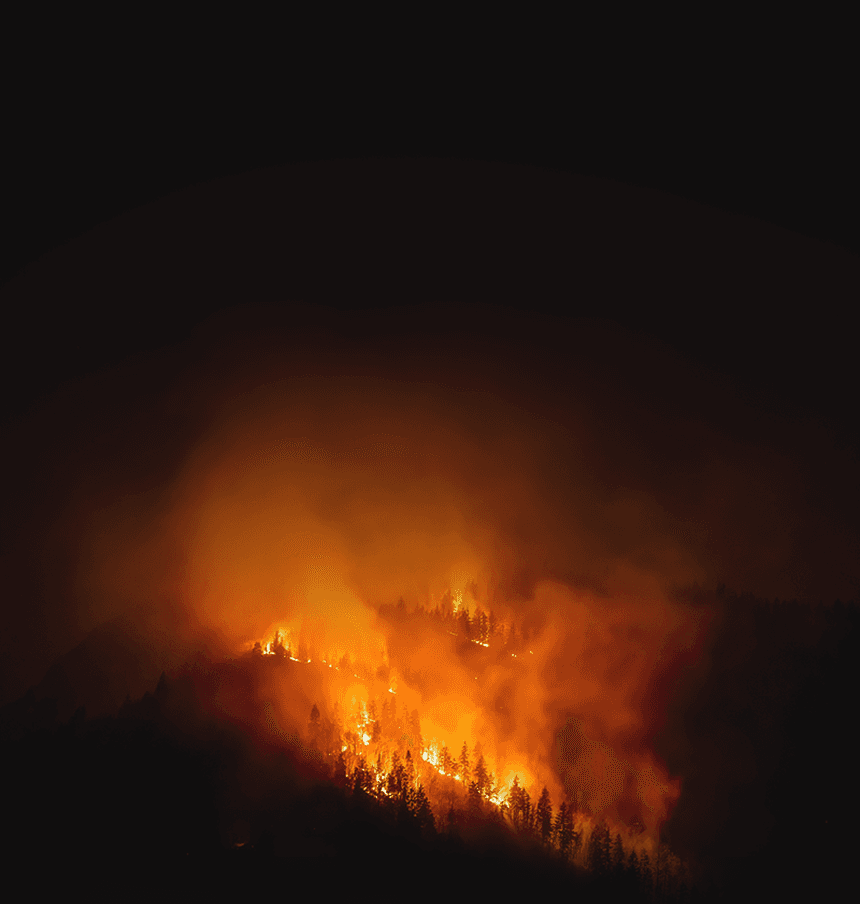
The moment a wildfire starts near you, you'll get an instant alert and simple tips to reduce your smoke exposure.
30xSmaller than a human hair
Fine enough to reach deep into the lungs. A MERV 13 is built to capture it.
It Doesn't Stay Local
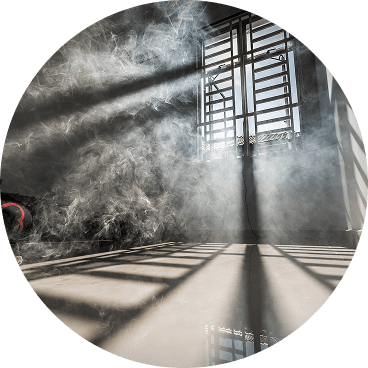
Smoke rides the wind far downwind — you can get smoky air with no fire nearby.
Simple steps to reduce indoor exposure.
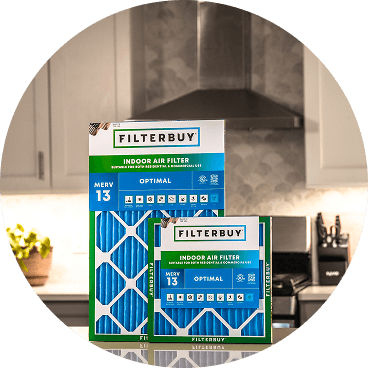
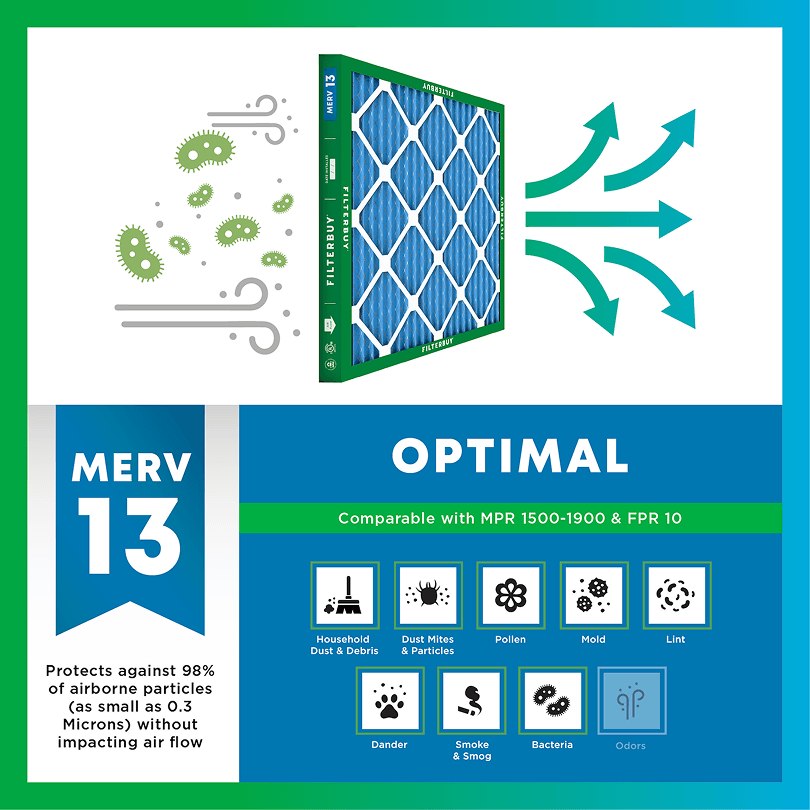
During smoke events, the EPA recommends upgrading to a MERV 13 filter — or the highest-rated filter your system can handle — to help reduce the fine particles smoke brings indoors. MERV 13 is the level most home HVAC systems can run while still capturing PM2.5, the fine particulate that makes up the bulk of wildfire smoke.
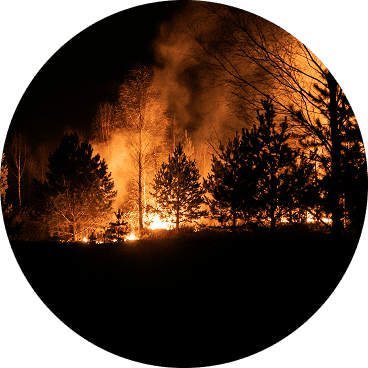
Over 70,000 wildfires burn in the U.S. every year.
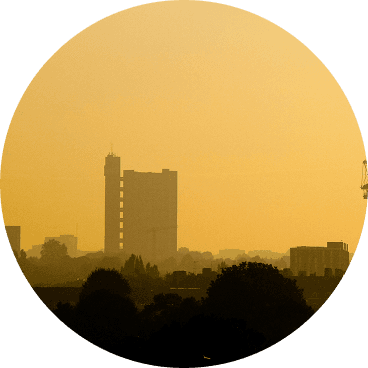
Wildfire smoke can travel 1,000+ miles, affecting states that aren't even near the blaze.
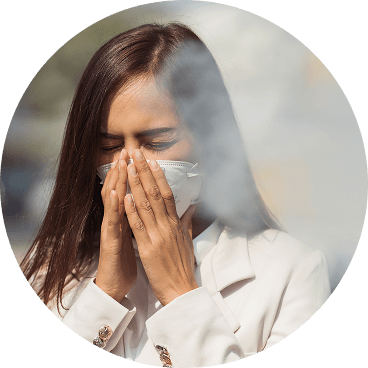
Exposure to wildfire smoke can worsen asthma, trigger heart issues, and lead to ER visits.
Indoor air can hold more fine particles during wildfire events unless it's properly filtered.
The EPA advises using MERV 13 filters or portable HEPA air cleaners during wildfire smoke events.
Use the live wildfire smoke tracker and upgrade your air filters today to protect your lungs and your home.
Shop Filters For Smoke Protection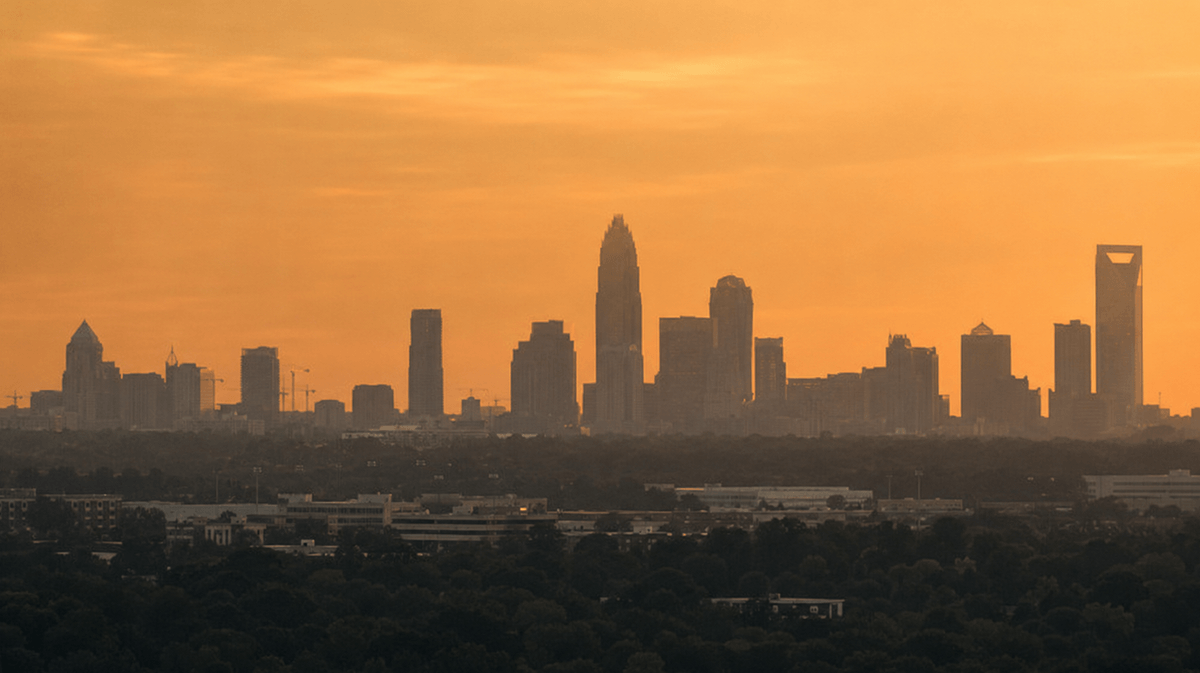
Author: Michelle Wan
Reviewer: David Clark, Licensed HVAC Technician
Publish Date: July 22, 2026
Updated Date: July 22, 2026
Is Charlotte breathing wildfire smoke today? The live map above has your answer, pulled from federal monitors in real time. Charlotte rarely burns on its own. Its smoke almost always travels in from Western North Carolina, the Southeast, or Canada, and this page explains what's driving it and what to do at home.
Charlotte doesn't burn much on its own. Most of the wildfire smoke that reaches the city is transported in from somewhere else, whether that's the mountains of Western North Carolina, prescribed burns and wildfires further south, or long-range Canadian wildfire smoke drifting down the East Coast. Check Filterbuy's live map above for today's exact reading, then use this page to understand what's driving it and what to do about it inside your own home.
Charlotte's worst smoke days almost always trace back to fires burning elsewhere, most often Western North Carolina, the Southeast, or Canada.
Mecklenburg County Air Quality (MCAQ) runs federally approved monitors and reports a real-time NowCast AQI, not a once-a-day estimate.
Hurricane Helene debris keeps regional wildfire risk elevated across Western North Carolina's mountains in spring and fall.
The EPA recommends upgrading to a MERV 13 filter, or the highest efficiency your HVAC system can safely support, during wildfire smoke events.
Start with the live map above for today's reading. MCAQ issues air quality alerts, not just forecasts, covering both ozone and wildfire pollution. In one recent episode, smoke from hundreds of Canadian wildfires stalled over the Carolinas and pushed Charlotte into a multi-day Code Orange alert.
A Code Orange day means sensitive groups (kids, older adults, anyone with asthma or heart or lung disease) should watch for symptoms and limit strenuous outdoor activity. Code Red and above mean the general population can be affected too.
Can't tell if it's smoke or just a humid Piedmont afternoon? A campfire smell points to smoke. A still, milky sky with no smell is usually ozone or haze. For pollen and traffic PM2.5, see Filterbuy's live Charlotte AQI map.
Charlotte's Piedmont location, cleared of dense forest and away from major wildland-urban interface areas, makes home-grown ignitions uncommon inside city limits. Its smoke has three recurring sources.
Western North Carolina's mountains, roughly 130 miles west, where spring and fall are the historic fire seasons and Hurricane Helene timber has left a heavy fuel load.
Long-range Canadian wildfire smoke, which rides weather patterns down the East Coast and settles over the Carolinas when a stalled system keeps it from clearing out to sea.
Wildfires and prescribed burns in Georgia, South Carolina, and coastal North Carolina, drifting smoke north and west depending on wind direction.
Because the source is often hundreds of miles away, Charlotte's smoke days don't always line up with anything happening locally. New to the map? See Filterbuy's guide to reading a wildfire smoke map.
MCAQ runs real-time, federally approved monitors that track PM2.5, ozone, and other pollutants around the clock, feeding directly into the AQI on the live map above. Station placement separates traffic-corridor readings, such as one near I-77, from population-center readings elsewhere.
Based on the EPA's Air Quality Index. Check the live map above for Charlotte's current reading.
North Carolina logs thousands of wildfires yearly, and 2026 has followed that pattern. The N.C. Forest Service's daily report tracked twelve wildfires burning a combined 3.6 acres in a single mid-July snapshot, typical of most days on the state's Signal 14 system. Most are small, quickly contained, and human-caused, not the sprawling blazes people picture when they hear the word wildfire.
Western North Carolina has carried a disproportionate share of this year's fire risk, with Hurricane Helene debris still fueling wildfire danger across the mountains, per Governor Josh Stein. None of these mountain fires threatened Charlotte directly, but smoke from fires like these can push the city's air quality into Code Orange or worse.
Spring (March–April): Western North Carolina's historic fire season, with burn bans common. Most likely to send mountain smoke toward Charlotte on a west wind.
Summer (June–August): Charlotte's ozone peaks on hot afternoons just as Canadian smoke season is most active, so the two often arrive together.
Fall (Late September–Early December): North Carolina's second fire season, as fresh leaf litter and dry, windy days raise risk again.
Winter (December–February): The quietest window for smoke, though PM2.5 can still spike from wood burning and cold-air inversions.
Charlotte's tree pollen season, late February through May, overlaps with Western North Carolina's spring fire season, so hazy, itchy-eyed days often get blamed on the wrong culprit. Pollen brings sneezing and itchy eyes that ease up indoors, plus visible yellow dust outside. Smoke brings a scratchy throat or cough that doesn't let up indoors. A high PM2.5 reading on the live map points to smoke; a normal reading with ongoing misery points to pollen. Either way, closed windows and a MERV 13 filter address both.
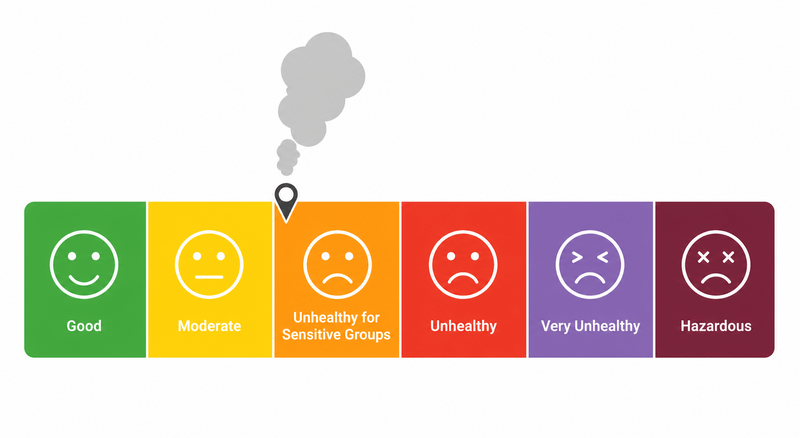
Once outdoor AQI climbs into Yellow or higher, the CDC and EPA recommend the same first move: close up the house, run the air conditioner instead of opening windows, and route indoor air through the highest-efficiency filter your system can safely handle.
The EPA recommends MERV 13, or the highest MERV rating your system supports, during smoke events. It captures more fine PM2.5 than the MERV 8 filters common in many Charlotte homes, without requiring a new system. Order and size your filter before the season gets busy, since households that wait until the map turns orange are the ones most likely to find their size sold out locally.
Older Charlotte homes, common in Dilworth and Eastover, tend to have leakier ductwork and window seals, so smoke finds those gaps first. Renters without control over building HVAC still have options: a portable air cleaner in the room used most, weatherstripping, and closed interior doors to concentrate cleaner air in one space.
What does the live map say? Green or Yellow means it's fine to open up. Orange or worse means keep things closed.
Can you smell smoke or see haze? Trust your nose over a borderline number.
Is anyone in your home in a sensitive group? That should tip the decision toward closed, even at Moderate.
A single yes is reason enough to keep windows shut. Change your filter before smoke season rather than during it, and once the map clears, open windows and run exhaust fans to flush out anything that settled indoors.
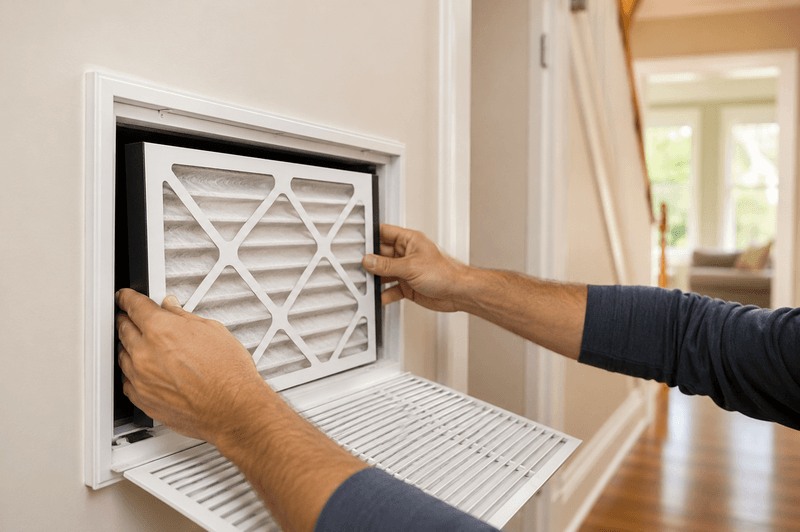
Filterbuy carries MERV 13 residential air filters in over 600 sizes to fit most HVAC systems. For a room-by-room walkthrough, see Filterbuy's guide to keeping wildfire smoke out of your house.
Charlotte residents check the weather before they walk outside, but almost nobody checks the air, and that gap matters most when smoke from a fire hundreds of miles away is the actual story. After manufacturing filters for over a decade and serving more than two million households, we built this map so people can see exactly what's in their air today.
David Heacock, Founder and CEO, Filterbuy
Seven government sources for more than a live reading.
NC DEQ explains how the state tracks wildfire and prescribed-burn smoke, and what to do if it settles into your neighborhood.
Source: NC DEQ: Smoke, Wildfires & Prescribed Burns
The N.C. Forest Service publishes a wildfire situation report most business days, by district.
Source: N.C. Forest Service: Wildfire Situation Report
MCAQ's monitoring-station page shows which neighborhoods its sensors cover.
Source: Mecklenburg County Air Quality: Monitoring Stations
The EPA details how smoke infiltrates a home and which steps cut indoor exposure most.
Source: EPA: Wildfires and Indoor Air Quality (IAQ)
The CDC's guidelines spell out warning signs, from coughing to chest tightness, with precautions for sensitive groups.
Source: CDC: Safety Guidelines for Wildfires and Wildfire Smoke
AirNow's Fire and Smoke Map is the federal data source behind most live wildfire tools, including this page's map.
Source: AirNow: Fire and Smoke Map, Version 4
ReadyNC covers how the state issues wildfire warnings and evacuation guidance, plus advance alert sign-up.
Source: ReadyNC: Wildfire Preparedness
4,588 wildfires burned 15,706 acres statewide in 2024, and nearly 99% were human-caused, mostly escaped debris burns. This statewide activity is the source of the regional smoke reaching Charlotte.
Source: N.C. Department of Public Safety
Charlotte-Concord, NC-SC received an F grade for ozone in the 2026 “State of the Air” report and ranked 69th most polluted metro nationally. Ozone and wildfire smoke both peak on the same hot, stagnant afternoons.
Source: American Lung Association
A Nature Communications study of Southern California hospitalizations found wildfire PM2.5 drove 1.3% to 10% more respiratory admissions per 10 ug/m3 increase, versus 0.67% to 1.3% for everyday pollution.
Source: Aguilera et al., 2021, National Institutes of Health (PMC7935892)
Charlotte's air quality story is really about wind direction. On a clear day, there's no wildfire signal, just typical Piedmont traffic and ozone. On a bad day, the cause is usually burning hundreds of miles away. Bookmark the live map and check it year-round, especially spring and fall.
Actual wildfire ignitions inside city limits are rare. The Piedmont landscape has far less forest fuel than Western North Carolina's mountains, so most wildfire smoke here is transported in from fires burning elsewhere.
The three most common sources are Western North Carolina's mountains, long-range Canadian wildfire smoke, and wildfires or prescribed burns in Georgia, South Carolina, or coastal North Carolina.
At Yellow (51–100), sensitive groups should start watching for symptoms. At Orange (101–150) and above, the CDC and EPA recommend closing windows and doors and running a well-filtered HVAC system or portable air cleaner.
The EPA recommends MERV 13, or the highest rating your HVAC system can safely handle, to capture more fine PM2.5. Filterbuy carries MERV 13 filters in over 600 sizes.
Set up Filterbuy's auto-delivery filter subscription so a fresh MERV 13 filter arrives on schedule, or take our two-minute quiz to find the right filter for your system.
AQI (Air Quality Index): The EPA's 0–500 scale for air pollution, in six categories from Green (good) to Maroon (hazardous).
PM2.5: Fine particulate matter 2.5 micrometers or smaller, small enough to reach deep into the lungs. It is the main pollutant in wildfire smoke.
MERV Rating: Minimum Efficiency Reporting Value, a 1–16 scale for how well an HVAC filter captures airborne particles. Higher numbers capture smaller particles, including wildfire smoke.
Michelle Wan is Filterbuy's Brand Manager and Air Quality Writer. She authors Filterbuy's wildfire and air-quality resource pages for cities across the country.
Reviewed by David Clark, Licensed HVAC Technician.
Subscribe to wildfire smoke alerts for Charlotte, NC, to get a heads-up before the next event reaches your area.