
Reno, NV Live Wildfire Smoke Map
Get Alerts For Wildfires In Your Area
The moment a wildfire starts near you, you'll get an instant alert and simple tips to reduce your smoke exposure.
What's In The Smoke
30xSmaller than a human hair
Fine enough to reach deep into the lungs. A MERV 13 is built to capture it.
How Far It Travels


It Doesn't Stay Local
Smoke rides the wind far downwind — you can get smoky air with no fire nearby.
What To Do During A Smoke Event
Simple steps to reduce indoor exposure.
- Stay In, Close UpShut windows and doors to keep smoke out.
- Set Fan To "On"Keeps air cycling through your filter, not just when heating or cooling.
- Recirculate AirSwitch off fresh-air intake so you're not pulling smoke in.
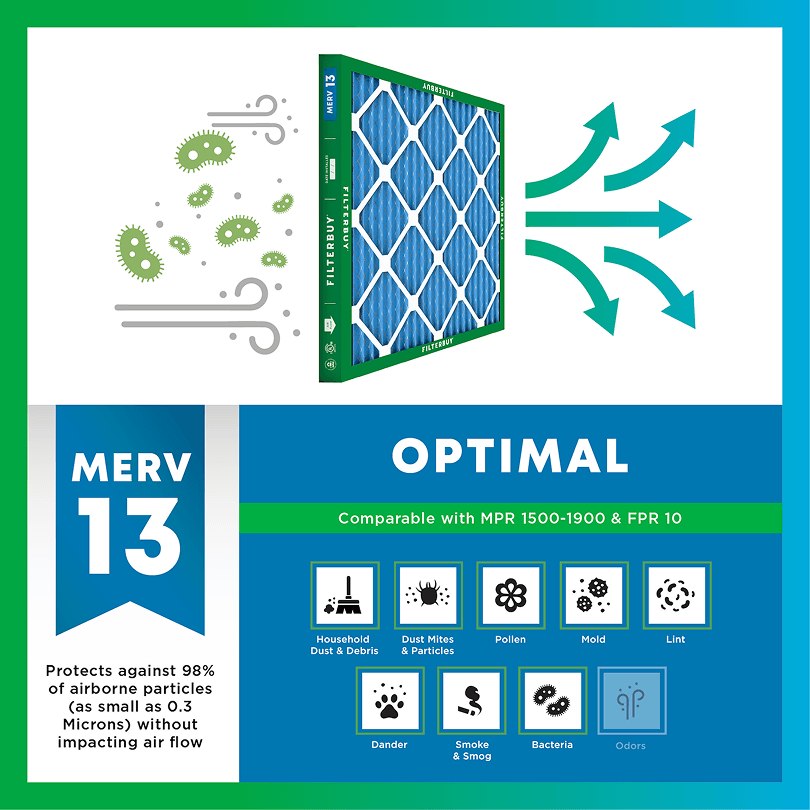
- Run A MERV 13Built to capture the fine PM2.5 in smoke.
- Add A PurifierExtra filtration for the room you use most.
- Wear an N95 if OutsideFits snug to block fine particles — a cloth mask won't.


The Best Air Filter For Wildfire Smoke
During smoke events, the EPA recommends upgrading to a MERV 13 filter — or the highest-rated filter your system can handle — to help reduce the fine particles smoke brings indoors. MERV 13 is the level most home HVAC systems can run while still capturing PM2.5, the fine particulate that makes up the bulk of wildfire smoke.
- Captures PM2.5 particles
- Blocks ash, soot, and smoke odor
- Keeps your indoor air safe—even when the outdoor air is dangerous
- Meets the EPA's recommended rating for filtering fine wildfire smoke particles.

Wildfire Smoke FAQs
Facts About Wildfires
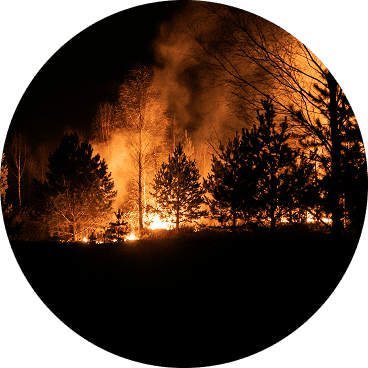
Over 70,000 wildfires burn in the U.S. every year.
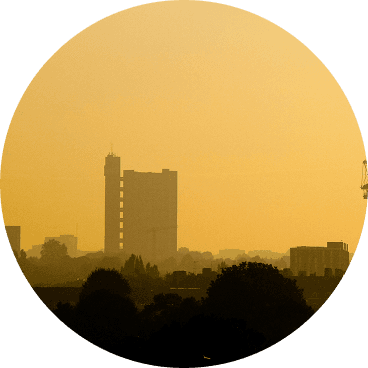
Wildfire smoke can travel 1,000+ miles, affecting states that aren't even near the blaze.
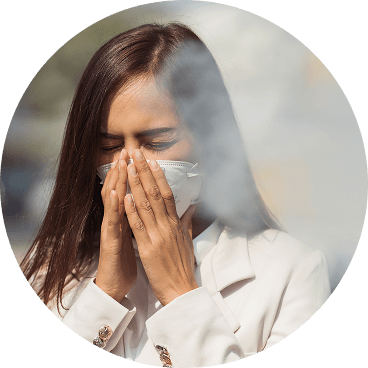
Exposure to wildfire smoke can worsen asthma, trigger heart issues, and lead to ER visits.
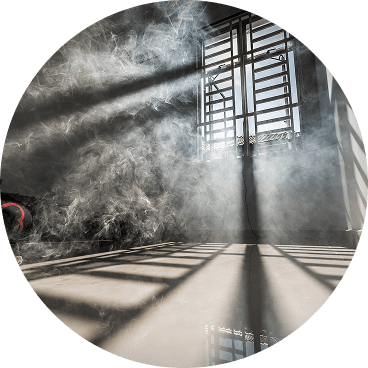
Indoor air can hold more fine particles during wildfire events unless it's properly filtered.
The EPA advises using MERV 13 filters or portable HEPA air cleaners during wildfire smoke events.
Don't Wait Until The Smoke's Inside.
Use the live wildfire smoke tracker and upgrade your air filters today to protect your lungs and your home.
Shop Filters For Smoke Protection
Live Reno, NV Forest Wildfire & Smoke Map Today: Local Air Quality Tracking & Indoor Protection Solutions from Filterbuy.com's Air Obsessed Experts
By Michelle Wan, Brand Manager & Air Quality Writer
Reviewed By: David Clark, Licensed HVAC Technician
Published: August 9, 2026 | Updated: August 9, 2026
Reno’s wildfire smoke changes by the hour. Reading Northern Nevada Public Health’s advisories for this page, what surprised me most is that the number at 7 a.m. and the one at 2 p.m. can describe two different days, and the one that matters is usually the one you slept through. The map below tracks live conditions across the Truckee Meadows. The rest of this page covers what no map shows: the air already inside your house.
TL;DR: Quick Answers
Reno’s smoke peaks early morning and evening, when calm air lets it pool on the valley floor, so the map above is the only reliable read on what you’re breathing now. If the AQI near you tops 100: close the house up, switch the HVAC fan to "On," and get a clean MERV 13 filter in the slot.
Top Takeaways
The AirNow Fire and Smoke Map is the authoritative live source for Reno smoke. It’s a joint EPA and U.S. Forest Service product, updated hourly.
Wildfire smoke drives most of Reno’s fine-particle pollution in late summer: 56% to 65% of PM2.5, per Desert Research Institute research.
Northern Nevada Public Health issues an Advisory at AQI 101–150 and a Stage 1 Air Pollution Alert above a 24-hour average of 150.
Reno’s smoke spikes early morning and evening, not midday. That’s valley geography, not the fire.
The EPA recommends MERV 13 or higher during smoky periods. With the fan on continuous, it can cut indoor PM2.5 by roughly half.
How Do I Read the Reno Wildfire and Smoke Map?
Read the map in three layers: air quality circles, fire icons, then smoke plumes. The circles are live PM2.5 readings near you and matter most. Flame icons mark fires reported to the National Interagency Fire Center. Plumes are satellite-detected smoke overhead, often thousands of feet up and never reaching the ground, so on many Reno days that layer looks ominous while every Washoe County monitor reads Good.
Circle size tells you what device is reporting:
TABLE 1: Fire and Smoke Map icon types
Icon shapes reflect version 4 of the AirNow Fire and Smoke Map. Smoke plumes are hidden by default; toggle NOAA Smoke Plumes in the settings menu.
One setting trips people up, and nothing on the map’s face tells you about it: smoke plumes don’t appear by default. Open the settings icon at the upper right and toggle on "NOAA Smoke Plumes." See EPA’s guide to the map’s icons or our own walkthrough on reading a smoke map.
All readings show as NowCast AQI, which reacts fast when conditions change. And because the Truckee Meadows sits between two ranges, readings differ across town. A Sparks monitor can sit two AQI categories from one in the North Valleys. For a non-smoke view, see our live Reno AQI tracker.
Why Is Reno’s Air Worse at 6 a.m. Than at 2 p.m.?
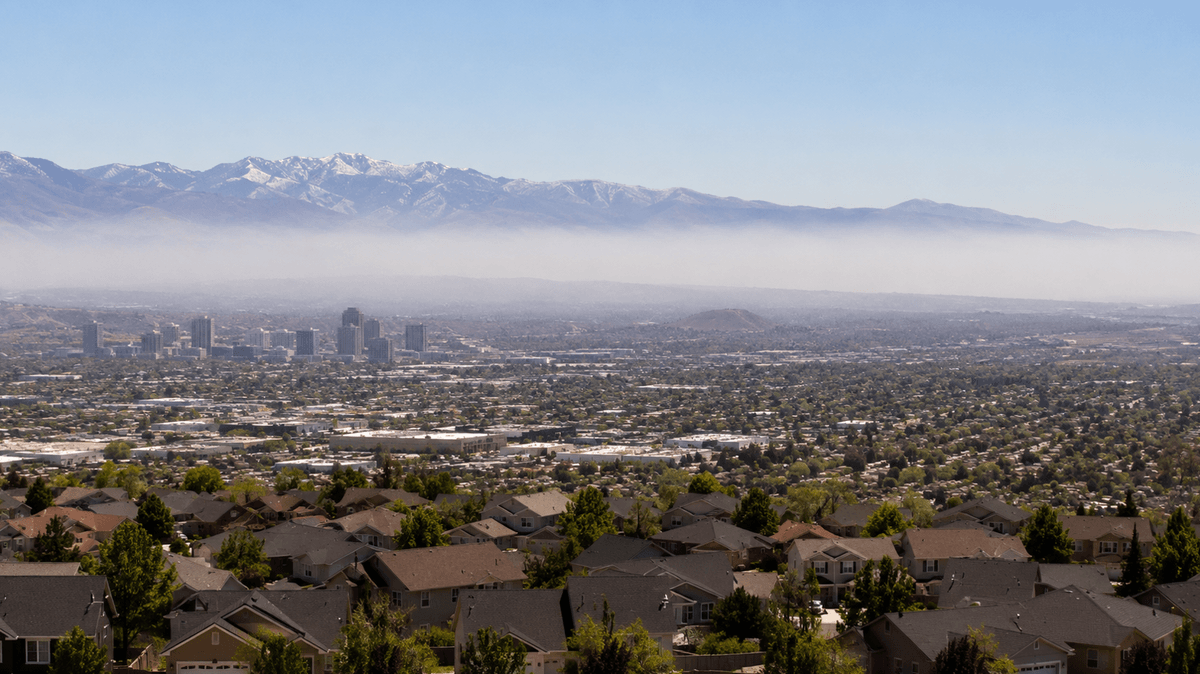
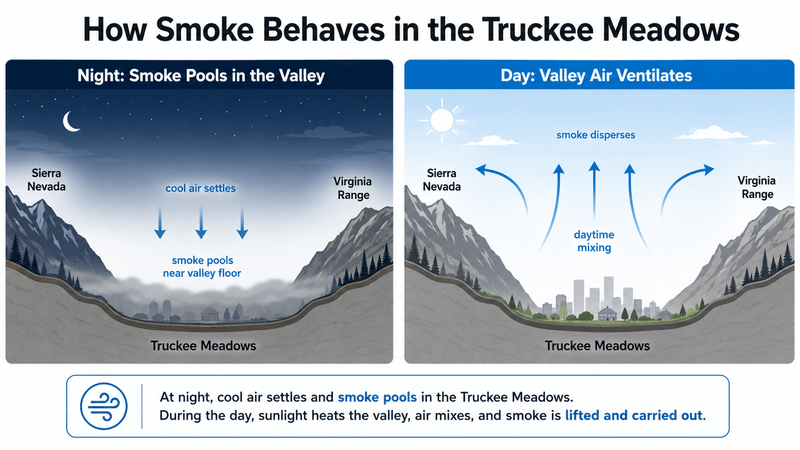
Reno’s worst smoke hours are usually early morning and evening, when calm air stops ventilating the valley and lets smoke sink and pool on the valley floor. Overnight is when it builds.
The mechanism is valley meteorology. The Truckee Meadows is partially enclosed by the Sierra Nevada to the west and the Virginia Range to the east. Daytime wind flushes the basin. After sunset, the air cools, sinks, and stagnates, and smoke already here has nowhere to go. Ben McMullen of Northern Nevada Public Health explained the pattern to 2 News Nevada: overnight calm lets "smoke that’s built up overnight to settle down and stay in the valley."
This is the part I’d tell a neighbor first. Every national wildfire-smoke guide I read for this page says to check the AQI before going outside. None mentioned that in a valley like this, the worst air arrives while you’re asleep with the windows open.
What that means for your house: close bedroom windows before bed and run the HVAC fan overnight.
Wind direction is the other Reno variable. Fires north of Loyalton arrive on north-northwest flow, Sierra fires on a west wind, central Nevada fires on an east wind. A fire 60 miles out with the wind blowing the other way may not touch your AQI at all.
What Should I Do at Each AQI Level in Reno?
Match your response to the reading on the monitor nearest you.
TABLE 2: AQI level and indoor response
AQI categories are the U.S. EPA standard. Advisory and Stage 1 Alert thresholds are set by Northern Nevada Public Health for Washoe County.
Above 100, NNPH guidance is consistent: keep windows and doors closed, and don’t add indoor smoke of your own. No vacuuming, candles, frying, or smoking. See our full guide to keeping wildfire smoke out of your house.
How Do I Keep Wildfire Smoke Out of My Reno Home?
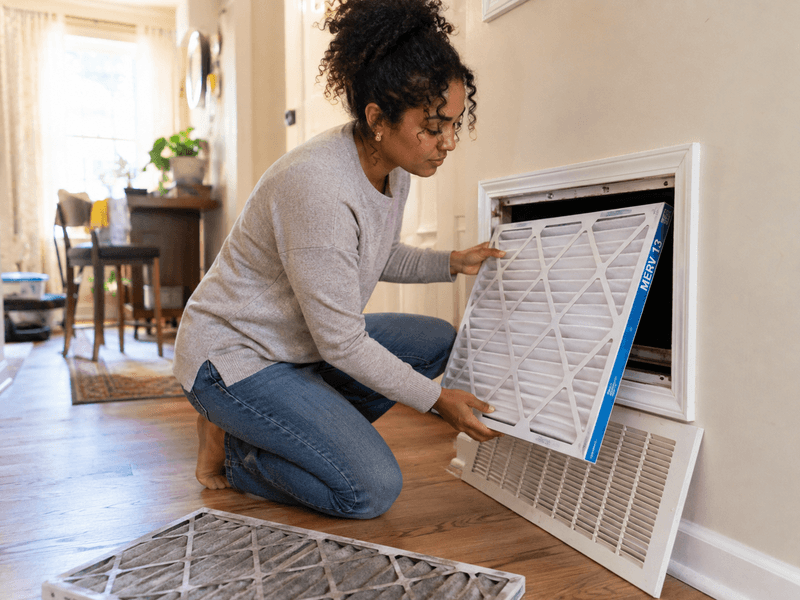
Your HVAC filter is the largest lever you control. The U.S. EPA’s guidance on preparing for smoke and heat recommends MERV 13 or higher during smoky periods, and notes most systems accommodate it without equipment problems provided the filter is replaced frequently.
Close the envelope, and shut off the swamp cooler. An evaporative cooler pulls outdoor air through a wet pad and blows it inside, making it a smoke intake with a fan on it. EPA advises against running one in smoky conditions.
Put a MERV 13 in the slot. MERV 8 handles dust and lint, MERV 11 catches more, neither reaches what EPA recommends for smoke. Filterbuy makes MERV 13 filters in 600+ sizes that fit a standard slot.
Switch the thermostat fan to "On." A filter only works when air moves through it.
Check the filter weekly, not monthly. Heavy smoke loads a 1-inch filter far faster than dust.
Add a clean-air room. One bedroom, door closed, HEPA purifier running. This is where kids, older adults, or anyone with asthma or heart disease should sleep during an Alert. No purifier? A DIY Corsi-Rosenthal box does the same job for less.
What About Reno’s Other Smoke Season?
Wildfire is only half of Reno’s air quality year. From November 1 through the end of February, Northern Nevada Public Health runs a Green, Yellow, Red Burn Code governing whether you may legally use a fireplace or wood stove. Wood burning accounts for roughly 40% of wintertime fine particulate matter in the Truckee Meadows, according to then-District Health Officer Kevin Dick. The same inversion that traps summer smoke traps winter woodsmoke.
Green means burning is allowed, Yellow means discouraged, and Red follows a declared Stage 1 Episode, prohibits burning for 24 hours, and is enforced with warnings and fines. It covers ZIP codes from Washoe Lake to Silver Knolls, updates daily at OurCleanAir.com, and exempts households that file a Sole Source of Heat Declaration.
The upshot: the Filterbuy MERV 13 you install for August smoke is doing the same job in January. Reno’s PM2.5 problem doesn’t take the winter off. It changes where the smoke comes from.
I write about filtration for a living, and researching Reno changed how I’d answer the most basic question people ask me. Someone says ‘is the air bad today?’ and for the Truckee Meadows the honest answer isn’t a number, it’s ‘bad when?’ A green dot at noon and a red one at 5 a.m. are the same day.
Michelle Wan, Brand Manager and Air Quality Writer, Filterbuy
Seven Essential Resources for Reno Smoke Season
Verified sources, each from a different organization.
Read every icon on the map: AirNow Fire and Smoke Map guide
Washoe County’s official alerts: Northern Nevada Public Health AQMD
Federal health guidance and clean-air rooms: CDC Safety Guidelines
Free alerts at a threshold you choose: Subscribe to EnviroFlash
Why nearby readings disagree: UC Berkeley EH&S on monitors versus sensors
Multi-day forecasts for large fires: IWFAQRP smoke outlooks
Statewide conditions: Filterbuy’s live Nevada AQI map
Three Statistics That Change How Reno Homeowners Think About Smoke
56% to 65%. That’s the share of Reno’s PM2.5 attributable to wildfire emissions during July, August, and September across 2016–2021, per Desert Research Institute, New Study Analyzes Air Quality Impacts of Wildfire Smoke. In late summer, smoke isn’t one contributor. It’s the majority.
106 wildfires. That’s how many sent smoke into Reno’s air between July 2017 and October 2020, per the Desert Research Institute’s summary of that study. Reno doesn’t get smoke from one fire a year. It gets it from dozens.
About 50%. That’s the indoor PM2.5 reduction from a high-efficiency HVAC filter with the fan running continuously, per EPA guidance on reducing smoke exposure indoors. Your filter, not the outdoor AQI, sets what your family breathes.
Frequently Asked Questions
Author & Review
Written by Michelle Wan, Brand Manager and Air Quality Writer at Filterbuy, covering AQI trends, wildfire smoke, and indoor air quality.
Technically reviewed by David Clark, Licensed HVAC Technician and CEO of Filterbuy HVAC Solutions, for accuracy on airflow and static pressure. Published by Filterbuy, manufacturing HVAC filters in the U.S. since 2013.
Subscribe to wildfire smoke alerts for Reno, NV, to get a heads-up before the next event reaches your area.