
Air Quality in Nevada
Air quality index (AQI⁺) and PM2.5 air pollution in Nevada •


Get Alerts For Unhealthy AQI In Your Area
When air quality in your area reaches unhealthy levels, we'll send you a quick alert, along with expert tips on how to reduce your exposure.
Live Air Quality Ratings in Nevada
Live Most Polluted City Ranking
Real-time most polluted cities in Nevada
Live Cleanest City Ranking
Real-time cleanest cities in Nevada
The Right Air Filter For High AQI Days
When outdoor air quality drops, the EPA recommends upgrading to a MERV 13 filter — or the highest-rated filter your HVAC system can handle — to help capture more of the fine particulate (PM2.5) that comes with poor air quality. MERV 13 is the highest rating most residential systems can run without restricting airflow.
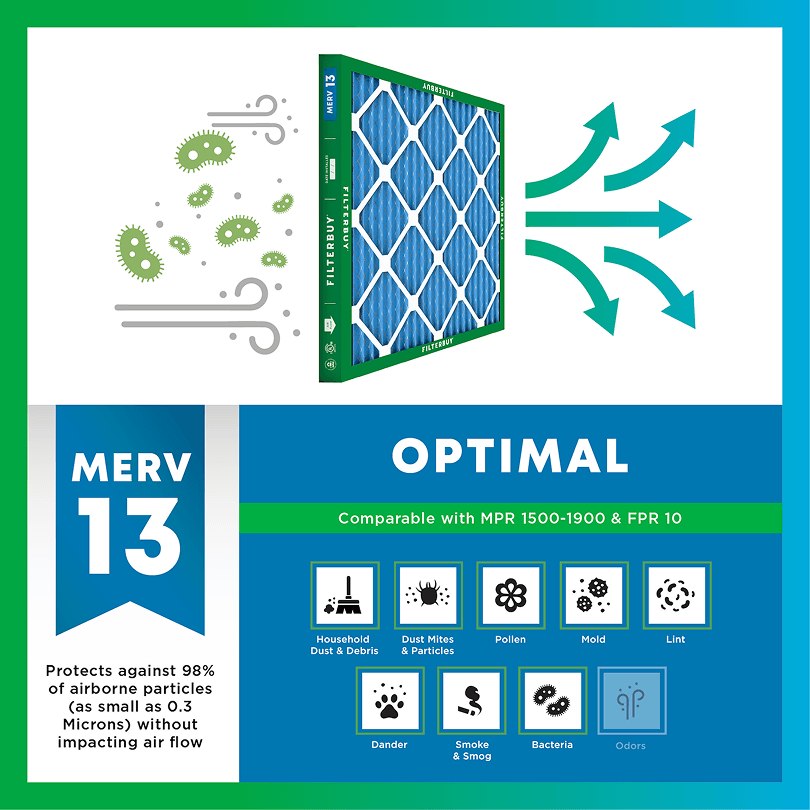
- Captures PM2.5 and other fine particulates
- Filters ash, soot, and smoke particles
- Rated to capture particles as small as 0.3 microns
- Matches the filter rating the EPA suggests during high-AQI and smoke events

AQI FAQs
What is AQI?
AQI stands for Air Quality Index, the EPA's scale for reporting daily air quality. It runs from 0 to 500. The higher the number, the greater the level of air pollution. Values at or below 100 are generally considered satisfactory; values above 100 mean air quality is unhealthy, first for sensitive groups, then for everyone as numbers climb.
What does AQI measure?
The AQI tracks five major pollutants regulated by the Clean Air Act: ground-level ozone, particle pollution (PM2.5 and PM10), carbon monoxide, sulfur dioxide, and nitrogen dioxide. The reported AQI value reflects whichever pollutant is highest at that time — most often ozone or fine particles (PM2.5).
How is AQI calculated?
Monitoring stations measure pollutant concentrations, and the EPA converts each into a standardized 0–500 score using set breakpoints. Each pollutant gets its own sub-index, and the highest sub-index becomes the reported AQI. That's why a single number can represent different pollutants on different days.
What is a good AQI?
An AQI of 0–50 is rated "Good" — air quality poses little or no risk. 51–100 is "Moderate," acceptable for most people though unusually sensitive individuals may want to limit prolonged outdoor exertion. Anything at or below 100 is generally considered satisfactory air quality.
What does an AQI of 100 (or 150) mean?
100 is the dividing line: at or below it, air quality is satisfactory for the general public. From 101–150, air is "Unhealthy for Sensitive Groups" — people with respiratory conditions, older adults, and children. From 151–200, it's "Unhealthy" and everyone may begin to feel effects.
Why is the AQI bad today?
Short-term AQI spikes usually come from wildfire smoke, temperature inversions that trap pollutants near the ground, high-ozone weather (hot, sunny, stagnant days), or heavy traffic and industrial activity. Check a real-time source like the map on this page to see which pollutant is driving today's reading in your area.
What AQI is bad for running or exercise?
Many runners follow the EPA category lines: below 50, no adjustment needed; 51–100, unusually sensitive people may shorten intense workouts; above 100, sensitive groups are advised to reduce prolonged or heavy outdoor exertion; above 150, that advice extends to everyone. Exercise increases how much air you breathe in, which is why thresholds matter more during workouts.
What AQI is safe to open windows?
A common rule of thumb is to keep windows open when the AQI is under 100 and close them when it climbs above, especially during wildfire smoke events when fine particles are elevated. When windows are closed, running your HVAC system with a fresh filter helps capture particles circulating indoors.
Should I wear a mask based on AQI?
Public health agencies generally suggest considering a well-fitted N95-style respirator outdoors when the AQI exceeds 150, particularly during smoke events. Cloth and surgical masks don't filter fine particles effectively. Follow guidance from your local health department, which may adjust recommendations during severe episodes.
Check Today's Live Real Time Air Quality Index AQI Map in Nevada Now
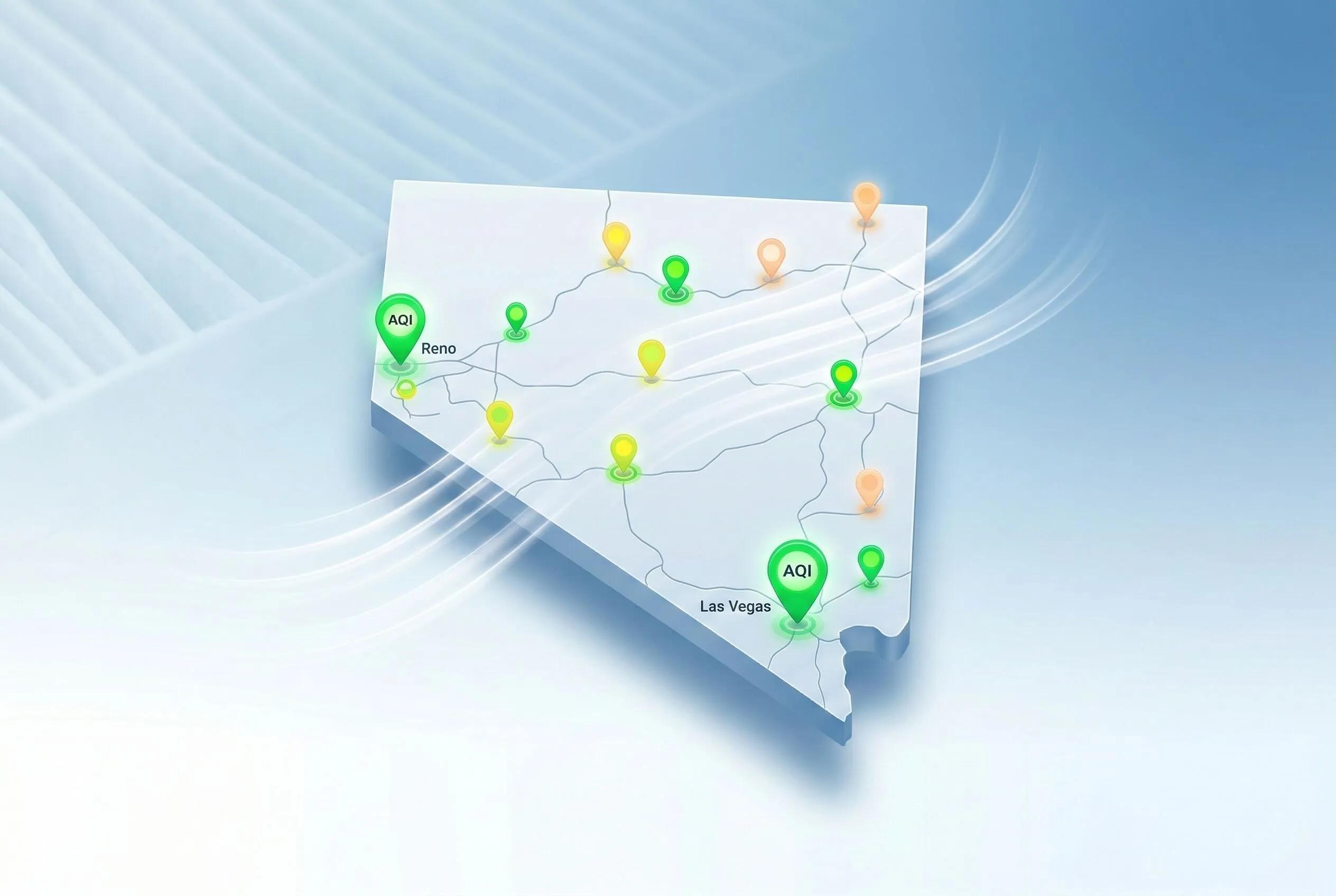
Nevada's air quality changes fast—desert dust, wildfire smoke, and urban emissions create a unique mix that affects millions. Our live AQI map shows you exactly what's happening right now in Las Vegas, Reno, Carson City, and beyond. We've spent over a decade helping families breathe cleaner air, and we know that tracking outdoor conditions is the first step to protecting what matters most: the air inside your home.
TL;DR Quick Answers
Live Air Quality Index AQI Map Now Today in Nevada
Nevada's current AQI varies by region. Las Vegas and Reno typically range from 'Good' (0-50) to 'Moderate' (51-100), though conditions can spike during wildfire season or high-wind dust events.
• Real-time data updates continuously from EPA monitoring stations
• AQI 0-50 = Good (green) | AQI 51-100 = Moderate (yellow) | AQI 101+ = Unhealthy
• When outdoor AQI rises, indoor air quality suffers—unless you're actively filtering it
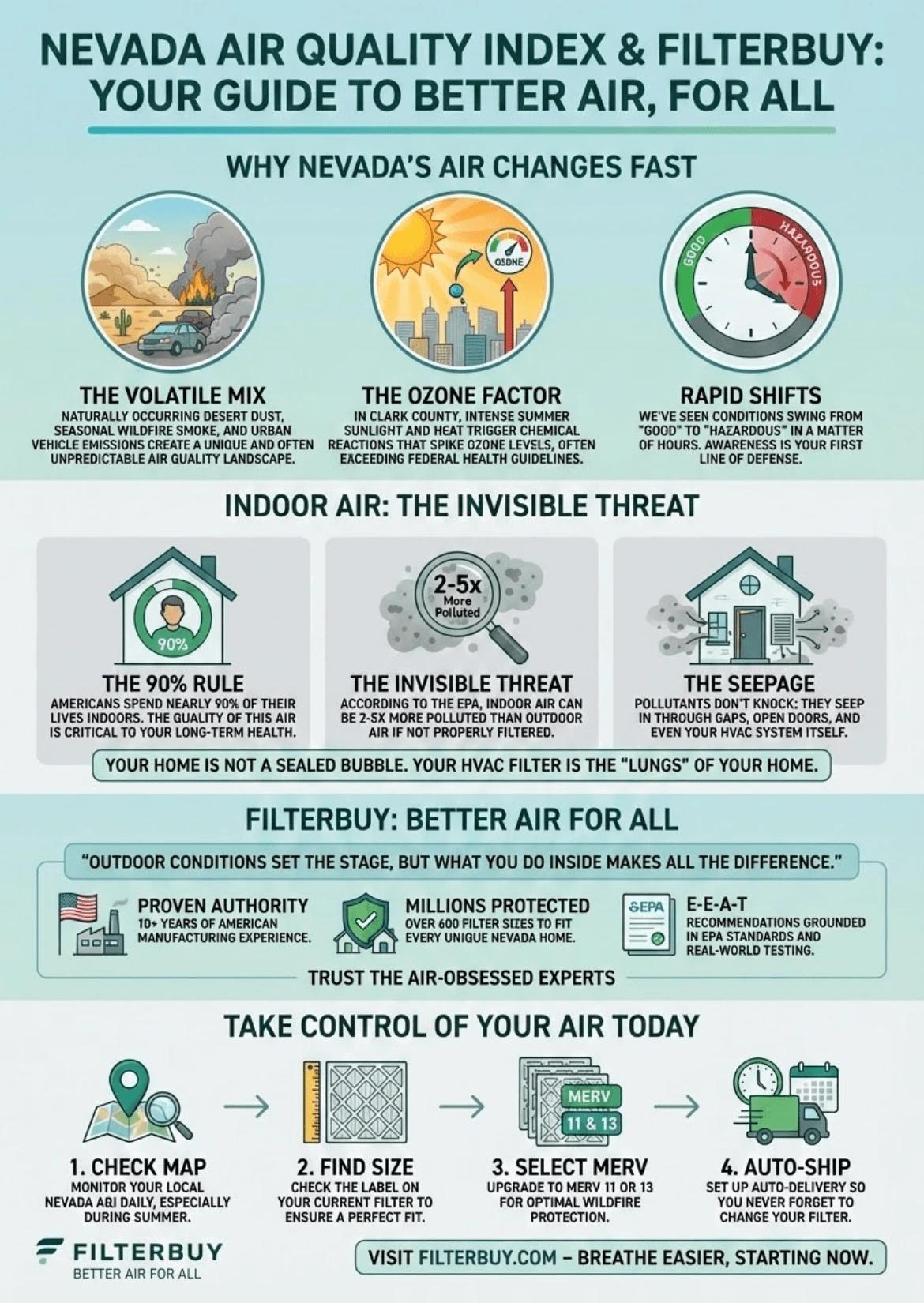
• MERV 11-13 filters capture pollutants that seep indoors
Top Takeaways
• Real-time AQI tracking: Desert dust + wildfires + emissions = unpredictable conditions. Monitor daily.
• Hotspots: Las Vegas and Reno see the most ozone and particle pollution issues.
• Indoor impact: Bad outdoor air = compromised indoor air. Filtration matters.
• The 90% rule: You spend most of your life indoors. Indoor air can be 2-5x worse than outdoor.
• Filter solution: MERV 11-13 filters trap fine particles and allergens effectively.
Understanding Nevada's Air Quality Landscape
Nevada's air quality story is complex. The Silver State's desert environment means naturally occurring dust is always a factor, but that's just the baseline. Add in seasonal wildfire smoke—which regularly drifts in from California—and the emissions from our growing urban centers, and you've got conditions that can change dramatically from hour to hour.
Clark County, home to Las Vegas and nearly three-quarters of Nevada's population, has historically struggled with ozone pollution. The region has experienced days where ozone levels exceed federal health guidelines, particularly during hot summer months when sunlight and heat trigger chemical reactions between vehicle emissions and industrial pollutants.
How to Read the AQI Map
The Air Quality Index uses a color-coded system from 0 to 500. Green (0-50) means good air quality. Yellow (51-100) is moderate—generally acceptable, though sensitive individuals should be aware. Orange (101-150) is unhealthy for sensitive groups. Red (151-200), purple (201-300), and maroon (300+) indicate increasingly hazardous conditions for everyone.
Why Indoor Air Quality Matters Even More
When outdoor AQI spikes, your indoor air often follows. Pollutants seep in through doors, windows, and your HVAC system. Without proper filtration, you're breathing the same compromised air inside that you were trying to escape outside. That's where the right air filter becomes essential—not just any filter, but one rated to capture the fine particles that matter most to your health.
"After over a decade of helping families across America protect their indoor air, we've learned one thing: outdoor conditions set the stage, but what you do inside your home makes all the difference. When Nevada's AQI climbs, the families who stay protected are the ones who've already invested in quality filtration—not as an afterthought, but as a priority."
Essential Resources on Live Air Quality Index AQI Map Now Today in Nevada
1. AirNow.gov Nevada State Page – Official EPA Real-Time Data
The EPA's official source for current AQI readings across all Nevada monitoring stations. Get forecasts, health recommendations, and fire/smoke maps. Link: https://www.airnow.gov/state/?name=nevada
2. Nevada Division of Environmental Protection – State Monitoring Network
Access detailed state-level air quality data, trend reports, and information about Nevada's ambient air monitoring program. Link: https://ndep.nv.gov/air/air-quality-monitoring
3. American Lung Association – Nevada State of the Air Report
See how Nevada counties grade for ozone and particle pollution. Understand long-term trends and health implications. Link: https://www.lung.org/research/sota/city-rankings/states/nevada
4. EPA Air Quality Index Basics – Understand What the Numbers Mean
Learn how to interpret AQI values, understand color codes, and know when to take protective action. Link: https://www.airnow.gov/aqi/aqi-basics/
5. EPA Indoor Air Quality Guide – Protect Your Home Environment
Essential guidance on managing indoor air quality, understanding pollutant sources, and implementing effective solutions. Link: https://www.epa.gov/indoor-air-quality-iaq/introduction-indoor-air-quality
6. Filterbuy Learning Center – MERV Ratings & Filter Selection
Understand how different MERV ratings capture different particle sizes, and find the right filter for your home's needs. Link: https://filterbuy.com/resources/
7. Filterbuy Shop – High-Efficiency Air Filters for Nevada Homes
Browse 600+ filter sizes with MERV 8, 11, and 13 options. Made in the USA, shipped free. Link: https://filterbuy.com/
Supporting Statistics
• 90% of life spent indoors + indoor air 2-5x more polluted = HVAC filtration is essential, not optional. Source: U.S. EPA – Indoor Air Quality
• 131+ million Americans breathe unhealthy air daily — proper filtration is your home's defense system. Source: American Lung Association – State of the Air 2024
• Indoor pollutants ranked top 5 environmental health risks by EPA — this isn't about comfort, it's about health. Source: EPA Report on Environment
• Nevada progress: 12% ozone reduction, 50% particulate reduction since 2001 — but wildfire season still requires vigilance. Source: Nevada Division of Environmental Protection
Final Thoughts & Opinion
• Proactive beats reactive: Don't wait for symptoms to act on air quality.
• The AQI map is your early warning system—check it regularly, especially during wildfire season.
• Real protection happens indoors: Quality HVAC filtration is non-negotiable.
• Clean air shouldn't be complicated—find your filter, set auto-delivery, breathe easier.
• Our belief: Every Nevada family deserves to breathe better air—it's why we do what we do.
Next Steps
1. Check Your Current AQI: Use the live map to see real-time conditions in your Nevada location.
2. Find Your Filter Size: Check the size printed on your current filter or measure your filter slot.
3. Choose Your MERV Rating: MERV 8 for basic | MERV 11 for allergies | MERV 13 for maximum protection.
4. Set Up Auto-Delivery: Fresh filters arrive exactly when you need them.
5. Bookmark This Page: Check back during wildfire season and high-pollution events.
FAQ on "Live Air Quality Index AQI Map Now Today in Nevada"
Q: What does the AQI number tell me about Nevada's air quality right now?
A: The AQI is a 0-500 scale. 0-50 (green) = Good. 51-100 (yellow) = Moderate. 101-150 (orange) = Unhealthy for sensitive groups. 151+ = Increasingly hazardous. Even 'Moderate' days warrant attention to indoor filtration—outdoor particles still make their way inside.
Q: Why does Nevada's air quality change so quickly?
A: Nevada's unique geography creates volatile conditions. Desert dust kicks up with wind. Wildfire smoke drifts from California. Urban emissions concentrate in valleys. Temperature inversions trap pollutants. We've seen customers go from 'Good' to 'Unhealthy' within hours during fire season.
Q: How does outdoor air quality affect my indoor air?
A: More than most realize. Outdoor pollutants enter through doors, windows, gaps, and your HVAC system. The EPA confirms indoor air can be 2-5x more polluted than outdoor air. When Nevada's AQI spikes, proper HVAC filtration becomes your home's primary defense.
Q: What MERV rating filter should I use?
A: For Nevada: MERV 8 for basic dust/pollen capture. MERV 11 for families with allergies or pets. MERV 13 for maximum protection against fine particles and wildfire smoke. MERV 11 hits the sweet spot for most Nevada homes—strong filtration without straining your HVAC system.
Q: How often should I change my filter during poor air quality periods?
A: Normal conditions: every 90 days. Wildfire season or high-AQI periods: every 30-60 days. Your filter works harder when outdoor air quality is poor. Visual check: if it's gray instead of white, it's time to change—regardless of the calendar.
Take Control of Your Indoor Air Today
Now that you can track Nevada's live air quality conditions, take the next step to protect what matters most—the air inside your home. Visit Filterbuy.com to find your perfect filter size, choose your MERV rating, and set up hassle-free auto-delivery so clean air arrives exactly when you need it.