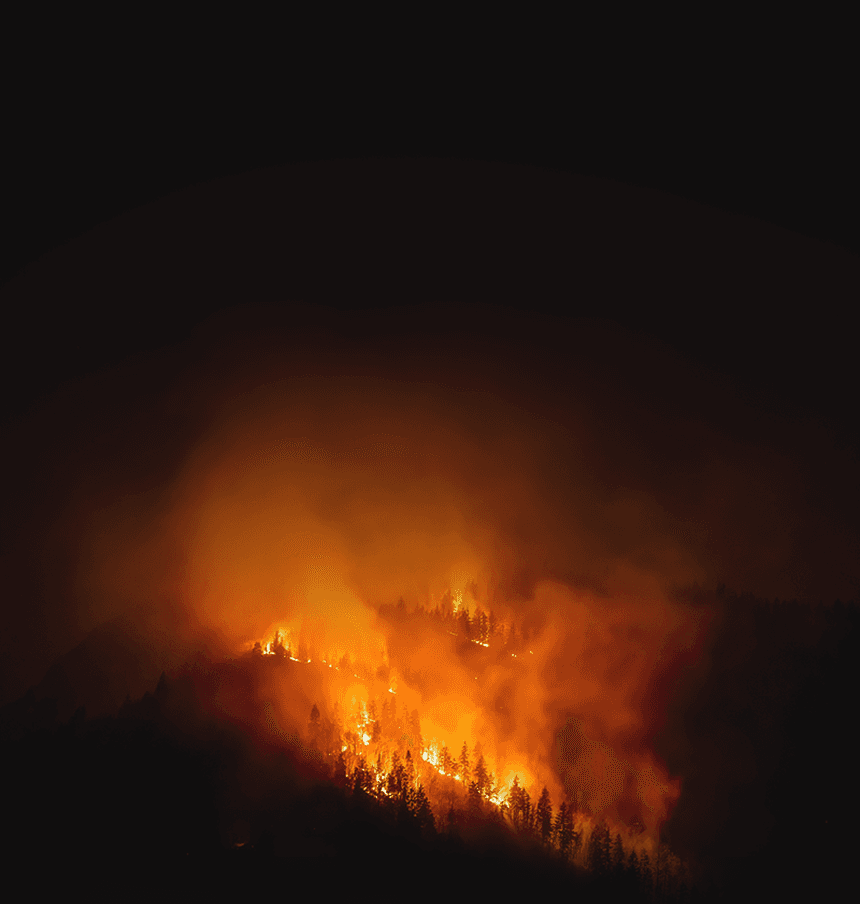
The moment a wildfire starts near you, you'll get an instant alert and simple tips to reduce your smoke exposure.
30xSmaller than a human hair
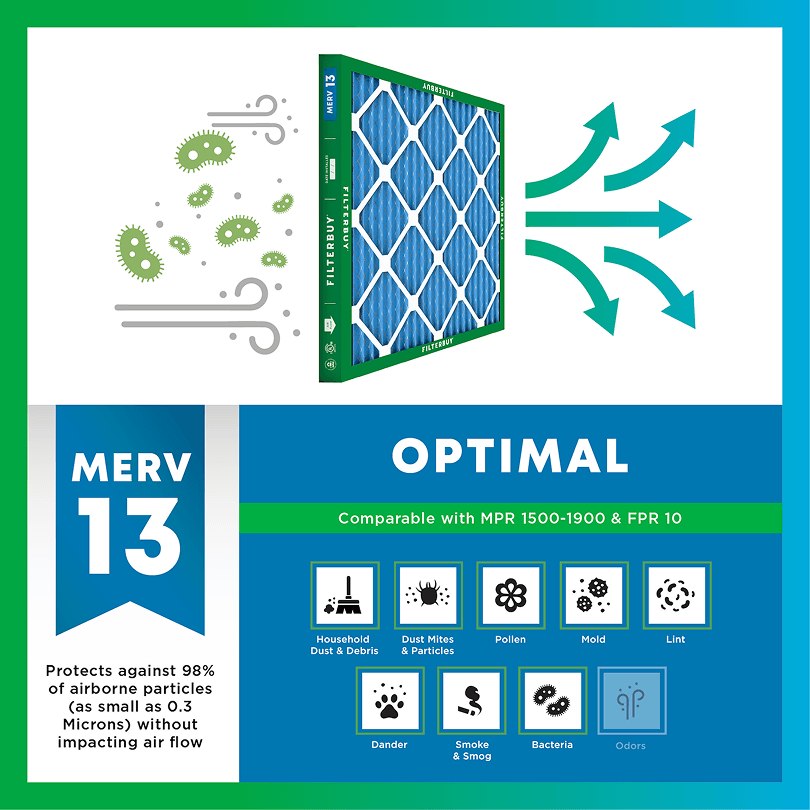
Fine enough to reach deep into the lungs. A MERV 13 is built to capture it.
It Doesn't Stay Local
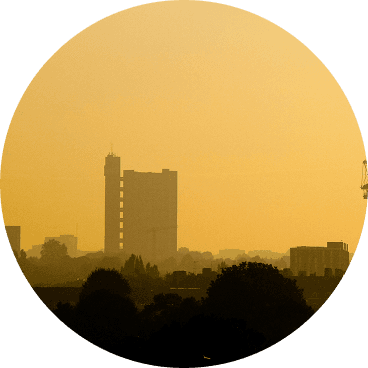
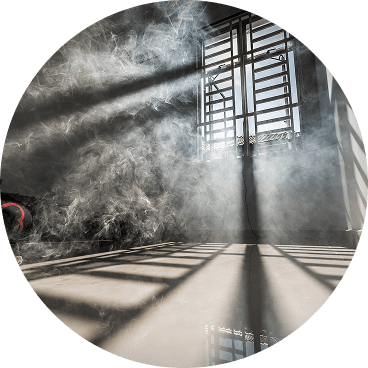
Smoke rides the wind far downwind — you can get smoky air with no fire nearby.
Simple steps to reduce indoor exposure.
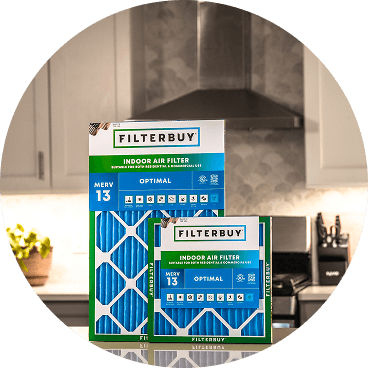
During smoke events, the EPA recommends upgrading to a MERV 13 filter — or the highest-rated filter your system can handle — to help reduce the fine particles smoke brings indoors. MERV 13 is the level most home HVAC systems can run while still capturing PM2.5, the fine particulate that makes up the bulk of wildfire smoke.
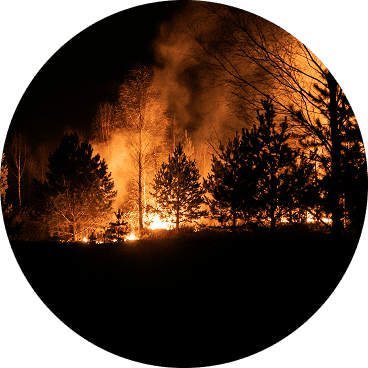
Over 70,000 wildfires burn in the U.S. every year.
Wildfire smoke can travel 1,000+ miles, affecting states that aren't even near the blaze.
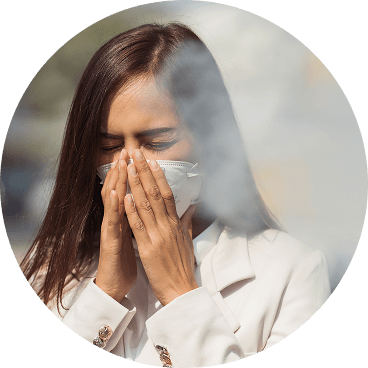
Exposure to wildfire smoke can worsen asthma, trigger heart issues, and lead to ER visits.
Indoor air can hold more fine particles during wildfire events unless it's properly filtered.
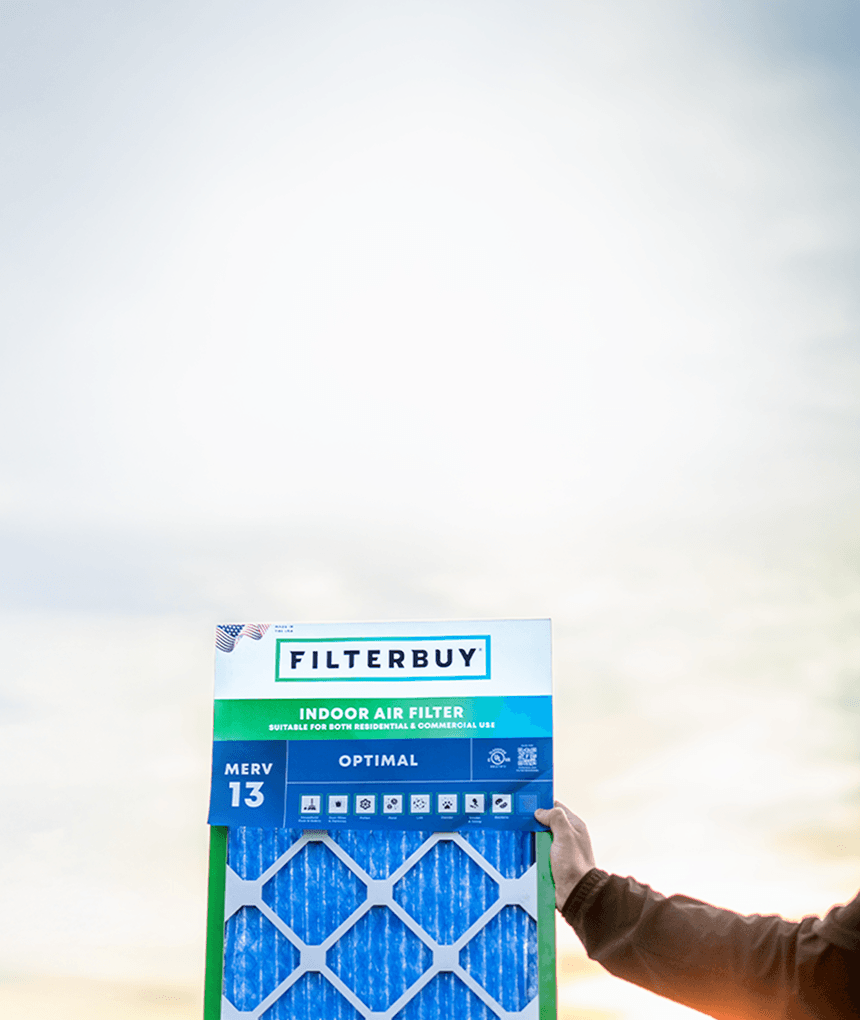
The EPA advises using MERV 13 filters or portable HEPA air cleaners during wildfire smoke events.
Use the live wildfire smoke tracker and upgrade your air filters today to protect your lungs and your home.
Shop Filters For Smoke Protection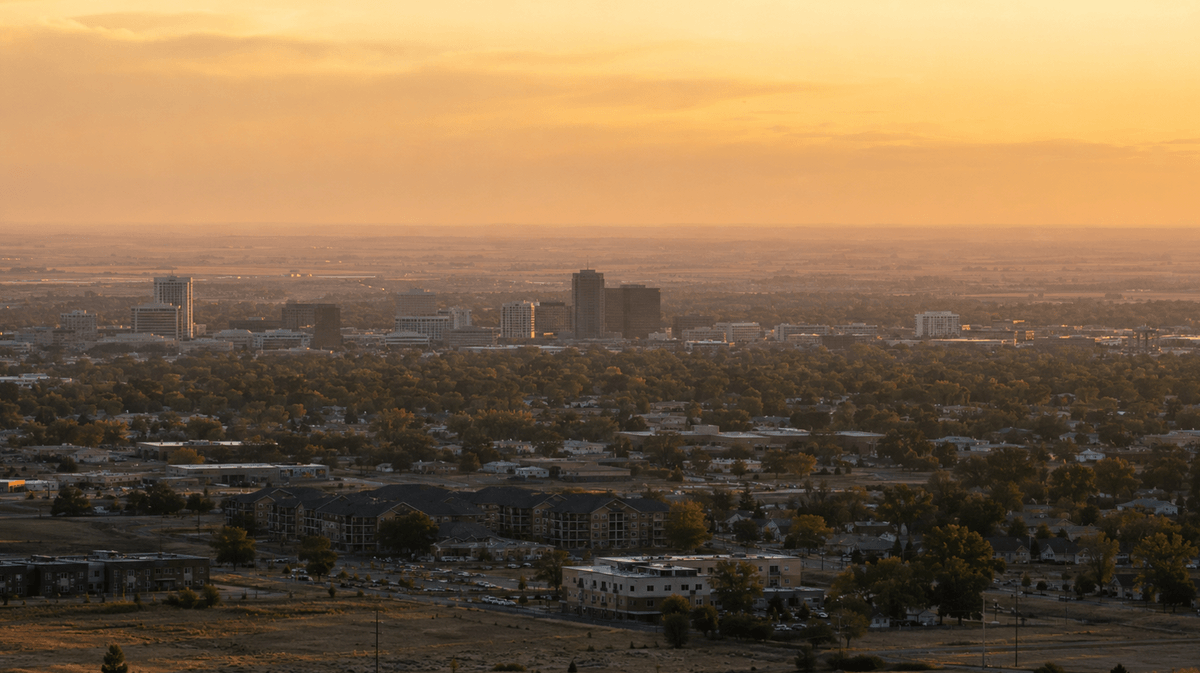
Author: Michelle Wan (byline link in About the Author section below)
Reviewer: David Clark, Licensed HVAC Technician
Publish Date: July 21, 2026
Updated Date: July 21, 2026
The sky over Aurora turned orange again this month, and it was not a sunset. I have covered enough Front Range smoke seasons at Filterbuy to know what follows: neighbors comparing photos of the haze, then asking whether it is safe to let the dog out. Wildfires from the Western Slope to southern Colorado send smoke into the Front Range, turning a clear afternoon hazy within hours. A pale haze can sit over an AQI still in the 40s, while a clear afternoon can carry an unhealthy ozone reading with no visible smoke at all. This page tracks the live wildfire and smoke picture for Aurora and covers what to do at each stage of the Air Quality Index.
Aurora sits inside Colorado's Front Range Urban Corridor, placed under an Ozone Action Day Alert from July 11 through at least July 12, 2026, driven by hot, dry weather and smoke from active wildfires across the state. Check the live map above for Aurora's real-time AQI before planning outdoor time, and treat any reading of Unhealthy for Sensitive Groups or worse as your signal to close windows and run a Filterbuy MERV 13 air filter.
Aurora falls inside CDPHE's Front Range Urban Corridor advisory zone and receives the same ozone and smoke alerts issued for the Denver-Boulder metro area.
Colorado's wildfire season runs May through September, and 2026 has already produced repeated smoke events from the Western Slope, southern Colorado, and neighboring states.
Wildfire-specific fine particulate matter drives a larger jump in respiratory hospitalizations than particulate matter from other sources, so a smoke day deserves more caution than a high-pollen day.
A Filterbuy MERV 13 air filter captures a far higher share of fine smoke particles than a standard MERV 8 filter, and smoke also helps form new ground-level ozone far from the fire, which is why Aurora sees combined alerts on the same afternoon.
The live map above layers three things: active fire locations, smoke plume direction, and the current AQI reading for monitors near Aurora. The AQI runs from 0 to 500 and can shift by dozens of points in a single afternoon as new plumes arrive from fires hundreds of miles away. Two pollutants drive most alerts: PM2.5, the fine particulate matter in smoke, and ground-level ozone, which forms when sunlight reacts with vehicle exhaust during hot, stagnant weather. For a full walkthrough of the map's icons and trend lines, see Filterbuy's guide to reading a wildfire smoke map.
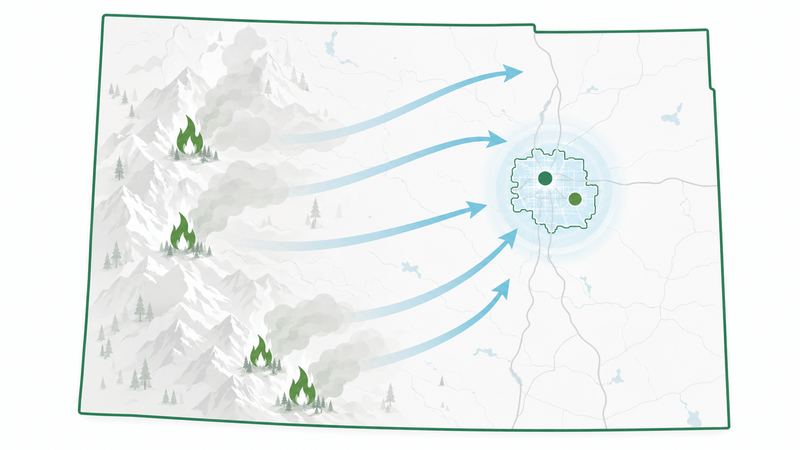
CDPHE and the Regional Air Quality Council issued an Ozone Action Day Alert at 4 p.m. on July 11, 2026, covering the Front Range Urban Corridor, including Aurora, Denver-Boulder, Fort Collins, and Greeley, through at least July 12. The alert cited hot, dry, stagnant weather pushing ozone into the Unhealthy for Sensitive Groups category. Earlier that week, the state issued Air Quality Health Advisories tied to fires including the Aspen Acres Fire in Pueblo County and the Ferris, Gold Mountain, and Snyder Mesa fires on the Western Slope, plus smoke drifting in from Utah. None of those zones sit directly over Aurora, but transport from any of them can still degrade its air quality, which is why checking the live map matters more than a single headline.
Aurora's air problem on a bad day is really two problems sharing one orange sky. Smoke plumes react with sunlight and other pollution to form new ground-level ozone far from the fire that produced them, which is why Colorado issues combined Ozone Action Day and smoke advisories on the same afternoon. Aurora residents sometimes notice smoke with no fire nearby because plumes travel hundreds of miles on wind currents. See Filterbuy's explainer on why smoke shows up with no local fire.
Colorado officials typically issue a wildfire smoke advisory once PM2.5 readings hit a 24-hour average of 35.5 micrograms per cubic meter or higher, which generally lines up with the Unhealthy for Sensitive Groups category below.
AQI categories and health guidance follow the U.S. Environmental Protection Agency's Air Quality Index scale. This table is evergreen and does not require a live-conditions refresh.
The table above is the accurate answer. This is the fast version, for the moment you are standing at the window right now.
1. What does the live map say? If Aurora's AQI is Unhealthy for Sensitive Groups or worse, keep the windows closed.
2. Can you see or smell smoke, even faintly? Colorado health officials treat visible haze as a sign PM2.5 has likely crossed the advisory threshold, even before the map catches up.
3. Is anyone home pregnant, very young, older, or living with asthma, COPD, or heart disease? If yes, treat Moderate, not Unhealthy for Sensitive Groups, as your cutoff.
Filterbuy's own order data shows MERV 13 orders from Aurora-area zip codes climb within a day of an alert like this one, not before it. That one-day lag is the exact gap this page is built to close.
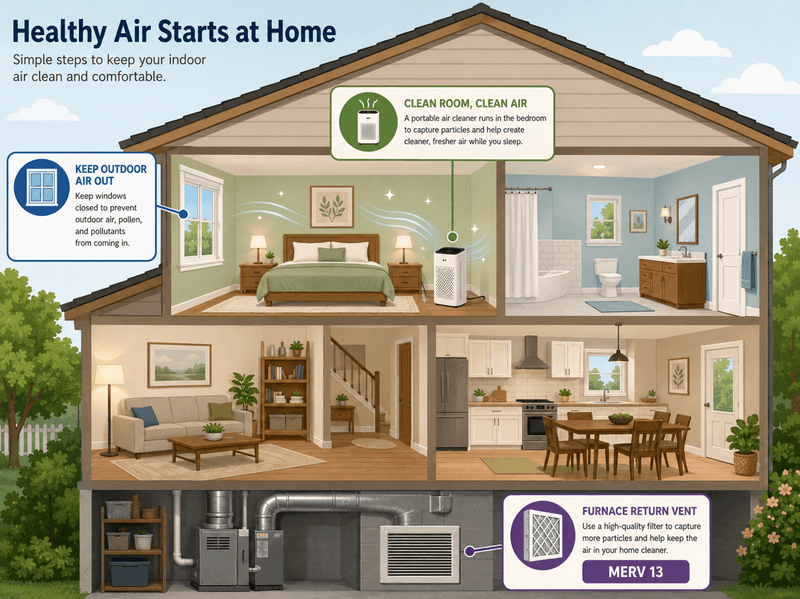
Most calls Filterbuy gets from Aurora-area customers during a smoke week are about why the house still smells like smoke with every window shut. In almost every case, the answer is the filter, not the door seal. Set your air conditioner or furnace fan to recirculate mode instead of pulling in outside air. A standard MERV 8 filter catches large dust and lint, not the fine particles that raise the most health concern, while a MERV 13 air filter captures a much higher share of them.
Filterbuy's MERV rating guide compares MERV 8, 11, and 13 side by side.
After manufacturing filters for over a decade and serving more than two million households, we see the same pattern every time a Front Range smoke event hits the news: our Aurora and greater Denver customers start upgrading to MERV 13 within a day of the first air quality alert, not after the smoke clears. That first-day upgrade, done before the smoke arrives rather than during it, is the single biggest difference we see between a household that rides out a bad air week comfortably and one that does not.
David Heacock, Founder and CEO of Filterbuy
1. Real-time fire and smoke conditions statewide.
Source: AirNow's Live Fire and Smoke Map for Colorado
2. Colorado's Ozone Action Day and smoke alert system.
Source: Colorado's Air Quality Advisory Page
3. National wildfire safety guidance.
Source: The American Red Cross's Wildfire Safety Guide
4. Federal safety steps during a smoke event.
Source: The CDC's Wildfire and Wildfire Smoke Safety Guidelines
5. Indoor air quality guidance.
Source: EPA's Wildland Fire and Smoke Resource Hub
6. Lung-health guidance for at-risk groups.
Source: The American Lung Association's Wildfire Smoke and Lung Health Guidance
7. The NWS alert covering Aurora directly.
Source: NWS Denver/Boulder Air Quality Alert Page
1. Wildfire smoke hits lungs harder than everyday pollution. A 10 microgram increase in wildfire-specific PM2.5 raises hospitalizations by 1.3 to 10 percent, versus only 0.67 to 1.3 percent from non-wildfire sources.
Source: A 2021 Southern California Study Published in Nature Communications
2. 2026 is already a well above average wildfire year. More than 3.4 million acres had burned nationwide as of mid-July 2026, keeping smoke transport into Aurora a recurring event.
Source: The National Interagency Fire Center's Year-to-Date Statistics
3. Wildfire ozone now reaches tens of millions who never see a flame. It exposed 43 million additional Americans to ozone levels that failed federal standards between 2022 and 2024, erasing five years of ozone-control progress.
Source: A NASA-Funded Study Published in the Journal Science
Aurora rarely burns itself. Its smoke problem is almost always a borrowed one, carried in from the Western Slope or states farther away, which makes it easy to underestimate. The households that handle smoke season best check the AQI number before deciding whether to open a window or send the kids outside.
Check the live map above and note today's AQI category before planning outdoor activities.
Set your HVAC system to recirculate mode once the reading crosses into Unhealthy for Sensitive Groups.
Upgrade to a Filterbuy MERV 13 filter before smoke season peaks, not after the first alert lands.
Build a clean room with a portable air cleaner in your most-used bedroom if anyone has asthma, COPD, or heart disease.
Sign up for CDPHE's air quality advisory alerts so a new Ozone Action Day or smoke advisory reaches you immediately.
It can be either, and often both. Aurora's smoke commonly arrives from fires on the Western Slope or in southern Colorado, and can also arrive from neighboring states when wind patterns line up. The live map shows plume direction to identify the source.
Colorado's wildfire season typically runs May through September. The Front Range Urban Corridor, which includes Aurora, has received multiple alerts through the summer of 2026 alone, and frequency varies year to year with weather and fire activity.
Unhealthy for Sensitive Groups, an AQI of 101 to 150, is the point to start limiting outdoor exertion for at-risk groups. Unhealthy, 151 and above, is the point where closing windows and switching your HVAC system to recirculate benefits everyone.
A standard MERV 8 filter catches larger particles like dust and lint, not the fine PM2.5 particles that make up most wildfire smoke. A Filterbuy MERV 13 filter captures a much higher share of those fine particles.
The live map at the top of this page pulls from the same monitoring network used by AirNow and Colorado's own advisory system, giving you Aurora's current AQI, nearby fire locations, and smoke plume direction in one place.
Do not wait for the next alert to check your filter. Set up Filterbuy's auto-delivery filter subscription so a fresh MERV 13 filter arrives on schedule, right before Aurora's next smoke event, not after it.
Air Quality Index (AQI): The EPA's 0 to 500 scale for reporting how polluted outdoor air is and what that means for health.
PM2.5: Fine particulate matter 2.5 micrometers or smaller, small enough to reach deep into the lungs and the main pollutant in wildfire smoke.
MERV Rating: A 1 to 16 scale measuring how effectively an air filter captures particles of different sizes.
Ozone Action Day: A Colorado alert indicating ground-level ozone is expected to reach unhealthy levels, typically triggered by hot, stagnant weather.
Written by Michelle Wan, Brand Manager and Air Quality Writer at Filterbuy. Reviewed by David Clark, Licensed HVAC Technician.
Subscribe to wildfire smoke alerts for Aurora, CO, to get a heads-up before the next event reaches your area.