
Why Is There Smoke in the Air Today? How to Find Out Where the Smoke Is Coming From and Whether It's Safe
June 4, 2026
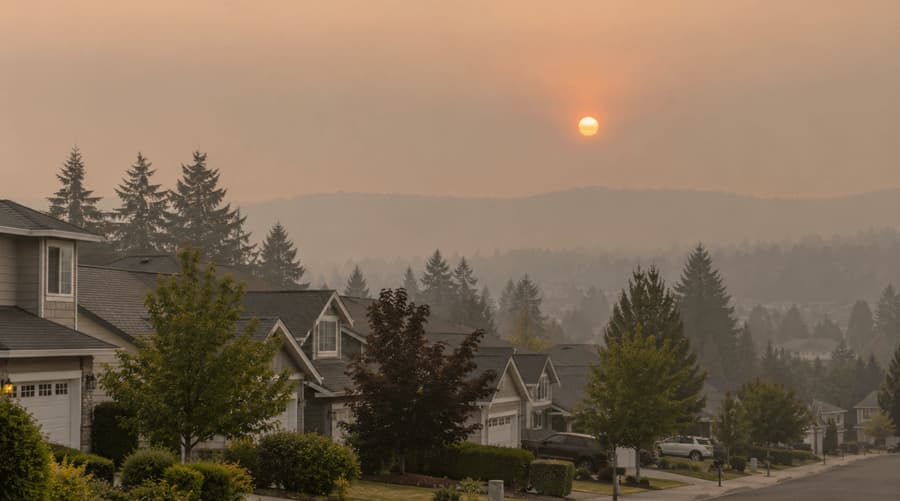
Why Is There Smoke in the Air Today?
If you smell smoke but see no fire, it almost certainly blew in on the wind from a wildfire hundreds of miles away. A live AQI map tells you where it came from and whether it is safe to go outside, and it takes about two minutes. Once the AQI passes 100, sensitive groups should cut back on outdoor time; past 150, everyone should.
Indoors, keep the windows shut, set your HVAC fan to ON, and run a MERV 13 filter, which captures microscopic particles and is what the EPA recommends during smoke events.
Not Sure Which Filter Fits Your System?
Answer a few quick questions and we will match you to the right filter for your home.
TL;DR
When you smell smoke on a day with no fire in sight, chances are it traveled on the wind from a wildfire hundreds of miles away. It only takes a couple of minutes on a live Air Quality Index (AQI) map or the AirNow Fire and Smoke Map to spot where it came from and figure out if it's safe to step outside.
Once the AQI crosses 100, those in sensitive groups should start cutting back on outdoor time; past 150, everyone ought to take precautions.
Inside your home, keeping windows shut and running a MERV 13 filter make all the difference, something we tell our Filterbuy customers firsthand who ask us about this problem.
Key Takeaways
If it smells like smoke but you don't see flames, you're likely catching smoke carried in from a distant fire by high-altitude winds.
Smoke haze isn't just humidity, smog, or dust. The distinct smell, an orange sun, and an AQI driven by fine PM2.5 particles are your dead giveaways.
PM2.5 is the real health concern. An AQI over 100 means sensitive groups should be careful, while anything above 150 affects us all.
Switching to a MERV 13 filter is the best defense at home. It won't clean the air outdoors, but it helps trap microscopic particles circulating through your HVAC system.
Why Is There Smoke in the Air Today?
If you don't see any flames nearby, the smoke almost certainly hitchhiked on the wind. Most of the time, it comes from a wildfire hundreds of miles off, a planned prescribed burn, or a local structure fire. Wildfires are by far the biggest culprit, with the EPA estimating that wildland fires account for 52% of all PM2.5 pollution in the U.S.
It's constantly surprising just how far smoke can travel. Take the record 2023 Canadian wildfire season: NASA tracked massive plumes drifting thousands of miles across the U.S. Northeast. By late June, soot from those fires had even journeyed over 2,000 miles across the Atlantic to reach Portugal and Spain.
Because smoke spreads out over such vast distances, your nose usually picks up the smell long before official air quality alerts catch up. A plume can be completely invisible to the eye and still smell strong enough to notice. If you're curious about why it lingers, our guide on how long wildfire smoke stays in the air breaks down what keeps it hanging around.
My first real smoke season in the Bay Area taught me to stop checking the window and start checking the map. The sky can look almost normal while the AQI climbs, and apocalyptic on a day the number is only moderate. Your eyes are the least reliable instrument you own.
Michelle Wan, Brand Manager and Air Quality Writer at Filterbuy
That's the practical takeaway: if you can smell smoke, the useful next step isn't squinting at the horizon; it's finding out what's burning and how far away it is. Local AQI readings tell you how bad the air is right now, but knowing the source tells you whether you're looking at one hazy afternoon or a week of it. That answer usually depends on where you live and what month it is.
Two free tools answer that question in about a minute. The AirNow Fire and Smoke Map overlays active fire detections with ground sensor and satellite smoke readings, so you can see whether the plume over your house starts 20 miles away or 2,000. The distance matters more than most people expect. Smoke from a fire in the next county shifts with every wind change and can clear the same afternoon, while smoke that traveled from another region arrives as a thin, high layer that settles slowly and often lingers for days after the fire itself is contained.
Where Is the Smoke Coming From Right Now?
Where your smoke comes from depends heavily on where you're located and the time of year. Across the country, smoke patterns follow predictable seasonal trends, meaning you can often guess the source even before pulling up a map.
Those patterns come from federal tracking: NASA smoke transport modeling, fire activity reported by the National Interagency Fire Center, and NOAA monitoring of the Saharan Air Layer, which peaks between late June and mid-August and can reach as far west as Texas.
During fire season, people ask us "Whose smoke is this?" more than anything else. After tracking air quality for over a decade, we've learned that checking the calendar often gives you the answer faster than a map. Saharan dust trips people up the most because it creates a hazy sky that looks like smoke but has no burnt smell.
How Do I Find Out What's Causing Today's Smoke?
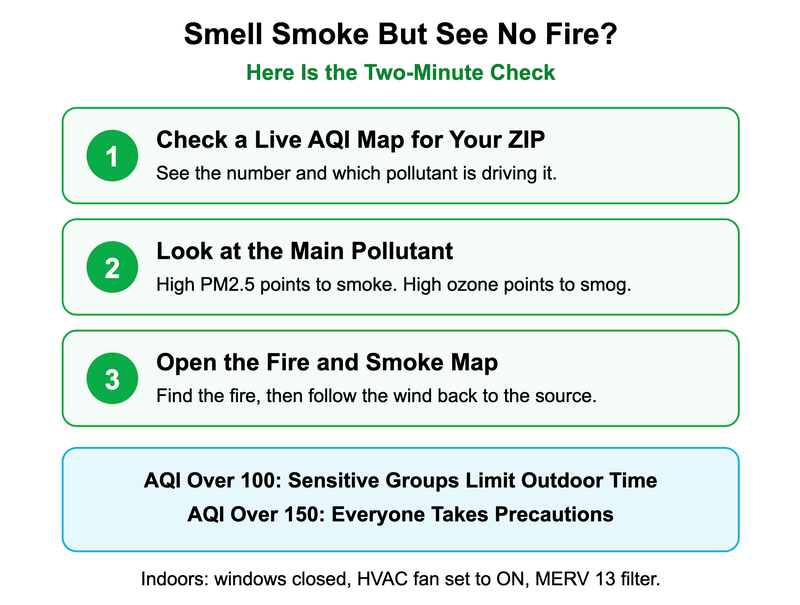
You can usually pinpoint the source in just a couple of minutes. These simple steps will help you track down where the smoke is coming from:
Check a live AQI map for your ZIP code to get local readings and see what pollutant is driving the score.
Look at the main pollutant. High PM2.5 points straight to smoke, whereas high ozone usually means urban smog.
Open the AirNow Fire and Smoke Map to view active fire locations and satellite plume tracks.
Follow the wind direction back to identify the fire responsible and see where the plume is heading next.
Start by pulling up our live local AQI map or the live wildfire and smoke map. If the air quality score is poor but you can't see or smell smoke, check out our guide on why the air quality is bad today and other common causes.
Why Can the AQI Read "Moderate" When It Smells Terrible Outside?
A "low" AQI reading during a smoke event doesn't automatically guarantee clean air outside. When the number on your app conflicts with what your own senses tell you, three factors are usually at play:
The score is a rolling average, not an instant snapshot. The EPA uses an algorithm called NowCast that averages up to 12 hours of past monitoring data. While this prevents wild swings, it means the official number trails behind a sudden smoke plume that rolled in 20 minutes ago.
Monitoring stations might be miles away. Smoke levels change rapidly across short distances. Standard AirNow reporting relies on official monitors, whereas the Fire and Smoke Map includes low-cost local sensors that update much faster (EPA).
The headline AQI only highlights the single worst pollutant. On a warm afternoon, the main gauge might feature high ozone levels, masking rising PM2.5 smoke levels underneath.
Trust what you smell first, then verify with real-time maps. If you smell smoke, act cautiously until official monitors update. For a deeper look, read our plain-English guide to using EPA AirNow.Why Is the Sky Hazy Today: Is It Smoke, Smog, Dust, or Humidity??
A murky sky doesn't automatically mean smoke. Several weather and pollution factors can create haze. Wildfire smoke is easy to spot because of three clear signs: a distinct campfire smell, an orange or reddish sun, and an AQI score driven by fine PM2.5 particles.
Smelling smoke under a seemingly clear sky usually means you're catching the subtle edge of a distant plume. Checking a map gives peace of mind, though it rarely indicates an immediate local fire hazard.
Is the Smoke Outside Dangerous to Breathe?
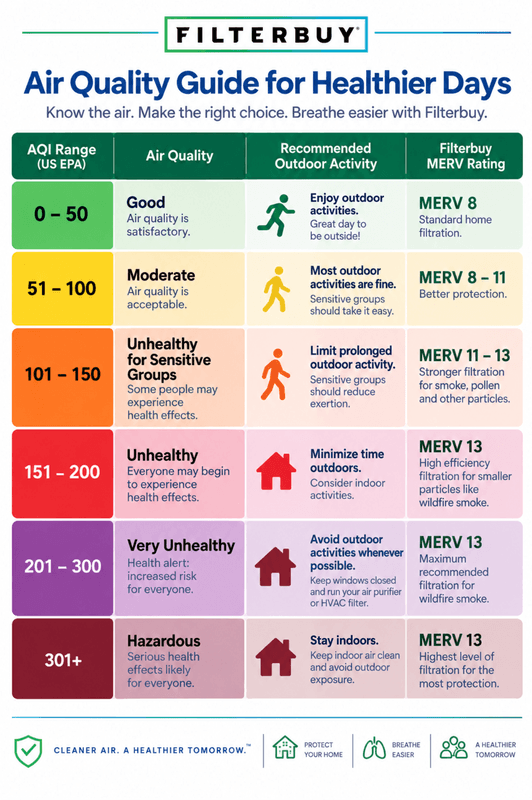
The health impact of smoke depends on overall AQI levels and individual health sensitivity. The EPA's Air Quality Index runs from 0 to 500. During smoke events, the index focuses on PM2.5, which are microscopic particles small enough to be inhaled deep into your lungs and enter your bloodstream.
A recent 2026 study linked wildfire PM2.5 to roughly 24,100 deaths annually across the continental U.S., finding these particles up to five times more toxic than standard background pollution (Zhang et al., Science Advances, 2026).
AQI ranges follow the U.S. EPA Air Quality Index. Filter guidance reflects EPA recommendations for wildfire smoke events.
Many people experience health symptoms well before air quality indexes flag a warning. If you manage asthma, COPD, or a heart condition, or are pregnant, take precautions when the AQI reaches the orange level. To learn more about extreme readings, check what a hazardous AQI range means.
When to seek medical attention: persistent shortness of breath, chest tightness, wheezing unresponsive to medication, dizziness, or a rapid heart rate warrant immediate medical care. The American Lung Association provides a dedicated HelpLine staffed by respiratory specialists.
What Smoke Actually Does to the Air Inside Your House
Outdoor smoke doesn't stay outside. On average, Americans spend 90% of their time indoors, where indoor air pollution can already run two to five times higher than outdoors (EPA). When heavy wildfire smoke rolls in, those same fine particles can easily seep indoors and circulate through your home's ventilation system.
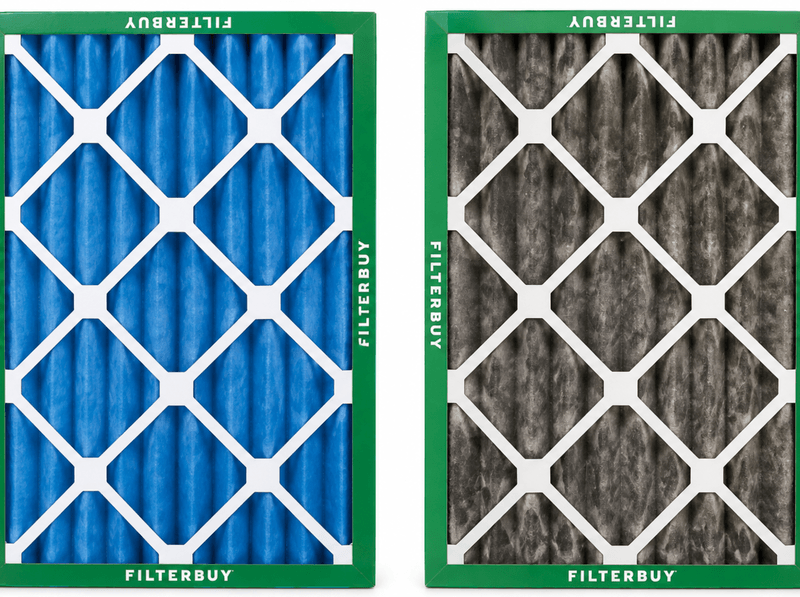
You can see the direct impact on your air filters. At Filterbuy, we manufacture pleated filters across our U.S. plants in Alabama, Florida, Pennsylvania, and Utah. During wildfire season, returned filters show a striking transformation—completely darkened by captured soot particles— compared to filters used during clean-air months.
The service calls after a smoke event are almost never about air quality. They are about airflow, from a system straining against a filter that loaded up in three weeks instead of three months. Smoke rarely damages equipment on its own. Ignoring what it did to the filter does.
David Clark, Licensed HVAC Technician and CEO, Filterbuy HVAC Solutions
What to Do Right Now When the Air Is Smoky
Here are six practical steps to protect your indoor air, listed by effectiveness. The first three take under five minutes and deliver the biggest benefit:
Stay inside with all windows and doors closed tightly.
Set your HVAC fan setting to "ON" instead of "AUTO." Setting it to "ON" ensures your system continuously pulls air through the filter, even when not actively heating or cooling.
Upgrade to a MERV 13 air filter. Official EPA clean room guidelines explicitly recommend MERV 13 filtration during smoke events.
Avoid activities that create indoor particle pollution, such as burning candles, frying food, or vacuuming without a HEPA filter.
Limit physical outdoor exertion and wear a properly fitted N95 respirator if you must go outside. Simple cloth or surgical masks won't filter fine smoke particles. Learn more in our mask comparison guide.
Keep an eye on local smoke maps. Read our walkthrough on how to interpret wildfire smoke maps.
If possible, designate a dedicated "clean room" in your house—like a bedroom with closed doors, a running portable HEPA purifier, and no indoor combustion. Follow the EPA guide for setting up a clean room, step by step.
When Is It Safe to Open the Windows Again?
Wait until air quality maps show clear improvement before airing out your home. Indoor air quality clears up more slowly than outdoor air, meaning trapped particles linger long after skies look clear outside. Opening windows too soon is a common mistake.
Don't rely solely on smell to decide when it's safe. Odor molecules absorb into furniture, carpets, and fabrics, continuing to release a faint campfire smell even after dangerous PM2.5 particles have cleared out. Monitor trend lines on local smoke maps, run your HVAC fan for several hours after AQI drops below 100, and replace your air filter once conditions normalize. Setting up recurring filter auto-delivery ensures you're always prepared before smoke arrives.
What Does the Research Say About Wildfire Smoke Risk?
Key findings from public health research support our practical advice:
1. Asthma-related ER visits jumped 17% on wildfire smoke days. CDC tracking across 19 smoke-heavy days in 2023 showed significant spikes in emergency health visits, particularly among individuals aged 5 to 64 (CDC, MMWR).
2. Running high-efficiency HVAC filtration continuously cuts indoor PM2.5 by about 50%. According to EPA data, low-efficiency filters reduce particle levels by only 24%, highlighting why filter ratings and continuous fan settings matter (EPA).
3. 44% of Americans (152.3 million people) live in areas with unhealthy air pollution levels. The American Lung Association attributes much of this air quality challenge to the increase in wildfire smoke events (American Lung Association, State of the Air 2026).
Frequently Asked Questions
Why Does It Smell Like Smoke Outside When the Sky Looks Clear?
You're likely sensing the subtle leading edge of a distant smoke plume. Human noses can detect the smell of burning at tiny concentrations long before smoke becomes thick enough to darken the sky. Check local air maps to stay informed, but a light smell under clear skies rarely signals an immediate local fire.
Why Is It So Smoky Today When It Was Clear Yesterday?
Sudden changes in air quality are usually driven by shifting wind patterns rather than new fires. A smoke plume hovering nearby can quickly blow over your neighborhood when wind directions change, which is why checking live AirNow maps is more reliable than static weather forecasts.
What Kind of Air Filter Protects Against Wildfire Smoke?
Look for MERV 13-rated filters, which are engineered to capture the microscopic PM2.5 particles found in wildfire smoke. Standard fiberglass or low-MERV filters allow fine particles to pass right through. Compare MERV filter ratings.
Glossary
Air Quality Index (AQI). The EPA's 0-500 scale for daily outdoor air quality. Values at or below 100 are generally satisfactory.
PM2.5. Fine particulate matter 2.5 micrometers or smaller. It drives the AQI during wildfire smoke events.
MERV. Minimum Efficiency Reporting Value, the ASHRAE 52.2 standard for a filter's particle capture. Higher numbers capture smaller particles.
MERV 13. The rating the EPA recommends during smoke events. It captures at least 50% of particles in the 0.3 to 1.0 micron range, which covers most wildfire smoke.
Prescribed burn. A controlled fire set by land managers to reduce fuel loads, and the most common Southeast smoke source in winter and early spring.
Saharan Air Layer. Dry, dusty air travels from the Sahara across the Atlantic to the Gulf Coast, June through August. It creates haze with no smell.
PM10. Coarse particulate matter is 10 micrometers or smaller, including most dust. It does not reach as deep into the lungs as PM2.5.
NowCast. The EPA algorithm behind the current-hour AQI is calculated from up to 12 hours of past data, weighted toward more recent readings.
N95 respirator. A mask certified to filter at least 95% of airborne particles, including PM2.5, when it seals to the face.
Stay Ready for the Next Smoky Day
We believe in being upfront about what air filtration can and cannot achieve. An air filter won't clear outdoor smoke or neutralize gas odors, but it plays a crucial role in protecting your indoor living spaces from fine particle pollution.
Getting high-quality filters in advance ensures your home stays protected the moment smoke rolls in, saving you the hassle of hunting for supplies during peak fire events.
Filterbuy offers MERV 13 filters in over 600 standard and custom sizes, shipping free directly from our factories. Explore MERV 13 air filters.