
Sacramento, CA Live Wildfire Smoke Map
Get Alerts For Wildfires In Your Area
The moment a wildfire starts near you, you'll get an instant alert and simple tips to reduce your smoke exposure.
What's In The Smoke
30xSmaller than a human hair
Fine enough to reach deep into the lungs. A MERV 13 is built to capture it.
How Far It Travels


It Doesn't Stay Local
Smoke rides the wind far downwind — you can get smoky air with no fire nearby.
What To Do During A Smoke Event
Simple steps to reduce indoor exposure.
- Stay In, Close UpShut windows and doors to keep smoke out.
- Set Fan To "On"Keeps air cycling through your filter, not just when heating or cooling.
- Recirculate AirSwitch off fresh-air intake so you're not pulling smoke in.
- Run A MERV 13Built to capture the fine PM2.5 in smoke.
- Add A PurifierExtra filtration for the room you use most.
- Wear an N95 if OutsideFits snug to block fine particles — a cloth mask won't.


The Best Air Filter For Wildfire Smoke
During smoke events, the EPA recommends upgrading to a MERV 13 filter — or the highest-rated filter your system can handle — to help reduce the fine particles smoke brings indoors. MERV 13 is the level most home HVAC systems can run while still capturing PM2.5, the fine particulate that makes up the bulk of wildfire smoke.
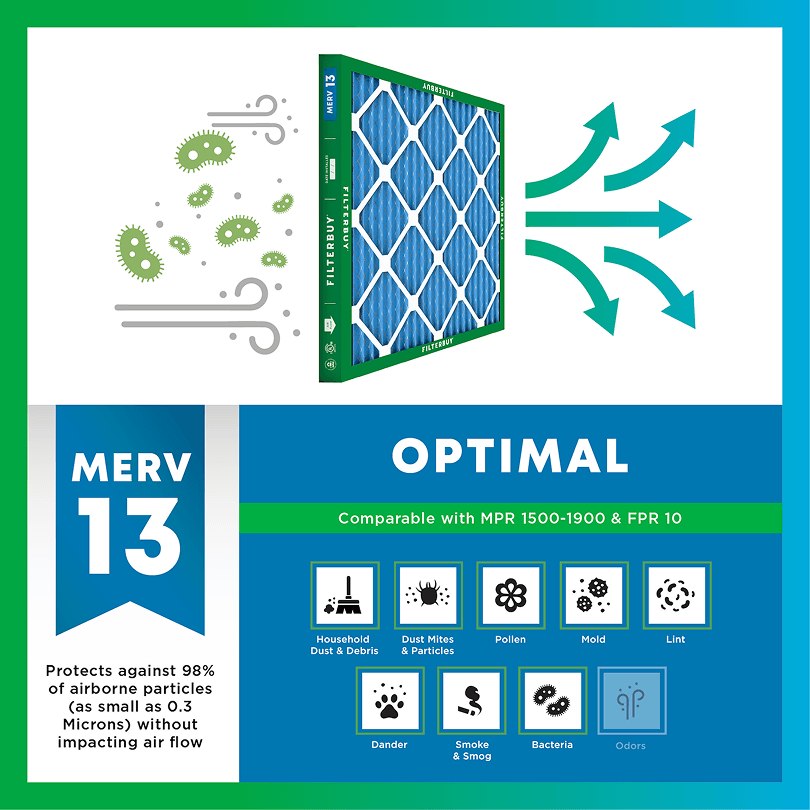
- Captures PM2.5 particles
- Blocks ash, soot, and smoke odor
- Keeps your indoor air safe—even when the outdoor air is dangerous
- Meets the EPA's recommended rating for filtering fine wildfire smoke particles.

Wildfire Smoke FAQs
Facts About Wildfires
Over 70,000 wildfires burn in the U.S. every year.
Wildfire smoke can travel 1,000+ miles, affecting states that aren't even near the blaze.
Exposure to wildfire smoke can worsen asthma, trigger heart issues, and lead to ER visits.
Indoor air can hold more fine particles during wildfire events unless it's properly filtered.
The EPA advises using MERV 13 filters or portable HEPA air cleaners during wildfire smoke events.
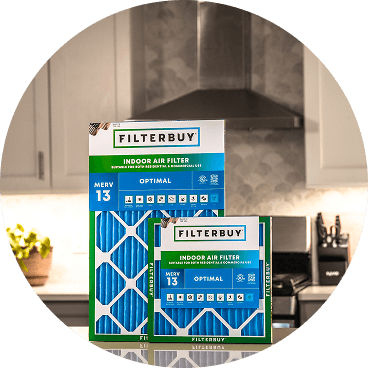
Don't Wait Until The Smoke's Inside.
Use the live wildfire smoke tracker and upgrade your air filters today to protect your lungs and your home.
Shop Filters For Smoke Protection
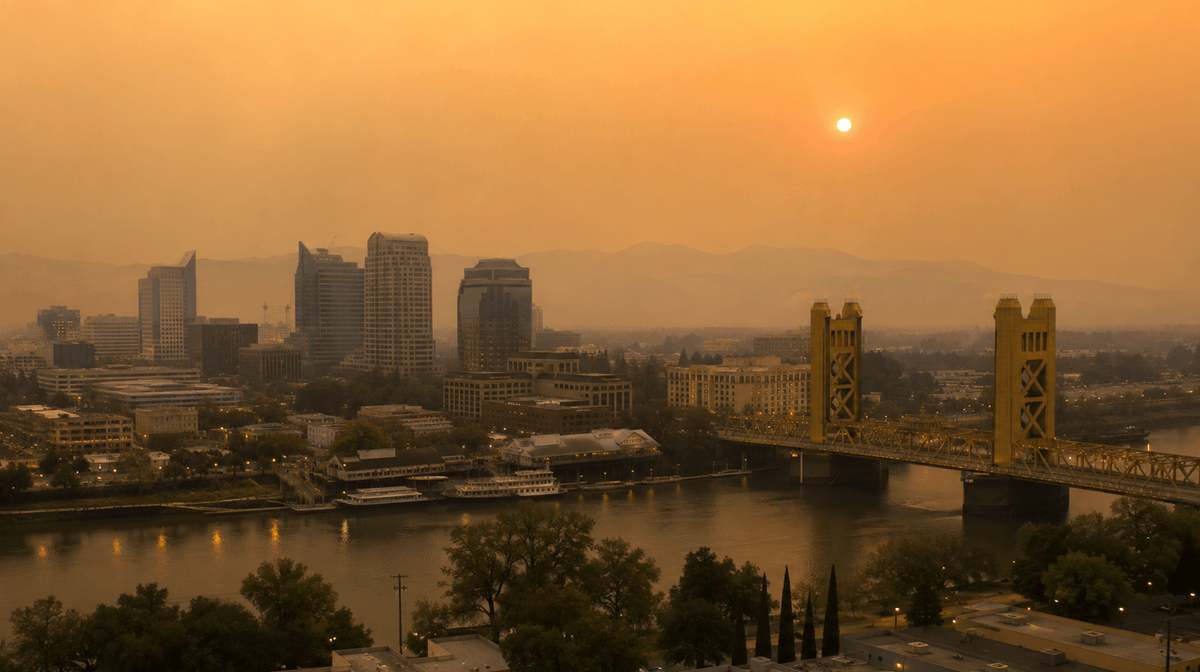
Current Live Forest Wildfire and Smoke Map Today in Sacramento, CA: Track Nearby Fire Activity, Smoke Drift & Air Quality Alerts Across the Valley Region
Author: Michelle Wan
Reviewed by: David Clark, Licensed HVAC Technician
Published: July 5, 2026
Updated: July 5, 2026
By late morning on a heavy smoke day, the Sacramento sky turns the color of weak tea and porch lights flick on at noon. That brown haze is fine particle pollution from wildfire smoke, and once it settles into the Valley, it can push the air inside your home past healthy limits within an hour. The live map below shows where fires are burning near Sacramento right now, where the smoke is drifting, and how clean or dirty the air is on your block.
At Filterbuy, we manufacture air filters in the USA, so wildfire smoke is not an abstract news story to us. It is the fine particle our filters are built to capture, and that vantage point shapes every step on this page. One pattern holds up year after year. The map turns before the smell reaches your porch, so the families who check it early stay ahead of the haze instead of reacting once it is already indoors. Your job today is simple. Read the map, know your number, and keep the smoke on the far side of your walls.
TL;DR Quick Answers
Sacramento sits in a valley that traps wildfire smoke, so air quality here can swing from clean to unhealthy in a single afternoon during fire season. The fastest way to know what you are breathing is the AirNow Fire and Smoke Map, which shows active fires, smoke plumes, and real-time PM2.5 readings for your exact location. When the dot nearest you turns orange or worse, close up the house, run your HVAC fan with a MERV 13 filter, and set up one clean room. MERV 13 is the lowest household rating the EPA recommends for capturing the fine particles in wildfire smoke.
Top 5 Takeaways
Sacramento's Valley bowl geography traps smoke, so PM2.5 can spike fast even when the nearest fire is a hundred miles away in the foothills or the Sierra.
The AirNow Fire and Smoke Map is the most reliable free tool for real-time Sacramento smoke, combining permanent government monitors with thousands of local sensors.
The colored dot closest to you is your answer. Green and yellow are generally fine, orange means sensitive groups should limit outdoor time, and red or purple means everyone should stay inside.
Wildfire smoke is measured as PM2.5, fine particles small enough to reach deep into the lungs and enter the bloodstream.
The EPA recommends a MERV 13 filter as the lowest household rating that meaningfully captures wildfire smoke particles. MERV 13 is not the same as HEPA.
Running your HVAC fan on ON instead of AUTO keeps air cycling through the filter, and a single clean room gives at-risk family members a safer place to breathe.
Current Live Sacramento Wildfire and Smoke Map
The map below tracks wildfire and smoke conditions across Sacramento and the surrounding Valley in real time. It pulls active fire locations, satellite smoke plumes, and live PM2.5 air quality readings into one view. Find your neighborhood, read the colored dot closest to you, and you will know within seconds whether the air outside is safe to breathe today.
Want the official source directly? You can also open the live Sacramento smoke map and let it use your location. For a Filterbuy view that pulls from the same federal monitors, check our real-time wildfire and smoke map.
How to Read the Sacramento Wildfire and Smoke Map
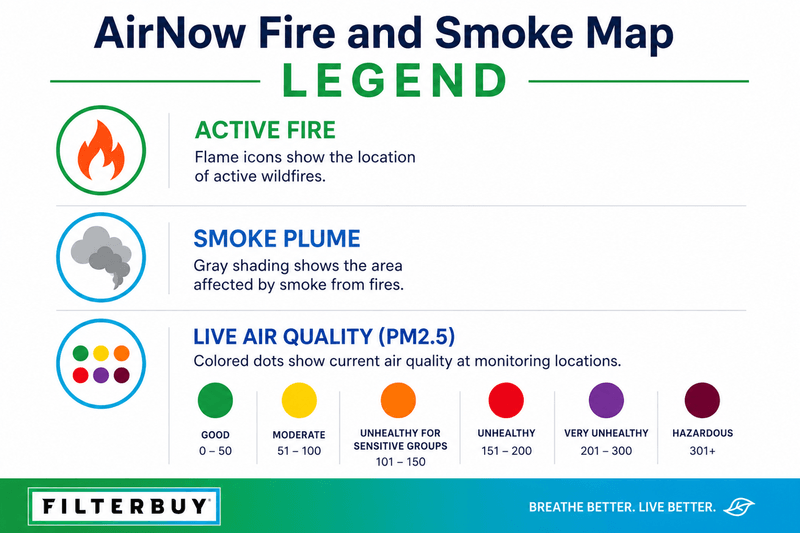
A wildfire smoke map stacks three things in one view. Flame icons mark active fires, gray shading shows drifting smoke plumes, and colored dots report real-time air quality by location. The dot color follows the Air Quality Index, so a glance tells you the category without reading a single number.
Circles are permanent government monitors and the most accurate readings on the map. Other markers are temporary monitors and lower-cost crowdsourced sensors. When two nearby readings disagree, trust the closer official monitor, and when you are still unsure, act on the worse number. For a deeper walkthrough, read our guide below.
See our full walkthrough in our guide to reading a wildfire smoke map.
Why Sacramento's Valley Traps Wildfire Smoke
If we could get one point across to every Sacramento homeowner, it would be this, and it comes down to the shape of the ground. The city sits at the bottom of a wide valley ringed by foothills, and that shape works like a bowl. High summer heat and stagnant air let pollutants pool near the ground, and smoke from fires in the foothills, the Sierra, and the northern Sacramento Valley funnels down and settles across the region. The twist that surprises people is how local it gets. Particle levels can differ sharply from one part of the Valley to the next, so your block can read worse than a friend's a few miles away on the very same afternoon.
The Sacramento region tracks all of this through Spare The Air, a partnership of five local air districts covering Sacramento Metro, El Dorado, Feather River, Placer, and Yolo-Solano. During wildfire episodes, that program forecasts PM2.5 rather than the summer ozone it usually watches, which is why a Spare the Air alert in July often means smoke, not smog.
How the Delta Breeze Moves Sacramento's Smoke
Sacramento has a weather feature most smoke guides never mention, and during fire season it decides how your afternoon goes. The Delta breeze is cool marine air that pushes in from the Bay and the Delta through the Carquinez Strait, usually building through the afternoon and evening. When it flows, it ventilates the Valley and can carry smoke out, so the air often breathes easier by evening and into the early morning.
When a heat dome or a high-pressure ridge stalls that breeze, the opposite happens. Smoke pools under the still air, an inversion caps it near the ground, and the heaviest readings often land in the calm early morning before the wind returns. That is why Sacramento's number can climb from moderate to unhealthy in a few hours. Treat any single reading as a snapshot that can change within the hour. Check the map again right before you head out, and save the errands you cannot skip for the cleaner stretch, which often arrives once the Delta breeze picks up.
What the AQI Colors Mean for Your Family Today
The Air Quality Index turns a pollution reading into a color and a plain-language health message. On a Sacramento smoke day, the color of the dot nearest you is the single most useful piece of information on the map. Use this table to translate that color into what you should do at home right now.
Categories follow the U.S. EPA Air Quality Index. On smoke days, match your action to the color nearest you on a live monitor.
How to Protect Your Home When Smoke Drifts Into Sacramento
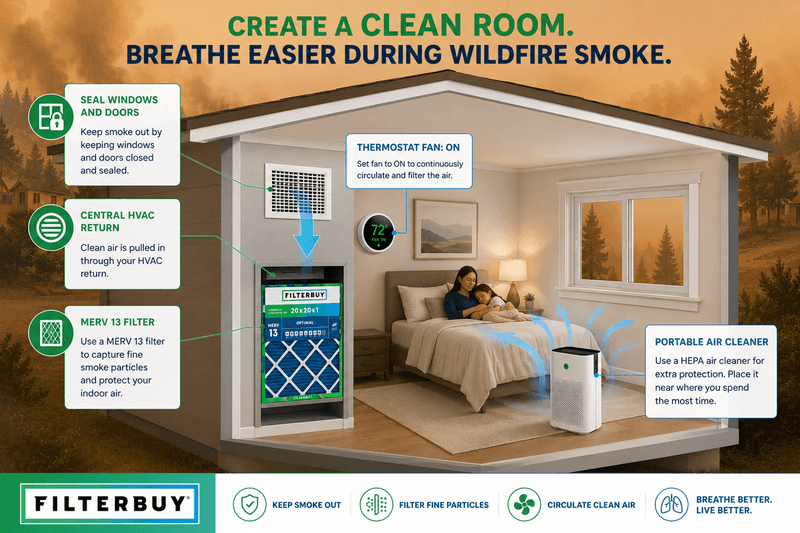
When the map turns orange or red, the goal is simple. Keep outdoor smoke out, clean the air already inside, and give the most vulnerable people in your house one reliably clean room. A few coordinated moves capture a large share of the fine particles before they reach your family, and our step-by-step guide to keep wildfire smoke out of your house walks through each one.
Close windows and doors, and keep them closed until the air clears. If you run a window or portable AC that pulls outside air, seal around it or run it sparingly.
Set your HVAC fan to ON rather than AUTO so household air keeps cycling through the filter instead of only running during heating or cooling.
Install a MERV 13 filter before the smoke arrives. It is the lowest household rating the EPA recommends for capturing wildfire smoke particles.
Set up one clean room with the fewest windows, add a portable air cleaner sized for the space, and avoid activities that add particles indoors such as frying, burning candles, or vacuuming without a HEPA vacuum.
Check the filter about every 30 days during smoke season. Filters load up fast in heavy smoke, and a clogged filter stops pulling its weight.
Which Filter Actually Captures Wildfire Smoke
Building filters is Filterbuy's whole business, so this is the question we care about most, and the answer is narrower than most product pages admit. Wildfire smoke is mostly PM2.5, and a MERV 13 filter is built to capture those fine particles while air moves through your system. That is why the EPA points households to MERV 13 as the smoke-season starting point. It captures and reduces the particles that define wildfire smoke, though no single filter captures every pollutant, and running the fan often is what lets the filter do its work.
One clarification worth making. MERV 13 is a high-efficiency furnace filter rating, not HEPA. HEPA is a stricter standard used in many portable air cleaners. Both help during a smoke event, and they work well together: a MERV 13 filter cleaning the whole-house airflow, and a HEPA portable cleaner polishing the air in your clean room. If a lingering campfire smell hangs around after the worst passes, an activated carbon Odor Eliminator filter catches odors a standard filter cannot.
After manufacturing filters for over a decade and serving more than two million households, we have learned that the families who get through smoke season best are the ones who prepare before the air turns brown. A MERV 13 filter in the system, the fan set to keep air moving, and one room set aside as a clean space will capture a large share of the fine particles that wildfire smoke pushes into a home.
David Heacock, Founder and CEO, Filterbuy
7 Essential Resources
Every source below is a government or nonprofit page, chosen so no two share a domain. Bookmark the first two for daily checks during fire season.
Source: Using AirNow During Wildfires, from the EPA and U.S. Forest Service. How to find and read real-time smoke and PM2.5 for your location
Source: CAL FIRE current incidents map for California. Every active wildfire of 10 acres or more, updated frequently
Source: Sacramento Metro Air District wildfire smoke data and tracking. Local monitors, forecasts, and the regional California Smoke Blog
Source: EPA guide to creating a clean room during a wildfire. Step-by-step setup for a low-smoke room at home
Source: CDC wildfire smoke safety guidelines. Who is most at risk and how to reduce exposure
Source: National Weather Service Sacramento forecast briefing. Wind, heat, and fire-weather outlooks that drive smoke drift
Source: Ready.gov wildfire preparedness and evacuation guidance. Alerts, go-bags, and evacuation planning before a fire
3 Supporting Statistics
Three findings from federal and nonprofit researchers back the guidance on this page. Each sits on its own root domain, separate from the resources above.
Wildfire smoke harms lungs more than ordinary soot.
Wildfire PM2.5 raised respiratory hospitalizations by up to 10% for every 10 micrograms per cubic meter, compared with 0.67% to 1.3% for PM2.5 from other sources.
Source: Aguilera et al. 2021, Nature Communications, via PMC. Peer-reviewed Southern California study
Emergency-level smoke days are climbing nationwide.
The American Lung Association counted 26 maroon Hazardous days of particle pollution in 2026, up from the zero to eight recorded in every report from 2004 through 2019.
Source: American Lung Association, State of the Air 2026. National short-term particle pollution findings
Wildfires are burning at scale right now.
The National Interagency Fire Center logged 36,262 wildfires and more than 3.1 million acres burned nationwide by July 1, 2026.
Source: National Interagency Fire Center. Live national wildland fire statistics.
[Jason: the NIFC figure is a live year-to-date tally that updates daily. Refresh at publish.]
Final Thoughts and Opinion
Here is the honest read from the Filterbuy team. Most Sacramento families wait until the smoke is already inside before they think about their filter, and by then the good MERV 13 filters are sold out and the air in the kids' rooms is already bad. The families who breathe easy in August are the ones who set up in June.
Clean air during fire season comes down to three things you control, and all of them cost less than a single bad night: a good filter, a fan you leave running, and a clean room you picked while the sky was still blue. Bookmark the map, keep a spare MERV 13 on the shelf, and you turn a scramble into a five-minute routine.
Next Steps
Bookmark this page and the live Sacramento smoke map so you can check both in two taps.
Find your filter size and rating on Filterbuy today. If you are running below MERV 13, order the upgrade before fire season peaks.
Pick your clean room now, the one with the fewest windows, and keep a portable air cleaner ready.
Sign up for Spare The Air and local emergency alerts so smoke and evacuation news reach you fast.
Frequently Asked Questions
Protect Your Family's Air This Fire Season
Do not wait for the sky to turn brown. Filterbuy manufactures MERV 13 filters in the USA in more than 600 sizes, cut to fit your exact system, so you can capture wildfire smoke particles before they reach your family. Find your MERV 13 filter size, set up your clean room, and breathe easier this fire season.
Glossary
AQI (Air Quality Index): A color-coded scale from 0 to 500 that the U.S. government uses to report how clean or polluted outdoor air is and what health effects to expect.
PM2.5: Fine particulate matter 2.5 micrometers wide or smaller, the main pollutant in wildfire smoke and small enough to reach deep into the lungs.
Fire and Smoke Map: The free AirNow map, run by the EPA and U.S. Forest Service, that shows fire locations, smoke plumes, and real-time PM2.5 readings.
MERV 13: A filter efficiency rating and the lowest household rating the EPA recommends for capturing wildfire smoke particles. MERV 13 is not HEPA.
HEPA: A high-efficiency particulate air standard used in many portable air cleaners, designed to capture at least 99.97% of particles at 0.3 micrometers.
Clean room: A single room set up to keep smoke particles as low as possible, with doors and windows closed and a portable air cleaner running.
Smoke plume: The visible column and drift of smoke moving away from a fire, often shown as gray shading on the Fire and Smoke Map.
Spare The Air: The Sacramento region air quality program, a partnership of five local air districts that issues forecasts and alerts.
Red Flag Warning: A National Weather Service alert issued when weather conditions can drive rapid wildfire growth.
Containment: The percentage of a fire's perimeter that crews have surrounded with a control line. It does not mean the fire is out.
Subscribe to wildfire smoke alerts for Sacramento, CA, to get a heads-up before the next event reaches your area.