
Phoenix, AZ Live Wildfire Smoke Map
Get Alerts For Wildfires In Your Area
The moment a wildfire starts near you, you'll get an instant alert and simple tips to reduce your smoke exposure.
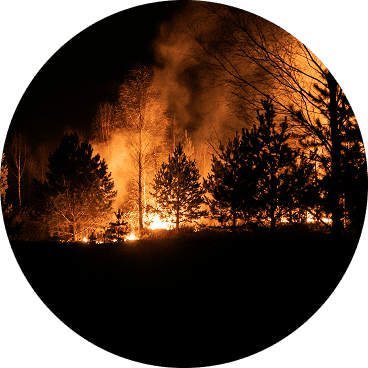
What's In The Smoke
30xSmaller than a human hair
Fine enough to reach deep into the lungs. A MERV 13 is built to capture it.
How Far It Travels


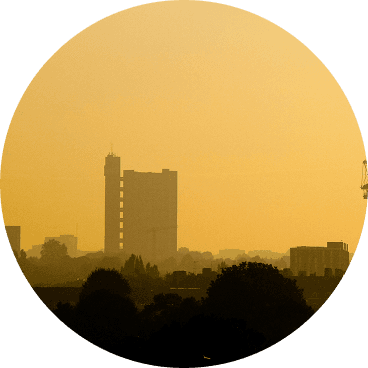
It Doesn't Stay Local
Smoke rides the wind far downwind — you can get smoky air with no fire nearby.
What To Do During A Smoke Event
Simple steps to reduce indoor exposure.
- Stay In, Close UpShut windows and doors to keep smoke out.
- Set Fan To "On"Keeps air cycling through your filter, not just when heating or cooling.
- Recirculate AirSwitch off fresh-air intake so you're not pulling smoke in.
- Run A MERV 13Built to capture the fine PM2.5 in smoke.
- Add A PurifierExtra filtration for the room you use most.
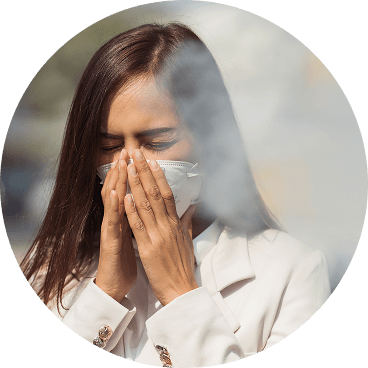
- Wear an N95 if OutsideFits snug to block fine particles — a cloth mask won't.


The Best Air Filter For Wildfire Smoke
During smoke events, the EPA recommends upgrading to a MERV 13 filter — or the highest-rated filter your system can handle — to help reduce the fine particles smoke brings indoors. MERV 13 is the level most home HVAC systems can run while still capturing PM2.5, the fine particulate that makes up the bulk of wildfire smoke.
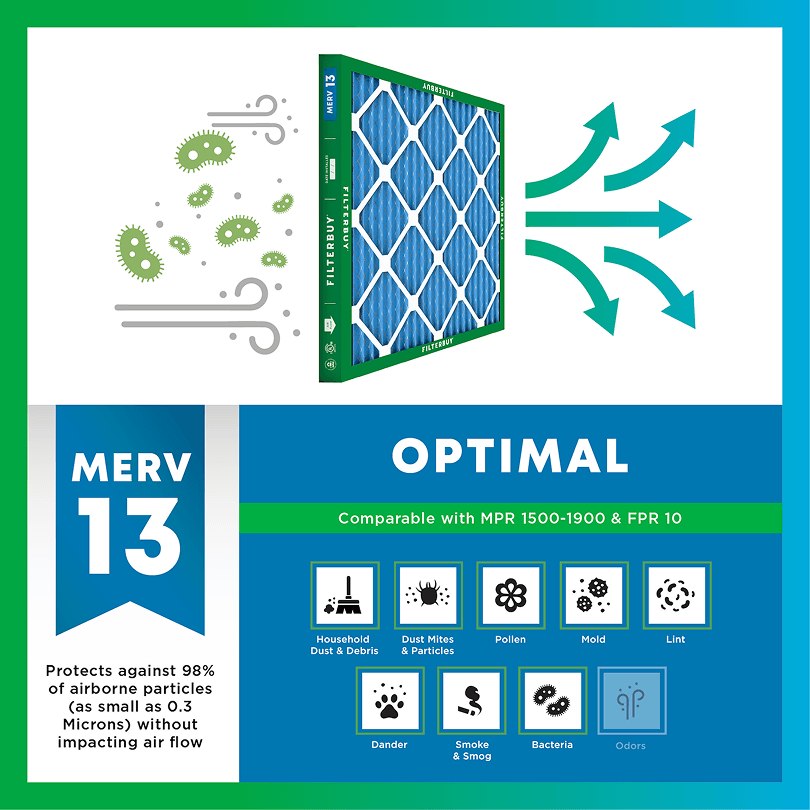
- Captures PM2.5 particles
- Blocks ash, soot, and smoke odor
- Keeps your indoor air safe—even when the outdoor air is dangerous
- Meets the EPA's recommended rating for filtering fine wildfire smoke particles.

Wildfire Smoke FAQs
Facts About Wildfires
Over 70,000 wildfires burn in the U.S. every year.
Wildfire smoke can travel 1,000+ miles, affecting states that aren't even near the blaze.
Exposure to wildfire smoke can worsen asthma, trigger heart issues, and lead to ER visits.
Indoor air can hold more fine particles during wildfire events unless it's properly filtered.
The EPA advises using MERV 13 filters or portable HEPA air cleaners during wildfire smoke events.
Don't Wait Until The Smoke's Inside.
Use the live wildfire smoke tracker and upgrade your air filters today to protect your lungs and your home.
Shop Filters For Smoke Protection
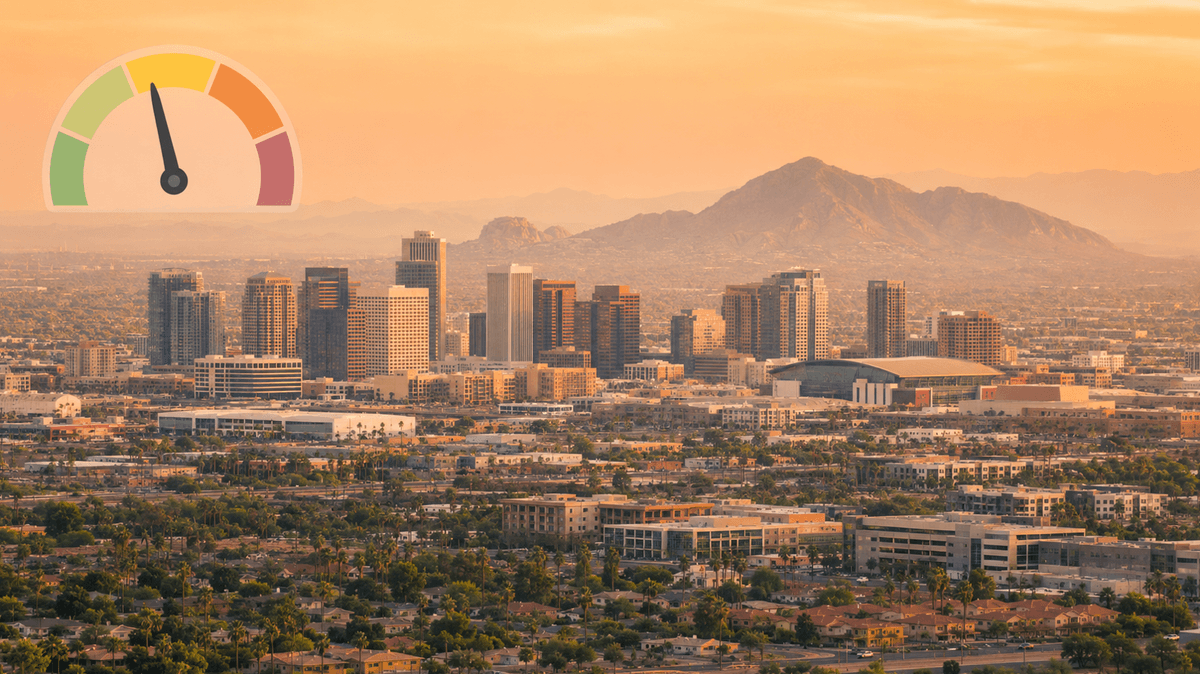
Current Live Wildfire And Smoke Map Phoenix Arizona Today From Filterbuy.com
By Michelle Wan | Reviewed by David Clark, Licensed HVAC Technician | Published July 22, 2026 | Updated July 22, 2026
No wildfire burns inside Maricopa County today. The haze over Phoenix comes from dust, not smoke, and telling the two apart determines whether you close your windows for an hour or run indoor filtration for days. This page tracks both in real time and shows which one you are breathing right now.
TL;DR Quick Answers
Phoenix has no active wildfire burning inside Maricopa County today, Wednesday, July 15, 2026. The Arizona Department of Environmental Quality (ADEQ) forecasts Moderate air quality for ozone, PM10, and PM2.5, driven by monsoon outflow and seasonal ozone rather than wildfire smoke. The nearest significant fire, the Pocket Fire near Sedona, burns roughly 110 miles north of the Valley and is 76 percent contained, though shifting winds can still carry smoke south. Check the live map above before planning outdoor time, and keep your HVAC filter rated MERV 13 or higher.
Key Takeaways
No wildfire burns inside Maricopa County today. Elevated readings trace to dust and ozone, not local flame or smoke.
ADEQ's July 15 forecast puts ozone at 84 AQI, PM10 at 64 AQI, and PM2.5 at 53 AQI, all Moderate.
The Pocket Fire near Sedona has triggered ozone advisories as far south as Flagstaff but only occasionally sends smoke into Phoenix.
Monsoon thunderstorm outflow, not wildfire, is the dominant air quality driver in Phoenix through the rest of July.
The EPA recommends a MERV 13 filter during any smoke-influenced stretch, since MERV 8 lets most fine PM2.5 pass through.
What Phoenix's Live Wildfire And Smoke Map Shows Today
The map above pulls from AirNow's Fire and Smoke Map, the joint EPA and U.S. Forest Service tool that layers PM2.5 monitors, fire locations, and smoke plume estimates onto one view. Per ADEQ's July 15 forecast, Phoenix sits at 84 AQI for ozone, 64 AQI for PM10, and 53 AQI for PM2.5, a Moderate reading with none of it tied to a fire inside the county. This weekend's heavier dust event has cleared, though another thunderstorm outflow is possible today. Our air quality team checks this dial most mornings during monsoon season, and a Moderate mid-July reading is the pattern we expect.
A Moderate reading is generally fine for most residents, though anyone sensitive to ozone or particle pollution, including people with asthma or COPD, may notice mild symptoms.
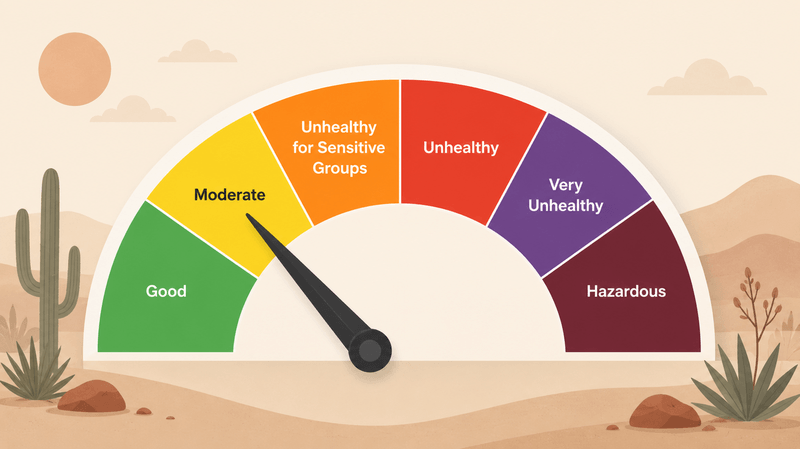
Why Today's Story Is Dust And Ozone, Not Local Wildfire Smoke
PM10 measures coarse particles kicked up by a monsoon outflow boundary or haboob, while PM2.5 measures the fine particles that dominate true wildfire smoke. High PM10 alongside comparatively low PM2.5 on the live map signals a dust event, not a smoke event, even though both raise the same AQI dial.
The response differs by event. Dust events are short and tied to a single storm, so closing windows for a few hours is usually enough. A genuine PM2.5-driven smoke event can linger for days and calls for sustained indoor filtration.
The Regional Fires Sending Smoke Toward Arizona's Skies
The Pocket Fire, burning near Sedona about 110 miles north of Phoenix, is the wildfire shaping Arizona's air quality. As of July 13, 2026, it has burned 27,393 acres and is 76 percent contained, per the National Interagency Fire Center.
The fire triggered Arizona's first-ever ozone high pollution advisory for Flagstaff in late June, and ADEQ has separately issued ozone advisories for Yavapai and Maricopa Counties. Smaller fires in Gila and Coconino Counties add to the regional smoke background without directly threatening Phoenix.
Wildfire smoke can travel hundreds of miles on the wind, so northern Arizona smoke reaches the Valley only when winds shift out of the north, showing up on the live map as a rise in the PM2.5 column even on a calm dust day.
How To Read The Map And Protect Your Indoor Air Today
Match today's AQI category below to an outdoor plan and indoor filtration step, including guidance on choosing the best air conditioner filter for wildfire smoke, built on EPA's AQI action levels.
Table 1: How To Read The Map And Protect Your Indoor Air Today
Guidance follows EPA's official Air Quality Index action levels. Check the live map above for today's category before planning outdoor time.
The 10-Second Gut Check For Reading Today's Map
Use this shortcut when standing at the door deciding whether to go outside.
Is PM10 higher than PM2.5? That is a dust signature. Close windows for a few hours until the outflow passes.
Is PM2.5 higher than PM10, or are both climbing together? That points to smoke. Switch your HVAC to recirculate and confirm a MERV 13 filter is in place.
Is the NowCast reading still climbing rather than holding steady? Conditions are worsening. Hold off on outdoor plans until the trend flattens.
How To Tell If Smoke Has Reached Your Indoor Air
These four signs mean smoke has reached your indoor air, even before a monitor confirms it.
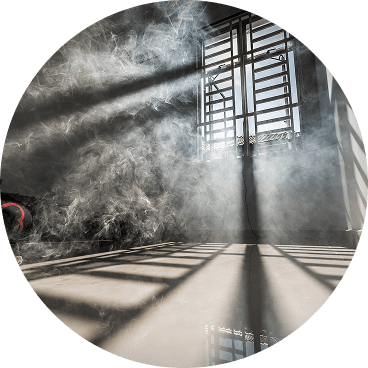
Visible haze in a sunbeam or under a light fixture with windows and doors closed.
A campfire-like smell that lingers minutes after coming back inside.
A fine layer of soot on light-colored windowsills, countertops, or fan blades.
Eye, throat, or sinus irritation soon after opening a door or window.
Any one of these is reason enough to switch your HVAC to recirculate and confirm a MERV 13 filter, even before the map above changes category.
Who Should Take Extra Precautions Today
A single citywide AQI number does not affect every household equally. These groups face higher risk at readings most residents would barely notice, per EPA, CDC, and American Lung Association guidance.
Asthma, COPD, or lung conditions: Symptoms can appear at a Moderate reading, so watch PM2.5, not just the category.
Pregnant people: CDC-cited research links fine particulate exposure to lower birth weight and preterm birth.
Infants and young children: Faster breathing pulls in more polluted air per pound. Shift outdoor play earlier.
Older adults: Heart and lung changes make exposure riskier during smoke than dust.
Outdoor workers: A dust mask will not filter fine particulate. Use an N95 during smoke, not routine dust.
Pets: Fine particles affect animal lungs too. Shorten walks once conditions reach Unhealthy for Sensitive Groups.
Phoenix families ask us the same question every monsoon season: is that haze outside dust or smoke? The honest answer is it is usually both, just in different amounts on different days. After manufacturing filters for over a decade and serving more than two million households, our team has learned that the households who stay ahead of it are the ones who check the pollutant breakdown, not just the headline number, and keep a MERV 13 filter ready before the smoke ever arrives.
David Heacock, Founder and CEO of Filterbuy
Essential Resources
These seven verified .gov and .org sources, checked July 15, 2026, go deeper than any single map.
Understand Exactly What Your AQI Number Means
AirNow explains what each AQI color and number represents, straight from the EPA and U.S. Forest Service.
Source: AirNow's AQI Basics Guide
Get Phoenix's Official Daily Pollution Forecast
ADEQ publishes Phoenix's official daily forecast for ozone, PM10, and PM2.5.
Source: ADEQ's Phoenix Forecast Page
Check Real-Time Monitoring Data From Your Own County
Maricopa County runs its own air monitor network, closer to your neighborhood than a citywide reading.
Source: Maricopa County's Air Quality Monitoring Page
Learn How To Stay Safe Before, During, And After A Wildfire
The CDC outlines household wildfire safety steps, from evacuation basics to indoor air protection.
Source: CDC's Wildfire Safety Guidelines
See How Wind And Weather Will Shape Today's Air
The National Weather Service pairs air quality with its wind and storm forecast tools.
Source: NWS's Air Quality Index Guide
Protect Your Lungs With Guidance From Respiratory Health Experts
The American Lung Association covers what wildfire smoke does to your lungs and who faces the highest risk.
Source: American Lung Association's Wildfire Smoke Guide
Track Every Active Wildfire Burning Across The Country
NIFC updates national fire counts and acreage daily, including fires sending smoke toward Arizona.
Source: NIFC's National Fire News Report
3 Supporting Statistics
Wildfire smoke hits the lungs harder than average PM2.5. Respiratory hospitalizations rise 1.3 to 10 percent per 10 µg/m³ increase in wildfire PM2.5, roughly double the risk from other PM2.5 sources. (Aguilera et al., 2021)
Source: Aguilera Et Al., 2021 Study
MERV 13 is the EPA's smoke-season standard. The EPA recommends a MERV 13 or higher filter during smoky periods, and most HVAC systems can run one without strain.
Source: EPA's Wildfire Smoke Preparedness Guide
Phoenix's real air quality pattern is dust, not fire. One to three large dust storms hit the Phoenix area yearly, and Arizona has logged more than 100 over the past decade.
Source: NOAA's Haboob Report
Final Thoughts
Phoenix's air quality can shift by the hour during monsoon season, and dust looks different from smoke once you know what to check for. Bookmark the live map above and read it the way you would check the weather.
Frequently Asked Questions
Protect Your Home's Air Today
Whether today's story is dust or smoke, a fresh MERV 13 filter is the fastest way to keep it out of your air.
Shop MERV 13 Filters to stock up before the next smoke event, or Find Your Exact Filter Size for a non-standard dimension.
Glossary
NowCast: An hour-by-hour AQI estimate reflecting rapidly changing conditions, used on the live map above alongside the standard 24-hour average.
MERV Rating: The Minimum Efficiency Reporting Value scale, from 1 to 20, rating how effectively an HVAC filter captures airborne particles.
Haboob: A dense wall of dust generated by thunderstorm outflow winds, a seasonal Arizona monsoon feature that drives short-term PM10 spikes.
About The Author
Michelle Wan is Filterbuy's Brand Manager and Air Quality Writer. This page was technically reviewed by David Clark, Licensed HVAC Technician.
Subscribe to wildfire smoke alerts for Phoenix, AZ, to get a heads-up before the next event reaches your area.