The moment a wildfire starts near you, you'll get an instant alert and simple tips to reduce your smoke exposure.
30xSmaller than a human hair
Fine enough to reach deep into the lungs. A MERV 13 is built to capture it.
It Doesn't Stay Local
Smoke rides the wind far downwind — you can get smoky air with no fire nearby.
Simple steps to reduce indoor exposure.
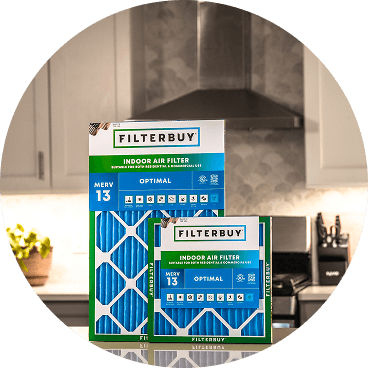
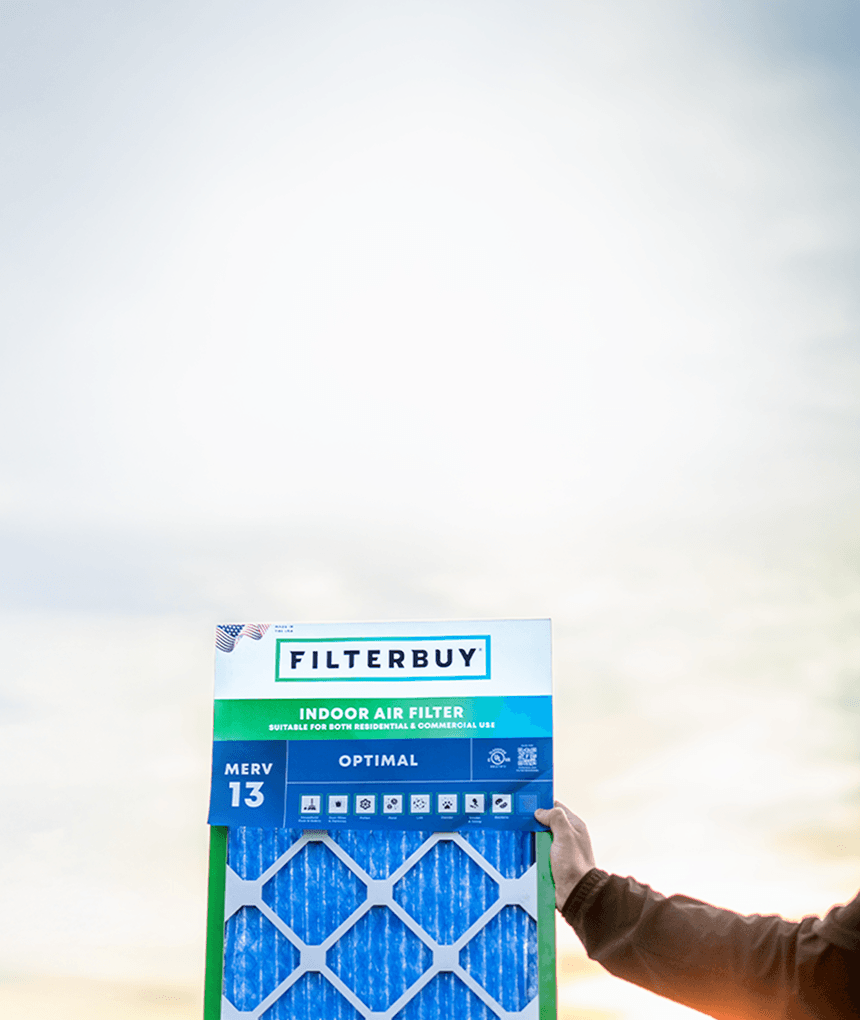
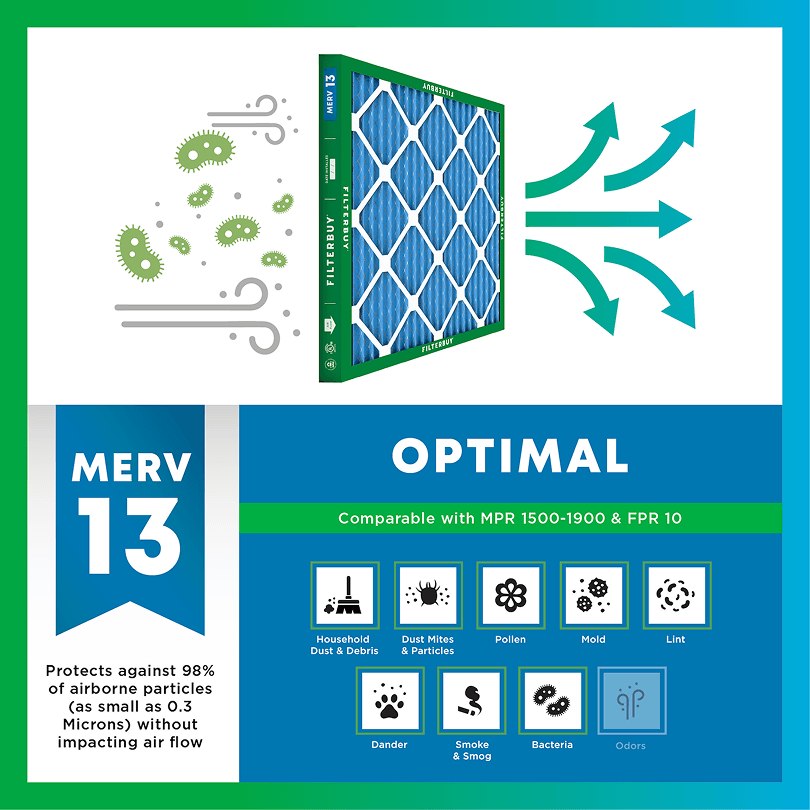
During smoke events, the EPA recommends upgrading to a MERV 13 filter — or the highest-rated filter your system can handle — to help reduce the fine particles smoke brings indoors. MERV 13 is the level most home HVAC systems can run while still capturing PM2.5, the fine particulate that makes up the bulk of wildfire smoke.

Over 70,000 wildfires burn in the U.S. every year.
Wildfire smoke can travel 1,000+ miles, affecting states that aren't even near the blaze.
Exposure to wildfire smoke can worsen asthma, trigger heart issues, and lead to ER visits.
Indoor air can hold more fine particles during wildfire events unless it's properly filtered.
The EPA advises using MERV 13 filters or portable HEPA air cleaners during wildfire smoke events.
Use the live wildfire smoke tracker and upgrade your air filters today to protect your lungs and your home.
Shop Filters For Smoke Protection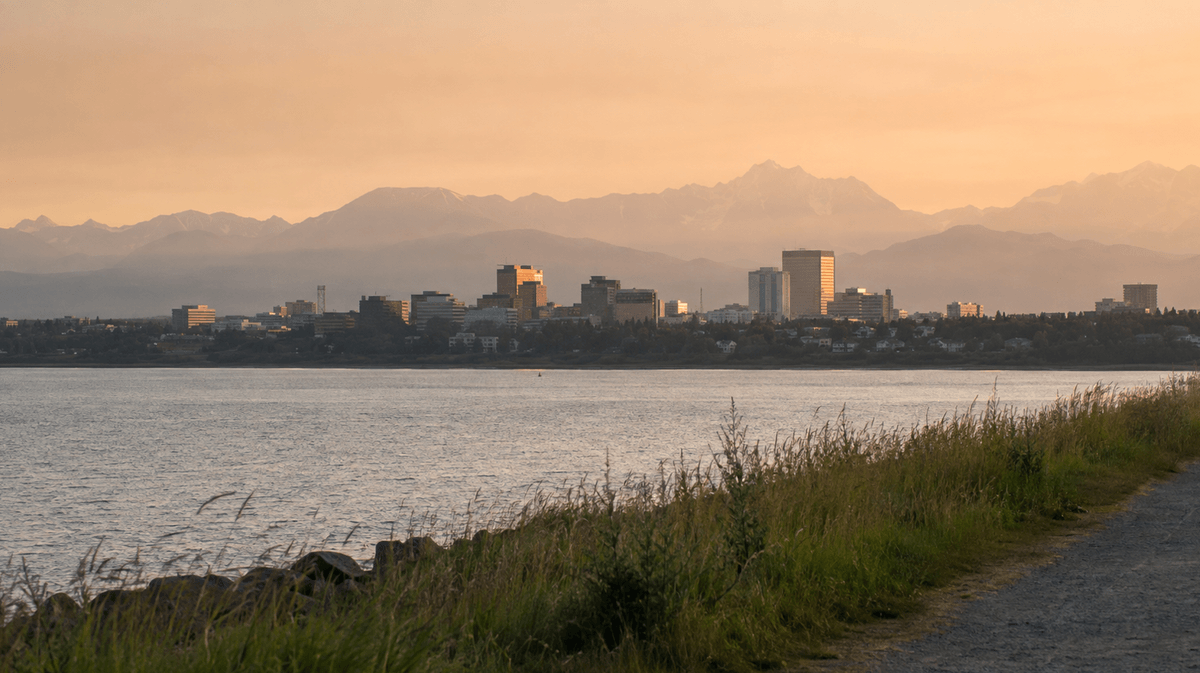
By Michelle Wan, Brand Manager & Air Quality Writer
Reviewed By: David Clark, Licensed HVAC Technician
Published: August 9, 2026 | Updated: August 9, 2026
Filterbuy is an American air filter manufacturer, not a weather service, and that shapes what we add. We have built filters in the USA since 2013. What we keep hitting with Anchorage is that smoke advice written for Denver assumes central air, a furnace running in July, and standard filter sizes. None hold reliably here.
Anchorage's wildfire smoke rarely starts in Anchorage. It blows in from the Kenai Peninsula, the Susitna Valley, and Interior Alaska, so clear skies at breakfast tell you nothing about dinner. Check the live map, keep windows shut once AQI passes 100, and run a MERV 13 with your HVAC fan continuous. That last step is the EPA's recommendation for smoky periods.
Anchorage smoke is usually imported. Kenai and Interior fires carry it in on the wind, often with no local fire in sight.
"Anchorage AQI" is really three separate monitors reading different air. A citywide figure can hide an Eagle River or Hillside spike.
The filter calendar runs opposite the smoke calendar. Summer smoke arrives when the furnace barely cycles and the filter is months old.
MERV 13 is the EPA minimum for smoke, and running the fan continuously with it roughly halves indoor PM2.5.
No ductwork? A box-fan filter build is the EPA-tested option, and it performs better than most people expect.
Anchorage air quality is reported by three Alaska DEC monitors: Garden in Airport Heights, Laurel on Tudor Road, and Parkgate in Eagle River. Their PM2.5 readings drive Anchorage Health Department advisories. Above AQI 100, stay indoors if you have asthma or heart disease, if you are pregnant, or if you care for young children or older adults. Above 150, that applies to everyone.
Filterbuy observation #1: "Anchorage AQI" is really three numbers, and averaging them hides the one you need. Parkgate sits in Eagle River at a different elevation, past the terrain that channels smoke through the Bowl. A citywide figure can read Moderate while one monitor is over 100. In Eagle River or on the Hillside, find your nearest monitor instead of trusting a headline number.
Anchorage sits in the Cook Inlet basin with the Chugach at its back, so smoke that settles tends to stay settled. A noon reading can be stale by dinner.
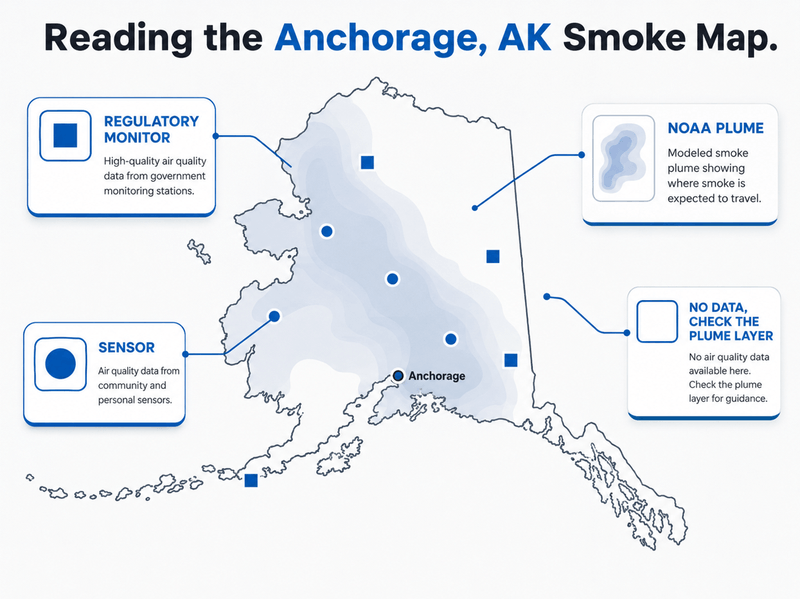
Anchorage's worst smoke days are almost always someone else's fire. Southwesterly flow carries Kenai Peninsula smoke up Turnagain Arm into the Bowl. Northerly flow brings Susitna Valley and Interior smoke down. In 2019, the Anchorage Health Department issued advisories citing airflow moving Kenai smoke into Anchorage and Eagle River.
Local ignition risk is real too. Spruce bark beetle infestation left dead fuel across the Hillside, and the 2016 McHugh Creek Fire burned hundreds of acres in Chugach State Park before stopping short of homes. Seven neighborhoods carry an "extreme" hazard rating in the Municipality's 2025 plan.
Match your current reading to the row below. This is the triage Filterbuy's support team uses with Anchorage customers each fire season.
Categories follow the U.S. EPA Air Quality Index. Filter guidance reflects EPA recommendations for wildfire smoke. Check the live map above for the current Anchorage reading.
In heavy smoke, a one-inch MERV 13 can load in 2–4 weeks instead of 90 days. A clogged filter does not just filter less. It restricts airflow and strains your blower.
Six steps, in order of impact:
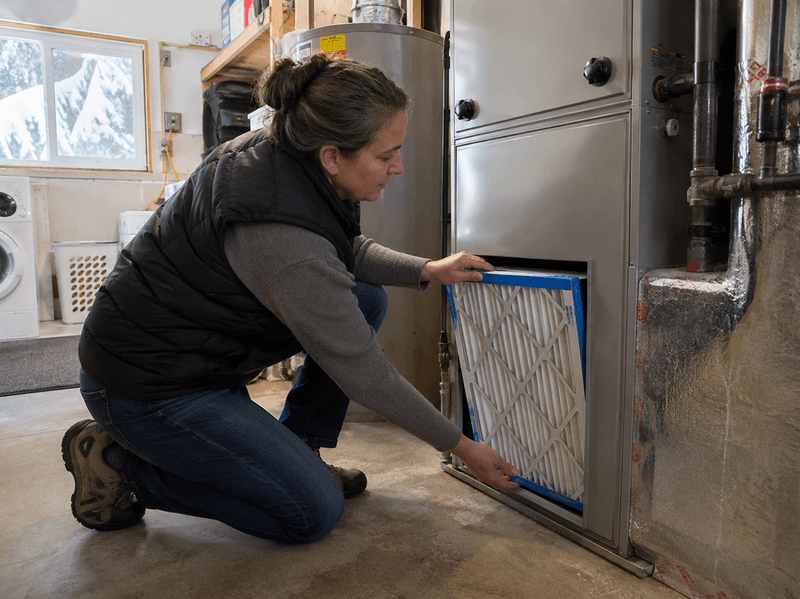
Fit a MERV 13 before smoke arrives. The EPA recommends MERV 13 or higher for smoky periods and notes most residential furnaces handle one if it is replaced often.
Set the HVAC fan to "On," not "Auto." A high-efficiency filter with the fan running continuously cuts indoor PM2.5 by roughly 50%, per EPA.
Close windows and switch to recirculate. Anchorage homes rely on open windows all summer, the exact habit that lets smoke in.
Confirm your system can take it. On an older PSC blower, have a technician check static pressure first. MERV 11 is the right call for systems that cannot handle the resistance. See how MERV ratings work.
Build a clean room. EPA guidance pairs a MERV 13 in the HVAC with a portable HEPA unit where you sleep. We compare them in MERV 13 vs. HEPA for wildfire smoke.
Check the filter every two weeks during smoke. Replace when the media darkens, or airflow weakens. See how often to change your filter when AQI is high.
Filterbuy observation #2: Anchorage's filter calendar runs upside down relative to its smoke calendar. Households swap furnace filters on a heating rhythm: change in fall, forget until spring. But smoke arrives June through August, when the furnace barely cycles. The filter in the slot when smoke rolls in is usually months old and partly loaded, in a system that is not running.
Filterbuy observation #3: fit matters more here than rating. Older Anchorage housing predates standardized returns, so people settle for close-enough sizes. Gaps let smoke bypass the media. A MERV 13 with a half-inch gap underperforms a well-fitted MERV 11. Filterbuy makes 600+ sizes plus custom for that reason.
Build a box-fan air cleaner. Plenty of Anchorage housing runs baseboard, hydronic, or Toyostove heat with no ducts and no filter slot, and most smoke guides never address it.
Tape or clamp a MERV 13 filter to the intake side of a box fan, arrow pointing toward the fan. EPA testing found a DIY unit cut PM2.5 about 56% in a larger room within 90 minutes and 99% in a smaller room within an hour. Builds with a shroud or multiple filters work best. Instructions are on the EPA's DIY air cleaner page.
Filterbuy sells the filter, not the fan, and a commercial HEPA unit works too. Pick whichever you will actually run. Renting? A box fan build needs no landlord permission and leaves with you. Put it in the bedroom, since you spend a third of any smoke event asleep.
Every wildfire smoke guide I read while researching Anchorage was written for somewhere else. They all assume you have central air you can flip to recirculate, and a filter slot that takes a standard size off the shelf. In Anchorage, a lot of homes have neither.
Michelle Wan, Filterbuy
The mistake I see most in Anchorage isn't the wrong filter. It's a good filter sitting in a system that never runs. Most homes here have no central air, so when smoke rolls in during July the blower is idle, and a MERV 13 can't clean air that isn't moving through it.
David Clark, Licensed HVAC Technician
AirNow Fire and Smoke Map: PM2.5 monitors, satellite fire detections, NOAA smoke plumes. The best view of whether smoke is heading your way.
Alaska DEC Air Monitoring: Real-time readings from each Anchorage-area monitor. Check yours, not the average.
AICC fire dashboard: Statewide fire activity, updated hourly.
Anchorage Health Department: Daily municipal AQI report by 9 a.m. weekdays. Hotline 907-343-4899.
Alaska Wildland Fire Information: Incident updates and burn permit suspensions.
Indoor PM2.5 runs 55% to 60% of outdoor levels during a smoke event with windows shut and no air cleaner running, varying 30% to 100% by home. A high-efficiency filter plus continuous fan cuts that by roughly half.
Source: U.S. EPA
U.S. asthma ER visits ran 17% above expected across 19 wildfire smoke days in 2023.
Source: CDC
Alaskans average 3.5 million person-days of moderate smoke exposure annually, plus 800,000 of dense exposure.
Source: Hahn et al., NIH PubMed Central
Check your nearest monitor rather than the citywide average. Anchorage air is usually Good to Moderate, but wildfire smoke can push it to Unhealthy within hours.
MERV 13 is the EPA-recommended minimum. It captures a high share of the fine PM2.5 that makes up most smoke. MERV 8 and MERV 11 do not.
Expect a few dollars more per filter than MERV 8. During an active smoke event, you will replace it more often, so budget two to three filters per season rather than one.
It depends entirely on wind. Smoke that settles into the Bowl during calm conditions can linger for days. A wind shift can clear it in hours.
Yes. EPA puts indoor PM2.5 at roughly 55% to 60% of outdoor levels in a closed-up home with no air cleaner running.
A portable HEPA unit cleans one room. A central system moves far more air across the whole house. The strongest setup uses both.
You cannot control what burns on the Kenai. You can control what your home breathes through when the wind turns. Measure your slot and order the exact size. Filterbuy ships factory-direct and free, and auto-delivery puts a fresh MERV 13 in your hands before fire season, not three days after.
AQI: The EPA's 0–500 air pollution scale. Above 100 is unhealthy for sensitive groups.
PM2.5: Fine particulate matter 2.5 micrometers or smaller, the main pollutant in wildfire smoke.
MERV: Minimum Efficiency Reporting Value, the ASHRAE 52.2 scale (1–16) rating particle capture.
NAAQS: National Ambient Air Quality Standards. The 24-hour PM2.5 standard is 35 µg/m³.
Wildland-urban interface (WUI): Where homes intermix with undeveloped wildland. About 82% of Anchorage sits inside it.
Box-fan air cleaner: A MERV 13 filter fixed to a box fan intake, an EPA-tested option for homes with no ductwork.
Filterbuy: An American air filter manufacturer, family-owned since 2013, producing 600+ sizes plus custom at four U.S. factories.
Subscribe to wildfire smoke alerts for Anchorage, AK, to get a heads-up before the next event reaches your area.