
Jackson Real-Time AQI Tracker


Get Alerts For Unhealthy AQI In Your Area
When air quality in your area reaches unhealthy levels, we'll send you a quick alert, along with expert tips on how to reduce your exposure.
What's Actually In Jackson Air Today?
What High AQI Means for Your Lungs in Jackson
How to Read AQI
The Air Quality Index (AQI) measures how polluted the air is and how it may affect your health.
0–50 (Good): Air quality is satisfactory.
51–100 (Moderate): Acceptable, but some pollutants may pose minor concerns.
101–150 (Unhealthy for Sensitive Groups)
151–200 (Unhealthy)
201–300 (Very Unhealthy)
301+ (Hazardous)
Moderate
Still okay for most, but if you have asthma or allergies, take it easy and avoid long outdoor workouts.
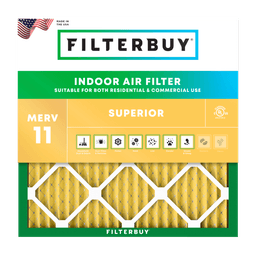
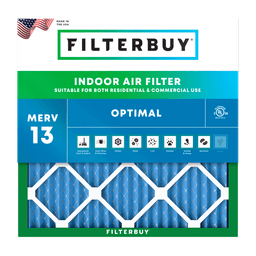
Shop MERV 11 filters→What's the Right Filter for Your AQI Level?



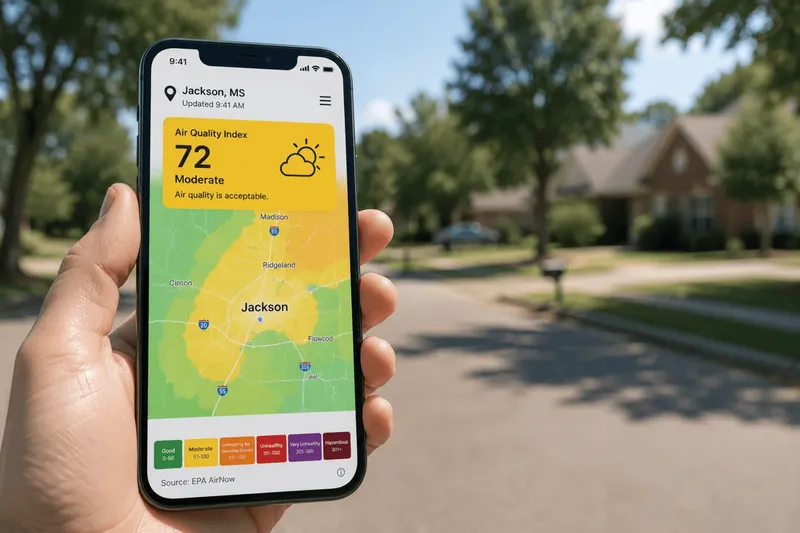
Check Today's Live Real Time Air Quality Index AQI Map in Jackson, MS Now
Author: Michelle Wan | Reviewed by: David Clark, Licensed HVAC Technician, Filterbuy | Published: July 31, 2026 | Updated: July 31, 2026
TL;DR
Jackson’s air is good or moderate on most days, and we will not pretend otherwise. Check the live map above for your ZIP code before outdoor plans. Air is fine for most people below AQI 100, and children, older adults, and anyone with asthma or heart disease should ease off above 100. The real risk is not smog. It is the handful of days when burn smoke settles over your street.
Why We Built This Page Differently
Most Jackson air quality pages show you a number and stop. Filterbuy went looking for what the number leaves out. Two things stood out. MDEQ issues forecasts only from March 1 through October 31, so burn season runs without one. And Jackson passes every annual measure, which tells you nothing about a plume that sits over three streets for a morning.
Filterbuy makes air filters, not forecasts. We work on the last barrier before your family’s lungs, which is why this page ends at your return vent.
Jackson’s Air Quality Right Now
Readings change hour to hour, so a real-time value beats yesterday’s average. Ozone climbs on hot afternoons June through September. Fine particles spike in late winter when burn smoke drifts in.
Key Takeaways
Jackson’s air is good or moderate on the large majority of days each year.
The metro earned B grades for ozone and short-term particle pollution in State of the Air 2026, at 0.7 unhealthy days per year on each.
One smoke event pushed the metro AQI to 153 on March 1, 2026.
MDEQ forecasts run March 1 through October 31, leaving burn season uncovered.
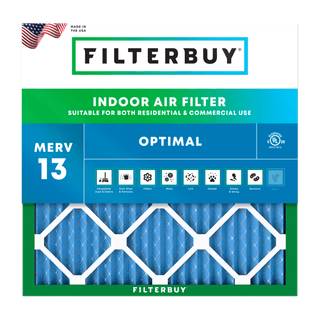
A MERV 13 filter with the windows closed is the strongest indoor step during a smoke event.
What Today’s Jackson AQI Number Actually Means
Thresholds follow the U.S. EPA Air Quality Index. Sensitive groups act at a lower number.
Why Jackson’s Yearly Grades Look Good And Single Days Still Do Not
Jackson is not a smog city, and we will say so plainly even though we sell filters. In State of the Air 2026, the metro earned a B for ozone at 143rd of 226, a B for short-term particle pollution at 154th of 224, and a passing grade year-round. Hinds County was worst in the metro and still passed.
Here is the part we think matters more. Annual grades average a whole year, and smoke does not average. It arrives as a plume, sits over a few streets for a morning, and clears. On March 1, 2026, Rankin County Emergency Operations reported a metro AQI of 153, which MDEQ attributed to fires burning during drought. Yearly grades never show that morning.
The Jackson Air Load Calendar
Sources: MDEQ air quality forecast schedule and USDA Forest Service Southern Region prescribed fire data.
One Monitor Network, One Whole County
Jackson’s citywide value comes from a small monitor network covering a whole county. That works for ozone, which spreads across a metro. It works poorly for smoke, and MDEQ has said as much.
MDEQ’s Rodney Cuevas called the effect very localized when a burn sent smoke past a Gulf Coast monitor. Anyone between the monitor and the fire felt it. Anyone outside the plume noticed nothing.
Here is our judgment rather than a measurement. If you smell smoke and the map reads green, believe your nose and close the windows. You live on one street.
MDEQ also notes that real-time monitoring data has not passed quality control and may change. Treat the live number as a decision tool for the next few hours.
What The Jackson AQI Never Measures
This is where we get obsessive, because this is our actual subject. The AQI tracks ozone, particulates, carbon monoxide, sulfur dioxide, and nitrogen dioxide. It does not track pollen, and the humid Southeast carries some of the heaviest loads in the country. It leaves out the indoor humidity that feeds mold here, and whatever your cooking and cleaning add.
EPA estimates Americans spend roughly 90 percent of their time indoors. The map describes the air outside your door. The air on your side of it is decided at the return vent.
Why Two Weather Apps Show You Two Different Jackson Numbers
Check Jackson’s air on three sites and you can get three answers. That is not a glitch.
The U.S. EPA runs one official index on a 0 to 500 scale with fixed breaks. Good ends at 50. Moderate ends at 100. Every federal and state source uses those breaks.
Some consumer weather platforms do not. At least one major weather site uses a sensor vendor with proprietary bands, where Fair and Poor fall at different numbers than EPA’s Good and Moderate. The same air reads Moderate on one app and Fair on another.
Look for Good, Moderate, and Unhealthy for Sensitive Groups. Those are EPA labels. Excellent, Fair, and Poor are not.
Check whether the source names AirNow, EPA, or a state agency. A private sensor company means a vendor index.
When they disagree and someone in your house has asthma, use the EPA number. Thresholds here and in school policy follow EPA’s scale.
You cannot act on a threshold without knowing which ruler you hold. Every number in the table above is EPA AQI.
What To Do In Jackson When The Number Climbs
Check the live map by ZIP code. Set a phone alert at AQI 51 if anyone has asthma, allergies, or a heart condition. Set it at 101 for everyone else.
Sign up for Enviroflash through MDEQ. It posts once daily at 2:45 p.m. and covers today and tomorrow, so plan a Saturday practice on Friday afternoon.
Close the envelope. Shut windows and doors, and switch your system to recirculate.
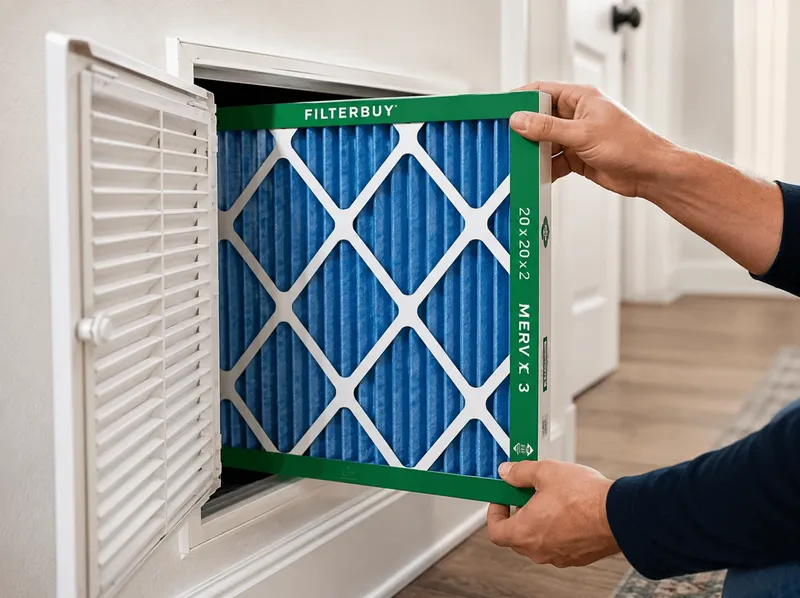
Find your filter size. Read the dimensions on the frame, such as 20x25x1. That nominal size runs slightly larger than the actual filter, which is normal. Filterbuy makes over 600 sizes, and odd openings use the custom filter builder.
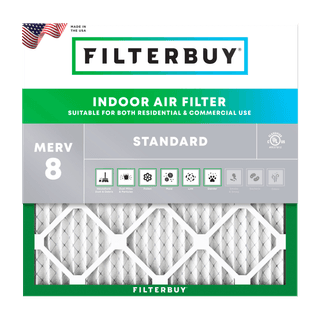
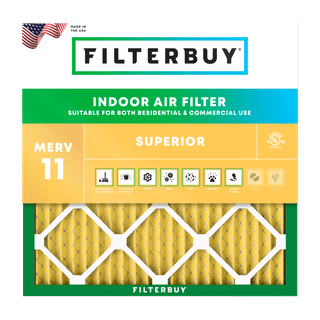
Match the rating to your household. Dust-only homes do fine on MERV 8 pleated filters. Pets or seasonal allergies point to MERV 11 filters. Step up to MERV 13 filters during smoke events if your system supports it. If the scale is unfamiliar, how MERV ratings are scored walks through it, and the filter match quiz narrows it in a minute.
Change it on schedule. Jackson humidity loads a filter faster than a dry climate. Ninety days is the limit, sixty is better in burn season, and an auto delivery schedule removes the guesswork.
For a regional comparison, see Houston ozone patterns.
What Our Founder Says About Jackson Air
After manufacturing filters for over a decade and serving more than two million households, we have learned that a good annual grade does not protect anyone on a bad afternoon. Jackson has a handful of smoke days a year, and on those days the only thing between the plume and your family is whatever sits in your return vent.
David Heacock, Founder and Chief Executive Officer, Filterbuy
Frequently Asked Questions About Jackson Air Quality
Seven Official Sources That Answer Jackson Air Quality Questions
Filterbuy grounds the health guidance here in federal and state sources. All seven are free to use, and where we offer our own judgment we say so.
1. Know What Today’s AQI Number Means
The federal reporting system run by EPA with NOAA, NASA, and CDC. Defines all six color categories and the health action for each.
2. Get Tomorrow’s Forecast By Email
MDEQ runs the state’s monitors and issues forecasts March 1 through October 31, updated daily at 2:45 PM. Links to Enviroflash for three-day forecasts by email.
MDEQ Mississippi air quality forecast
3. Know Which Pollutant Is Making You Cough
CDC explains how ozone and fine particles affect the lungs and heart differently, and names the symptoms that warrant a call to a doctor.
CDC ozone and particle pollution guidance
4. Pick A Filter Without Straining Your System
EPA covers HVAC filters and portable air cleaners side by side, stating plainly what filtration does and does not do. Read it before moving up a MERV rating.
EPA guide to selecting a furnace filter
5. See Why Pollen Hits Harder Than The AQI Says
AAFA ranks the 100 largest metros each year on pollen load and specialist access, and documents why warm humid climates produce longer pollen seasons.
AAFA Allergy Capitals research
6. Spot Burn Smoke Before It Reaches Your Street
The National Weather Service office in Flowood issues fire weather forecasts twice daily, plus the spot forecasts foresters request before controlled burns.
NWS Jackson fire weather products
7. Learn What Builds Up Indoors All Day
NIEHS funds research on mold, fine particles, and indoor allergens in homes and schools, and links indoor exposure to lung development in children.
NIEHS indoor air quality research
Supporting Statistics
All three sources are federal or national nonprofit, verified by direct fetch.
Jackson averages under one unhealthy air day per year. Unhealthy ozone days 0.7 and unhealthy particle days 0.7, grade B on both. Year-round particle pollution ranked 57th worst of 211 metros and passed.
Source: American Lung Association, State of the Air 2026
Link: American Lung Association State of the Air 2026 Mississippi findings
Mississippi ran 12.7 inches short of rain before the smoke. Precipitation fell 12.7 inches below average from August 2025 through April 2026, and 93 percent of the state sat in Moderate to Exceptional Drought. NOAA lists increased fire risk among the impacts.
Source: NOAA National Integrated Drought Information System, May 21, 2026
Link: NOAA drought status update for Mississippi
The Forest Service burns 1.2 million Southern acres a year. That is a five-year annual average for the Southern Region alone, and the Forest Service is one of many organizations burning, so regional totals run higher.
Source: USDA Forest Service
Link: USDA Forest Service Southern Region prescribed fire data
Glossary Of Jackson Air Quality Terms
AQI (Air Quality Index): the U.S. EPA’s 0 to 500 scale converting pollutant concentrations into a color-coded health rating.
PM2.5: fine particulate matter 2.5 microns wide or smaller, small enough to reach deep into the lungs. Smoke is mostly PM2.5.
MDEQ: the Mississippi Department of Environmental Quality, which runs the state’s air monitors and issues the forecast.
Prescribed fire: controlled burning used to manage forests and habitat, and a major seasonal PM2.5 source in Mississippi.
MERV: Minimum Efficiency Reporting Value, the 1 to 16 scale rating how effectively a filter captures airborne particles.