
Air Quality in South Dakota
Air quality index (AQI⁺) and PM2.5 air pollution in South Dakota •


Get Alerts For Unhealthy AQI In Your Area
When air quality in your area reaches unhealthy levels, we'll send you a quick alert, along with expert tips on how to reduce your exposure.
Live Air Quality Ratings in South Dakota
Live Most Polluted City Ranking
Real-time most polluted cities in South Dakota
Live Cleanest City Ranking
Real-time cleanest cities in South Dakota
The Right Air Filter For High AQI Days
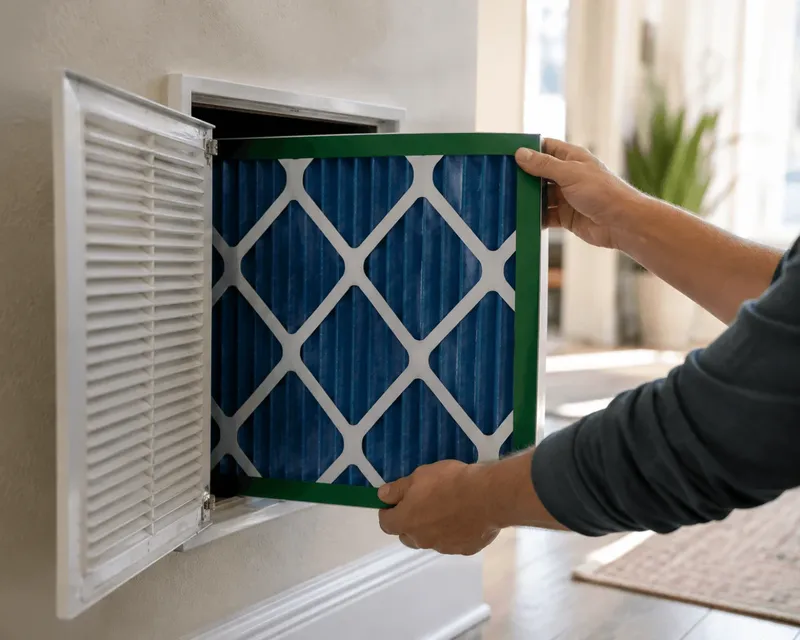
When outdoor air quality drops, the EPA recommends upgrading to a MERV 13 filter — or the highest-rated filter your HVAC system can handle — to help capture more of the fine particulate (PM2.5) that comes with poor air quality. MERV 13 is the highest rating most residential systems can run without restricting airflow.
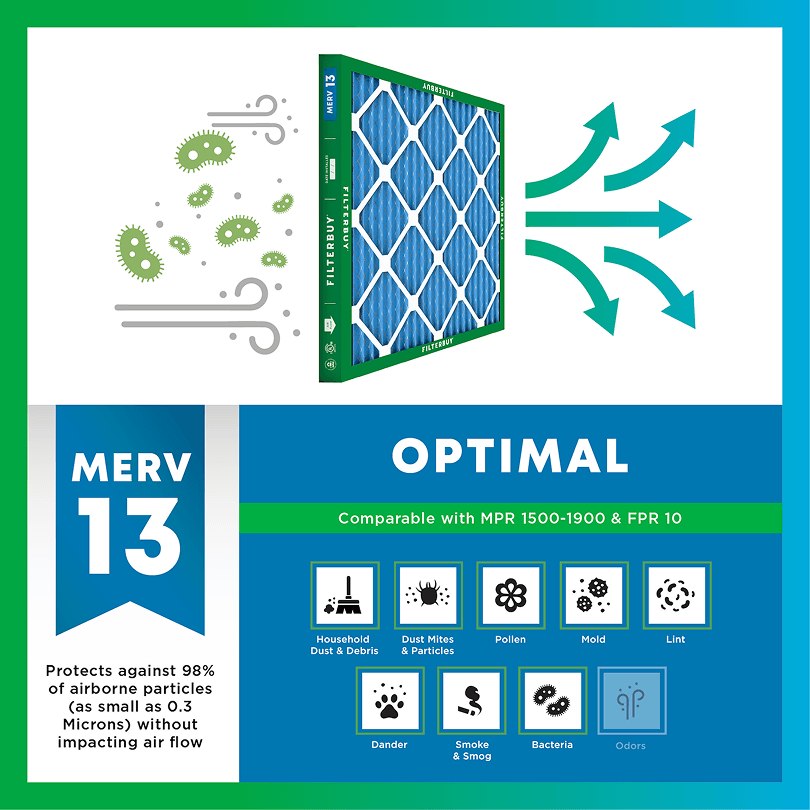
- Captures PM2.5 and other fine particulates
- Filters ash, soot, and smoke particles
- Rated to capture particles as small as 0.3 microns
- Matches the filter rating the EPA suggests during high-AQI and smoke events

AQI FAQs
What is AQI?
AQI stands for Air Quality Index, the EPA's scale for reporting daily air quality. It runs from 0 to 500. The higher the number, the greater the level of air pollution. Values at or below 100 are generally considered satisfactory; values above 100 mean air quality is unhealthy, first for sensitive groups, then for everyone as numbers climb.
What does AQI measure?
The AQI tracks five major pollutants regulated by the Clean Air Act: ground-level ozone, particle pollution (PM2.5 and PM10), carbon monoxide, sulfur dioxide, and nitrogen dioxide. The reported AQI value reflects whichever pollutant is highest at that time — most often ozone or fine particles (PM2.5).
How is AQI calculated?
Monitoring stations measure pollutant concentrations, and the EPA converts each into a standardized 0–500 score using set breakpoints. Each pollutant gets its own sub-index, and the highest sub-index becomes the reported AQI. That's why a single number can represent different pollutants on different days.
What is a good AQI?
An AQI of 0–50 is rated "Good" — air quality poses little or no risk. 51–100 is "Moderate," acceptable for most people though unusually sensitive individuals may want to limit prolonged outdoor exertion. Anything at or below 100 is generally considered satisfactory air quality.
What does an AQI of 100 (or 150) mean?
100 is the dividing line: at or below it, air quality is satisfactory for the general public. From 101–150, air is "Unhealthy for Sensitive Groups" — people with respiratory conditions, older adults, and children. From 151–200, it's "Unhealthy" and everyone may begin to feel effects.
Why is the AQI bad today?
Short-term AQI spikes usually come from wildfire smoke, temperature inversions that trap pollutants near the ground, high-ozone weather (hot, sunny, stagnant days), or heavy traffic and industrial activity. Check a real-time source like the map on this page to see which pollutant is driving today's reading in your area.
What AQI is bad for running or exercise?
Many runners follow the EPA category lines: below 50, no adjustment needed; 51–100, unusually sensitive people may shorten intense workouts; above 100, sensitive groups are advised to reduce prolonged or heavy outdoor exertion; above 150, that advice extends to everyone. Exercise increases how much air you breathe in, which is why thresholds matter more during workouts.
What AQI is safe to open windows?
A common rule of thumb is to keep windows open when the AQI is under 100 and close them when it climbs above, especially during wildfire smoke events when fine particles are elevated. When windows are closed, running your HVAC system with a fresh filter helps capture particles circulating indoors.
Should I wear a mask based on AQI?
Public health agencies generally suggest considering a well-fitted N95-style respirator outdoors when the AQI exceeds 150, particularly during smoke events. Cloth and surgical masks don't filter fine particles effectively. Follow guidance from your local health department, which may adjust recommendations during severe episodes.
Check Today's Live Real Time Air Quality Index AQI Map in South Dakota Now
By Michelle Wan, Brand Manager and Air Quality Writer. Reviewed by David Clark, Licensed HVAC Technician. Published August 4, 2026. Updated August 4, 2026.
TL;DR
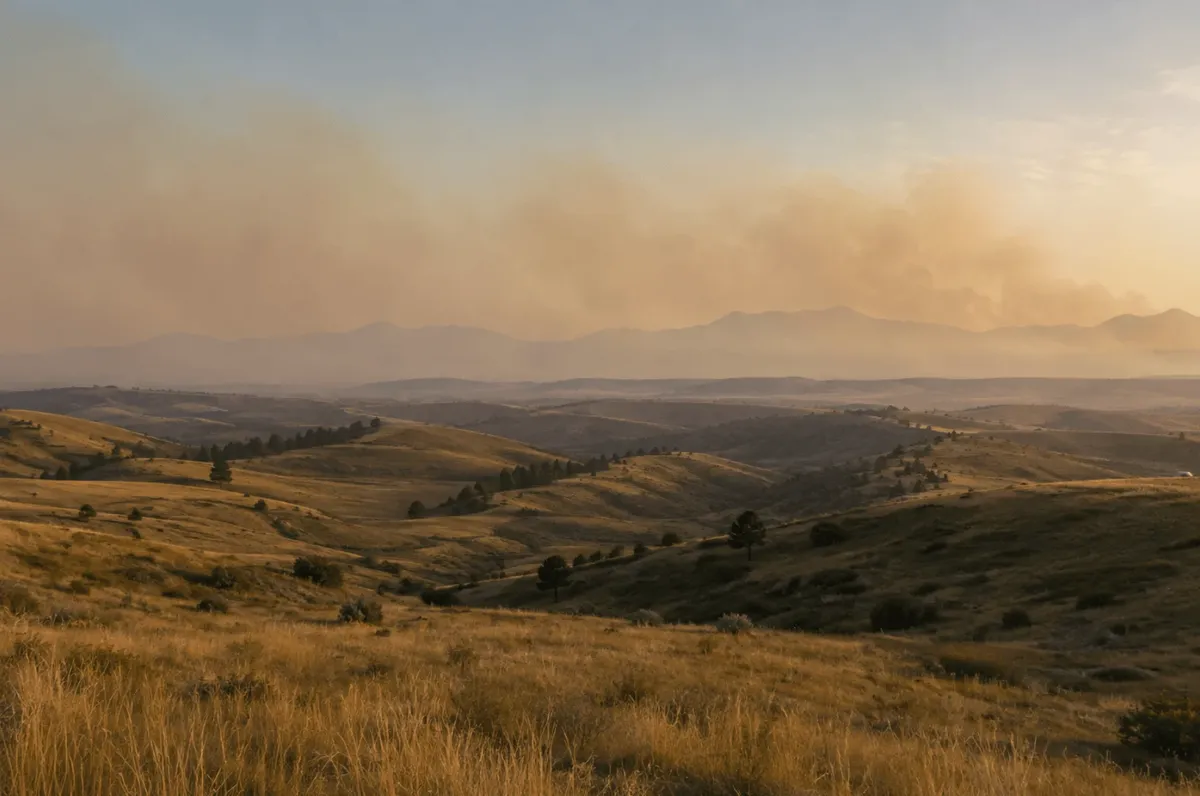
The live air quality index map above shows current outdoor conditions across South Dakota, drawn from ten state monitoring sites. A reading of 50 or below is good, and above 100 means children, adults 65 and older, and anyone managing asthma, COPD, or heart disease should cut back outdoors. Most bad air days here come from wildfire smoke drifting in or from windblown dust. Ozone adds a third driver on hot afternoons, and a MERV 13 filter helps with the first two while doing nothing about the third.
Key Takeaways
• The U.S. Air Quality Index runs from 0 to 500 across six color-coded categories, and 101 is where sensitive groups should limit outdoor exertion.
• South Dakota operates ten air monitoring sites across 75,810 square miles, so a reading for much of the state comes from the nearest monitor or a modeled estimate.
• South Dakota recorded 458 wildfires burning 52,775 acres in 2025, and its largest that year burned in March rather than summer.
• The 2026 State of the Air report gave Sioux Falls an F for ozone and Rapid City-Spearfish an F for short-term particle pollution.
• A MERV 13 filter captures fine particles from smoke and dust. It captures neither ozone nor radon, because both are gases.
South Dakota Air Quality By The Numbers
Three figures explain most of what happens to South Dakota air, and none is the AQI number itself.
52,775 Acres Burned Inside South Dakota In 2025
• 458 wildfires started within state lines.
• The Route 13 Fire burned 33,928 acres between March 10 and March 20.
• It ranked among the 40 largest wildfires in the country that year.
That March date matters. Smoke guidance, Filterbuy included, tends to assume July and August and fires burning elsewhere. A filter stocked in June would have been six weeks late. For multi-state smoke, check the nationwide live AQI map.
Source: National Interagency Coordination Center, 2025 Annual Report
Close To 43 Percent Of South Dakotans Sit In An Age-Based Sensitive Group
• 23.5 percent of residents are under 18.
• 19.4 percent are 65 or older.
• AQI health guidance names both groups first.
• Neither figure counts residents managing asthma, COPD, or heart disease.
Source: U.S. Census Bureau, QuickFacts South Dakota
Roughly 64,000 South Dakota Adults Have Been Told They Have Asthma
• 9.0 percent of adults statewide, the fourth lowest rate in the nation.
• The national figure is 10.9 percent.
• The measure counts lifetime diagnosis rather than current asthma.
A good ranking is easy to misread. That rate still covers roughly 64,000 adults with reason to watch the number on a smoky afternoon.
Source: America’s Health Rankings analysis of CDC Behavioral Risk Factor Surveillance System data
The Air Quality Index Scale And What Each Level Means In South Dakota
The AQI runs from 0 to 500 across six color-coded categories. Below 51 is good, 101 and above calls for sensitive groups to limit outdoor exertion, and 151 and above is unhealthy for everyone.
Source: AirNow, Air Quality Index (AQI) Basics. The index is set by the U.S. Environmental Protection Agency and runs from 0 to 500 across six categories. Confirm your system supports a higher MERV rating before upgrading.
What A MERV Filter Can And Cannot Fix In South Dakota Air
South Dakota carries two failing grades in the 2026 State of the Air report, and a filter helps with only one of them. Sioux Falls earned an F for ozone. Rapid City-Spearfish earned an F for short-term particle pollution, at 3.3 unhealthy days per year in Pennington County.
Ozone is a gas, and MERV rates particle capture. So a MERV 13 air filter answers the Rapid City problem and does nothing about the Sioux Falls one. The ozone fix is duller and cheaper. Shut windows through the hottest hours, set the system to recirculate, and move hard activity to the morning.
Filterbuy manufactures and sells air filters. Filterbuy would still rather you spend nothing on the days a filter is not the answer.
How To Read A South Dakota AQI Reading Correctly
South Dakota runs ten monitoring sites across 75,810 square miles, roughly one for every 7,580. That spacing changes what a local reading means, in two ways.
1. The sites do not all measure the same pollutants. Sioux Falls carries the full set. Pierre reports fine particles only. Black Hawk reports ozone and coarse dust with no PM2.5 at all.
2. Most of the state has no station nearby. Mitchell, Huron, Yankton, Mobridge, Winner, and the north-central and northwest counties sit well away from the network, so their readings come from the closest monitor or a modeled estimate.
In those places, treat the map as a prompt rather than a verdict. When the nearest reading climbs, or you smell smoke or see haze, act on what you observe. Filterbuy recommends rural South Dakota households keep the filter constant and let the map trigger the extra steps.
South Dakota Air Monitoring Network By Site And Pollutant
Source: South Dakota Department of Agriculture and Natural Resources, Ambient Air Monitoring. The state runs ten monitoring areas. Much of central, western, and northern South Dakota sits far from any of them, so a map reading for those areas comes from the nearest available monitor or a modeled estimate rather than a monitor in town.
What Drives South Dakota Air Quality
Four forces move the number. Wildfire smoke arrives from Canadian and western fires, wind lifts dust off dry soil, sun builds summer ozone, and roads, tillage, and burning add particles year-round.
Source: South Dakota Department of Agriculture and Natural Resources, Ambient Air Monitoring, and American Lung Association State of the Air 2026.
How Sioux Falls And Rapid City Compare On Air Quality Grades
Sioux Falls grades worst on ozone and passes on year-round particles. Rapid City-Spearfish grades worst on short-term particles. For neighborhood readings inside the largest metro, see the Sioux Falls air quality index map.
Source: American Lung Association, State of the Air 2026, released April 21, 2026. The same report counts 91,561 South Dakota children living where air pollution reaches unhealthy levels. Grades reflect each metro area's worst county.
Filter Guidance For South Dakota Air Days
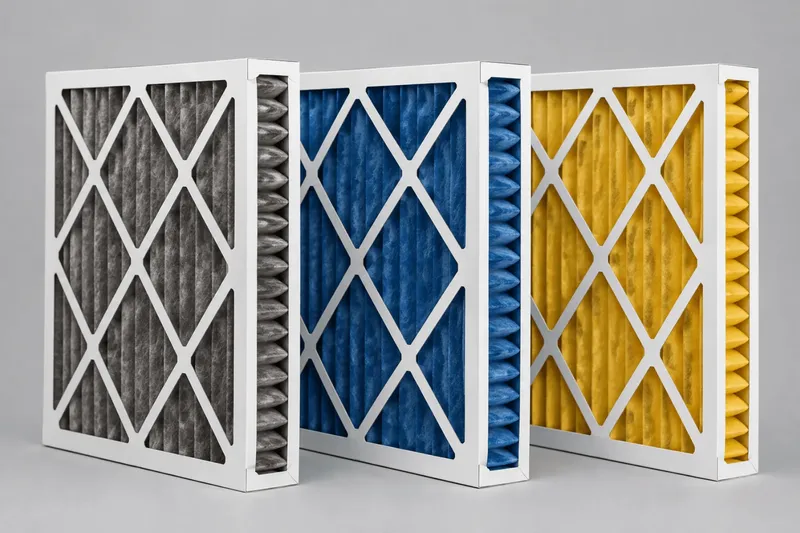
Match the filter to the day. A MERV 8 air filter covers routine dust and pollen on Good to Moderate days. A MERV 11 air filter catches finer particles when pollen, dust, or haze push the number up. Filters work only while clean, so an air filter subscription keeps replacements arriving before the smoke does.
Sources: EPA, Sources of Indoor Particulate Matter, and CDC, Safety Guidelines: Wildfires and Wildfire Smoke. Both point to MERV 13 or the highest efficiency filter a system can handle during smoke events. Check your equipment compatibility before upgrading, and replace filters on schedule.
What A Decade Of Building Filters Taught Filterbuy About Days Like These
After manufacturing filters for over a decade and serving more than two million households, the pattern I keep seeing is that people react to the number instead of preparing for it. South Dakota makes that costly. Ten monitors cover more than 75,000 square miles, so the reading on your screen may come from a town two hours away, and the state’s biggest fire last year burned in March rather than August. The filter already sitting in your system on a clear day is the one doing the work when the sky changes.
David Heacock, Founder and Chief Executive Officer of Filterbuy, an American air filter manufacturer that builds pleated filters in Talladega, Alabama, in more than 600 sizes including custom dimensions.
Essential Resources For South Dakota Air Quality
Seven sources, each a government agency, health nonprofit, or peer-reviewed research. No two share a website.
Read Today’s Number Before You Plan Outdoor Time
AirNow explains what each of the six AQI categories means for your health, from Good through Hazardous.
Source: Air Quality Index basics from AirNow
See What South Dakota Monitors Are Reading This Hour
The state agency publishes hourly readings that supply the national maps you see elsewhere.
Source: South Dakota real time air quality data
Find Out How Your Metro Ranks Nationally
The 2026 report grades Sioux Falls and Rapid City-Spearfish on ozone and particle pollution using 2022 through 2024 EPA data.
Source: State of the Air 2026 results for South Dakota
Know What To Do When Smoke Settles Over Your Town
The CDC smoke-day checklist covers sealing one room, switching to recirculate, respirator fit, and who carries the highest risk.
Source: CDC wildfire smoke safety guidelines
Choose A Filter Rating On Federal Guidance
The EPA explains how outdoor particles get inside and points to MERV 13, or the highest rating your system can accommodate.
Source: EPA guidance on indoor particulate matter
Understand Why Wildfire Smoke Hits Harder
Scripps researchers found respiratory hospitalizations rose 1.3 to 10 percent per 10 micrograms of wildfire PM2.5, against 0.67 to 1.3 percent from other sources.
Source: research on wildfire PM2.5 and respiratory hospitalizations
See What Rural South Dakota Air Looks Like Long Term
Badlands National Park holds one of the ten state monitoring sites and has tracked ozone there since 2004.
Frequently Asked Questions On South Dakota Air Quality
Glossary Of South Dakota Air Quality Terms
Air Quality Index (AQI): The EPA scale for outdoor air quality, 0 to 500 across six color-coded categories from Good to Hazardous.
PM2.5: Fine particulate matter 2.5 micrometers or smaller, able to reach deep into the lungs. Wildfire smoke is a major source.
PM10: Coarse particulate matter 10 micrometers or smaller, including road dust and soil lifted by high winds.
Ground-Level Ozone: A gas formed when nitrogen oxides and volatile organic compounds react in sunlight. It irritates the lungs and is the pollutant Sioux Falls grades worst on.
MERV: Minimum Efficiency Reporting Value, the scale for how well a filter captures airborne particles. Higher numbers catch smaller particles.
HEPA: A standard capturing at least 99.97 percent of airborne particles at 0.3 micrometers. MERV 13 is not HEPA.
Radon: A radioactive soil gas entering homes from below. No air filter captures it, and mitigation is the remedy.