
Air Quality in Arkansas
Air quality index (AQI⁺) and PM2.5 air pollution in Arkansas •


Get Alerts For Unhealthy AQI In Your Area
When air quality in your area reaches unhealthy levels, we'll send you a quick alert, along with expert tips on how to reduce your exposure.
Live Air Quality Ratings in Arkansas
Live Most Polluted City Ranking
Real-time most polluted cities in Arkansas
Live Cleanest City Ranking
Real-time cleanest cities in Arkansas
The Right Air Filter For High AQI Days
When outdoor air quality drops, the EPA recommends upgrading to a MERV 13 filter — or the highest-rated filter your HVAC system can handle — to help capture more of the fine particulate (PM2.5) that comes with poor air quality. MERV 13 is the highest rating most residential systems can run without restricting airflow.
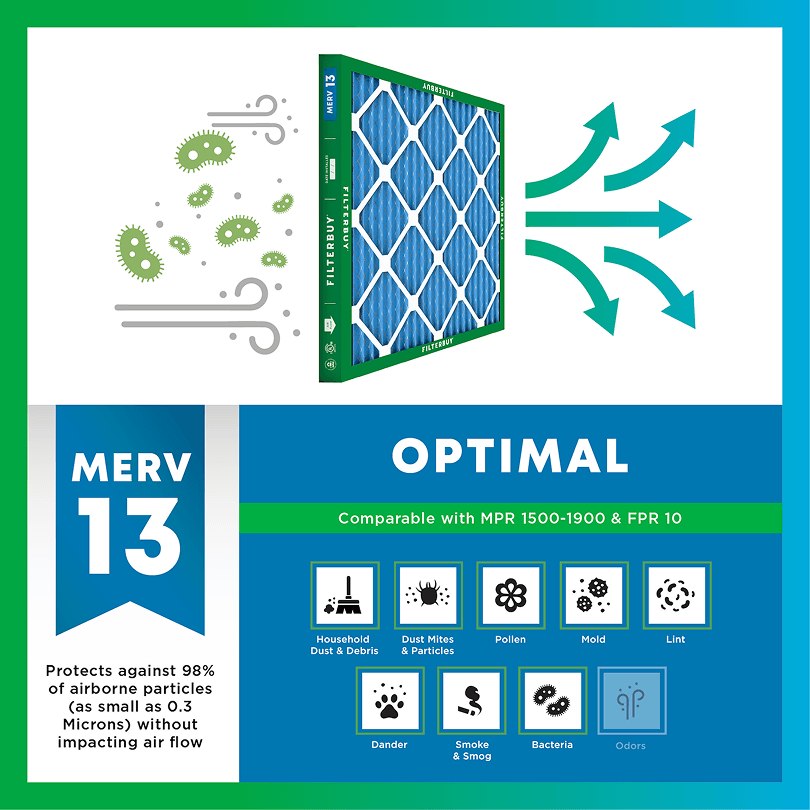
- Captures PM2.5 and other fine particulates
- Filters ash, soot, and smoke particles
- Rated to capture particles as small as 0.3 microns
- Matches the filter rating the EPA suggests during high-AQI and smoke events

AQI FAQs
What is AQI?
AQI stands for Air Quality Index, the EPA's scale for reporting daily air quality. It runs from 0 to 500. The higher the number, the greater the level of air pollution. Values at or below 100 are generally considered satisfactory; values above 100 mean air quality is unhealthy, first for sensitive groups, then for everyone as numbers climb.
What does AQI measure?
The AQI tracks five major pollutants regulated by the Clean Air Act: ground-level ozone, particle pollution (PM2.5 and PM10), carbon monoxide, sulfur dioxide, and nitrogen dioxide. The reported AQI value reflects whichever pollutant is highest at that time — most often ozone or fine particles (PM2.5).
How is AQI calculated?
Monitoring stations measure pollutant concentrations, and the EPA converts each into a standardized 0–500 score using set breakpoints. Each pollutant gets its own sub-index, and the highest sub-index becomes the reported AQI. That's why a single number can represent different pollutants on different days.
What is a good AQI?
An AQI of 0–50 is rated "Good" — air quality poses little or no risk. 51–100 is "Moderate," acceptable for most people though unusually sensitive individuals may want to limit prolonged outdoor exertion. Anything at or below 100 is generally considered satisfactory air quality.
What does an AQI of 100 (or 150) mean?
100 is the dividing line: at or below it, air quality is satisfactory for the general public. From 101–150, air is "Unhealthy for Sensitive Groups" — people with respiratory conditions, older adults, and children. From 151–200, it's "Unhealthy" and everyone may begin to feel effects.
Why is the AQI bad today?
Short-term AQI spikes usually come from wildfire smoke, temperature inversions that trap pollutants near the ground, high-ozone weather (hot, sunny, stagnant days), or heavy traffic and industrial activity. Check a real-time source like the map on this page to see which pollutant is driving today's reading in your area.
What AQI is bad for running or exercise?
Many runners follow the EPA category lines: below 50, no adjustment needed; 51–100, unusually sensitive people may shorten intense workouts; above 100, sensitive groups are advised to reduce prolonged or heavy outdoor exertion; above 150, that advice extends to everyone. Exercise increases how much air you breathe in, which is why thresholds matter more during workouts.
What AQI is safe to open windows?
A common rule of thumb is to keep windows open when the AQI is under 100 and close them when it climbs above, especially during wildfire smoke events when fine particles are elevated. When windows are closed, running your HVAC system with a fresh filter helps capture particles circulating indoors.
Should I wear a mask based on AQI?
Public health agencies generally suggest considering a well-fitted N95-style respirator outdoors when the AQI exceeds 150, particularly during smoke events. Cloth and surgical masks don't filter fine particles effectively. Follow guidance from your local health department, which may adjust recommendations during severe episodes.

Check Today's Live Real Time Air Quality Index AQI Map in Arkansas Now
Author: Michelle Wan, Brand Manager & Air Quality Writer, Filterbuy · Reviewer: David Clark, Licensed HVAC Technician · Publish Date: July 19, 2026 · Updated Date: July 19, 2026
TL;DR
Arkansas's air quality changes by the hour, so the fastest way to check it right now is the live, interactive AQI map below, sourced directly from AirNow and the Arkansas Department of Environmental Quality (ADEQ). Most days across the state fall in the Good to Moderate range, though ozone season (May through September) and wildfire smoke drifting in from other regions can push readings higher. Once you know today's number, the sections below explain what it means, who should take precautions, and how Filterbuy recommends protecting the air inside your home when the outdoor number climbs.
Key Takeaways
The live map below pulls current-hour AQI readings straight from AirNow and ADEQ, so the number on this page updates automatically rather than being a fixed daily figure.
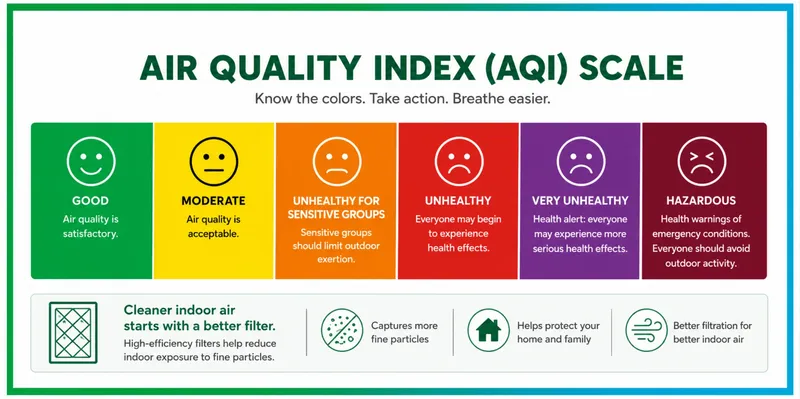
The AQI runs on a 0 to 500 scale across six color-coded categories, and a reading above 100 means air quality has moved into a range that affects at least sensitive groups.
Ground-level ozone is Arkansas's dominant seasonal concern from May through September, while fine particle pollution (PM2.5), often carried in by wildfire smoke from other regions, can spike air quality readings at other times of year.
Central Arkansas runs its own Ozone Action Days program covering Pulaski, Faulkner, Lonoke, and Saline counties, so conditions in Little Rock can differ from readings in Springdale or elsewhere in the state on the same day.
Children, older adults, and people with asthma, COPD, or heart disease should start reducing prolonged outdoor exertion once the AQI passes 100, and everyone should limit outdoor activity once it passes 150.
An outdoor AQI spike does not have to become an indoor air problem. Closing up the house and running HVAC filtration rated for fine particles is one of the most direct ways to keep smoke and haze from building up inside.
Author's Note
As Air Quality Writer for Filterbuy, I check Arkansas's AQI most mornings during ozone season, and the number by itself rarely tells the full story. Central Arkansas runs its own Ozone Action Days program, so a clear forecast for Little Rock says nothing about conditions two hours away in Springdale. A good reading in one corner of the state doesn't guarantee a good reading anywhere else in it. That's why I check the monitor closest to wherever I'll actually be that day, rather than trusting a single statewide number.
Michelle Wan, Brand Manager & Air Quality Writer, Filterbuy
Arkansas's Live Air Quality Index Map
The map below shows the current-hour Air Quality Index for monitoring stations across Arkansas, refreshed continuously from AirNow and ADEQ data feeds. Search or zoom to a specific city to see the closest monitor's live reading, plus the forecast for later today.
Prefer a direct check? AirNow's state-level Arkansas page and ADEQ's daily Little Rock and Springdale AQI postings (updated by 10 a.m. each day) are the two primary sources this map draws from.
For a national view that layers active fire locations on top of the same AQI data, Filterbuy's live wildfire and smoke map covers every state, including Arkansas.
What Today's AQI Number Means
The Air Quality Index is a 0 to 500 scale that the U.S. Environmental Protection Agency (EPA) uses to translate pollutant concentrations into a single number people can act on. The higher the number, the greater the health concern, and a reading of 100 generally lines up with the level of the short-term national air quality standard for that pollutant.
Source: U.S. EPA Air Quality Index categories.
Arkansas's two most common contributors to that number are ground-level ozone and fine particle pollution, known as PM2.5. ADEQ calculates the state's official AQI from whichever of the five federally regulated pollutants is highest at a given monitor on a given hour.
How To Tell Which Pollutant Is Driving Today's Reading
Arkansas's AQI is always set by whichever pollutant scores worst that hour, not a blend of everything in the air. ADEQ's Little Rock and Springdale monitors report ozone and fine particulate separately, so checking the detailed numbers instead of just the headline reading tells you whether today's air is an ozone story or a PM2.5 story.
That distinction changes how long the problem sticks around. An ozone-driven reading usually clears once the sun goes down and temperatures drop. A PM2.5-driven reading, especially during wildfire smoke, can linger for days regardless of what happens after sunset, since fine particles don't depend on sunlight to form the way ozone does. Filterbuy checks this same detail before recommending a filter upgrade to Arkansas customers, since an ozone-driven day and a smoke-driven day call for different advice.
What Affects Arkansas's Air Quality
Weather and season drive most of the day-to-day swings in Arkansas's air quality. Ground-level ozone forms when sunlight reacts with vehicle and industrial emissions, so it builds fastest during the hot, sunny months. The National Weather Service office in Little Rock identifies May through September as Arkansas's ozone season, and ADEQ issues an Ozone Action Day alert whenever the forecast 8-hour ozone average is expected to reach or exceed 85 parts per billion.
Fine particle pollution behaves differently. PM2.5 comes from vehicle exhaust, industrial sources, residential wood burning, and, increasingly, wildfire smoke that can travel hundreds of miles on the wind from fires burning well outside Arkansas's borders. Because smoke transport depends on wind direction and atmospheric stability rather than local emissions alone, a clear day in Little Rock can still turn hazy if smoke rides in from another region.
Temperature inversions and stagnant high-pressure systems trap pollution closer to the ground, which is why spring and early fall, with better atmospheric mixing and milder temperatures, tend to bring Arkansas's cleanest stretches of air.
One detail is easy to miss. Central Arkansas's Ozone Action Days program only forecasts for four counties, Pulaski, Faulkner, Lonoke, and Saline, so a clean advisory there says nothing about ozone building up in Northwest Arkansas or the River Valley the same afternoon.
Arkansas's Air Quality Calendar By Season
Arkansas's air quality risk shifts with the seasons, and knowing which pollutant tends to show up when helps you read today's number in context. It's the same seasonal pattern Filterbuy's air quality team tracks when planning filter recommendations for customers across the state.
How To Protect Yourself When Arkansas's AQI Turns Unhealthy
Source: U.S. EPA activity guidance for the Air Quality Index.
These action levels come directly from EPA's national activity guidance for the AQI and apply the same way in Arkansas as anywhere else in the country.
How Air Quality Varies Across Arkansas
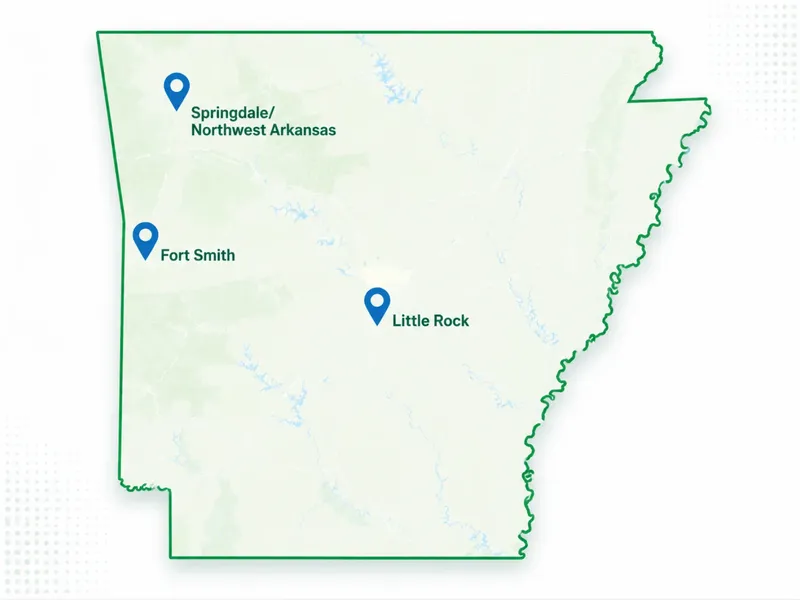
Customers who call Filterbuy about Arkansas air quality often assume the state runs on one number. Little Rock's Ozone Action Days program covers Central Arkansas specifically, and Springdale runs on its own Northwest Arkansas monitors. Neither one speaks for the whole state, which is why the live map above and a specific city search matter more than a single average.
A single statewide AQI number can hide real differences between regions. Central Arkansas runs its own Ozone Action Days program through Metroplan and the Central Arkansas Clean Cities Coalition, covering Pulaski, Faulkner, Lonoke, and Saline counties, with ADEQ posting Little Rock's daily AQI by 10 a.m. Northwest Arkansas, including Springdale, has its own monitoring network and can register a different reading on the same day depending on local traffic, industry, and wind patterns.
If you live somewhere without a nearby monitor, the closest station on the live map above is still the most reliable stand-in, since AQI values are calculated from actual measured concentrations rather than estimates.
Protect Your Indoor Air When Outdoor Air Quality Drops
The Arkansas homeowners we hear from most during ozone season are usually the ones who already know their AQI is climbing and want a filter recommendation before the next Action Day, not after it.
Closing windows and doors is the fastest response once the outdoor AQI climbs, but a home's HVAC system keeps recirculating whatever is already indoors unless it is filtering out the fine particles smoke and haze carry in. Running a higher-MERV-rated filter sized correctly for your system during a high-AQI stretch is one of the most direct ways to keep indoor air cleaner while the outdoor number comes back down.
After manufacturing filters for over a decade and serving more than two million households, we've seen how much of a difference the right filter makes on the days Arkansas's air quality dips.
David Heacock, Founder & CEO, Filterbuy
Not sure what to look for on the label? Filterbuy's guide to which MERV rating fits your HVAC system walks through matching filtration strength to what your system can actually handle.
Find Your Filter Size
Filterbuy makes filters in 600-plus standard and custom sizes. Find your exact size and have a fresh filter on hand before the next high-AQI stretch, rather than during it.
Frequently Asked Questions
7 Essential Resources We Trust For Arkansas Air Quality
We're obsessed with what's actually floating through the air Arkansas families breathe, and these seven sources are where Filterbuy's own team turns first when a customer calls with a specific question. Bookmark the ones that match what you need to know right now.
See Exactly What's In Arkansas's Air Right Now
AirNow's Arkansas State AQI Map turns invisible pollution into a number and a color you can actually act on, pulled from every federal, state, and local monitor in the state. Search your city instead of trusting one number for the whole state.
Know Before Ozone Season Catches You Off Guard
ADEQ's Ozone Action Days page spells out exactly when Central Arkansas issues an advisory or an alert, so you're planning around a forecast instead of reacting to a bad afternoon.
Turn A Confusing Number Into A Clear Decision
EPA's guide to communicating air quality conditions is where the six-category, 0 to 500 scale on this page comes from, and it explains what each color actually means for your family's health.
Get The Precise Thresholds Behind Every Alert
The National Weather Service Little Rock's Ozone Action Days page lists the exact ozone concentrations that separate a normal summer day from an advisory or alert, plus which counties the program covers.
Look Past Today's Number To The Bigger Picture
The American Lung Association's State of the Air report for Arkansas grades counties on ozone and particle pollution using years of EPA monitoring data, showing you what a single good day can't.
Understand Why We Take Ozone And Particle Pollution Seriously
The CDC's Climate and Health page on air pollution lays out the federal research behind ozone and particle pollution risk, including which groups face the greatest danger. It's the same reason we build every filter recommendation around real health outcomes, not just comfort.
See The Science Behind Why Wildfire Smoke Gets Special Attention
The Aguilera et al. (2021) study in PMC is the peer-reviewed research showing wildfire-specific PM2.5 drives a bigger jump in respiratory hospitalizations than PM2.5 from other sources. It's exactly why we treat a smoke-driven AQI reading differently than routine haze.
Supporting Statistics
Three numbers behind why this page treats wildfire smoke, ozone, and sensitive groups the way it does:
Global forest-fire carbon emissions rose 60% from 2001 to 2023. Source: NASA Earth Science.
Wildfires burned 8,924,884 acres nationwide in 2024, above the 10-year average. Source: National Interagency Fire Center.
Nearly 28 million Americans, about 8% of the population, live with asthma. Source: Asthma and Allergy Foundation of America.