
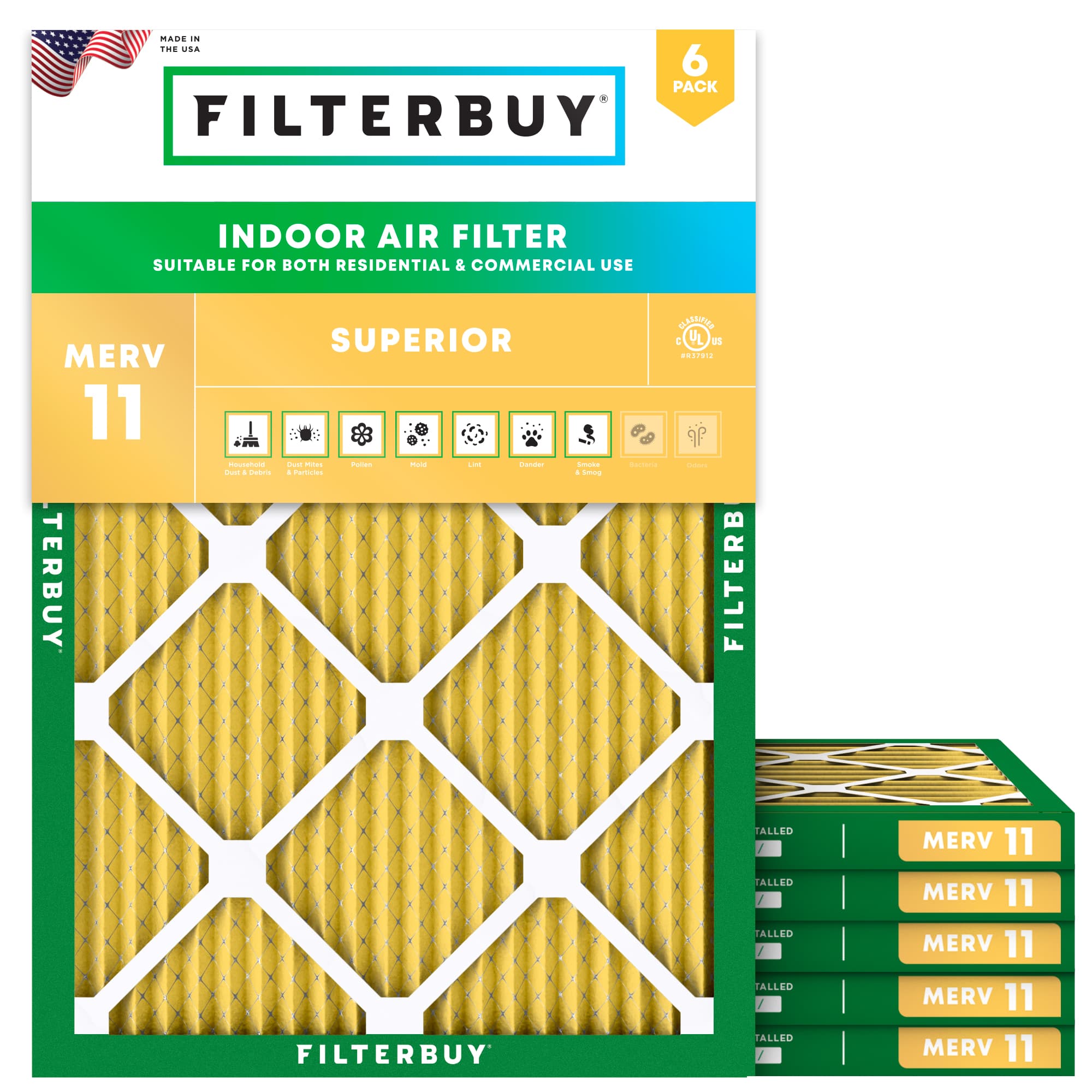
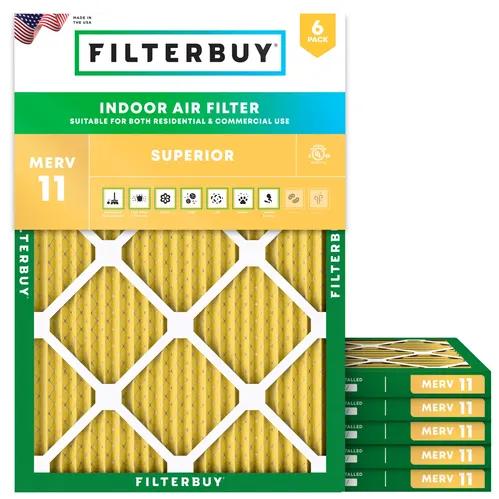
16.38x21.5x1 MERV 11 Pleated Air Filter
Actual Size: 16.5x21.5x0.75
 Free Delivery
 Factory-Direct Low Prices, Made in the USA
 Hassle-Free Returns & Free Exchanges

RESIDENTIAL AND/OR COMMERCIAL USE
Change Every 3 Months
16.38x21.5x1 MERV 11 Pleated Air Filter
Actual Size: 16.5x21.5x0.75
Free Delivery Factory-Direct Low Prices, Made in the USAHassle-Free Returns & Free ExchangesRESIDENTIAL AND/OR COMMERCIAL USE
Change Every 3 Months
16.38x21.5x1 MERV 11 Pleated Air Filter
Actual Size: 16.5x21.5x0.75
Free Delivery Factory-Direct Low Prices, Made in the USAHassle-Free Returns & Free ExchangesRESIDENTIAL AND/OR COMMERCIAL USE
Change Every 3 Months
About
- This is a list 17x22x1 MERV 11 air filter replacement for your furnace, air conditioner, heat pump, or HVAC system
- Actual air filter size: 16.5x21.5x0.75
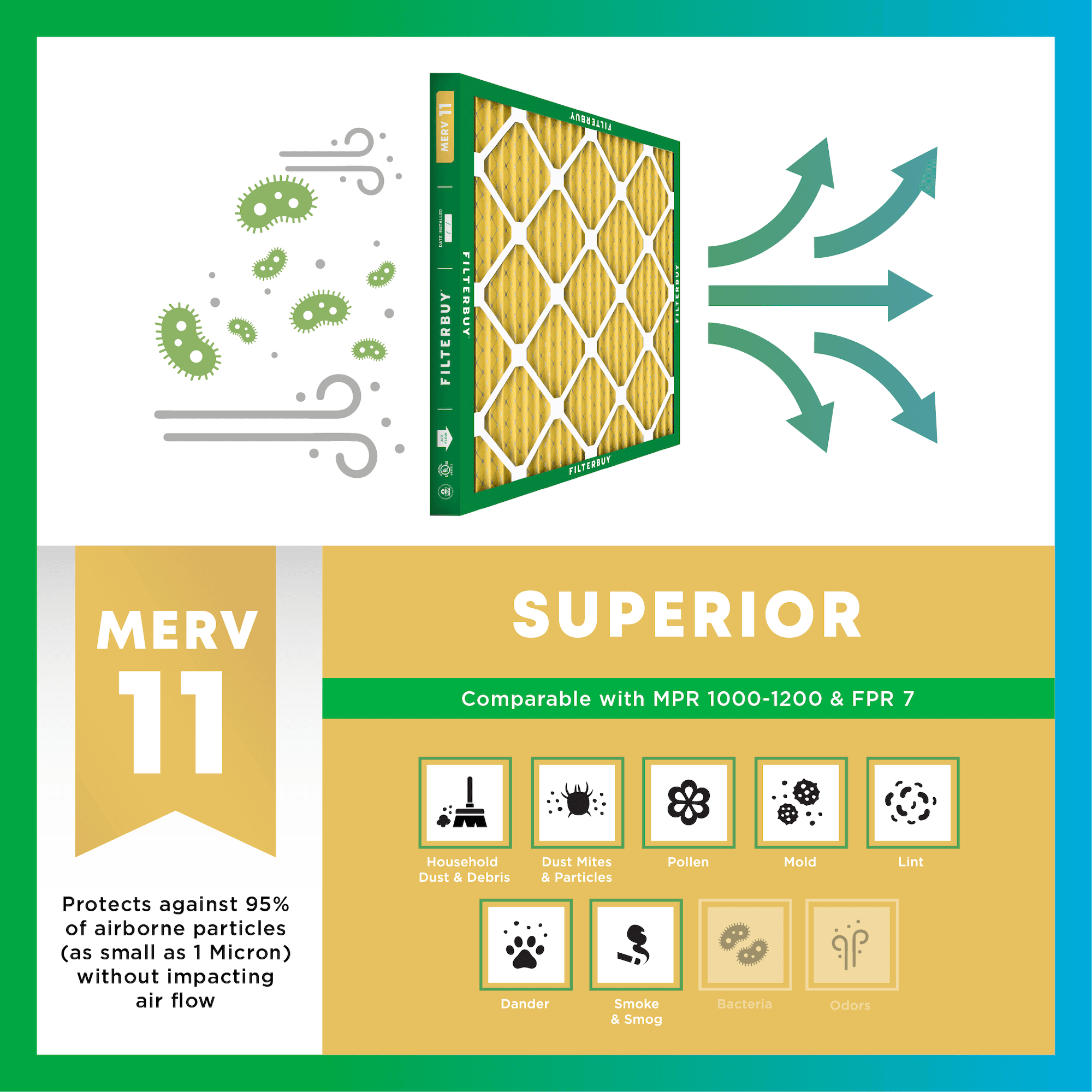
- MERV 11 synthetic media (comparable with MPR 1000/1200 and FPR 7) offers superior protection from dust, pollen, pet dander, mold, smog and more by trapping 95% of airborne particles without impacting air flow
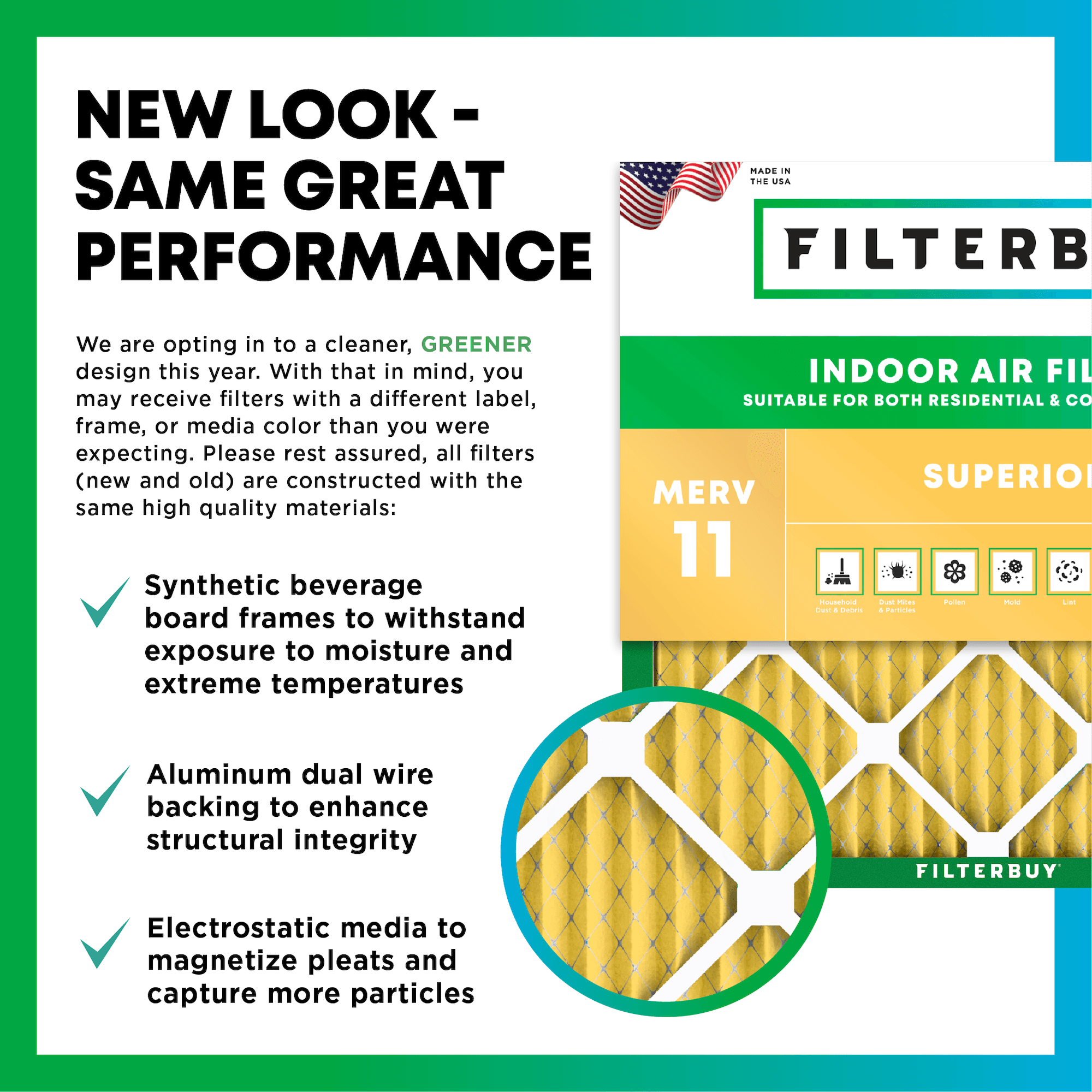
- High-quality construction means electrostatically charged pleated filter media, reinforced wire backing for structural integrity, and a durable frame to resist heat and humidity
- Built to last 3 months. 300% longer than fiberglass models
- 100% manufactured in the United States and designed with recyclable materials
- Learn more about 17x22x1 Air Filters
Top-Rated Filters. American Made. Delivered Free.
At Filterbuy, we don't cut corners—we craft high-quality air filters right here in the USA and ship them to your doorstep for free. No delays, no gimmicks—just clean air, made easy. With thousands of five-star reviews and filters built for real life & every HVAC system, it's no wonder why over 4 million families trust Filterbuy.

Proudly Made In The USA

Fast, Free Shipping on Every Order

Premium Materials That Go The Distance

85,000+ 5-Star Reviews From Happy Customers

Save Up to 70% Per Filter with Packs
Things to Know About Filter Sizes

Nominal Size
- The rounded size printed on your filter or HVAC unit (e.g., 17x22x1).
- Usually whole numbers to make identifying and ordering easier.
- A label for compatibility—not the exact measurement.

Actual Size
- The true, trimmed dimensions of the filter (e.g., 16.5x21.5x0.75 inches).
- Filters are manufactured slightly smaller so they slide into the filter slot without forcing.
- If you don't know your nominal size, measure your filter to get the actual size, then round up to find the nominal size to search on our site.

Why the difference?
- Nominal sizes simplify shopping and standardize categories.
- Actual sizes ensure the filter fits properly inside your HVAC's filter rack.
How To Find Your Nominal Size When You Don't Know It


Measure length × width × depth with a tape measure to find the actual size.

Round up each dimension to the nearest whole number to get the nominal size. Example: 16.5x21.5x0.75 in → 17x22x1 nominal.

Search by nominal size on our site for the best fit.

Why Getting the Right Size Matters
- Too small? Air can bypass the filter, reducing air quality and efficiency.
- Too big? It won't fit—risking bent frames and airflow issues.
- Just right? You get maximum performance, better filtration, and cleaner air.

Free Exchange Policy
If the filter you buy doesn't fit, we'll send you a better size.

What's a MERV Rating?
MERV stands for Minimum Efficiency Reporting Value—but don't let the technical name fool you. It's just a way to rate how well an air filter traps stuff like dust, pollen, pet dander, and smoke. The higher the MERV number, the more particles it catches—and the cleaner your air will be.

Merv 8
Comparable to:FPR: 4-7
MPR: 600-1000
 Dust & Debris
 Dust Mites & Particles
 Pollen
 Mold
 Lint
 Dander

Merv 11
Comparable to:FPR: 6-9
MPR: 1200-1550
Dust & DebrisDust Mites & ParticlesPollenMoldLintDander Smoke & Smog

Merv 13
Comparable to:FPR: 10
MPR: 1900-2800
Dust & DebrisDust Mites & ParticlesPollenMoldLintDanderSmoke & Smog Bacteria

MERV 8
Comparable to:FPR: 4-7MPR: 600-1000


MERV 11
Comparable to:FPR: 6-9MPR: 1200-1550

MERV 13
Comparable to:FPR: 10MPR: 1900-2800
What Makes Our Filters Last 90 Days? Quality, From the Inside Out
We build every Filterbuy filter to deliver reliable 90-day performance—thanks to smart design and premium materials that do the heavy lifting. Here's what makes the difference:
Pleated Design
More pleats = more surface area to capture dust and debris, keeping your air cleaner longer.
Electrostatically Charged Media
Pleats are magnetized to attract and trap microscopic particles—like pet dander, pollen, and smoke.
Synthetic Beverage Board Frame
Engineered to resist warping in extreme temperatures and high humidity.

Aluminum Dual Wire Backing
A layer of metal reinforcement keeps pleats evenly spaced and structurally sound—no sagging, even at high airflow.
Made in the USA
Assembled with care. Built to perform. Ships fast, free, and reliably from our U.S. facilities.
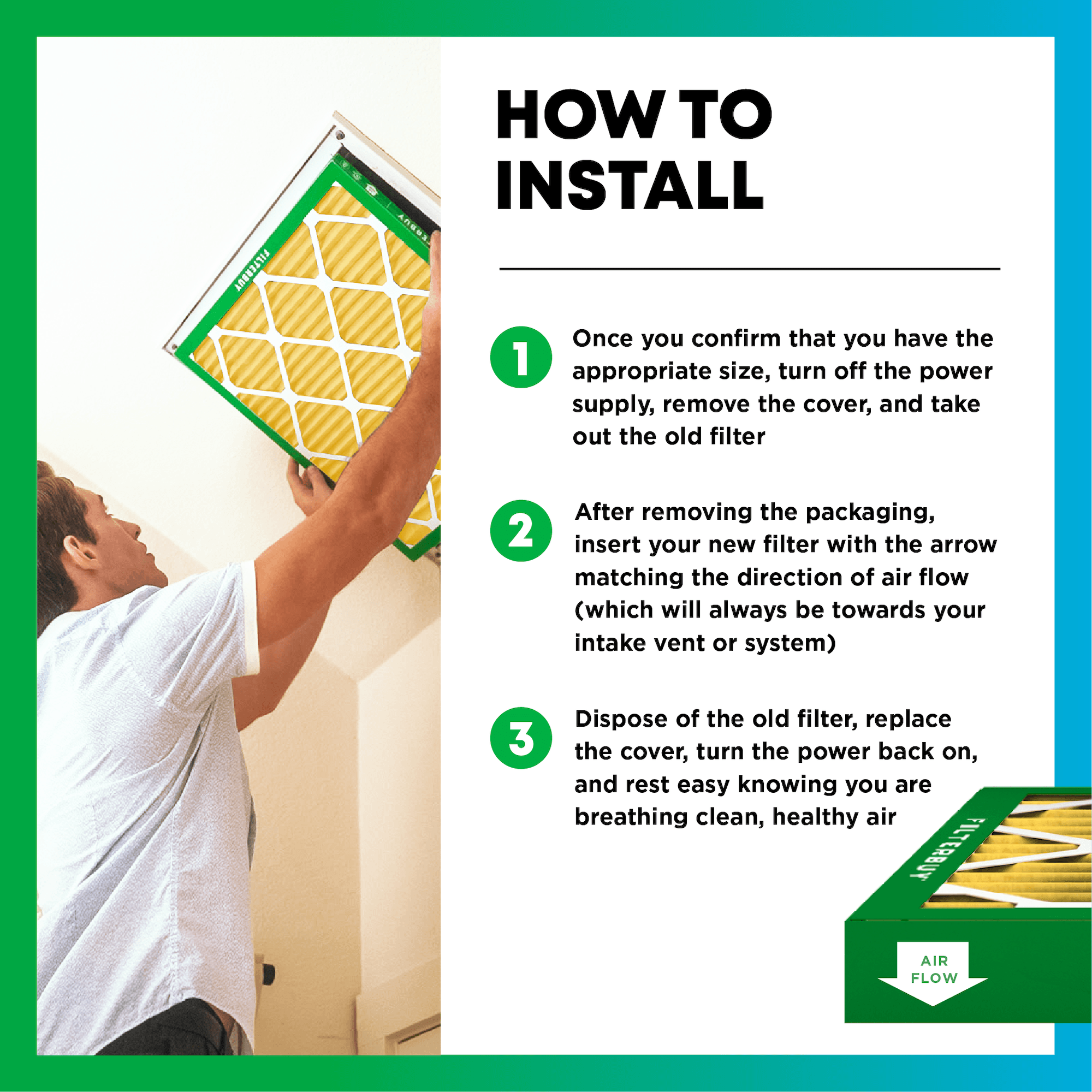
How to Install Your Filter in 4 Simple Steps

Turn Off Your HVAC SystemSafety first.

Remove The Old FilterLook for the airflow arrow and make note of the direction.

Slide In Your New FilterArrow should point toward the system (same direction as before).

Turn Your System Back OnAnd enjoy the fresh, clean air.

Never forget to replace your air filter again.
- Save 5% on every order
- Choose Your Delivery Schedule
- Edit, Skip, or Cancel Anytime.
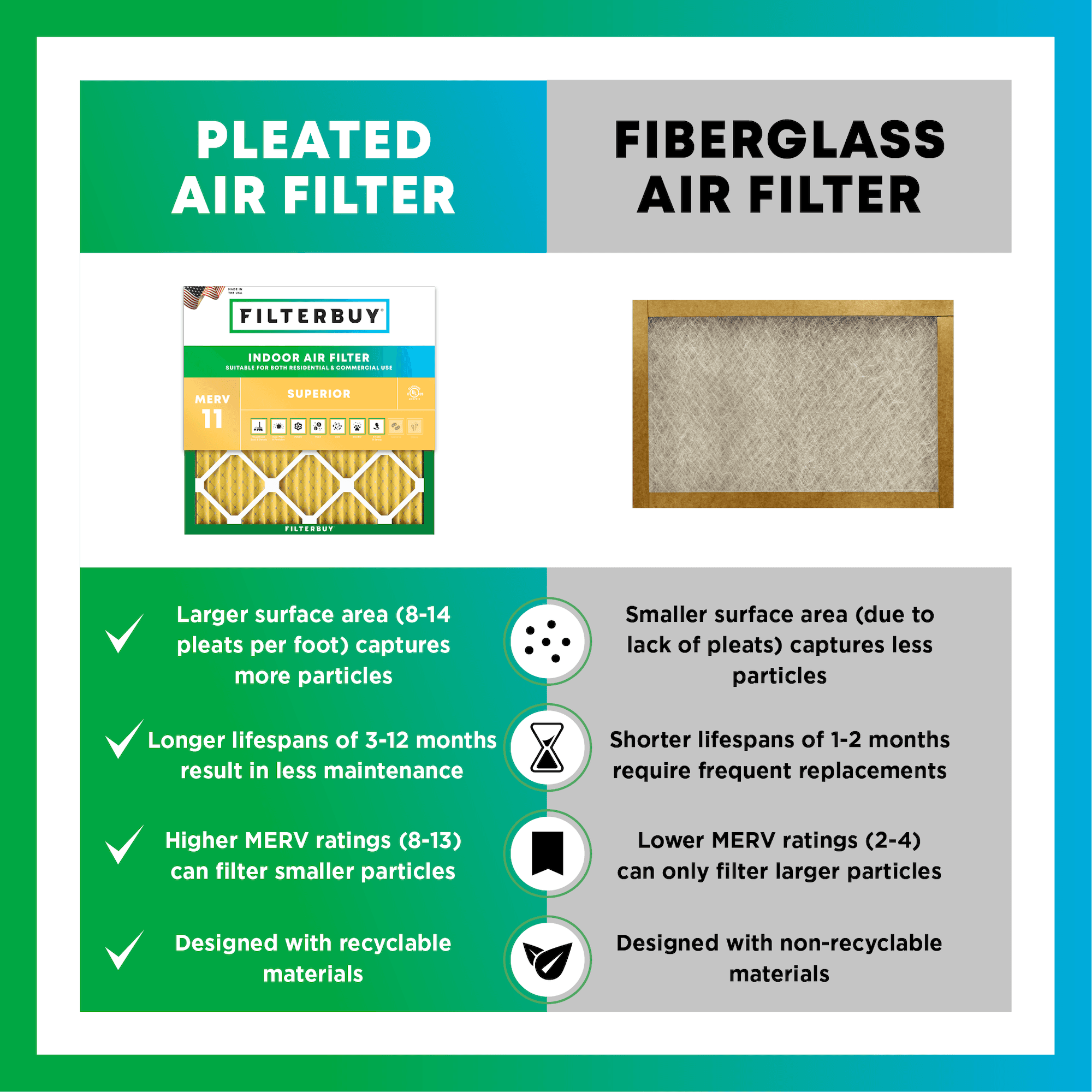
Pleated Filters vs. Fiberglass—What's the Difference?
Not all air filters are created equal. Pleated filters don't just last longer—they actually clean your air better. Here's how they stack up:

Pleated Filters
Efficiency:
High (MERV 8–13) – Traps more particles
Lifespan:
90 days – Long-lasting performance
Air Quality:
Excellent – Cleaner, healthier air
Materials:
Recyclable and durable

Fiberglass Filters
Efficiency:
Low (MERV 4 or less) – Misses small stuff
Lifespan:
30 days or less – Replace often
Air Quality:
Minimal – Basic protection only
Materials:
Thin, flimsy, and not recyclable
Pleated filters are a no-brainer—more protection, less hassle, and better air for your home.
How Often Should You Change Your Filter?
Changing your filter on time keeps your HVAC system running efficiently—and helps protect your lungs from dust, allergens, and airborne irritants. Here's how often to swap it out based on your needs:

Every 90 Days
Standard ScheduleFor most homes without pets or special air quality concerns. Great for general upkeep and energy efficiency.

Every 60 Days
If You Have Pets or AllergiesShedding fur, dander, and allergy triggers can build up fast. Changing your filter every two months helps keep the air fresher and symptoms at bay.

Every 30 Days
If You Have Respiratory Concerns or Live in Smog/Wildfire ZonesFor households affected by smoke, pollution, or respiratory conditions, monthly changes ensure maximum protection.

Want to stay on track? Set a reminder—or skip the stress with auto-delivery so fresh filters show up right when you need them.
Don't Just Take Our Word For It...
Got More Questions? We've Got Answers.
Product Specifications
| Nominal Size | 17 x 22 x 1 inches |
| Actual Size | 16.5 x 21.5 x 0.75 inches |
| Filter Type | Pleated |
| Media | Electrostatically Charged |
| Frame | Beverage Board |
| MERV Ratings Available | 8, 11, 13 |
| Lifespan | Up to 90 Days |
| Origin | Made in USA |
Buy the Exact 16.38x21.5x1 MERV 11 Air Filter – Precision Fit for Cleaner, Healthier Air
Finding a 16.38x21.5x1 filter that fits perfectly can feel impossible. Most stores only offer “close enough” options that leave gaps around the edges—letting dirty air bypass your filter. At FilterBuy, we refuse to compromise.
Every MERV 11 HVAC & furnace filter we produce is precision-cut to the exact fraction, so you get a true fit that protects your home, your family, and your HVAC system. Proudly manufactured in the U.S. with premium materials, our filters are rigorously tested to capture up to 95% of airborne particles, including:
Common allergens (pollen, pet dander, dust mites)
Fine household dust and fibers
Mold spores and other irritants
With over a decade of American manufacturing experience and feedback from millions of customers, we’ve learned that the right size and quality filter makes all the difference. A perfect fit means cleaner indoor air, greater protection for your loved ones, and extended life for your HVAC system—all with less effort on your part.
Pro Tip: Replacing your filter every 90 days keeps your air cleaner and your system running efficiently.
Why This Filter Matters – Key Takeaways
Precision Fit – Designed at the exact 16.38x21.5x1 size, so there are no gaps and no air leaks—just reliable protection for your family and your HVAC system.
MERV 11 Sweet Spot – Captures up to 95% of airborne particles including dust, pollen, mold spores, and pet dander, striking the perfect balance between strong filtration and system efficiency.
Backed by Research – Trusted sources like the EPA and CDC confirm that higher-MERV filters improve indoor air quality and HVAC performance, reducing exposure to harmful pollutants.
Decade of Experience – With millions of filters manufactured in the U.S. and customer feedback shaping every design, FilterBuy has proven results: cleaner air, healthier homes, and longer-lasting systems.
Small Change, Big Impact – Simply replace your filter every 1–3 months to maintain fresher air, lower energy costs, and a system that runs smoothly year-round.
Understanding MERV Ratings and Why They Matter
When it comes to protecting your home’s air, not all filters are created equal. The key to choosing the right HVAC air filter is understanding MERV ratings—short for Minimum Efficiency Reporting Value. This industry standard shows how effectively a filter captures airborne particles. Ratings range from 1 to 20: the higher the number, the finer the filtration.
MERV 1–4: Basic protection. Catches only large particles like lint and household dust.
MERV 5–8: Better everyday protection. Traps smaller particles such as pollen and some allergens.
MERV 9–12: Strong residential protection. Captures fine particles including mold spores and pet dander—making a big difference for allergy and asthma sufferers.
At FilterBuy, we’ve found that MERV 11 hits the sweet spot for most homes: powerful enough to protect your family’s health without overburdening your HVAC system.
Why Choose MERV 11 Filters?
Cleaner, Healthier Air – Traps up to 95% of airborne particles like dust, pollen, pet dander, and mold spores, so you and your family breathe easier.
Energy Efficiency & Cost Savings – By maintaining healthy airflow, MERV 11 filters reduce strain on your HVAC system—helping lower energy bills and extending equipment life.
Longer-Lasting Protection – Compared to lower-rated filters, MERV 11 options typically last longer, meaning fewer replacements, less waste, and more convenience.
Research-Backed – Agencies like the EPA and CDC confirm that higher-MERV filters play a vital role in improving indoor air quality and overall system performance.
How to Choose the Right Size Filter
Getting the correct dimensions is just as important as choosing the right MERV rating. An ill-fitting filter leaves gaps that allow unfiltered air to bypass, reducing effectiveness. Here’s how to ensure the perfect fit:
Check your current filter – Most have the size printed on the frame.
Measure the slot – Use a tape measure to confirm width, height, and depth.
Review your manual – HVAC manufacturers typically list recommended sizes.
Match MERV rating + fit – Choose a filter that balances your air quality needs while fitting securely.
At FilterBuy, we manufacture over 600 exact sizes (including custom options), so you’ll never have to settle for “close enough.”
Easy Steps to Order from FilterBuy
We’ve made finding the right filter simple and stress-free:
Visit FilterBuy – Start with our intuitive search tool.
Select Your Filters – Search by size, type, or MERV rating (like 16.38x21.5x1 MERV 11).
Check Customer Reviews – See how others with similar homes have benefited.
Add to Cart – Confirm your selection with one click.
Checkout Securely – Enter shipping and payment details, and your filters are on the way.
Maintaining Your Filters for Optimal Performance
Consistent care keeps your air clean and your HVAC system efficient. Follow these simple tips:
Inspect Monthly – Look for buildup of dust or debris.
Replace Regularly – Swap filters every 1–3 months, depending on use and household conditions (pets, allergies, seasons).
Keep the Area Clean – Vacuum and dust around your HVAC unit to prevent extra dirt from entering.
Choose Quality Every Time – Stick with high-quality MERV 11 filters to ensure reliable protection and long-term performance.
Pro Tip: Setting a reminder on your phone or subscribing to automatic deliveries ensures you’ll never forget to change your filter—keeping your home protected year-round.
“After manufacturing millions of filters and working directly with homeowners across the country, we’ve discovered that a precision-fit MERV 11 filter is the ideal choice for most households. It’s strong enough to capture the invisible pollutants—like dust, pollen, pet dander, and mold spores—that affect your family’s health, yet balanced to keep your HVAC system running efficiently. The result? Cleaner air, fewer allergy flare-ups, lower energy strain, and a system that lasts longer—all starting with the right fit.”
Supporting Statistics & Insights
1. 90% of Life Indoors
According to the EPA, Americans spend about 90% of their time indoors. That means the air inside your home matters more than most people realize.
FilterBuy Insight: Because exposure is so constant, even small improvements in filtration—like upgrading to a precision-fit MERV 11 filter—can make a significant difference in reducing allergy and asthma triggers.
2. Proven Particle Capture
Research confirms that MERV 11 filters trap approximately 20% of fine particles (0.3–1.0 microns) and at least 85% of larger allergens (3.0–10.0 microns) (EPA Technical Bulletin, HVAC.com).
FilterBuy Insight: These particle sizes align with the most common indoor irritants—mold spores, pollen, and pet dander. That’s why customers consistently report cleaner air and fewer respiratory symptoms after switching to MERV 11.
3. Efficiency Gains Backed by Science
A CDC-supported study shows that higher-efficiency filters deliver 3.8 to 8.4 more air changes per hour compared to lower-MERV options—meaning your indoor air gets refreshed faster and more effectively.
FilterBuy Insight: Our real-world field data confirms the science: homeowners using properly sized MERV 11 filters see HVAC systems that run smoother, last longer, and save energy.
Final Thoughts
When it comes to your home’s air, size and quality aren’t optional—they’re essential. After manufacturing millions of filters and listening to thousands of homeowners, we’ve seen what happens when the wrong size or a low-MERV filter is used: more dust, worsened allergy symptoms, and HVAC systems forced to work harder than they should.
What Changes When You Upgrade?
Homeowners who switch to a precision-fit MERV 11 filter consistently notice:
Cleaner, fresher air that makes breathing easier
Less dust buildup on furniture and surfaces
Improved HVAC efficiency, with fewer maintenance issues and longer system life
Why Choose MERV 11?
The Sweet Spot for Homes – Captures far more pollutants than basic filters while maintaining strong airflow.
Exact Fit Matters – Precision sizing (like 16.38x21.5x1) ensures no “close enough” gaps, so every particle gets filtered.
FilterBuy Opinion: A properly fitted MERV 11 filter is one of the most cost-effective upgrades you can make for your home. It delivers measurable improvements in air quality, system performance, and day-to-day comfort—results we’ve witnessed firsthand in homes across the country.
Next Steps to Cleaner Air
Step 1: Check Your Size
Look for 16.38x21.5x1 printed on your current filter frame.
If not listed, measure the HVAC slot (width × height × depth) to confirm exact dimensions.
Step 2: Choose MERV 11
The ideal balance for most homes—captures up to 95% of dust, pollen, pet dander, and mold spores.
Proudly U.S.-made and precision-cut for a flawless, gap-free fit.
Step 3: Order at Filterbuy
Search by size, add to cart, and checkout in minutes.
Fast, direct delivery from our American facilities to your doorstep.
Step 4: Replace Regularly
Change your filter every 1–3 months, depending on system use, pets, and allergy season.
Set a reminder or choose auto-delivery for hassle-free maintenance.
Step 5: Breathe Easier
Experience cleaner indoor air, fewer allergy triggers, and a longer-lasting, more efficient HVAC system.
Frequently Asked Questions
1. Is MERV 11 too high for residential HVAC?
No. Most residential systems are designed to handle MERV 11 filters without airflow issues. Problems typically only occur in systems that are undersized, very old, or not well-maintained.
2. What’s the best MERV rating for home AC filters?
For most households, MERV 8–11 is the sweet spot. These ratings balance effective particle capture with strong airflow and system efficiency.
3. Which is better: a MERV 8 or MERV 11 furnace filter?
MERV 8: Provides basic protection, capturing dust and larger particles like pollen.
MERV 11: A stronger choice, especially for families with pets or allergies, because it captures smaller irritants like mold spores and pet dander.
4. How often should I replace a MERV 11 filter?
Replace every 1–3 months, depending on:
Household factors (pets, allergies, smoking)
Seasonal air quality (pollen, wildfire smoke, humidity)
HVAC system usage (continuous vs. occasional)
5. Can I use MERV 12 instead of MERV 11?
Yes—if your HVAC system is compatible. Many systems handle MERV 12 just fine, but it’s always best to confirm with your manufacturer’s specifications.
6. Is MERV 16 the same as HEPA?
Not quite. MERV 16 is extremely high efficiency, but HEPA filters capture 99.97% of particles ≥0.3 microns. HEPA usually requires a special air cleaner unit, not a standard HVAC system.
7. What’s the most efficient HVAC filter?
HEPA filters are the most efficient overall. For standard HVAC systems, MERV 13–16 are the highest practical ratings—but these may not be compatible with all residential units.
8. Does a lower MERV rating increase airflow?
Yes. Lower-MERV filters create less resistance, so air moves more easily. But the tradeoff is that they capture fewer pollutants, leaving more dust and allergens in circulation
9. What’s the difference between cheap and expensive furnace filters?
Cheaper fiberglass filters: Trap only the largest dust particles, offering minimal protection.
Pleated, higher-MERV filters: Capture finer allergens, last longer, and protect your HVAC system from dust buildup and strain.
10. Can a MERV 11 filter capture mold?
Yes. Most mold spores measure 1–3 microns, and MERV 11 filters are specifically designed to trap them, helping reduce exposure indoors.
11. Are there downsides to using high-MERV filters?
Yes. Filters rated MERV 13 and above can restrict airflow in systems not built for them, leading to reduced efficiency or added strain on equipment.
12. Which is better: MERV 11 or MERV 16?
It depends on your system. MERV 16 captures far more pollutants, but most residential HVAC units can’t handle it. For typical homes, MERV 11 is a safe, effective, and balanced choice.