
What a Tornado Does to Indoor Air, Even in the Houses That Survive It
September 14, 2026
Air Quality | September 14, 2026 | 2 min read
What a Tornado Does to Indoor Air, Even in the Houses That Survive It
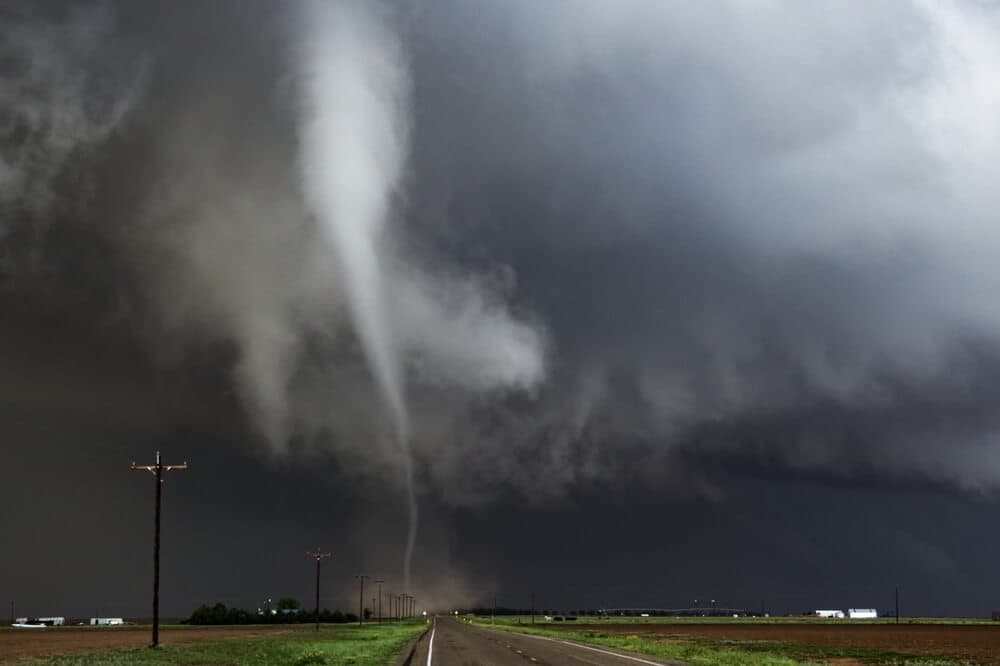
Tornado coverage ends when the sirens stop. The air quality story starts there. A tornado does something no other weather event does quite as efficiently: it takes an entire neighborhood's worth of building materials and reduces them to airborne particles in under a minute, then leaves that material sitting in yards, attics, and ductwork for weeks. Homes with no structural damage at all are breathing the results.
What actually gets into the air when a tornado hits a neighborhood?
Whatever the buildings were made of. Gypsum wallboard, fiberglass insulation, wood, roofing granules, masonry, and soil all become fine dust in the debris field. NIOSH, in its tornado cleanup and response guidance, notes that "air quality can be affected as a result of particles aerosolization and contaminant dispersion," and lists particulate matter, carbon monoxide, lead, nitrogen dioxide, and ozone among the pollutants responders encounter.
Older housing stock adds specific concerns. Homes built before the 1980s may contain asbestos in flooring, insulation, and siding, and lead in paint. Concrete and masonry dust carries crystalline silica. None of that is a hazard while it is nailed to a wall. All of it is once the wall is confetti.
Tornadoes also move soil. After the 2011 Joplin, Missouri tornado, physicians documented 13 confirmed cases of necrotizing cutaneous mucormycosis, five of them fatal, caused by soil fungi driven into wounds by flying debris, reported in the New England Journal of Medicine.
The mechanism there was penetrating injury rather than inhalation, but it demonstrates the basic point: a tornado does not just move buildings; it aerosolizes and redistributes the ground itself.
Why does the air inside an untouched house change too?
Because a house is not sealed. Even a home two streets outside the damage path is pulling in infiltration air from a neighborhood that now has a persistent dust source. Every gust, every truck, and every load of debris hauled to the curb resuspends material that has already settled.
The cleanup itself extends the problem. Chainsaws, skid steers, demolition, and reconstruction keep fine dust in the outdoor air for weeks to months after the storm. Fuel-powered equipment adds combustion pollutants. A home that was never hit spends that entire period filtering a debris field it did not create.
How fast does moisture become the bigger problem?
Faster than most people schedule repairs. EPA guidance is specific: mold can grow on wood, drywall, carpet, and furniture if those materials stay wet for more than 24 hours. A tornado that removes part of a roof and is followed by rain, which is common, starts that clock immediately.
Drying is not a weekend job either. EPA notes that thorough drying typically takes several days to weeks, and that materials should be down to 15% moisture content or lower before refinishing. Closing a wall over a substrate that is still wet builds the mold source into the structure, where it will feed indoor air long after the tarps come off.
What about the HVAC system itself?
It deserves its own decision. EPA is direct about water-affected systems: if any part of the HVAC system was affected by flood water, do not use it to help dry out the house. Running a contaminated air handler distributes whatever is in it to every room it serves. The same caution applies to a system whose return, ducts, or cabinet took on debris or dust from a compromised building envelope. That is a call for a qualified HVAC professional, not a filter change.
What will filtration not fix here?
Gases. This matters because the most immediate post-storm danger is a gas. Portable generators produce carbon monoxide, and the EPA's guidance is to run them outside only, at least 20 feet away from buildings. A MERV-rated filter captures particles. It does not capture carbon monoxide, and it does not capture the solvent and adhesive vapors that come with reconstruction. Filtration is the particle half of the answer, and being honest about that is more useful than overselling it.
Plan for a Filter Schedule, Not a Filter
Once the structure is safe and dry, the ongoing air quality task is managing a dust load that will not end for months.
- Expect to change filters far more often than the label suggests. Most households run MERV 8 as their everyday baseline, which handles normal dust and lint well. During a debris and reconstruction period, stepping up to MERV 11 or MERV 13 captures more of the fine particles generated by drywall dust, soil, and masonry.
- Filterbuy's 4-inch filters normally last 6 to 12 months, but "normally" assumes a normal dust load. In a rebuild zone, inspect monthly and replace on appearance rather than on the calendar, because a loaded filter restricts airflow and stops doing its job.
The tornado is a one-minute event. The indoor air consequences run on a much longer clock: dust for months, moisture for weeks, and an HVAC system that may need professional attention before it is trusted again. Households that treat post-storm air as a season rather than an afternoon come out of it with cleaner air and fewer surprises inside their walls.
Related Filterbuy resources:
- MERV Rating Chart: Range and Scale
- What's the Best MERV Filter for Mold Spores?
- How Often Should You Change Your Air Filter?
Sources: NIOSH / CDC, Tornado Cleanup and Response. cdc.gov; U.S. EPA, Flood Cleanup: Protect Indoor Air and Your Health. epa.gov; Neblett Fanfair R, et al. "Necrotizing Cutaneous Mucormycosis after a Tornado in Joplin, Missouri, in 2011." New England Journal of Medicine, 2012;367:2214-2225. doi.org/10.1056/NEJMoa1204781; CDC and EPA, Homeowner's and Renter's Guide to Mold Cleanup After Disasters. epa.gov; OSHA, Respirable Crystalline Silica standard background on construction and masonry dust; ASHRAE Standard 52.2, Method of Testing General Ventilation Air-Cleaning Devices for Removal Efficiency by Particle Size