
Buffalo, NY Live Wildfire Smoke Map
Get Alerts For Wildfires In Your Area
The moment a wildfire starts near you, you'll get an instant alert and simple tips to reduce your smoke exposure.
What's In The Smoke
30xSmaller than a human hair
Fine enough to reach deep into the lungs. A MERV 13 is built to capture it.
How Far It Travels


It Doesn't Stay Local
Smoke rides the wind far downwind — you can get smoky air with no fire nearby.
What To Do During A Smoke Event
Simple steps to reduce indoor exposure.
- Stay In, Close UpShut windows and doors to keep smoke out.
- Set Fan To "On"Keeps air cycling through your filter, not just when heating or cooling.
- Recirculate AirSwitch off fresh-air intake so you're not pulling smoke in.
- Run A MERV 13Built to capture the fine PM2.5 in smoke.
- Add A PurifierExtra filtration for the room you use most.
- Wear an N95 if OutsideFits snug to block fine particles — a cloth mask won't.


The Best Air Filter For Wildfire Smoke
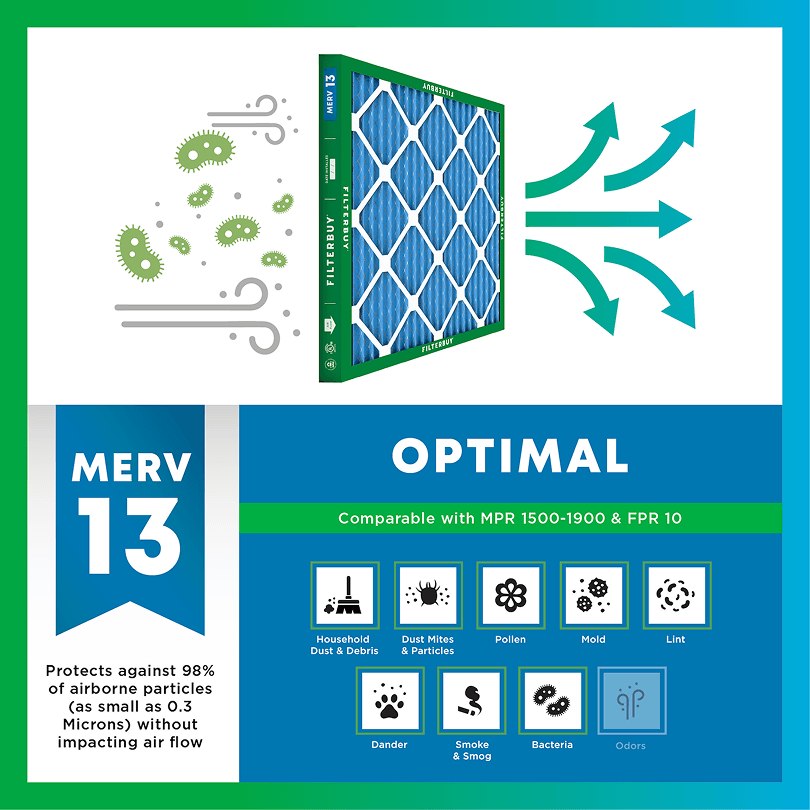
During smoke events, the EPA recommends upgrading to a MERV 13 filter — or the highest-rated filter your system can handle — to help reduce the fine particles smoke brings indoors. MERV 13 is the level most home HVAC systems can run while still capturing PM2.5, the fine particulate that makes up the bulk of wildfire smoke.
- Captures PM2.5 particles
- Blocks ash, soot, and smoke odor
- Keeps your indoor air safe—even when the outdoor air is dangerous
- Meets the EPA's recommended rating for filtering fine wildfire smoke particles.

Wildfire Smoke FAQs
Facts About Wildfires
Over 70,000 wildfires burn in the U.S. every year.
Wildfire smoke can travel 1,000+ miles, affecting states that aren't even near the blaze.
Exposure to wildfire smoke can worsen asthma, trigger heart issues, and lead to ER visits.
Indoor air can hold more fine particles during wildfire events unless it's properly filtered.
The EPA advises using MERV 13 filters or portable HEPA air cleaners during wildfire smoke events.
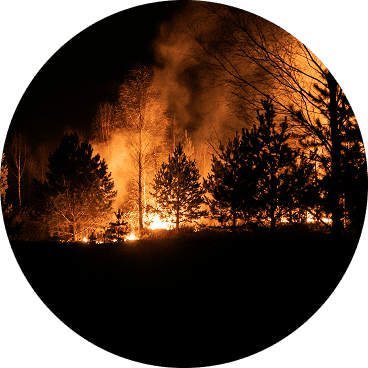
Don't Wait Until The Smoke's Inside.
Use the live wildfire smoke tracker and upgrade your air filters today to protect your lungs and your home.
Shop Filters For Smoke Protection
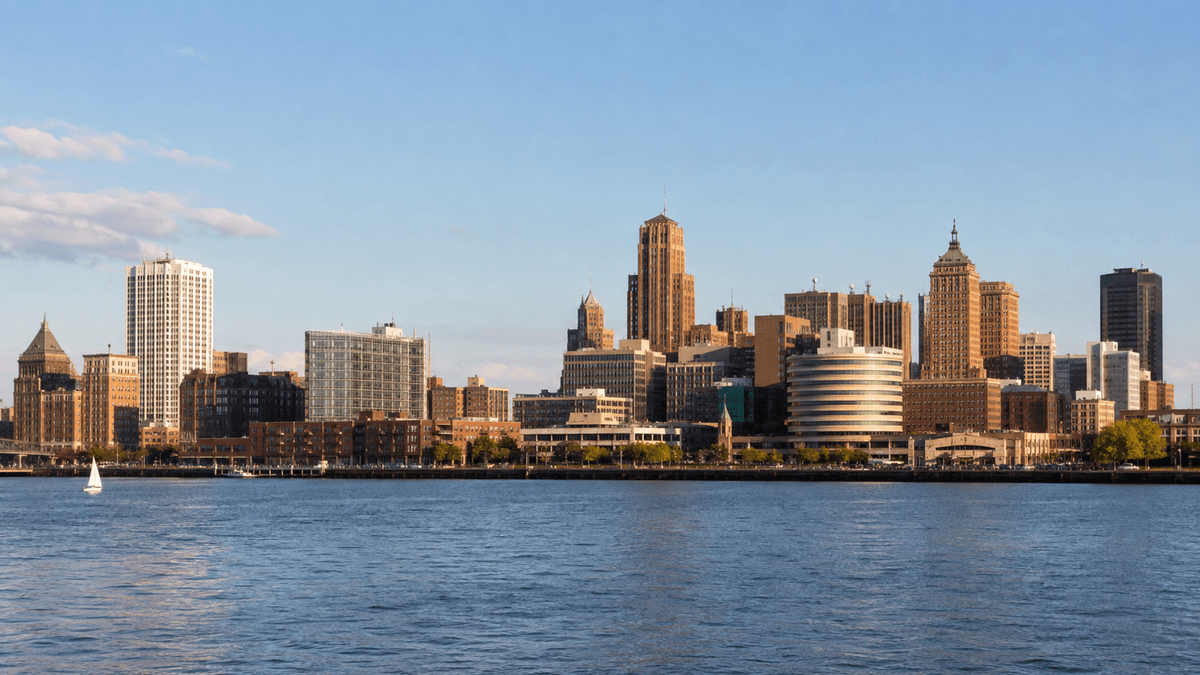
Live Buffalo, NY Forest Wildfire & Smoke Map Today: Local Air Quality Tracking & Indoor Protection Solutions from Filterbuy.com's Air Obsessed Experts
By Michelle Wan, Brand Manager & Air Quality Writer
Reviewed By: David Clark, Licensed HVAC Technician
Published: August 9, 2026 | Updated: August 9, 2026
The sky over Buffalo, New York tells you less than you think on a smoke day. Haze can look thin while ground-level particle counts climb, or hang heavy overhead while the air you breathe stays clean. The map above separates the two, and the sections below turn that reading into steps for your home.
TL;DR
Buffalo rarely burns, but Buffalo breathes smoke from fires hundreds of miles away. Canadian boreal wildfires push fine particle pollution down the Great Lakes corridor into Erie County, and Western New York usually registers it before the rest of the state. When the air quality index on the map above passes 100, close your windows, set your HVAC fan to ON, and run a MERV 13 filter.
Key Takeaways
New York State issues an Air Quality Health Advisory when forecast AQI exceeds 100. The Western New York region covers Cattaraugus, Chautauqua, Erie, Genesee, Niagara, Orleans, and Wyoming counties.
On July 16, 2026, the state forecast Western New York to reach the Very Unhealthy category because of Canadian wildfire smoke.
The U.S. Environmental Protection Agency advises running a MERV 13 filter, or the highest rating your system accepts, during a smoke event.
In Buffalo, the thermostat fan setting matters more than the filter rating, because a mild lake-moderated July leaves the blower idle.
Why Buffalo Sees Canadian Wildfire Smoke Before The Rest Of New York
Buffalo sits at the downwind end of a smoke conveyor running from the Canadian boreal forest across the Great Lakes. Fires in Ontario, Quebec, Manitoba, and Saskatchewan lift particle pollution thousands of feet up, and northwest flow carries the plume southeast over Lake Huron and Lake Erie. Erie County is the first major New York population center in its path.
State records show the pattern. During the July 2026 episode, New York issued an advisory covering Eastern Lake Ontario, Central New York, and Western New York on July 15, then downgraded Western New York to Very Unhealthy on July 16 while much of the state stayed one or two categories cleaner.
Distance from the flames protects nobody. Fine particles stay airborne for days and cross international borders, so the sky over Delaware Park can turn milk-gray with no fire burning in New York State. Filterbuy order data shows the same thing from the inside: during the 2023 Canadian smoke events, filter replacement requests rose more than 300 percent. Watch the source fires on the Canadian wildfire and smoke map.
What The Live Buffalo Wildfire And Smoke Map Shows You Right Now
Read the ground-level dial, not the plume shading. The map layers three data streams over Western New York: red markers for satellite-detected active fires, gray shading for smoke plumes as the NOAA Hazard Mapping System observes them, and colored dials for PM2.5 readings from monitors near your address.
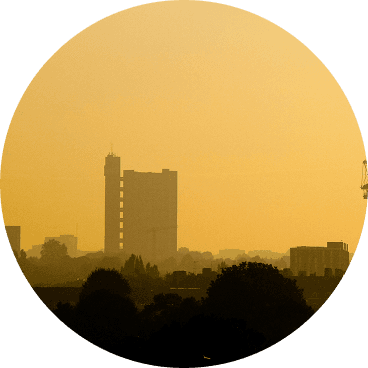
High-altitude smoke routinely produces a hazy sun and an orange sunset without moving ground-level counts at all. The reverse is the version that hurts people: an unremarkable sky while the nearest dial sits in the orange. This is the misread Filterbuy corrects more than any other.
That dial has a blind spot. AirNow warns that where no nearby PM2.5 monitor exists, the reading may not reflect local smoke, and Erie County is not densely monitored. Treat one dial as a strong signal, not a measurement of your block.
Your Buffalo AQI Response Table For Smoke Days
The public AQI scale tells you how to behave outdoors and nothing about the equipment inside your house. Filterbuy built this table to close that gap. Match the dial reading to the row, then take the HVAC and filter action beside it.
AQI categories follow the U.S. Environmental Protection Agency index. New York State issues an Air Quality Health Advisory when forecast AQI exceeds 100 for Western New York.
How To Protect Your Buffalo Home's Indoor Air During A Smoke Event
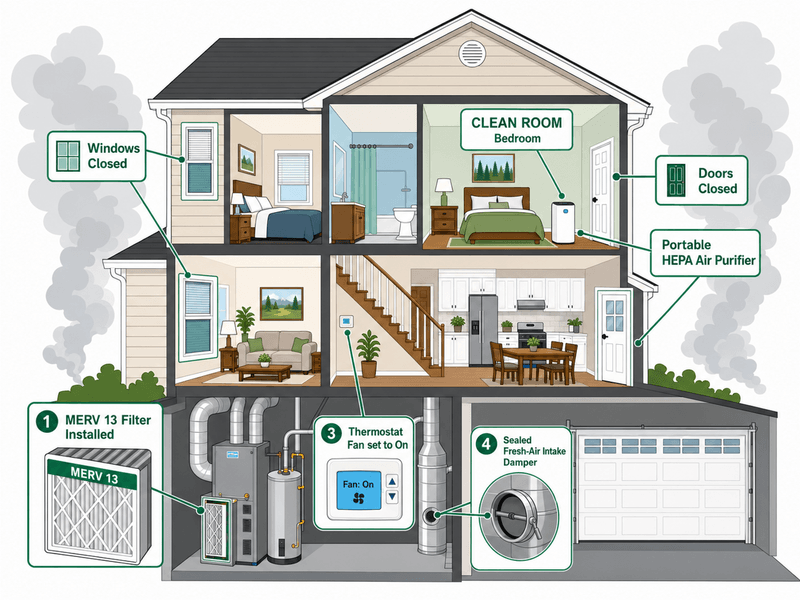
Six actions cut indoor smoke exposure during a Western New York advisory. Close every window and door, including the basement hoppers common in Buffalo's older housing. Switch the thermostat fan from AUTO to ON so air cycles through the filter continuously. Close the fresh-air intake if your system has one. Install a MERV 13 filter sized to your return. Add a portable air cleaner in the room where you spend the most hours. Skip candles, gas stoves, and vacuuming without a sealed filter.
The fan setting matters more in Buffalo than almost anywhere else, and that is why Filterbuy puts it ahead of the filter upgrade. A furnace-dominant housing stock and a lake-moderated July mean many homes run the blower less during smoke season than at any other time of year. In Phoenix, an August air conditioner cycles constantly and the filter works whether anyone thinks about it. In Buffalo, a house with no central air conditioning can pass most of the day without pushing a cubic foot of air through the filter. The filter is not failing. It is idle.
The usual objection is the electric bill, and it is fair. A variable-speed ECM blower draws little power at low speed, while an older single-speed PSC blower pulls considerably more. Treat ON as an advisory setting rather than a season-long default: flip it when the dial passes 100, and flip it back when the advisory clears.
MERV 13 matters because of particle size. Wildfire smoke is mostly PM2.5, particles 2.5 microns and smaller, and a MERV 8 filter passes most of it straight through. MERV 13 media captures a large share while still allowing residential airflow. The MERV 13 pleated filter specifications list media construction and replacement interval.
What To Do If Your Buffalo Home Has No Ductwork
If your home has no ducts, it has no central filter, and the fix is a clean room rather than a filter upgrade. A large share of Buffalo housing heats with boilers and radiators, which move water, not air, so most smoke advice assumes ductwork you may not have.
Pick one room, usually a bedroom, run a portable air cleaner sized to the square footage, and keep the door shut while the plume passes. If a purifier is out of reach, a MERV 13 filter fastened to the intake side of a newer box fan moves useful air, and the EPA has tested the approach. A 20x20x1, a size Filterbuy stocks, matches a standard box fan face. Run it while you are awake and in the room, never unattended overnight. Set window air conditioners to recirculate rather than fresh air.
Who Faces The Highest Risk In Erie County
Wildfire smoke reaches everyone in Buffalo and hits some residents harder. The Erie County Department of Health identifies people with heart disease, asthma, and chronic obstructive pulmonary disease as most at risk, along with older adults, young children, pregnant residents, and people who work outdoors.
A smoke day in Buffalo is an indoor air problem wearing an outdoor air costume. People watch the sky, shut the windows, and assume the house is sealed. What they miss is that a mild Western New York July gives the furnace almost no reason to run, so smoke that drifted in overnight sits in the rooms where the family is breathing. Setting the fan to ON and putting a MERV 13 in the return turns the furnace into the air cleaner the house already owns.
Filterbuy Team
Essential Resources
Using AirNow During Wildfires, U.S. Environmental Protection Agency
Air Quality Health Advisory for Central New York and Western New York, New York State Department of Environmental Conservation
Protect Yourself From Wildfire Smoke and Ash, U.S. Environmental Protection Agency
How Wildfire Smoke Affects Your Body, Centers for Disease Control and Prevention
National Fire News, National Interagency Fire Center
Erie County air quality guidance, Erie County Department of Health
Supporting Statistics
Respiratory hospitalizations rose between 1.3 percent and 10 percent for every 10 micrograms per cubic meter increase in wildfire-specific PM2.5, compared with 0.67 percent to 1.3 percent for PM2.5 from other sources.
Source: wildfire-specific PM2.5 and respiratory hospitalizations, Nature Communications
The Buffalo-Cheektowaga-Olean, NY metro area earned a C grade for short-term particle pollution, and unhealthy particle days reached their worst level since the 2011 report.
Source: 2026 State of the Air results for Buffalo, American Lung Association
More than 28 million people in the United States live with asthma, and Rochester, New York ranked second among the 100 most challenging U.S. cities to live in with the condition.
Source: 2025 Asthma Capitals rankings, Asthma and Allergy Foundation of America
Frequently Asked Questions About Buffalo Wildfire Smoke
Protect Your Buffalo Home Before The Next Plume Arrives
Smoke season in Western New York no longer waits for a headline. Stock the MERV 13 size your return takes, and set the fan to ON the moment an advisory posts.
Shop MERV 13 filters for smoke protection and keep a spare on the shelf.
Track conditions statewide on the New York wildfire and smoke map.
See the full picture on the national wildfire and smoke map.
Glossary
Air Quality Health Advisory: the alert New York State issues when forecast AQI exceeds 100 for a region.
PM2.5: fine particles 2.5 microns and smaller, the dominant pollutant in wildfire smoke.
MERV 13: a filter rating that captures a substantial share of PM2.5. It is not HEPA.