
Albuquerque, NM Live Wildfire Smoke Map
Get Alerts For Wildfires In Your Area
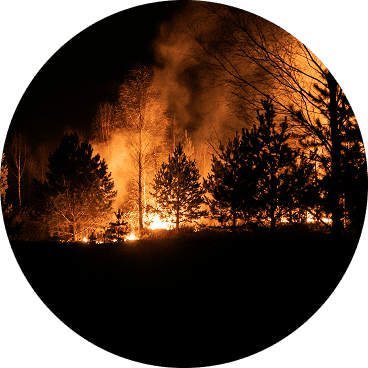
The moment a wildfire starts near you, you'll get an instant alert and simple tips to reduce your smoke exposure.
What's In The Smoke
30xSmaller than a human hair
Fine enough to reach deep into the lungs. A MERV 13 is built to capture it.
How Far It Travels


It Doesn't Stay Local
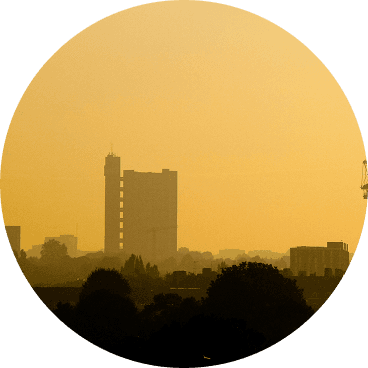
Smoke rides the wind far downwind — you can get smoky air with no fire nearby.
What To Do During A Smoke Event
Simple steps to reduce indoor exposure.
- Stay In, Close UpShut windows and doors to keep smoke out.
- Set Fan To "On"Keeps air cycling through your filter, not just when heating or cooling.
- Recirculate AirSwitch off fresh-air intake so you're not pulling smoke in.
- Run A MERV 13Built to capture the fine PM2.5 in smoke.
- Add A PurifierExtra filtration for the room you use most.
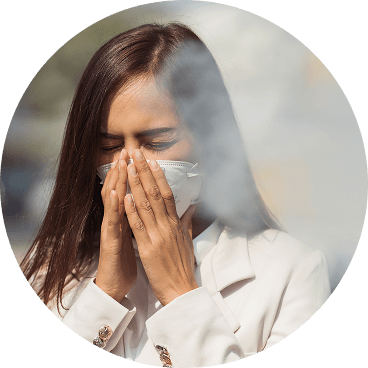
- Wear an N95 if OutsideFits snug to block fine particles — a cloth mask won't.


The Best Air Filter For Wildfire Smoke
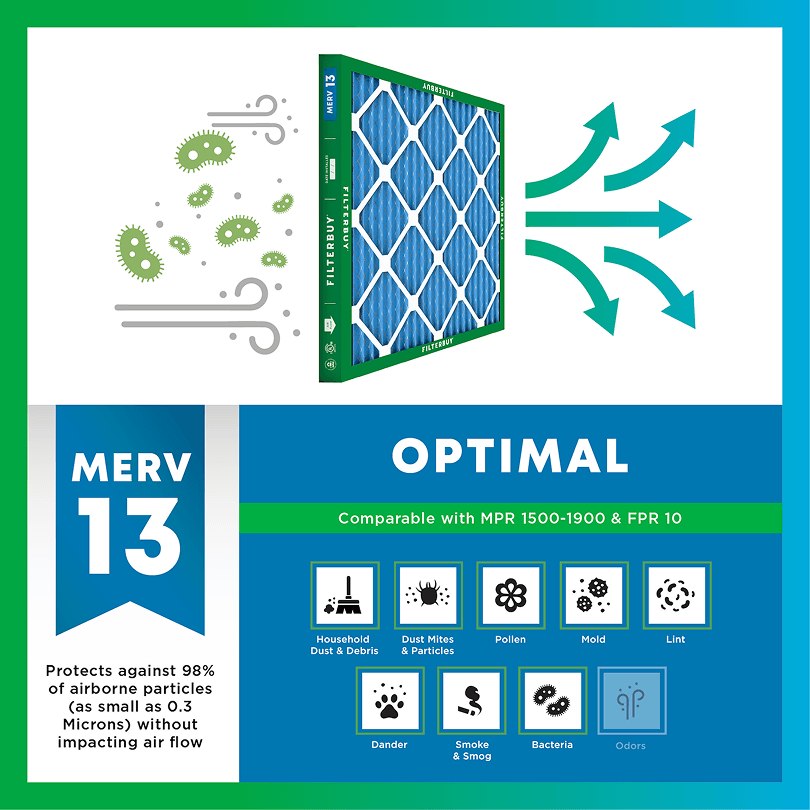
During smoke events, the EPA recommends upgrading to a MERV 13 filter — or the highest-rated filter your system can handle — to help reduce the fine particles smoke brings indoors. MERV 13 is the level most home HVAC systems can run while still capturing PM2.5, the fine particulate that makes up the bulk of wildfire smoke.
- Captures PM2.5 particles
- Blocks ash, soot, and smoke odor
- Keeps your indoor air safe—even when the outdoor air is dangerous
- Meets the EPA's recommended rating for filtering fine wildfire smoke particles.

Wildfire Smoke FAQs
Facts About Wildfires
Over 70,000 wildfires burn in the U.S. every year.
Wildfire smoke can travel 1,000+ miles, affecting states that aren't even near the blaze.
Exposure to wildfire smoke can worsen asthma, trigger heart issues, and lead to ER visits.
Indoor air can hold more fine particles during wildfire events unless it's properly filtered.
The EPA advises using MERV 13 filters or portable HEPA air cleaners during wildfire smoke events.
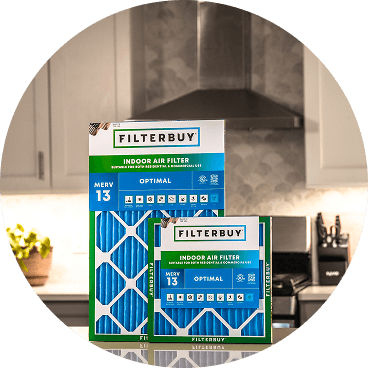
Don't Wait Until The Smoke's Inside.
Use the live wildfire smoke tracker and upgrade your air filters today to protect your lungs and your home.
Shop Filters For Smoke Protection
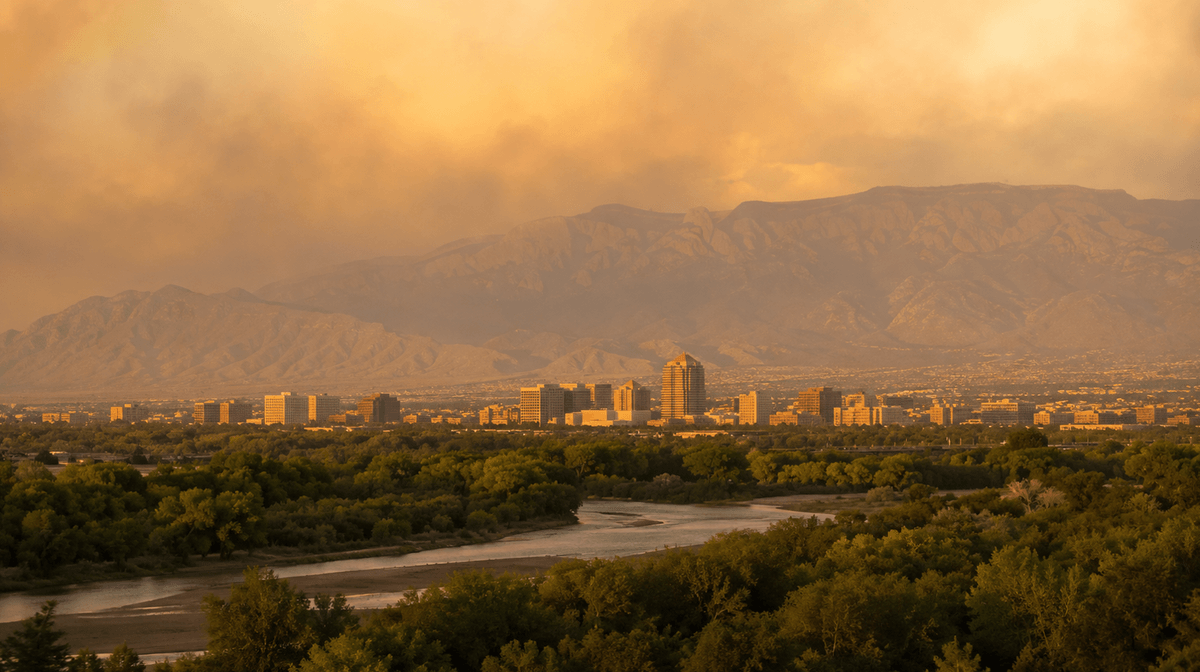
Current Live Forest Wildfire And Smoke Map Today In Albuquerque, NM: Track Nearby Fire Activity, Smoke Drift & Air Quality Alerts Across The Metro Area
Author: Michelle Wan
Reviewed by: David Clark, Licensed HVAC Technician
Published: July 5, 2026 Updated: July 5, 2026
Smoke can roll into Albuquerque from a fire you never see. A blaze in the Gila, a burn in the Sandias, or a wildfire hundreds of miles away in Arizona can drift over the Rio Grande valley and turn a clear high-desert sky hazy within hours. The live map on this page shows where fires are burning right now, where the smoke is heading, and what the air quality reads near your neighborhood. At Filterbuy, we make air filters for a living, so we read a smoke map a little differently than most people do. While you're watching the color near your block, we're thinking about what that smoke does once it reaches your return vent, and whether the filter behind it can catch it. We built this page so you can make a fast, confident call about heading outside, keeping the kids in, or sealing up the house.
TL;DR Quick Answers
Use the live map on this page to see active fires, smoke plumes, and the current air quality near Albuquerque in real time. When the map turns orange or worse, limit time outside, set your HVAC to recirculate, and run a MERV 13 filter or a portable air cleaner to keep indoor air clean. Sensitive groups should act as soon as visibility drops below 5 miles.
Top 5 Takeaways
The live map on this page shows active fires, smoke plumes, and current air quality near Albuquerque, updated throughout the day.
Albuquerque's basin and surrounding mountains can trap wildfire smoke over the metro, even from fires hundreds of miles away.
New Mexico's 5-3-1 Visibility Method is a fast outdoor check. Under 5 miles, sensitive groups stay in. Under 3 miles, everyone limits time outside. Under 1 mile, everyone stays indoors.
Wildfire PM2.5 can be several times more harmful to your lungs than everyday particle pollution.
Setting your HVAC to recirculate and using a MERV 13 filter are among the most effective ways to keep smoke out of your home.
How To Read The Live Albuquerque Wildfire And Smoke Map
The map uses color to show air quality at each monitor and sensor near Albuquerque. Green means good air, yellow is moderate, orange is unhealthy for sensitive groups, red is unhealthy for everyone, and purple or maroon signals very unhealthy to hazardous air. Flame icons mark reported fires, and glowing dots show heat that satellites detect. Shaded gray areas trace smoke plumes. Tap any icon to see the current reading, whether the air is improving or getting worse, and the exact steps to take.
Here's the tip we give Filterbuy customers. Watch the trend, not only the current color. A reading that climbs toward orange over an hour or two is your cue to close up and turn on filtration, even if the dot near you still shows yellow.
Why Albuquerque Gets Wildfire Smoke
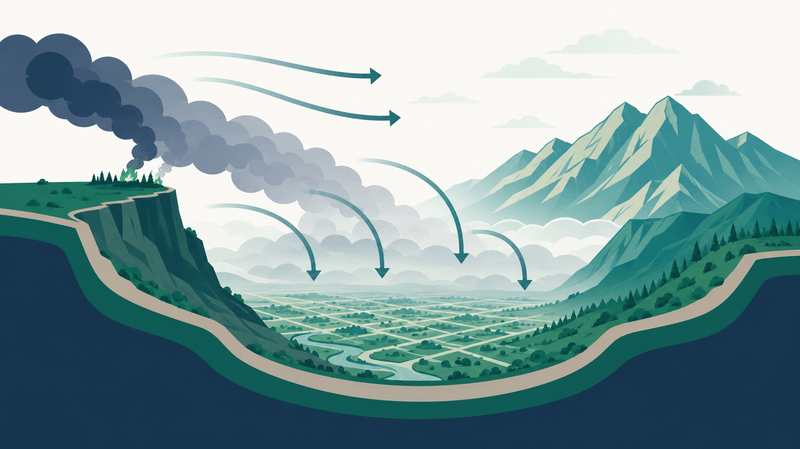
Albuquerque sits in a valley called the Albuquerque Basin, framed by the Sandia and Manzano Mountains to the east and the West Mesa to the west. That bowl shape can trap air, so smoke from regional fires settles over the metro and lingers. New Mexico's own wildfire season runs mainly from spring into early summer, when drought, low humidity, and strong winds line up ahead of the July monsoon. Smoke also travels in on the wind from Arizona, Colorado, and other neighboring states, which means your sky can turn hazy on a day with no fire anywhere near the city.
For a sense of scale, the 2022 Hermits Peak and Calf Canyon Fire in the Sangre de Cristo Mountains grew into the largest wildfire in New Mexico history, burning more than 341,000 acres and sending smoke across a wide stretch of the northern and central state. Events like that are exactly why a live view of nearby fire and smoke matters here.
That basin shape matters when you read the map. Smoke tends to settle low in the valley, so the monitor nearest your part of town can read very differently from the citywide number. On a hazy day, trust the reading closest to your home over the headline for the whole metro.
What The Air Quality Colors Mean For Your Health
Air quality color tells you how safe the air is to breathe right now. New Mexico also gives you a quick outdoor check for when you cannot reach a monitor. The state's 5-3-1 Visibility Method uses how far you can see. If you can see less than 5 miles, sensitive groups should stay inside. Under 3 miles, everyone should limit time outdoors. Under 1 mile, everyone should stay indoors and keep the air clean.
The color is really a stand-in for how much fine PM2.5 is in the air, and PM2.5 is the exact part of wildfire smoke a high-efficiency filter is built to catch. Once the map hits orange, that's your signal to stop counting on open windows and start counting on filtration.
Air Quality Index Categories And What To Do In Albuquerque
How To Protect Your Home And Family From Wildfire Smoke
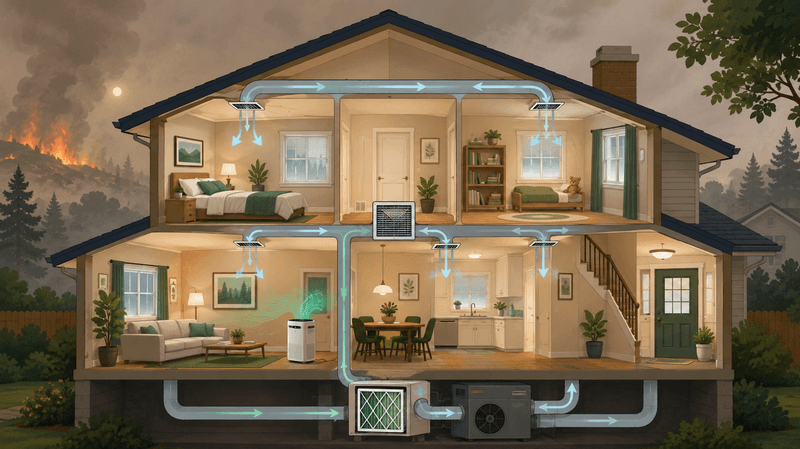
The simplest way to protect your family during a smoke event is to keep indoor air clean. Close your windows and doors, and set your central system to recirculate so it stops pulling smoky air inside. Run it with a high-efficiency filter, and set up one room with a portable air cleaner. The EPA points to MERV 13 filters for trapping the fine particles that make up wildfire smoke.
Because we build these filters ourselves, we'll be straight with you. For most homes, MERV 13 is the sweet spot. Lower ratings like MERV 8 or 11 handle everyday dust and pollen, but they let the finest smoke particles slip through, so smoke season is where MERV 13 earns its place. It captures those particles while still letting your system breathe. Pushing to a denser filter than your equipment was designed for can choke airflow and leave you worse off, so match the filter to what your system can actually handle.
Close windows and doors, and switch your HVAC to recirculate so it does not draw in outdoor air.
Run your system with a high-efficiency filter. The EPA recommends a MERV rating of 13 for capturing fine smoke particles.
Set up a clean room with a portable air cleaner. Pick a smaller room you spend time in, like a bedroom, and match the cleaner to that room's size so it can turn the air over a few times an hour.
Check your filter more often during smoke. It loads up with particles faster than usual, so swap it once it looks gray or your airflow drops off.
Skip indoor activities that add particles, such as frying, burning candles, or vacuuming without a sealed filter.
If you use a swamp cooler, remember it pulls in outside air, so limit it during heavy smoke.
If you must go out, wear a well-fitting N95 or P100 mask. Cloth and dust masks do not stop PM2.5.
After manufacturing filters for over a decade and serving more than two million households, we've learned that people fixate on the outdoor number while the real fix is usually indoors. When the Albuquerque map turns orange or red, the highest-impact move is to switch your system to recirculate and run a MERV 13 filter. These are the same filters we build and run in our own homes when the smoke rolls in, and that small step makes a real difference for your family's air.
David Heacock, Founder and CEO, Filterbuy
7 Essential Resources
These government and public-health resources go deeper on tracking fires, reading air quality, and protecting your health across New Mexico.
Source: AirNow's guide to reading the Fire and Smoke Map explains how to interpret every icon, color, and dashboard on the live map.
Source: EPA guidance on wildfires and indoor air quality shows why MERV 13 filtration and recirculation keep smoke out of your home.
Source: CDC wildfire smoke safety guidelines list the steps that protect at-risk family members before and during a smoke event.
Source: The New Mexico Environment Department's fire and smoke resources gather state monitoring, smoke forecasts, and local air quality contacts.
Source: New Mexico's 5-3-1 Visibility Method gives you a quick outdoor test for smoky days when you cannot reach a monitor.
Source: National Weather Service Albuquerque posts local fire-weather forecasts and red-flag warnings for the wind and dryness that spread fire and smoke.
Source: The American Lung Association explains how wildfire smoke affects your lungs and who faces the greatest risk.
3 Supporting Statistics
Government agencies and peer-reviewed research back up the guidance on this page.
Wildfire smoke is more harmful than ordinary pollution. A 10 microgram-per-cubic-meter rise in wildfire PM2.5 raised respiratory hospitalizations by 1.3 to 10 percent. The same rise in ordinary PM2.5 raised them by only 0.67 to 1.3 percent.
Source: Aguilera and colleagues, Nature Communications (2021).
Wildfires burn millions of acres a year. The United States recorded 64,897 wildfires in 2024, and they burned 8,924,884 acres. Both totals ran above the five- and ten-year averages.
Source: National Interagency Fire Center statistics.
High-efficiency filtration works. A HEPA air cleaner can cut indoor particle levels during a smoke event, sometimes by more than 90 percent. For central systems, the same state air agency recommends a MERV 13 or higher filter.
Source: California Air Resources Board guidance on indoor air cleaners and wildfire smoke.
Final Thoughts And Opinion
Here's our take at Filterbuy, as the people who actually make the filters that end up in a lot of these homes. Wildfire smoke is becoming a regular part of life across the Southwest, and Albuquerque's basin makes it easy for haze to drift in and stick around. You don't have to guess about the air. Check the live map, use the 5-3-1 test when you step outside, and keep one room ready with clean, filtered air. We'd rather see you set up before the next smoky week than scramble in the middle of one.
Next Steps
Ready to breathe easier? Here is where to go next.
Bookmark this page and open the live map whenever you smell smoke or see haze over the metro.
Match your system to the right filter. Find your filter size and step up to MERV 13 for smoke season.
Set up a clean room with a portable air cleaner before the next smoke event, not during it.
Sign up for local air quality alerts through the City of Albuquerque or the state Environment Department.
Have a plan for heavy smoke or a fire near the metro. Put together a wildfire evacuation plan, so your household knows where to go and what to grab.
Frequently Asked Questions
Do Not Let Smoke Catch You Off Guard
Don't wait for the next smoky sky to catch you off guard. Filterbuy makes MERV 13 filters in over 600 sizes right here in America, built to trap the fine particles in wildfire smoke. Set your system to recirculate, drop in the right filter, and breathe easier all season. Shop Filterbuy filters and get your home smoke-ready today.
Glossary
AQI (Air Quality Index): a color-coded scale from 0 to 500 that the EPA uses to report how clean or polluted outdoor air is and what health effects to expect.
PM2.5: fine particulate matter measuring 2.5 micrometers or less. It is the main pollutant in wildfire smoke and small enough to reach deep into the lungs and enter the bloodstream.
MERV: Minimum Efficiency Reporting Value, a rating from 1 to 16 for residential filters that measures how well a filter captures airborne particles. Higher numbers capture smaller particles.
Smoke Plume: the visible drift of smoke from a fire, mapped from satellite data to show where the smoke is traveling.
5-3-1 Visibility Method: a New Mexico Department of Health guide that uses how far you can see to judge whether the air is safe for outdoor activity.
Recirculate Mode: an HVAC setting that reuses indoor air instead of drawing in outdoor air, which helps keep smoke from entering your home.
Clean Room: a single room sealed from outdoor air where a portable air cleaner keeps the air as clean as possible during a smoke event.
Fire and Smoke Map: the real-time map produced by the EPA and the U.S. Forest Service that shows air quality readings, fire locations, and smoke plumes.
Subscribe to wildfire smoke alerts for Albuquerque, NM, to get a heads-up before the next event reaches your area.