
Miami, FL Live Wildfire Smoke Map
Get Alerts For Wildfires In Your Area
The moment a wildfire starts near you, you'll get an instant alert and simple tips to reduce your smoke exposure.
What's In The Smoke
30xSmaller than a human hair
Fine enough to reach deep into the lungs. A MERV 13 is built to capture it.
How Far It Travels


It Doesn't Stay Local
Smoke rides the wind far downwind — you can get smoky air with no fire nearby.
What To Do During A Smoke Event
Simple steps to reduce indoor exposure.
- Stay In, Close UpShut windows and doors to keep smoke out.
- Set Fan To "On"Keeps air cycling through your filter, not just when heating or cooling.
- Recirculate AirSwitch off fresh-air intake so you're not pulling smoke in.
- Run A MERV 13Built to capture the fine PM2.5 in smoke.
- Add A PurifierExtra filtration for the room you use most.
- Wear an N95 if OutsideFits snug to block fine particles — a cloth mask won't.


The Best Air Filter For Wildfire Smoke
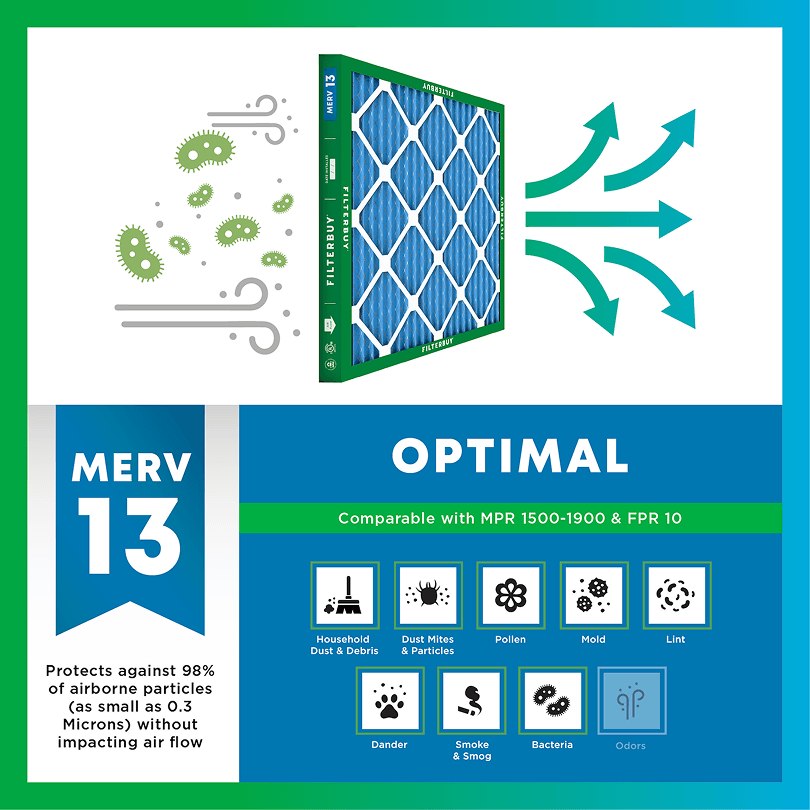
During smoke events, the EPA recommends upgrading to a MERV 13 filter — or the highest-rated filter your system can handle — to help reduce the fine particles smoke brings indoors. MERV 13 is the level most home HVAC systems can run while still capturing PM2.5, the fine particulate that makes up the bulk of wildfire smoke.
- Captures PM2.5 particles
- Blocks ash, soot, and smoke odor
- Keeps your indoor air safe—even when the outdoor air is dangerous
- Meets the EPA's recommended rating for filtering fine wildfire smoke particles.

Wildfire Smoke FAQs
Facts About Wildfires
Over 70,000 wildfires burn in the U.S. every year.
Wildfire smoke can travel 1,000+ miles, affecting states that aren't even near the blaze.
Exposure to wildfire smoke can worsen asthma, trigger heart issues, and lead to ER visits.
Indoor air can hold more fine particles during wildfire events unless it's properly filtered.
The EPA advises using MERV 13 filters or portable HEPA air cleaners during wildfire smoke events.
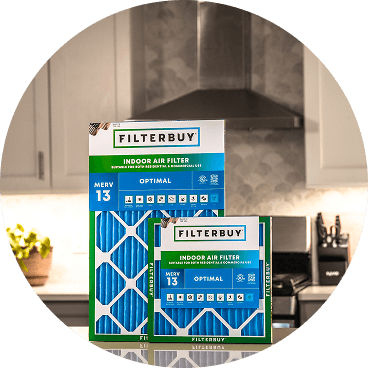
Don't Wait Until The Smoke's Inside.
Use the live wildfire smoke tracker and upgrade your air filters today to protect your lungs and your home.
Shop Filters For Smoke Protection
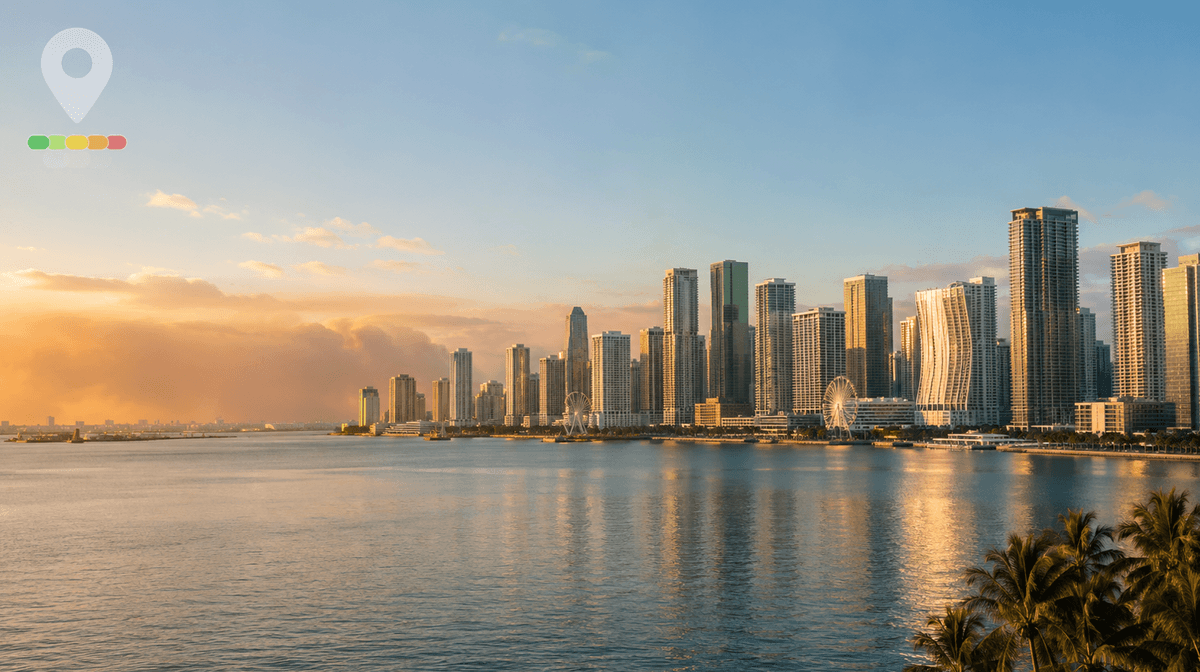
Current Live Forest Wildfire and Smoke Map Today in Miami, FL: Track Nearby Fire Activity, Smoke Drift & Air Quality Alerts Across South Florida Right Now
By Michelle Wan (filterbuy.com/author/michelle-wan/)
Reviewed by David Clark, Licensed HVAC Technician
Published July 7, 2026 • Updated July 7, 2026
Smoke from brush and Everglades fires can reach Miami-Dade neighborhoods within hours when dry-season winds blow in from the west, even when no flames are visible anywhere near the coast. At Filterbuy, we watch this pattern play out every dry season, which is why we built this page as one place for Miami and South Florida residents to track that risk as it happens. The live map below pulls active fire locations, smoke plume tracks, and neighborhood-level air quality readings so you can decide, right now, whether it is safe to open the windows, take the kids to the park, or switch your air conditioner to recirculate.
TL;DR: Miami Wildfire And Smoke Map At A Glance
Miami sits far from large western forests, but South Florida still faces real wildfire smoke risk from brush and Everglades fires, especially during the dry season that runs roughly from November through May. The live Fire and Smoke Map on this page, powered by data from the U.S. Environmental Protection Agency and the U.S. Forest Service, shows nearby fire locations, drifting smoke, and current air quality for your exact area. When the map shows orange, red, or purple near Miami, stay indoors, keep windows closed, set your air conditioner to recirculate, and run a MERV 13 filter to help capture the fine smoke particles that reach your home.
Top Takeaways You Can Act On Right Now
Miami's wildfire smoke usually drifts in from inland brush and Everglades fires rather than from fires inside the city, so clear skies overhead do not always mean clean air.
The AirNow Fire and Smoke Map is the official U.S. source for near real-time smoke and air quality, combining more than 1,700 regulatory monitors with temporary monitors and thousands of low-cost sensors.
Fine particles known as PM2.5 are the main health hazard in wildfire smoke, and they can travel deep into the lungs and pass into the bloodstream.
The EPA recommends a MERV 13 or higher HVAC filter to capture fine wildfire smoke particles indoors, run with the system fan set to On and replaced more often during heavy smoke.
MERV 13 is a high-efficiency residential rating, not a HEPA filter, so pairing it with a portable HEPA air cleaner in one room gives the strongest protection during a smoke event.
South Florida's 2026 dry season has produced active wildfires near the Everglades that affected regional air quality, which makes live monitoring worthwhile for Miami-Dade and Broward households.
Are There Active Wildfires Near Miami, FL Today?
Miami itself rarely burns, but South Florida regularly sees wildfires in the Everglades, Big Cypress, and inland brush and sawgrass, especially during the dry season. The live map and the Florida Forest Service incident viewer show current fire locations and sizes. During the 2026 dry season, fires west of Broward and near the Everglades sent smoke toward the coast, so nearby fire activity is a real and recurring concern for Miami-Dade households.
The Florida Forest Service protects millions of acres of state and private land and reports active incidents through its public incident viewer. South Florida's fire risk peaks during the dry season, which typically runs from November through May, when rainfall drops and sawgrass, palmetto, and pine flatwoods dry out. Both lightning and human activity start fires in this landscape.
Because Miami's dry-season winds often blow from the west and southwest, smoke from these inland fires can reach coastal neighborhoods even when the nearest flames are dozens of miles away. That is why a clear view of the sky over Biscayne Bay does not guarantee the air is clean, and why the map matters more than a glance out the window.
How Wildfire Smoke Affects Air Quality And Health In South Florida
Wildfire smoke is mostly fine particle pollution called PM2.5, and PM2.5 is the pollutant that makes smoky air dangerous to breathe. These particles measure 2.5 microns or smaller, small enough to travel deep into the lungs and pass into the bloodstream. The EPA and CDC report that smoke exposure can irritate the eyes and airways, worsen asthma and heart conditions, and raise the risk of serious events for people at higher risk.
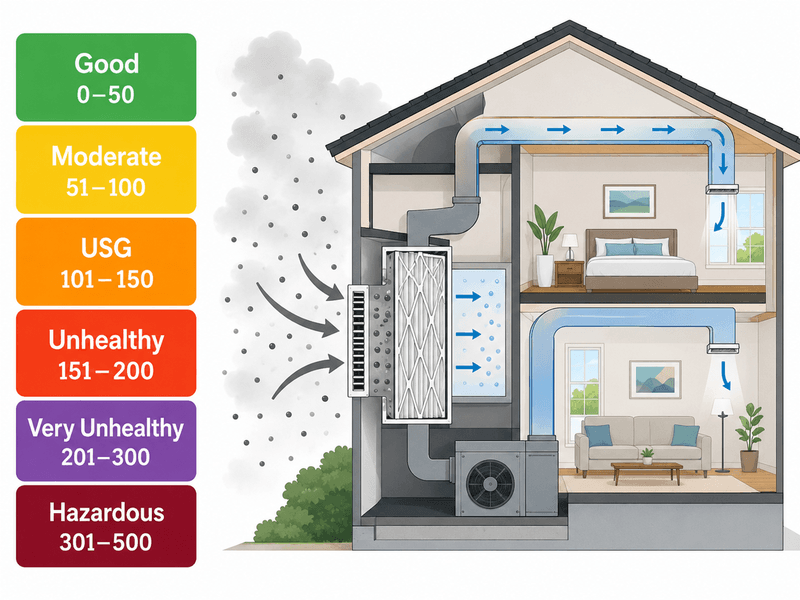
The U.S. Air Quality Index translates the concentration of PM2.5 and other pollutants into a color-coded number from 0 to 500 so you can gauge risk at a glance. Higher numbers and warmer colors mean higher risk. The CDC notes that wildfire smoke can affect people even when they are nowhere near the flames, because fine particles travel long distances on the wind.
People at higher risk include children, adults over 65, pregnant people, and anyone with asthma, COPD, heart disease, or diabetes. For these groups, smoky air can trigger coughing and wheezing, worsen existing conditions, and lead to emergency department visits. A well-fitted, high-efficiency HVAC filter helps by capturing and reducing the fine particles that make it indoors. A filter captures particles, so it cannot pull every gas or odor out of smoke, and it works best alongside closed windows and limited outdoor activity when the map shows unhealthy air. Filterbuy focuses on that indoor layer of defense, capturing and reducing the fine particles that slip inside before they circulate through your home.
What The AQI Colors Mean For A Miami Household
AQI category ranges follow the U.S. Environmental Protection Agency scale. The recommended actions are Filterbuy guidance tailored to South Florida homes.
How To Protect Your Home And Family When Smoke Drifts Into Miami
When the map shows unhealthy air near Miami, keep smoke out and clean the air you already have inside. Close windows and doors, set your central air conditioner or HVAC system to recirculate, and install a MERV 13 filter to capture fine smoke particles. Set the system fan to On rather than Auto so air keeps passing through the filter, and replace the filter more often during heavy smoke.
We recommend the same steps the EPA and public health agencies advise during smoke events, because we have watched them hold up in real South Florida homes. In our experience, the households that ride out a smoke stretch most comfortably are the ones that reduce the smoke coming in and keep clean air moving through the house. Start by closing windows and doors, and if your central HVAC system or window unit has a fresh-air intake, close it or switch the system to recirculate mode.
Next, upgrade what your system captures. The EPA recommends a filter rated MERV 13 or higher to capture the fine PM2.5 particles in wildfire smoke, installed in a system that can handle it. Set the fan to On instead of Auto so indoor air keeps cycling through the filter, and plan to replace the filter more often than usual, because heavy smoke loads a high-efficiency filter in days rather than weeks. If you are unsure whether your blower can handle a MERV 13 filter, ask a licensed HVAC technician before jumping up two rating levels at once.
MERV 13 is a high-efficiency residential rating, but it is not a HEPA filter. HEPA media captures 99.97 percent of particles at 0.3 microns and creates far more resistance than most home HVAC systems can handle. For the strongest protection, pair a properly sized MERV 13 filter in your HVAC system with a portable HEPA air cleaner in the room where your family spends the most time. The American Lung Association and the EPA both describe this cleaner-air-room approach for smoke events.
Because Filterbuy manufactures its own filters, we have learned that fit matters as much as the rating on the box. A MERV 13 filter only protects you when it seals correctly in the return, since a loose or wrong-size filter lets smoky air slip right past it. That is why we make more than 600 filter sizes and build custom filters for odd or non-standard returns, so a MERV 13 upgrade in a South Florida home never comes down to whatever size happens to be on the store shelf.
Your Clean-Air Options During A Miami Smoke Event
The right clean-air setup during a smoke event depends on your home, your budget, and how quickly you need cleaner air, so it helps to compare the three options that actually reduce indoor smoke.
Guidance reflects current EPA recommendations for reducing wildfire smoke indoors. The comparison is Filterbuy's summary to help South Florida households choose quickly.
All three options rely on a MERV 13 filter to do the actual capturing, so match the filter to your setup and change it more often once smoke starts loading it.
For a deeper look at which rating stops smoke and why, see Filterbuy's guide to the best MERV rating for wildfire smoke.
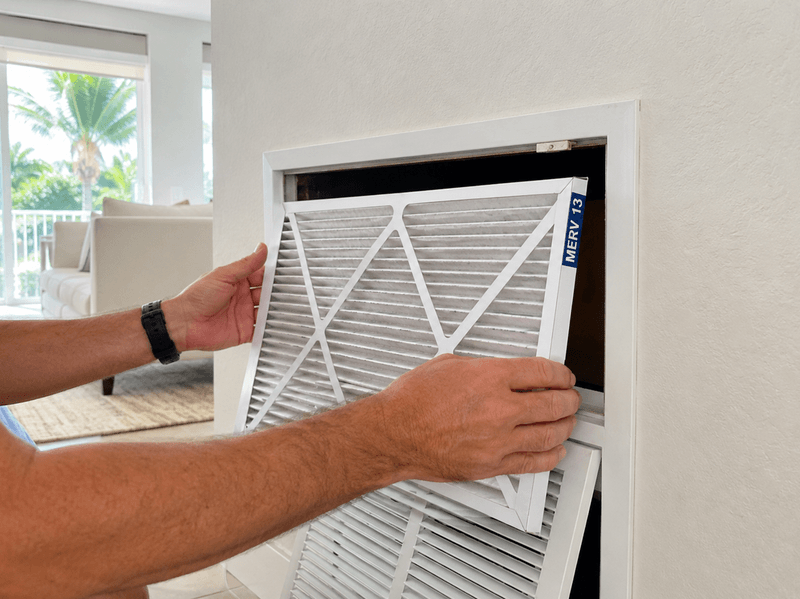
After manufacturing filters for over a decade and serving more than two million households, we have learned that the families who breathe easiest in a smoke event are the ones who upgraded to a properly sized MERV 13 filter before the first smoky day rather than during it. In South Florida, the smoke often arrives on a west wind before you can see or smell it, so the filter needs to be in place and the system set to recirculate ahead of time. A filter cannot stop a wildfire, but it can capture a large share of the fine particles that slip indoors, and that is the moment your HVAC system becomes the most important air cleaner you own.
David Heacock, Founder and CEO, Filterbuy
7 Essential Resources For Tracking Miami Wildfires And Smoke
Every resource below is a government or nonprofit page you can rely on during a smoke event. Bookmark them alongside this map.
Source: AirNow Fire and Smoke Map information from the EPA and Forest Service. Near real-time smoke, fire locations, and air quality in one national map.
Source: EPA guidance on wildfires and indoor air quality. How to keep smoke out and which filter rating to choose.
Source: CDC health advisory on wildfire smoke exposure. Symptoms, higher-risk groups, and when to seek care.
Source: Florida Forest Service current wildfire information. Active incidents and fire danger across the state.
Source: National Weather Service Miami fire weather forecast. The local fire-weather and smoke-dispersion outlook for South Florida.
Source: American Lung Association wildfire smoke and lung health guide. Protecting your lungs before, during, and after a smoke event.
Source: Ready.gov wildfire preparedness guide. How to prepare your household and respond safely.
3 Supporting Statistics On Wildfire Smoke And Health
Wildfire smoke raises respiratory hospitalizations. Each 10 microgram-per-cubic-meter rise in wildfire PM2.5 raised respiratory hospitalizations by 1.3 percent to 10 percent, compared with 0.67 percent to 1.3 percent for other particle pollution.
Source: peer-reviewed research on wildfire smoke and respiratory hospitalizations. Aguilera and colleagues, Nature Communications (2021).
Children face the sharpest rise in risk. Wildfire PM2.5 was tied to a 30 percent increase in children's respiratory visits in San Diego County, versus 3.7 percent for other PM2.5 sources.
Source: pediatric respiratory study in the journal Pediatrics. Aguilera and colleagues, American Academy of Pediatrics (2021).
Wildfires are frequent and widespread. The United States recorded 77,850 wildfires in 2025, burning 5,131,474 acres, a fire count above the five-year and ten-year averages.
Source: National Interagency Fire Center wildfire statistics. National Interagency Fire Center, 2025 wildland fire summary.
Final Thoughts And Opinion
Here is the practical reality for Miami households. Wildfire smoke is no longer only a western problem, and South Florida's own dry-season fires can push unhealthy air over the coast with little warning. Watching the live map costs nothing and takes seconds, and it turns an invisible risk into a decision you can act on. The homes that handle smoke season best are the ones that treat the HVAC filter as frontline protection and upgrade before the air turns orange, not during the scramble when everyone else is doing the same. That is the approach Filterbuy brings to South Florida smoke season, and it is why we make the filters and build the tools that help families get ahead of the smoke instead of reacting to it.
Next Steps For Miami Residents
Check the live map above for current air quality at your Miami address before planning outdoor activity today.
Confirm your HVAC filter is fresh and rated MERV 13 if your system supports it. Not sure of your size? Find your correct filter size first.
Switch your air conditioner to recirculate and set the fan to On whenever the map shows orange or worse near you.
Set up one cleaner-air room with a portable HEPA air cleaner for sensitive family members.
Keep spare MERV 13 filters on hand so you can replace them more often during a heavy smoke stretch.
Frequently Asked Questions
Protect Your Miami Home's Air With Filterbuy
Do not wait for the sky to turn orange to think about your air. Filterbuy manufactures MERV 13 air filters in more than 600 sizes, including custom dimensions for odd returns, so your Miami home can capture more of the fine smoke particles that drift in during fire season.
Order your MERV 13 filters now and set your household up to breathe easier before the next smoke event reaches South Florida.
Glossary Of Key Wildfire And Air Quality Terms
PM2.5: Fine particle pollution measuring 2.5 microns or smaller. PM2.5 is the main health hazard in wildfire smoke and can travel deep into the lungs and into the bloodstream.
AQI (Air Quality Index): The EPA's color-coded scale from 0 to 500 that reports how clean or polluted outdoor air is and the health risk that comes with it.
NowCast AQI: The near real-time AQI value shown on the AirNow Fire and Smoke Map, calculated from recent hourly readings so it reflects fast-changing smoke conditions.
MERV (Minimum Efficiency Reporting Value): A 1-to-16 scale that rates how well an HVAC filter captures airborne particles. Higher numbers capture smaller particles.
MERV 13: A high-efficiency residential filter rating the EPA recommends for capturing the fine PM2.5 in wildfire smoke. MERV 13 is not a HEPA filter.
HEPA (High-Efficiency Particulate Air): A filter standard that captures 99.97 percent of particles at 0.3 microns, typically used in portable air cleaners rather than standard home HVAC systems.
AirNow Fire and Smoke Map: The official U.S. map from the EPA and U.S. Forest Service showing near real-time air quality, fire locations, and smoke plumes.
Dry season: The lower-rainfall period in South Florida, roughly November through May, when vegetation dries out and wildfire risk rises.
Smoke plume: A visible mass of smoke carried by wind away from a fire, which can lower air quality far from the flames.
DIY air cleaner: A low-cost air cleaner made by attaching a MERV 13 filter to a box fan. The EPA describes it as a temporary option when commercial portable air cleaners are unavailable or unaffordable.
Subscribe to wildfire smoke alerts for Miami, FL, to get a heads-up before the next event reaches your area.