The moment a wildfire starts near you, you'll get an instant alert and simple tips to reduce your smoke exposure.
30xSmaller than a human hair
Fine enough to reach deep into the lungs. A MERV 13 is built to capture it.
It Doesn't Stay Local
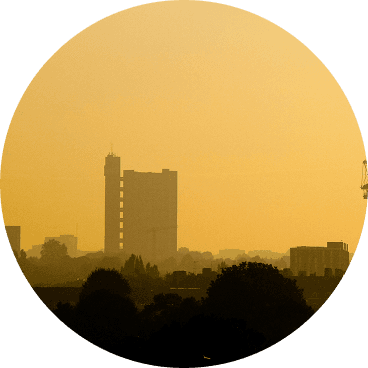
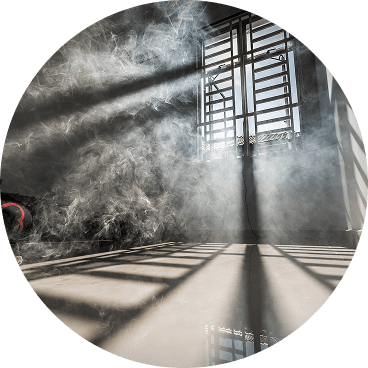
Smoke rides the wind far downwind — you can get smoky air with no fire nearby.
Simple steps to reduce indoor exposure.
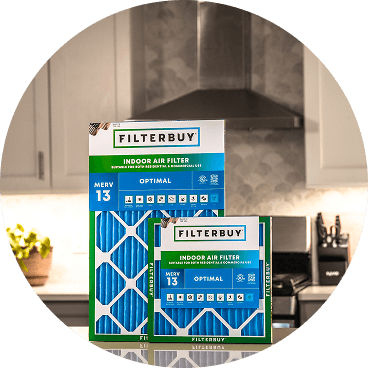
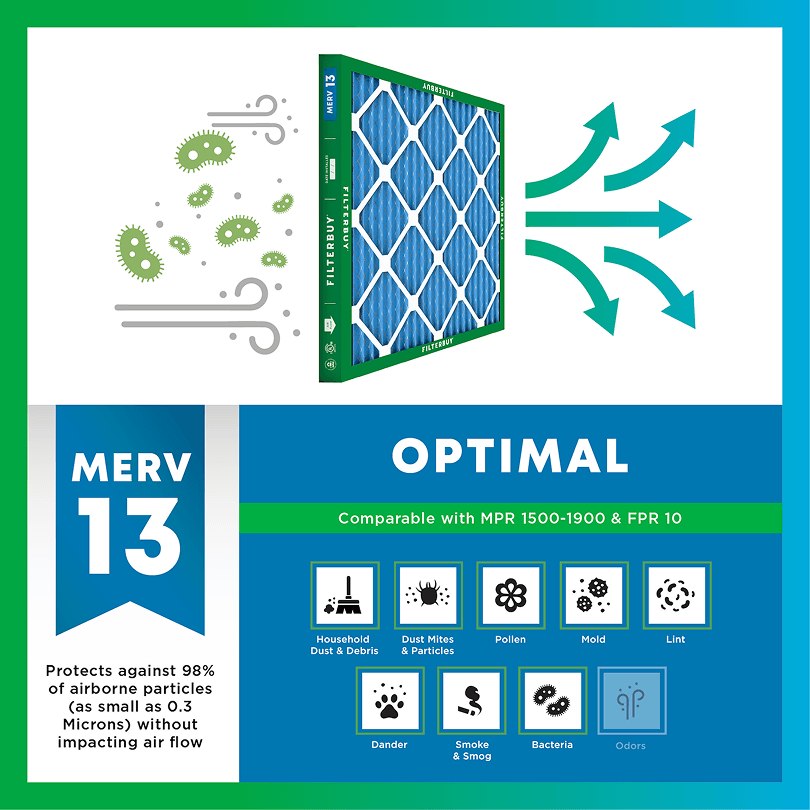
During smoke events, the EPA recommends upgrading to a MERV 13 filter — or the highest-rated filter your system can handle — to help reduce the fine particles smoke brings indoors. MERV 13 is the level most home HVAC systems can run while still capturing PM2.5, the fine particulate that makes up the bulk of wildfire smoke.
Over 70,000 wildfires burn in the U.S. every year.
Wildfire smoke can travel 1,000+ miles, affecting states that aren't even near the blaze.
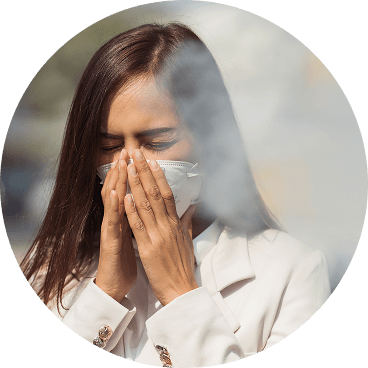
Exposure to wildfire smoke can worsen asthma, trigger heart issues, and lead to ER visits.
Indoor air can hold more fine particles during wildfire events unless it's properly filtered.
The EPA advises using MERV 13 filters or portable HEPA air cleaners during wildfire smoke events.
Use the live wildfire smoke tracker and upgrade your air filters today to protect your lungs and your home.
Shop Filters For Smoke Protection
Author: Michelle Wan, Brand Manager and Air Quality Writer. https://filterbuy.com/author/michelle-wan/
Reviewed By: David Clark, Licensed HVAC Technician, Filterbuy
Published: July 13, 2026
Updated: July 13, 2026
This page tracks live wildfire and smoke conditions across Minnesota using the AirNow Fire and Smoke Map, which updates throughout the day. Minnesota is currently under a statewide air quality alert tied to wildfire smoke drifting in from Canada, with red category conditions possible in central Minnesota. The Air Quality Index, or AQI, tells you when it is safe to be outside and when to move activities indoors. A Filterbuy MERV 13 air filter in your home's HVAC system is one of the most effective ways to reduce indoor smoke exposure while an alert is active.
Minnesota is under a statewide air quality alert due to wildfire smoke, in effect through 9 a.m. on July 14, 2026, according to the Minnesota Pollution Control Agency.
The Twin Cities metro area and St. Cloud face red AQI conditions, unhealthy for everyone, while southern Minnesota sits in the orange category, unhealthy for sensitive groups.
The Minnesota Pollution Control Agency forecasts 12 to 16 days of wildfire smoke across the state during the 2026 season, driven by dry conditions and active fires in Canada and the western United States.
Wildfire smoke particles, known as PM2.5, drive a larger increase in respiratory hospital visits than PM2.5 from other pollution sources, according to a 2021 study published in Nature Communications.
Running a home HVAC system on a MERV 13 filter in recirculate mode is one of the most effective ways to reduce indoor smoke exposure, according to the CDC and the Minnesota Department of Health.
Minnesota's Arrowhead region borders the same boreal forest that covers Manitoba, Saskatchewan, and Ontario, and Manitoba sits directly north of the state, so smoke from fires there has a short, direct path south.
The AirNow Fire and Smoke Map above updates continuously and is the most current source for fire locations, smoke plumes, and AQI readings near you.
The live map shows three layers of information at once: fire locations, smoke plumes, and the current Air Quality Index for monitors and sensors near you. Flame icons mark reported fire incidents, while glowing circles mark fires detected by satellite. Colored circles represent monitoring stations, and the color follows the same AQI scale used across the guide below. Zoom in on your city or type an address into the map's search bar to see the reading closest to you, since AQI can vary from one side of a metro area to another depending on wind direction and how close a monitor sits to a smoke plume.
Click any colored circle to open a short summary of the current reading, the recommended actions for that AQI level, and whether the trend is improving or worsening. If a Smoke Outlook has been issued for a nearby fire, the map will show an alert box with a link to more detail. For a step-by-step walkthrough of every icon and button on the map, see AirNow's guide to using the Fire and Smoke Map. For a broader look at reading AQI maps generally, see our air quality map by ZIP code guide.
The Minnesota Pollution Control Agency has issued an air quality alert for all of Minnesota, running through 9 a.m. on Monday, July 14, 2026. Heavy ground-level smoke from wildfires in central Canada moved into northwest Minnesota, then continued east across the state. Fine particle levels are expected to reach the red AQI category, unhealthy for everyone, across the Twin Cities metro area, St. Cloud, and Ortonville. Southern Minnesota, including Albert Lea, Marshall, Worthington, Rochester, Winona, and Mankato, sits in the orange category, unhealthy for sensitive groups.
In the red zone, everyone should limit prolonged or heavy outdoor exertion, and sensitive groups should avoid it altogether. In the orange zone, sensitive groups, including children, older adults, and people with asthma, COPD, or heart disease, should limit prolonged or heavy exertion outdoors. Because smoke can shift with wind direction in a matter of hours, check the live map above rather than relying on this summary alone.
The Minnesota Pollution Control Agency is forecasting an active air quality season, with roughly two weeks' worth of days affected by wildfire smoke and additional days affected by unhealthy ozone levels. Warmer, drier conditions across the state and Canada are increasing the odds of both local and long-distance wildfire smoke reaching Minnesota through the summer.
Drought and wildfire risk are closely linked. Dry soil and vegetation act as fuel, and dry conditions raise both the odds a fire starts and the speed at which it spreads. Minnesota is currently listed among the states experiencing severe to exceptional drought, part of a week in which roughly 40 percent of the United States was in drought, according to the National Integrated Drought Information System. Tracking drought conditions alongside the AQI map above gives a fuller picture of how the rest of the season may unfold.
Minnesota's location explains a lot of what shows up on the map above. The Arrowhead region, near the Boundary Waters, borders the same boreal forest that stretches north through Ontario, Manitoba, and Saskatchewan, the kind of dense conifer forest that fuels the largest, longest-burning fires in Canada. Manitoba sits directly north of the state, so when fire activity picks up there, or one province over in Saskatchewan or Ontario, the smoke has a short, direct path south into Minnesota rather than a long drift across the continent.
Distance from a fire is not the whole story. Minnesota Pollution Control Agency forecasters have pointed to a specific mechanism behind many of the state's worst smoke days: a strong cold front moving through the region, which pulls smoke down out of the upper atmosphere and pushes it to ground level. That is why a clear Minnesota morning can turn hazy by afternoon even when nothing has changed at the fire itself hundreds of miles away, and why checking the live map once a day is not enough during an active alert.
The Air Quality Index (AQI) turns raw pollution measurements into a single 0-500 scale, color-coded so you can act on it quickly. Here is what each category means and the action it calls for.
AQI categories and health guidance follow the U.S. EPA's Air Quality Index scale.
Pick one room, ideally a bedroom with an attached bathroom, and keep it stocked with what your household needs to spend extended time there. Close the windows and doors, and run a portable HEPA air cleaner sized for the room. EPA's guide to setting up a clean room walks through choosing the room, sealing it, and running the air cleaner correctly. A Filterbuy MERV 13 filter in your main HVAC system pairs well with this step, since it covers the rest of the house while the clean room covers the one space your family spends the most time in.
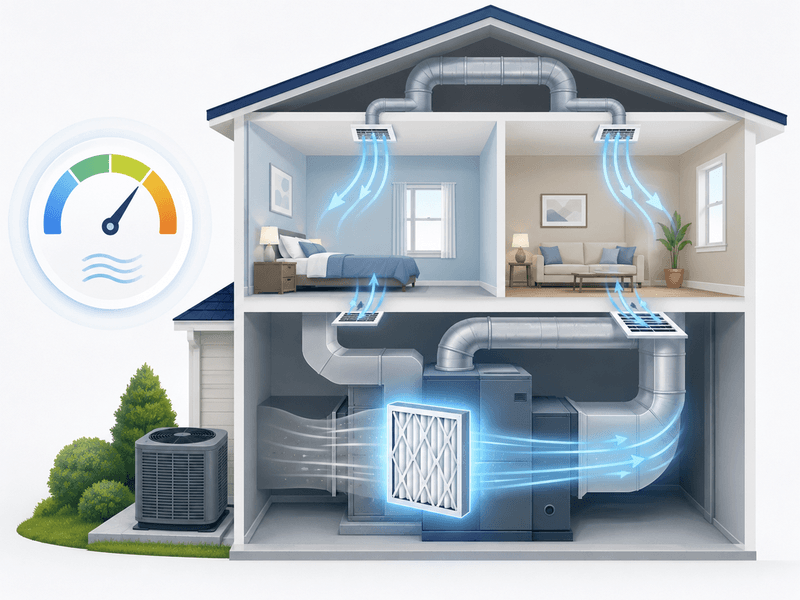
Set your central air conditioning system to recirculate mode and close any fresh-air intake so outdoor smoke is not pulled indoors. CDC guidance on protecting workers and the public from wildfire smoke recommends changing ventilation settings and using more efficient filters, and both the CDC and Minnesota Department of Health point to a MERV 13 air filter or higher if your system can accommodate one, since a higher MERV rating captures a larger share of the fine particles found in wildfire smoke. At Filterbuy, we manufacture our MERV 13 line in our own U.S. factories and test it against real particulate, including wildfire smoke, which is part of why we are comfortable recommending it by name rather than pointing you to a rating and leaving you to guess.
Check your filter monthly during heavy wildfire smoke, since a clogged filter loses efficiency and can strain your HVAC system. A Filterbuy auto-delivery filter subscription takes that task off your plate by shipping a fresh filter on the schedule your household needs.
Coughing, wheezing, chest tightness, or shortness of breath that does not improve indoors are reasons to contact a healthcare provider. People with asthma, COPD, heart disease, or who are pregnant should follow their action plan and keep rescue medication nearby during an alert.
Sensitive groups are not only the ones a doctor would flag. Pets and outdoor workers breathe the same fine particles without the option of deciding on their own to step inside. The American Veterinary Medical Association recommends keeping pets indoors as much as possible during a smoke event, limiting outdoor time to brief bathroom breaks, and watching for coughing, watery eyes, or unusual fatigue. Birds are especially sensitive and should not be left outside when particulate matter is present. For anyone working outdoors during an alert, OSHA points employers toward monitoring the AQI throughout the shift, scheduling breaks in filtered indoor air, and providing NIOSH-approved respirators once conditions turn unhealthy. The same Filterbuy MERV 13 filter running in your HVAC system also reduces the smoke reaching your pets while they are indoors with you.
Not every Minnesota household has a central HVAC system to upgrade, and the advice above assumes one. If you rent or rely on window units, a portable HEPA air cleaner sized for your room does much of the same job a MERV 13 filter does for a house, and it moves with you if you move. Weatherstripping around windows and doors cuts down on how much smoke seeps into an older apartment, and a rolled towel pressed against the bottom of an exterior door helps in a pinch. If a portable cleaner is not in the budget yet, the box-fan-and-filter setup described in the EPA clean room guide above is a reasonable stand-in until you can get one.
Minnesota families are seeing wildfire smoke reach the state more often, and for more days each summer, than they used to. After manufacturing filters for over a decade and serving more than two million households, we built our MERV 13 line specifically to handle the fine particles that come with that smoke, so a family can keep breathing easier without having to think about it every time an alert goes out.
David Heacock, Founder and CEO of Filterbuy
Source: AirNow: Wildfires and the Fire and Smoke Map.
Source: EPA: Wildland Fires and Smoke.
Source: CDC: Safety Guidelines for Wildfires and Wildfire Smoke.
Source: National Weather Service: Air Quality Forecast Partnership.
Source: American Lung Association: Wildfire Smoke and Lung Health.
Source: NASA Science: How Satellites Track Wildfires and Smoke.
Source: Drought.gov: Minnesota Drought Conditions.
64,897 wildfires burned 8,924,884 acres across the U.S. in 2024.
Both figures topped the five-year and ten-year averages.
Source: National Interagency Fire Center: Wildfires and Acres Statistics.
A 10 microgram-per-cubic-meter rise in wildfire-specific PM2.5 raises respiratory hospitalizations by 1.3 to 10 percent.
The same rise in PM2.5 from non-wildfire sources raises hospitalizations by only 0.67 to 1.3 percent.
Source: Aguilera et al., Nature Communications (2021), via PMC (NIH).
Exposure to heavy wildfire smoke raises the risk of out-of-hospital cardiac arrest by up to 70 percent.
The elevated risk appears across men, women, and multiple age groups.
Source: American Heart Association: Wildfire Smoke and Heart Health Risks.
I have written about Minnesota's air quality for a few summers now, and the pattern that still catches people off guard is timing, not distance. The smoke rarely announces itself locally. It shows up on a clear, sunny afternoon, carried in from a fire burning in another province, and by the time the sky looks hazy, the AQI has often already climbed. My own rule of thumb, the one I would hand to any Minnesota reader, is to treat the live map above the way you would treat a weather radar during storm season, a quick check before you commit to anything outdoors, not a once-a-week glance. Pair that habit with a MERV 13 filter already installed in your HVAC system, and you have covered both halves of the problem, knowing when the air turns and reducing how much of it reaches your family indoors.

Check the live map above for your city's current AQI before planning outdoor time today.
Sign up for MPCA email alerts or download the AirNow app to get notified the moment conditions change near you.
Check the age of your HVAC filter and consider upgrading to a Filterbuy MERV 13 filter ahead of the next smoke event.
Set up Filterbuy auto-delivery so a fresh filter arrives on schedule without you having to remember.
Check the live map at the top of this page for the current reading in your city.
An AQI of 151 or higher falls in the red, unhealthy category, meaning everyone may begin to experience health effects. An AQI of 101 to 150 is orange, unhealthy for sensitive groups such as children, older adults, and people with asthma or heart disease.
MERV 13 or higher is the rating the CDC and Minnesota Department of Health recommend for capturing the fine particles found in wildfire smoke, provided your HVAC system can handle the added airflow resistance.
Smoke events can last anywhere from a few hours to several days, depending on the size of the source fire, wind direction, and weather patterns. The Minnesota Pollution Control Agency forecasts roughly 12 to 16 days of smoke-affected air quality across the 2026 season statewide.
Yes. Smoke can travel hundreds of miles from its source fire, and much of the smoke affecting Minnesota during alerts this season has originated from wildfires burning in central and western Canada. Wisconsin, just to the east, is tracking a similar pattern this summer. See our Milwaukee wildfire and smoke map for a look at how the same Canadian smoke is affecting areas along Lake Michigan.
Yes. Pets breathe the same fine particles people do, and cannot decide on their own to go inside. Keep pets indoors as much as possible during a smoke event, limit outdoor time to brief bathroom breaks, and watch for coughing, watery eyes, or unusual fatigue. Birds are especially sensitive to smoke.
Ready to upgrade your HVAC filter before the next smoke event reaches Minnesota? Shop Filterbuy MERV 13 Air Filters or set up Filterbuy auto-delivery so you are always covered.
AQI (Air Quality Index): A 0-500 scale developed by the EPA that converts pollutant measurements, including PM2.5 and ozone, into a single color-coded number describing how clean or polluted the air is.
PM2.5: Fine particulate matter measuring 2.5 micrometers or smaller in diameter, small enough to travel deep into the lungs. PM2.5 is the primary pollutant of concern in wildfire smoke.
MERV Rating: Minimum Efficiency Reporting Value, a 1 to 16 scale that measures how effectively an air filter captures particles of different sizes. MERV 13 filters capture a high share of fine particles like wildfire smoke.
Air Quality Alert: A notice issued by a state or local agency, such as the Minnesota Pollution Control Agency, when the AQI is forecast to reach an unhealthy level in the orange category or worse.
Smoke Outlook: A short-term forecast issued for specific large wildfires, describing where smoke is expected to travel and how it may affect air quality in nearby communities.
Clean Room: A single room in a home, sealed off from outside air, where a household can spend extended time during a smoke event with the help of a portable air cleaner.
HEPA Filter: High-Efficiency Particulate Air filter, a filter standard capable of capturing at least 99.97 percent of particles 0.3 micrometers in size, commonly used in portable air cleaners.
Boreal Forest: The dense, cold-climate conifer forest that stretches across Canada, including the areas of Ontario, Manitoba, and Saskatchewan that border northern Minnesota. This forest type is prone to large, long-burning wildfires.
Long-Range Transport: The movement of wildfire smoke hundreds or thousands of miles from the fire that produced it, carried by upper-atmosphere winds and often pulled to ground level by a passing cold front.
Subscribe to wildfire smoke alerts for Minnesota to get a heads-up before the next event reaches your area.