
Georgia Live Wildfire Smoke Map
Get Alerts For Wildfires In Your Area
The moment a wildfire starts near you, you'll get an instant alert and simple tips to reduce your smoke exposure.
What's In The Smoke
30xSmaller than a human hair
Fine enough to reach deep into the lungs. A MERV 13 is built to capture it.
How Far It Travels


It Doesn't Stay Local
Smoke rides the wind far downwind — you can get smoky air with no fire nearby.
What To Do During A Smoke Event
Simple steps to reduce indoor exposure.
- Stay In, Close UpShut windows and doors to keep smoke out.
- Set Fan To "On"Keeps air cycling through your filter, not just when heating or cooling.
- Recirculate AirSwitch off fresh-air intake so you're not pulling smoke in.
- Run A MERV 13Built to capture the fine PM2.5 in smoke.
- Add A PurifierExtra filtration for the room you use most.
- Wear an N95 if OutsideFits snug to block fine particles — a cloth mask won't.


The Best Air Filter For Wildfire Smoke
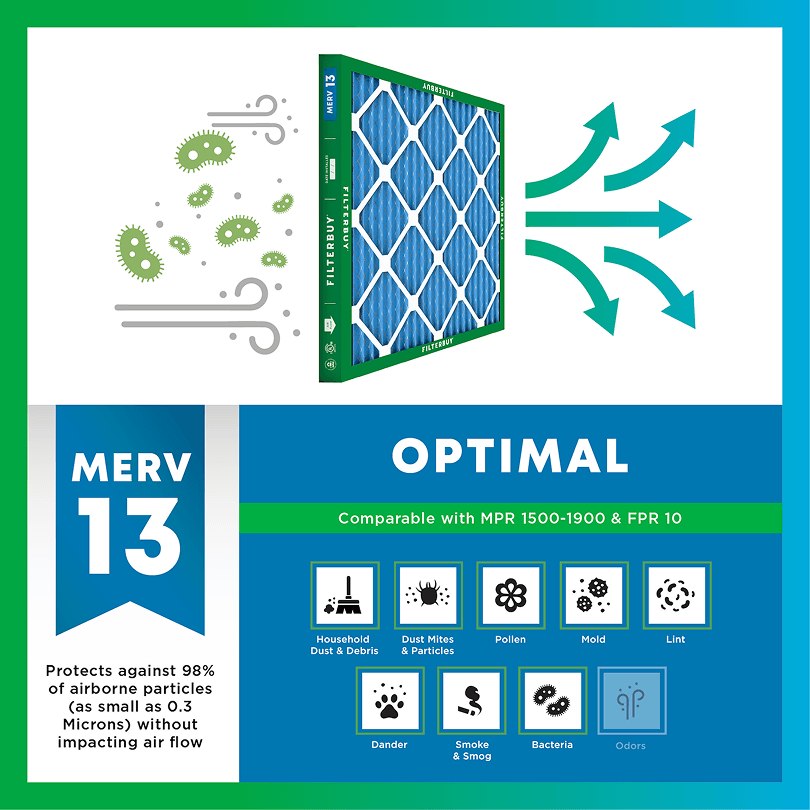
During smoke events, the EPA recommends upgrading to a MERV 13 filter — or the highest-rated filter your system can handle — to help reduce the fine particles smoke brings indoors. MERV 13 is the level most home HVAC systems can run while still capturing PM2.5, the fine particulate that makes up the bulk of wildfire smoke.
- Captures PM2.5 particles
- Blocks ash, soot, and smoke odor
- Keeps your indoor air safe—even when the outdoor air is dangerous
- Meets the EPA's recommended rating for filtering fine wildfire smoke particles.

Wildfire Smoke FAQs
Facts About Wildfires
Over 70,000 wildfires burn in the U.S. every year.
Wildfire smoke can travel 1,000+ miles, affecting states that aren't even near the blaze.
Exposure to wildfire smoke can worsen asthma, trigger heart issues, and lead to ER visits.
Indoor air can hold more fine particles during wildfire events unless it's properly filtered.
The EPA advises using MERV 13 filters or portable HEPA air cleaners during wildfire smoke events.
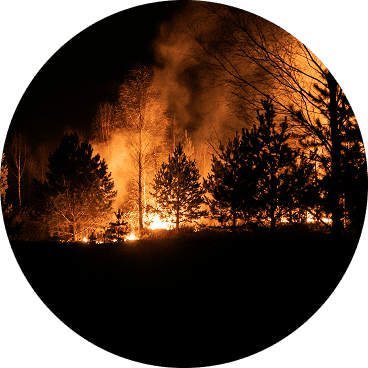
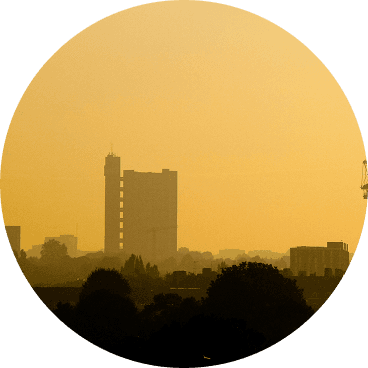
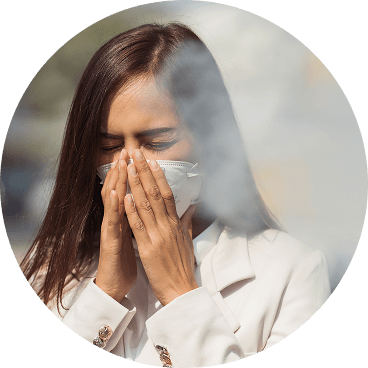
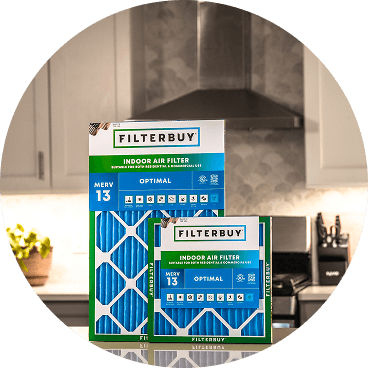
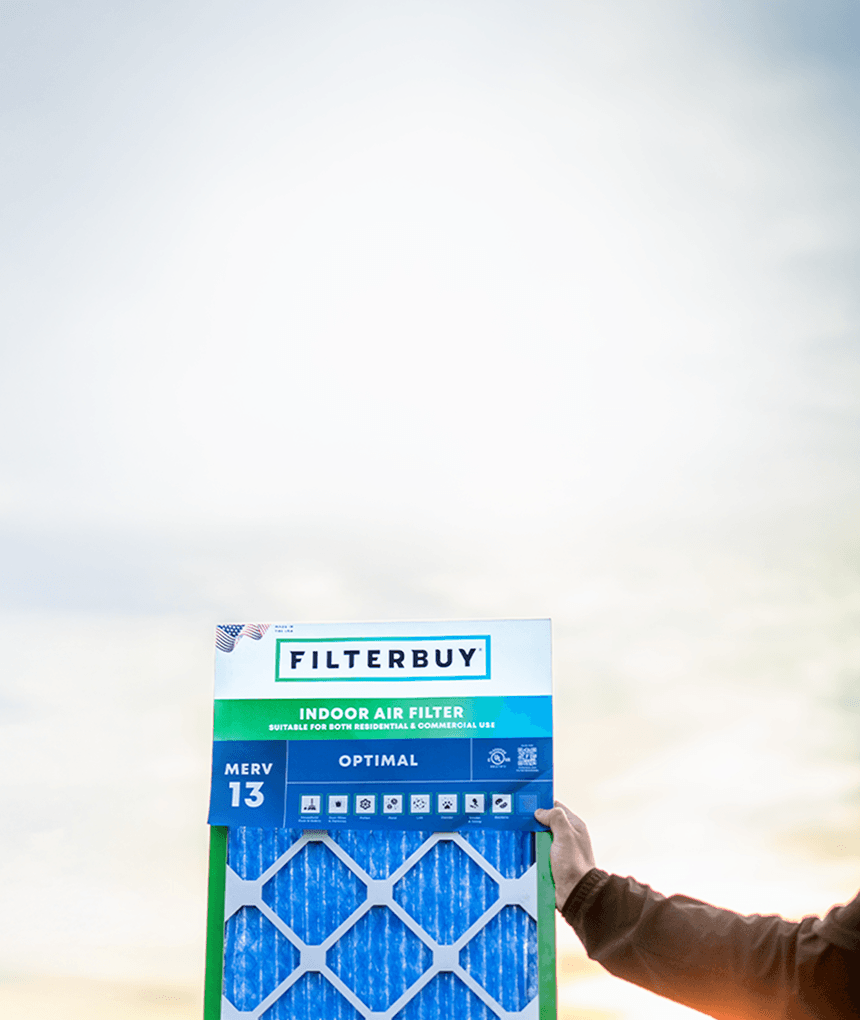
Don't Wait Until The Smoke's Inside.
Use the live wildfire smoke tracker and upgrade your air filters today to protect your lungs and your home.
Shop Filters For Smoke Protection
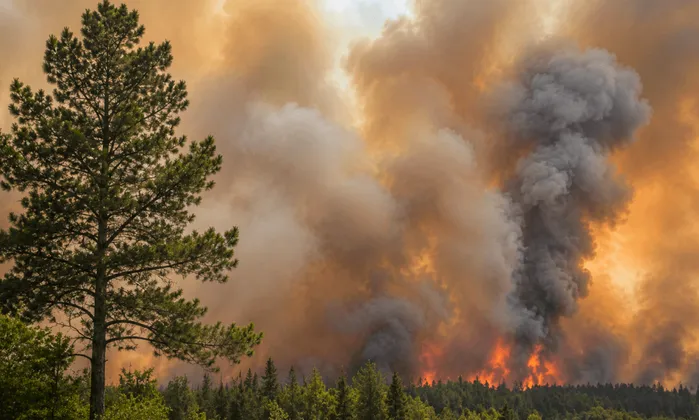
Current Live Wildfire and Smoke Map Georgia Today From Filterbuy.com
Two large wildfires are still burning in south Georgia: the Pineland Road Fire in Clinch and Echols Counties at 32,575 acres, and the Highway 82 Fire in Brantley County at 22,420 acres. When the wind turns north, smoke from both reaches the Atlanta metro within hours. The live map above shows where that smoke is right now. The rest of this page is what we’d tell our own families about keeping it outside the house.
TL;DR Quick Answers
Where can I find a live Georgia wildfire and smoke map?
The live map at the top of this page is updated continuously and shows active Georgia fire perimeters alongside the PM2.5 smoke plume. AirNow and NASA FIRMS are reliable second sources.
What is the best air filter for wildfire smoke?
A MERV 13 HVAC filter is the EPA Indoor AirPlus program’s recommended residential minimum for wildfire smoke protection. Pair it with a true HEPA portable cleaner in any bedroom where someone has asthma, COPD, or heart disease.
How do I protect my home from wildfire smoke?
Close windows and exterior doors, upgrade to a MERV 13 filter, set the HVAC fan to On, close the fresh-air intake damper, run a HEPA in the most-used room, and skip candles, gas stoves, and fireplaces while smoke is heavy outside.
Is wildfire smoke dangerous indoors?
Yes. PM2.5 in wildfire smoke is small enough to infiltrate homes through HVAC systems and gaps around windows and doors. Upgraded filtration paired with a sealed envelope brings indoor concentrations down substantially.
Top Takeaways
Two large fires are still active in south Georgia: the Pineland Road Fire in Clinch and Echols Counties, and the Highway 82 Fire in Brantley County.
Wildfire smoke is mostly PM2.5, which is fine enough to slip past standard MERV 8 filters and infiltrate the inside of your house through HVAC ductwork and small gaps.
EPA’s Indoor AirPlus program names MERV 13 as the residential minimum filter rating during a wildfire smoke event.
A true HEPA portable cleaner captures 99.97% of particles 0.3 microns and bigger, and works best as a second line of defense alongside an upgraded HVAC filter.
Many Georgia homeowners' policies cover smoke damage, but coverage varies. Document what happens and call your carrier early.
Wildfire smoke seasons in the Southeast aren’t going away. The filter upgrade you make now will earn its keep across many seasons ahead.
Today’s Wildfire Picture in Georgia
Both fires started from human causes. A spark from a welding project ignited Pineland Road. Containment on Pineland Road now sits at 66%, and Highway 82 is at 90% per the latest Georgia Forestry Commission report. Governor Kemp declared a state of emergency on April 22, 2026, and FEMA approved Fire Management Assistance Grants for both responses. Crews are finishing patrol and suppression repair work, but neither fire is fully out. Drought is the reason. South Georgia is still dry enough that one careless ember can start the cycle over.
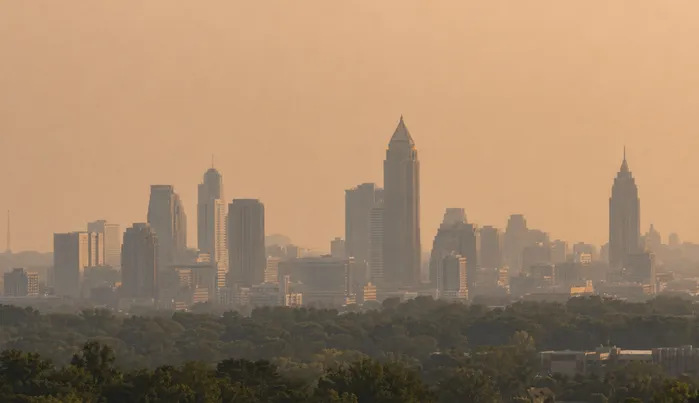
How That Smoke Reaches You
Wildfire smoke is mostly PM2.5. That’s particulate matter so fine it slips around HVAC ductwork and past window screens, then settles in your lungs. For background on how fire behaves and how smoke moves through the atmosphere, the Wikipedia article on wildfire is a useful primer. What matters in Georgia right now is more direct. Smoke from south Georgia reaches Atlanta whenever the wind turns north, and that has already happened more than once during this event. For the live AQI at your specific address, our live Georgia AQI map by city and county runs alongside the fire and smoke map at the top of this page.
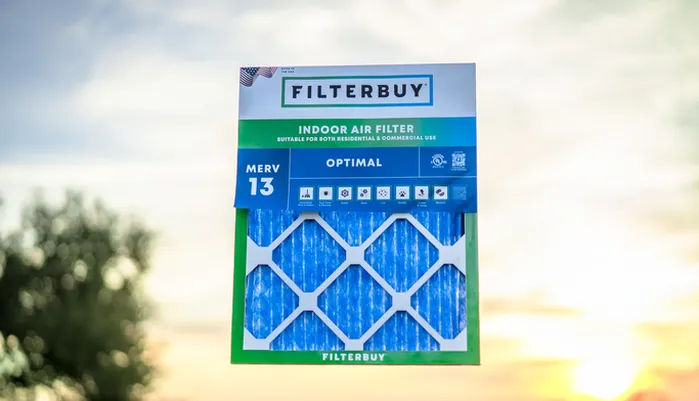
What MERV Rating Filters Wildfire Smoke
EPA’s Indoor AirPlus program names MERV 13 as the practical minimum filter rating for wildfire smoke protection in a residential HVAC system. After manufacturing filters for over a decade, we see the same pattern every fire season. Homeowners running MERV 8 notice the HVAC working overtime while the indoor air still smells like a campfire, because MERV 8 was never built to catch the fine PM2.5 droplets that make wildfire smoke what it is. MERV 13 catches a meaningful share of those droplets. MERV 16 catches more, though most residential blowers can’t push air through a MERV 16 without straining the system. Check your system specs or call a local HVAC technician before going above MERV 13.
HEPA Filtration for Bedrooms and Sensitive Family Members
True HEPA cleaners pull 99.97% of particles 0.3 microns and bigger out of whatever room they’re running in. Think of them as the second line of defense behind your HVAC filter, not a replacement for it. They earn their keep in bedrooms where kids sleep, or someone in the family lives with asthma, COPD, or heart trouble. Size the unit to the room using the CADR rating printed on the box.
Sealing the House Against Smoke
Close windows and exterior doors when the smoke is heavy outside. Flip your HVAC thermostat fan from Auto to On so the upgraded filter keeps cleaning the air even when the system isn’t actively heating or cooling. Close any fresh-air intake damper on the return. Hold off on candles, the fireplace, and gas-stove cooking on high while the air is bad. Pick one room as your clean room (a bedroom usually works best), run the portable HEPA in there, and treat it as the safe-air space for anyone in the family who needs it most.
A Word on Home Insurance
Most standard Georgia homeowners' policies cover smoke damage from a wildfire, though the specifics depend on your carrier. If smoke gets into your house, document what happened. That means dated photos, HVAC service records, the filters you replaced, and any cleaning receipts. Call your insurer while the event is happening, not after. We aren’t insurance professionals and won’t pretend to be. Read your policy. Talk to your agent. They know what your coverage actually includes.
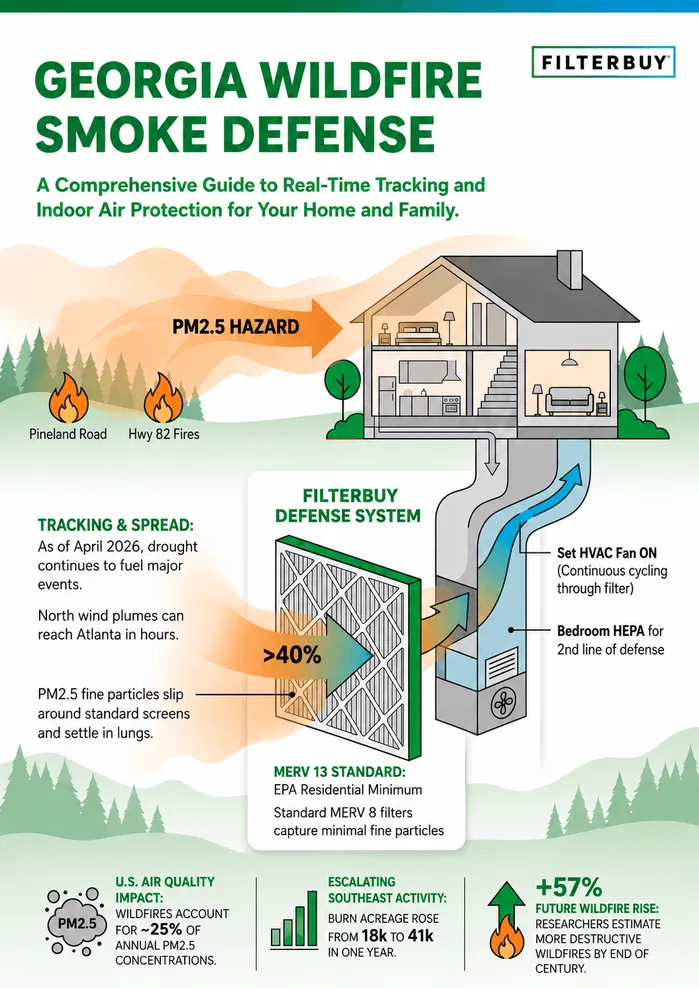
Every fire season, we take the same call from a Filterbuy customer. They’ve had the HVAC fan on continuously for two weeks, and the air inside still smells like a campfire. That’s almost always a filter problem, not a fan problem. MERV 8 was never built to catch PM2.5 particles. If your system can handle a MERV 13, switch to one, check it every two weeks while smoke is in the air, and put a HEPA unit in any bedroom where someone has asthma or heart trouble. People feel the change the same day they make it.
— Filterbuy Team
7 Essential Resources
These are the sources we check ourselves during a Georgia smoke event. All seven were live and current when we built this page.
1. AirNow Fire and Smoke Map
EPA and U.S. Forest Service partner site. Real-time PM2.5 readings layered with active fire perimeters and smoke plumes. The fastest single-screen check during a smoke event.
Source: https://fire.airnow.gov/
2. Georgia Forestry Commission Current Wildfire Information
Daily situation updates from the state agency leading wildfire response in Georgia. Includes current acreage and containment figures for Pineland Road and Highway 82.
Source: https://gatrees.org/current-wildfire-information-and-resources/
3. National Interagency Fire Center National Fire News
Federal wildfire activity dashboard with preparedness levels, new fire counts, and large uncontained fires nationwide. Helpful for placing the Georgia situation inside the national picture and seeing how response resources are being moved around.
Source: https://www.nifc.gov/fire-information/nfn
4. NASA FIRMS US and Canada Fire Map
Satellite-derived fire detections from MODIS and VIIRS sensors, refreshed multiple times daily. Gives you independent fire-location confirmation from space, separate from any ground-reported data.
Source: https://firms.modaps.eosdis.nasa.gov/usfs/map/
5. CDC Wildfire Safety Guidance
CDC public-health guidance for wildfire smoke events. Includes specific protections for children, pregnant individuals, older adults, and people living with chronic conditions.
Source: https://www.cdc.gov/wildfires/safety/how-to-safely-stay-safe-during-a-wildfire.html
6. EPA Indoor AirPlus and Wildfires
EPA guidance on indoor air protection during wildfire smoke. This is the page that names MERV 13 as the residential minimum and walks through envelope-sealing and HVAC operating settings room by room.
Source: https://www.epa.gov/indoorairplus/indoor-airplus-and-wildfires
7. Georgia Department of Public Health Wildfire Smoke Advisory
The Georgia Department of Public Health issued an advisory for the current wildfire event. Specific precautions for people with respiratory conditions, young children, pregnant individuals, and older adults.
Source: https://dph.georgia.gov/press-releases/2026-04-22/smoke-wildfires-spreads-georgia
3 Supporting Statistics
Three numbers that explain why this isn’t only a Georgia problem and why this won’t be the last fire season we plan around.
1. Wildfires Drive a Quarter of US PM2.5 Exposure
Wildfires now account for roughly 25% of all PM2.5 concentrations in U.S. air, and at least one wildfire smoke day reaches an estimated 95% of the U.S. population every year. That means almost everyone, almost every year.
Source: https://pmc.ncbi.nlm.nih.gov/articles/PMC11962561/
2. Southeast Wildfire Activity Has Escalated Sharply
USDA Forest Service tracking shows the Southern Region went from 23 large fires burning 18,000 acres at this point in 2023 to 28 large fires burning 41,000 acres at the same point in 2024. The Southern Area entered Preparedness Level 4 in March 2025, which is the second-highest national level for wildland fire activity.
3. Destructive Wildfires Could Rise 57% by Century’s End
Researchers estimate destructive wildfires could rise by up to 57% by the end of the century if greenhouse gas emissions stay unchecked. For Georgia and the Southeast, that means more smoke seasons ahead, not fewer.
Source: https://community.aafa.org/blog/climate-change-the-effect-on-people-with-allergies-and-asthma
Final Thoughts and Opinion
Air quality is the kind of thing most homeowners never think about until they have to. Between South Georgia and Atlanta this week, a lot of households are thinking about it. The reassuring part is that the moves that matter most are things any homeowner can finish on a Saturday afternoon without a contractor: a MERV 13 in the HVAC, the fan flipped to On, the windows kept shut while smoke is heavy, and a HEPA cleaner running in the bedroom where someone needs it. None of that is complicated. It just has to actually happen, and you’re the one who decides whether it does.
Next Steps
Check the live map above a few times a day while smoke is in the air. It’s the fastest way to see which direction the plume is heading.
Turn on AirNow’s AQI alerts on your phone so it tells you what the air looks like before you open the door.
Swap your HVAC filter for a MERV 13 if your system can take one, and inspect it every two weeks during smoke season instead of every quarter.
Put a true HEPA portable cleaner in the bedroom of anyone in the family who has asthma, COPD, heart disease, or another chronic respiratory condition.
Frequently Asked Questions
Change Your Filter Before the Next Plumes
Pull your HVAC filter out and look at the date on it. If it has been in there longer than three months, or if it’s a MERV 8, switch to a MERV 13 before the next plume reaches your block. Filterbuy makes MERV 13 filters in every standard residential size, plus custom dimensions, and we ship to Georgia. Change your filter. Little effort, big impact on the air your family is breathing.