
Tip: Ensure you buy the exact air filter size for your system. Certain brands have precise dimensions that only fit their specific models. See related filters
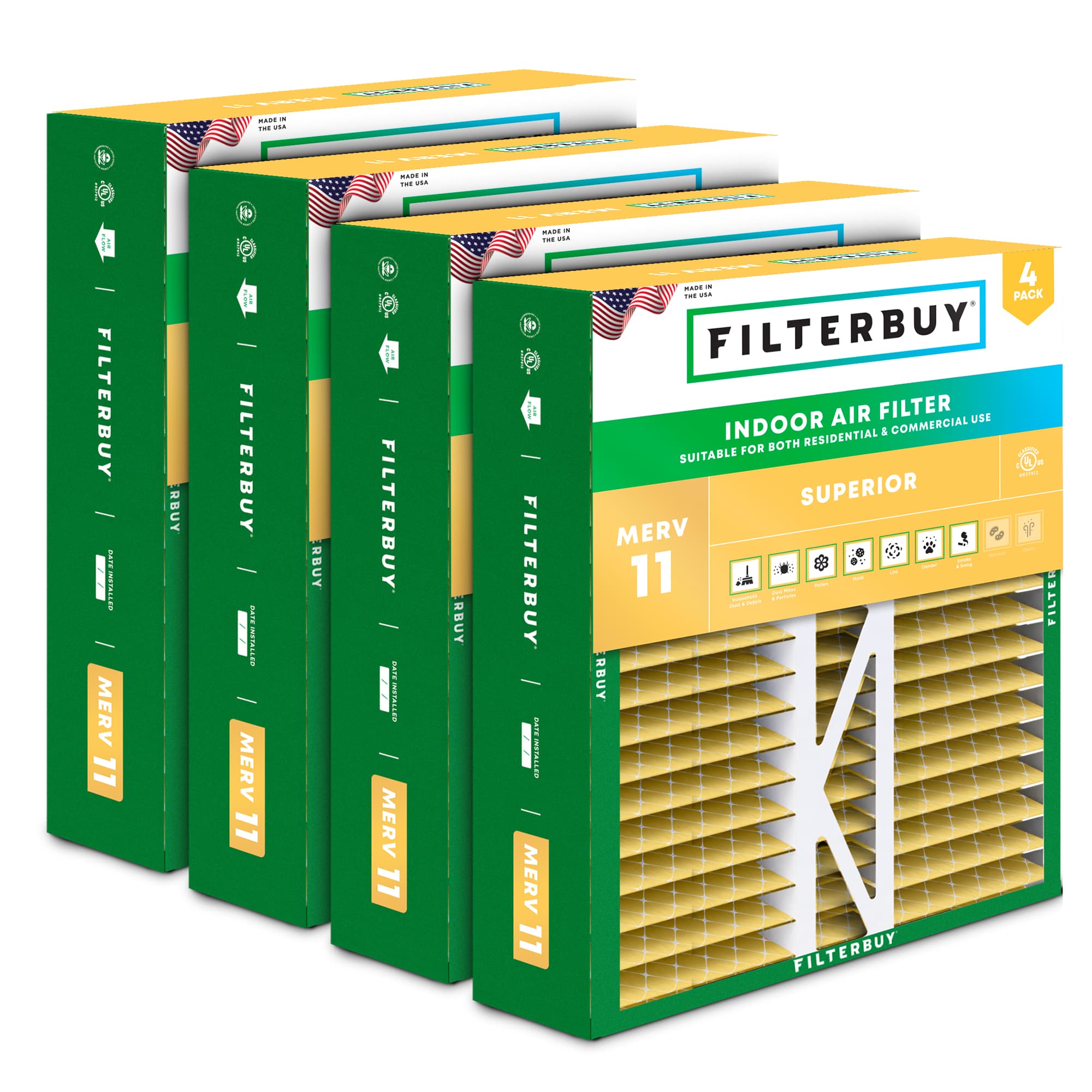
BDP 16X22X5 MERV 11 Replacement Filter
Actual Size: 15.38x21.88x5.25
 Free Delivery
  Factory-Direct Low Prices, Made in the USA
 Hassle-Free Returns & Free Exchanges
RESIDENTIAL AND/OR COMMERCIAL USE
Change Every 3 Months
Tip: Ensure you buy the exact air filter size for your system. Certain brands have precise dimensions that only fit their specific models. See related filters
BDP 16X22X5 MERV 11 Replacement Filter
Actual Size: 15.38x21.88x5.25
Free Delivery Factory-Direct Low Prices, Made in the USAHassle-Free Returns & Free ExchangesRESIDENTIAL AND/OR COMMERCIAL USE
Change Every 3 Months
Tip: Ensure you buy the exact air filter size for your system. Certain brands have precise dimensions that only fit their specific models. See related filters
BDP 16X22X5 MERV 11 Replacement Filter
Actual Size: 15.38x21.88x5.25
Free Delivery Factory-Direct Low Prices, Made in the USAHassle-Free Returns & Free ExchangesRESIDENTIAL AND/OR COMMERCIAL USE
Change Every 3 Months
About
- This is a list 16X22X5 MERV 11 air filter replacement for your furnace, air conditioner, heat pump, or HVAC system
- Actual air filter size: 15.38x21.88x5.25
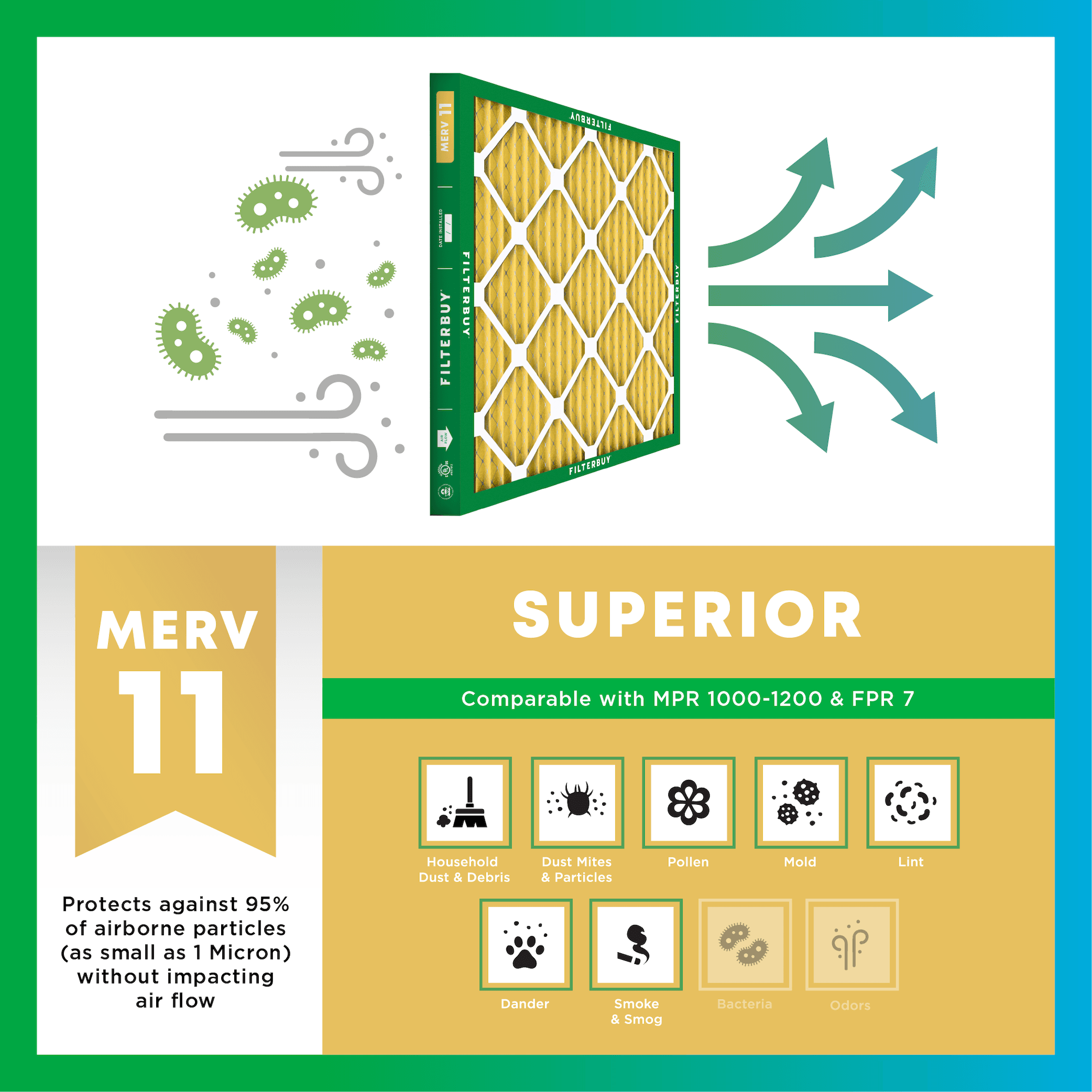
- MERV 11 synthetic media (comparable with MPR 1000/1200 and FPR 7) offers superior protection from dust, pollen, pet dander, mold, smog and more by trapping 95% of airborne particles without impacting air flow
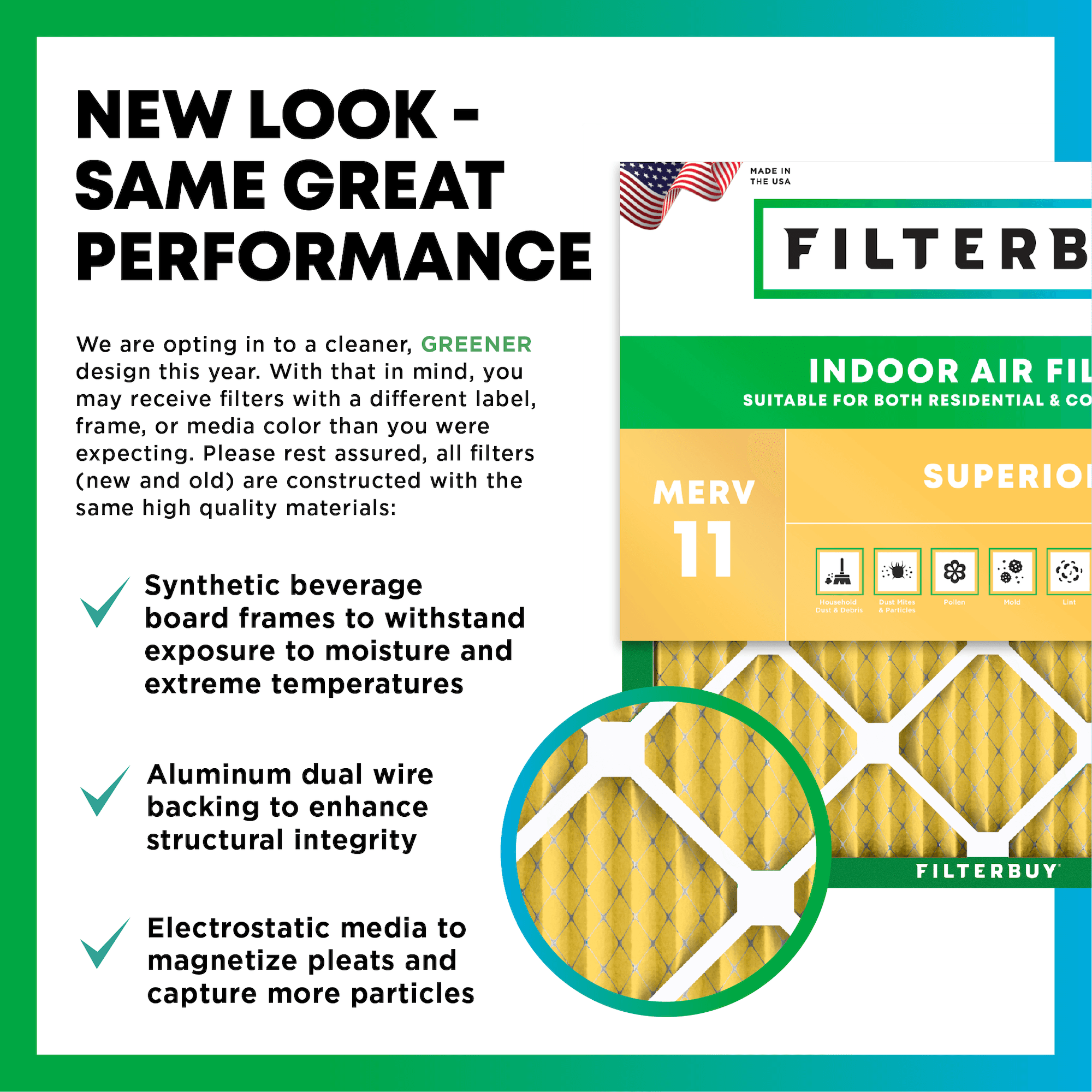
- High-quality construction means electrostatically charged pleated filter media, reinforced wire backing for structural integrity, and a durable frame to resist heat and humidity
- Built to last 3 months. 300% longer than fiberglass models
- 100% manufactured in the United States and designed with recyclable materials
- Learn more about 16X22X5 Air Filters
Top-Rated Filters. American Made. Delivered Free.
At Filterbuy, we don't cut corners—we craft high-quality air filters right here in the USA and ship them to your doorstep for free. No delays, no gimmicks—just clean air, made easy. With thousands of five-star reviews and filters built for real life & every HVAC system, it's no wonder why over 4 million families trust Filterbuy.

Proudly Made In The USA

Fast, Free Shipping on Every Order

Premium Materials That Go The Distance

85,000+ 5-Star Reviews From Happy Customers

Save Up to 70% Per Filter with Packs
Things to Know About Filter Sizes

Nominal Size
- The rounded size printed on your filter or HVAC unit (e.g., 16X22X5).
- Usually whole numbers to make identifying and ordering easier.
- A label for compatibility—not the exact measurement.

Actual Size
- The true, trimmed dimensions of the filter (e.g., 15.38x21.88x5.25 inches).
- Filters are manufactured slightly smaller so they slide into the filter slot without forcing.
- If you don't know your nominal size, measure your filter to get the actual size, then round up to find the nominal size to search on our site.

Why the difference?
- Nominal sizes simplify shopping and standardize categories.
- Actual sizes ensure the filter fits properly inside your HVAC's filter rack.
How To Find Your Nominal Size When You Don't Know It


Measure length × width × depth with a tape measure to find the actual size.

Round up each dimension to the nearest whole number to get the nominal size. Example: 15.38x21.88x5.25 in → 16X22X5 nominal.

Search by nominal size on our site for the best fit.

Why Getting the Right Size Matters
- Too small? Air can bypass the filter, reducing air quality and efficiency.
- Too big? It won't fit—risking bent frames and airflow issues.
- Just right? You get maximum performance, better filtration, and cleaner air.

Why Choose a 5″ filter

5″ filters give you maximum filtration with minimal maintenance — lasting up to 12 months while handling higher MERV ratings without restricting airflow.
Sizing note:
- Requires a 5″ cabinet or system.
- Actual thickness varies by brand (~4¾″–5¼″), so check your model for the best fit.

Free Exchange Policy
If the filter you buy doesn't fit, we'll send you a better size.

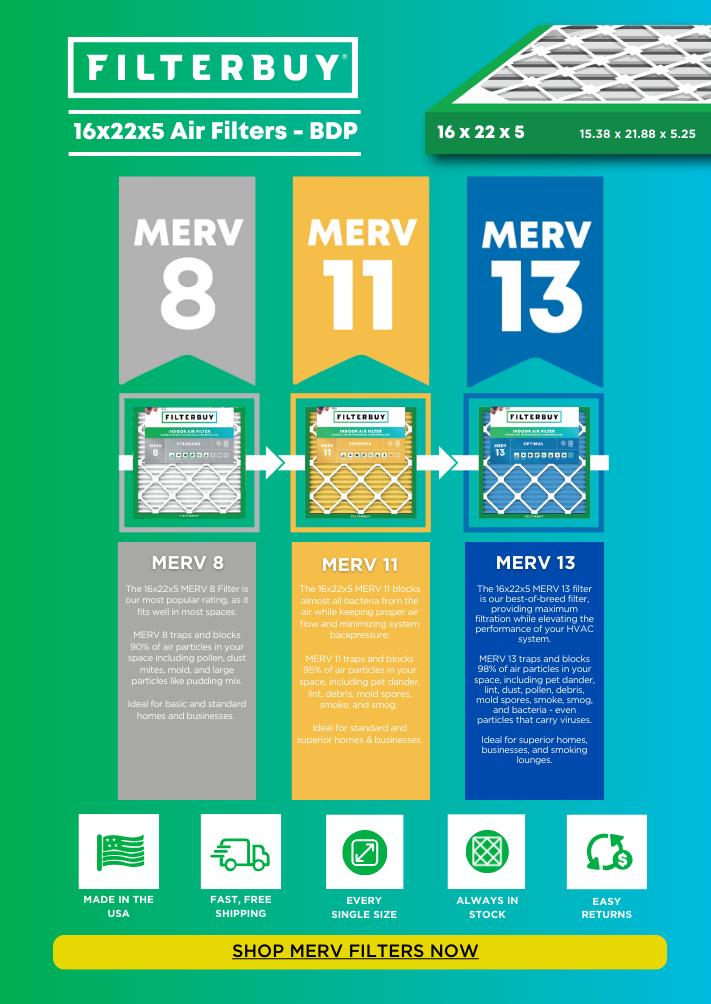
What's a MERV Rating?
MERV stands for Minimum Efficiency Reporting Value—but don't let the technical name fool you. It's just a way to rate how well an air filter traps stuff like dust, pollen, pet dander, and smoke. The higher the MERV number, the more particles it catches—and the cleaner your air will be.

Merv 8
Comparable to:FPR: 4-7
MPR: 600-1000
 Dust & Debris
 Dust Mites & Particles
 Pollen
 Mold
Mold Lint
Lint Dander
Merv 11
Comparable to:FPR: 6-9
MPR: 1200-1550
Dust & DebrisDust Mites & ParticlesPollenMoldLintDander Smoke & Smog
Merv 13
Comparable to:FPR: 10
MPR: 1900-2800
Dust & DebrisDust Mites & ParticlesPollenMoldLintDanderSmoke & Smog Bacteria
MERV 8
Comparable to:FPR: 4-7MPR: 600-1000


MERV 11
Comparable to:FPR: 6-9MPR: 1200-1550

MERV 13
Comparable to:FPR: 10MPR: 1900-2800
What Makes Our Filters Last 90 Days? Quality, From the Inside Out
We build every Filterbuy filter to deliver reliable 90-day performance—thanks to smart design and premium materials that do the heavy lifting. Here's what makes the difference:
Pleated Design
More pleats = more surface area to capture dust and debris, keeping your air cleaner longer.
Electrostatically Charged Media
Pleats are magnetized to attract and trap microscopic particles—like pet dander, pollen, and smoke.
Synthetic Beverage Board Frame
Engineered to resist warping in extreme temperatures and high humidity.

Aluminum Dual Wire Backing
A layer of metal reinforcement keeps pleats evenly spaced and structurally sound—no sagging, even at high airflow.
Made in the USA
Assembled with care. Built to perform. Ships fast, free, and reliably from our U.S. facilities.
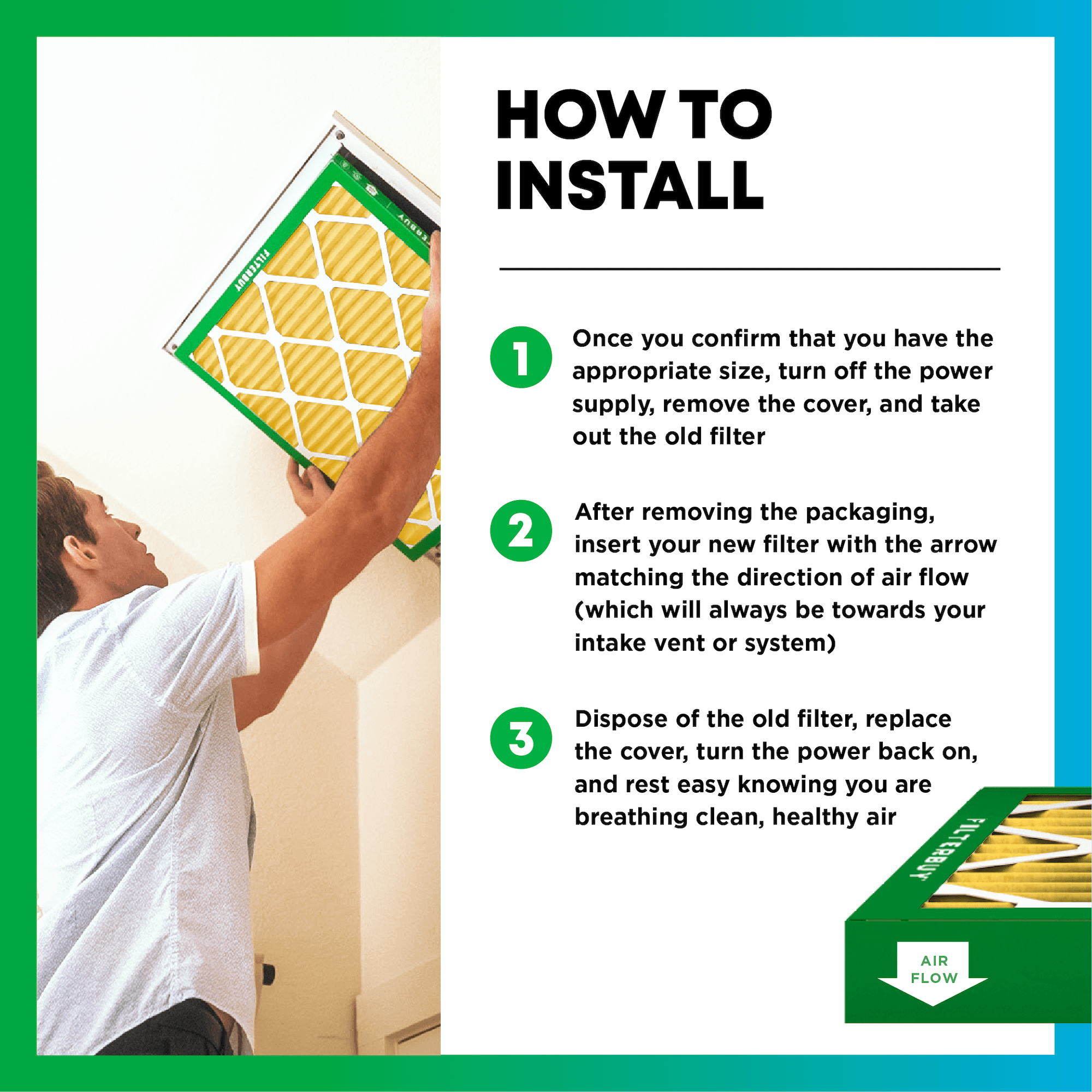
How to Install Your Filter in 4 Simple Steps

Turn Off Your HVAC SystemSafety first.

Remove The Old FilterLook for the airflow arrow and make note of the direction.

Slide In Your New FilterArrow should point toward the system (same direction as before).

Turn Your System Back OnAnd enjoy the fresh, clean air.

Never forget to replace your air filter again.
- Save 5% on every order
- Choose Your Delivery Schedule
- Edit, Skip, or Cancel Anytime.
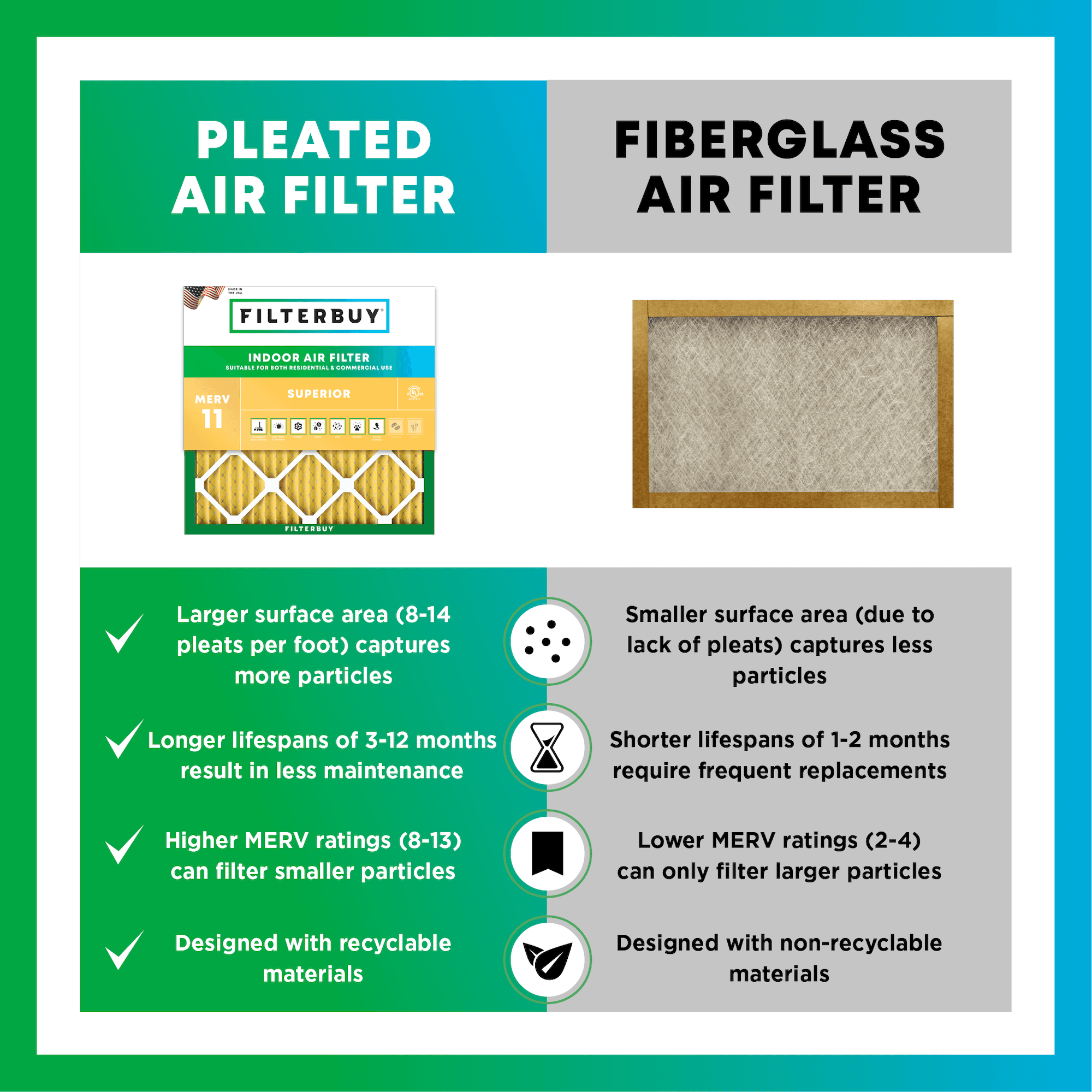
Pleated Filters vs. Fiberglass—What's the Difference?
Not all air filters are created equal. Pleated filters don't just last longer—they actually clean your air better. Here's how they stack up:

Pleated Filters
Efficiency:
High (MERV 8–13) – Traps more particles
Lifespan:
90 days – Long-lasting performance
Air Quality:
Excellent – Cleaner, healthier air
Materials:
Recyclable and durable

Fiberglass Filters
Efficiency:
Low (MERV 4 or less) – Misses small stuff
Lifespan:
30 days or less – Replace often
Air Quality:
Minimal – Basic protection only
Materials:
Thin, flimsy, and not recyclable
Pleated filters are a no-brainer—more protection, less hassle, and better air for your home.
How Often Should You Change Your Filter?
Changing your filter on time keeps your HVAC system running efficiently—and helps protect your lungs from dust, allergens, and airborne irritants. Here's how often to swap it out based on your needs:

Every 90 Days
Standard ScheduleFor most homes without pets or special air quality concerns. Great for general upkeep and energy efficiency.

Every 60 Days
If You Have Pets or AllergiesShedding fur, dander, and allergy triggers can build up fast. Changing your filter every two months helps keep the air fresher and symptoms at bay.

Every 30 Days
If You Have Respiratory Concerns or Live in Smog/Wildfire ZonesFor households affected by smoke, pollution, or respiratory conditions, monthly changes ensure maximum protection.

Want to stay on track? Set a reminder—or skip the stress with auto-delivery so fresh filters show up right when you need them.
Don't Just Take Our Word For It...
Got More Questions? We've Got Answers.
Product Specifications
| Nominal Size | 16X22X5 |
| Actual Size | 15.38 x 21.88 x 5.25 inches |
| Filter Type | Pleated |
| Media | Electrostatically Charged |
| Frame | Beverage Board |
| MERV Ratings Available | 8, 11, 13 |
| Lifespan | Up to 12 Months |
| Origin | Made in USA |
What Does MERV 11 Do? 16x22x5 BDP Air Filter Guide
Your BDP system ran its last cycle not long ago. The dander your dog shed this morning, the mold spore that drifted in when you opened the back door, the exhaust particles your car pulled into the garage — they’re still circulating.
What catches them, or doesn’t, comes down to one number printed on the frame of your filter.
A MERV 11 filter targets a different particle category entirely from MERV 8. MERV 8 catches what you can roughly see: pollen, carpet fibers, lint. MERV 11 catches what settles in airways — pet dander, mold spores, dust mite debris, the auto emission particles that enter through every gap in your home’s envelope. These float at a child’s face height.
Your HVAC recirculates them dozens of times a day, and a lower-rated filter sends them straight through.
The 16x22x5 slot gives you something most homeowners never fully use: five inches of filtration depth. That extra media means stronger particle capture without restricting airflow, and a filter lifespan that standard one-inch filters can’t approach.
TL;DR Quick Answers
MERV 11 16x22x5 BDP Air Filter
The Filterbuy 16x22x5 MERV 11 air filter is a direct replacement for BDP systems and compatible units from Amana, Goodman, Coleman, Day & Night, Payne, and York using the same cabinet. It captures 95% of airborne particles in the 1–3 micron range — including pet dander, mold spores, and dust mite debris — at an actual size of 15.38" x 21.88" x 5.25". The 5-inch depth supports up to 12 months of filtration per replacement. Compatible BDP part numbers: 9183940, CMF1620, MU1620, M0-1056, and CNC1620.
Top Takeaways
MERV 11 captures 95% of airborne particles in the 1–3 micron range, including pet dander, mold spores, dust mite debris, and auto emissions. That’s the particle category driving most household allergy and asthma responses.
The actual size of a 16x22x5 BDP air filter is 15.38″ x 21.88″ x 5.25″. Always verify actual dimensions before ordering. The nominal size is a rounded shorthand.
The 5-inch depth is what makes this slot capable of MERV 11 performance without airflow restriction. That translates to a filter lifespan of up to 12 months.
MERV 11 is the right choice for most homes. Reserve MERV 13 for households with smokers, immunocompromised members, or exposure to heavy smoke and pollution.
Compatible BDP part numbers: 9183940, CMF1620, MU1620, M0-1056, CNC1620. Also fits Amana, Goodman, Coleman, Day & Night, Five Seasons, Payne, and York systems using the same cabinet.
A clogged filter makes your system work harder and clean less. Replacing on schedule protects both your family’s health and your HVAC’s efficiency.
Understanding MERV Ratings
MERV stands for Minimum Efficiency Reporting Value, a standardized rating scale developed by ASHRAE (the American Society of Heating, Refrigerating and Air-Conditioning Engineers) that measures how effectively an air filter captures particles between 0.3 and 10 microns. The scale runs from 1 to 16 for residential and commercial filters, with higher numbers capturing finer particles at greater efficiency rates.
Most builders install MERV 8 filters by default. That covers large particles well enough: pollen, carpet fibers, lint. What MERV 8 wasn’t built to catch is the finer category, and that’s where the health effects live. Pet dander floating near the floor, mold spores traveling from a bathroom ceiling to a bedroom, auto emission particles entering through every gap in your home’s envelope — these fall between 1 and 3 microns. MERV 11 is built to catch them.
MERV Efficiency at a Glance
MERV 8: captures ~90% of particles 3–10 microns (dust, pollen, lint, basic mold spores)
MERV 11: captures ~95% of particles 1–3 microns (pet dander, mold spores, auto emissions, Legionella)
MERV 13: captures ~85–98% of particles 0.3–1 micron (smoke, bacteria, some virus carriers)
Per EPA guidance, MERV ratings are the most reliable way to compare filters across brands, more useful than proprietary scales like MPR (3M) or FPR (Home Depot) because they’re standardized by an independent testing method. For a deeper look at how filters are classified, Wikipedia’s overview of
air filter efficiency standards provide a solid technical foundation.
What a MERV 11 Filter Actually Captures
Moving from MERV 8 to MERV 11 closes a real gap: you go from filtering visible debris to filtering the particles small enough to reach your lungs and stay there. Here’s what changes:
Particles MERV 11 captures that MERV 8 misses or under-captures:
Pet dander (1–10 microns): a primary trigger for allergies and asthma, shed constantly by cats, dogs, and other animals
Mold spores (3–100 microns): fully captured at MERV 11, though lower ratings allow the smallest spores through
Dust mite debris and fecal matter (0.5–50 microns): a major allergen source in bedding, upholstery, and carpet
Auto emissions and smog particles (1–10 microns): enter homes through infiltration and recirculate through HVAC systems
Legionella bacteria (1–2 microns): captured effectively at MERV 11 and above
Lead dust particles (0.5–5 microns): particularly relevant in older homes
What MERV 11 does not reliably capture:
Tobacco smoke particles (0.01–1 micron): MERV 13 recommended for homes with smokers
Most virus carriers below 1 micron: MERV 13 or higher recommended for these applications
For homes with pets, allergy sufferers, young children, or anyone working toward genuine daily air quality improvement, MERV 11 covers the particle range that matters most.
MERV 11 vs. MERV 13: Which Is Right for Your BDP System?
This is the question we hear most from customers upgrading their 16x22x5 BDP filter, and the answer is direct: MERV 11 is right for most homes.
MERV 13 filters capture finer particles, but they create more resistance in your airflow to do it. Your blower motor has to push harder against a denser media. In systems designed for MERV 8 or MERV 11, which covers most BDP, Goodman, Amana, Coleman, and Payne units, running MERV 13 can reduce airflow, raise energy consumption, and add wear to the blower motor over time. The 5-inch depth of your 16x22x5 slot helps offset that resistance, but the compatibility question is still worth checking against your system’s manual.
MERV 11 delivers 95% particle capture in the 1–3 micron range without that trade-off. For homes with pets, seasonal allergies, general air quality concerns, or household members with respiratory sensitivities, that’s the level most families actually need. Reserve MERV 13 for specific situations: smokers in the home, immunocompromised household members, or homes in high-pollution, high-wildfire, or heavy urban traffic areas.
Your 16x22x5 BDP Filter: Size, Fit, and Compatibility
The most common frustration with specialty filter sizes is ordering the right number and getting something that doesn’t quite fit. Here’s what’s actually happening.
Nominal vs. Actual Size
Nominal size: 16 x 22 x 5 (the rounded measurement used for ordering and labeling)
Actual size: 15.38″ x 21.88″ x 5.25″ (the precise manufactured dimension)
The nominal size is always rounded up. Your filter will be slightly smaller than the nominal dimension — that’s normal and intentional, allowing it to seat properly in the housing.
The 5-inch depth is what separates this filter from standard residential sizes. More depth means more filter media, which means:
Higher particle capture efficiency without increasing airflow restriction
Filter lifespan of up to 12 months in standard homes (versus 1–3 months for 1-inch filters)
Compatibility with higher MERV ratings: your system can run MERV 11 at 5 inches where it couldn’t at 1 inch
Compatible BDP Part Numbers:
BDP 9183940 • CMF1620 • MU1620 • M0-1056 • CNC1620
Also compatible with systems from: Amana, Goodman, Coleman, Day & Night, Five Seasons, Payne, and York using the same 16x22x5 cabinet.
"When you look at what a MERV 8 collects after 90 days in a home with pets, the media tells you exactly what it wasn't built for: the dander, mold spores, and fine particles that trigger real respiratory responses passed through by design, not by accident. After manufacturing filters for over a decade and working with more than two million households, that's precisely why MERV 11 is the recommendation we give without hesitation to any family where the air quality actually matters."
- Filterbuy Team
7 Essential Resources on Air Filtration and Indoor Air Quality
At Filterbuy, we back every recommendation with sources you can verify. These are the same references we’ve relied on across more than a decade of manufacturing and millions of customers served.
1. EPA: What Is a MERV Rating?
The U.S. Environmental Protection Agency’s plain-language breakdown of how MERV ratings work, what particle sizes each rating level captures, and how to choose the right filter for your HVAC system. This is the most direct government-sourced explanation of MERV efficiency available.
Source: epa.gov/indoor-air-quality-iaq/what-merv-rating
2. EPA: Guide to Air Cleaners in the Home
The EPA’s full guide to furnace filters, portable air cleaners, and HVAC filtration for residential use. Covers how to select the right MERV level, how long to run your system for effective filtration, and what different filter types catch and miss.
Source: epa.gov/indoor-air-quality-iaq/guide-air-cleaners-home
3. EPA: The Inside Story — A Guide to Indoor Air Quality
The EPA’s foundational document on indoor air pollution sources, health effects, and mitigation strategies. It establishes why indoor air quality matters, including the TEAM studies showing indoor pollutant concentrations consistently exceeding outdoor levels.
Source: epa.gov/indoor-air-quality-iaq/inside-story-guide-indoor-air-quality
4. ASHRAE Standard 52.2 — Method of Testing General Ventilation Air-Cleaning Devices
The industry standard that defines the MERV rating system. Every MERV-rated filter, including Filterbuy’s, is tested against this specification. Knowing what’s in it helps you evaluate any air filter claim with confidence.
Source: ashrae.org — ASHRAE Standard 52.2
5. CDC: Asthma Data, Statistics, and Surveillance
The CDC’s central hub for asthma prevalence, emergency department visits, and demographic data. It puts a real number on respiratory sensitivity across American households, and makes clear why indoor air filtration is a health decision, not just a comfort preference.
Source: cdc.gov/asthma/asthmadata.htm
6. EPA: Introduction to Indoor Air Quality
An accessible overview of how pollution sources, ventilation, and air exchange rates interact in a home. It explains why IAQ symptoms are often misread as colds or seasonal illness, and how regular filter replacement directly cuts the accumulation of airborne particles.
Source: epa.gov/indoor-air-quality-iaq/introduction-indoor-air-quality
7. Filterbuy: Tips for Clean Indoor Air
Our resource center guides on practical steps homeowners can take to improve air quality beyond filter replacement, covering ventilation habits, humidity control, and the indoor pollution sources most households overlook.
Source: filterbuy.com/resources/health-and-wellness/tips-for-clean-indoor-air/
3 Statistics Worth Knowing
Numbers make the case better than claims do. These three come from federal health and environmental agencies, and each one changes how you think about what that filter is actually doing in your home.
2–5x
EPA research found that concentrations of some indoor air pollutants are often 2 to 5 times higher than typical outdoor concentrations, regardless of whether a home is in a rural area or a heavily industrialized city. Americans spend roughly 90% of their time indoors. The air inside your home has a direct, outsized impact on your total pollutant exposure.
Source: EPA: The Inside Story — A Guide to Indoor Air Quality
25 million
The CDC reports that approximately 25 million Americans, roughly 7.7% of the U.S. population, currently have asthma. The primary indoor triggers are pet dander, dust mite debris, and mold spores: the exact particle category MERV 11 is built to capture. For households with an asthmatic family member, the filter rating is a daily health variable, not a comfort preference.
Source: CDC: Asthma Surveillance in the United States, 2001–2021
MERV 7–13
Per the EPA’s Guide to Air Cleaners in the Home, filters rated MERV 7 through 13 are likely to be nearly as effective as true HEPA filters at controlling most airborne indoor particles. MERV 11 sits in this high-performance residential range, delivering results close to HEPA-grade filtration at a fraction of the cost, with full compatibility with standard residential HVAC systems.
Source: EPA: Guide to Air Cleaners in the Home
Final Thoughts
Here’s what it comes down to: the filter slot in your BDP system is not just a maintenance checkpoint. It’s the most consistently accessible way to improve what your family breathes every single day. At five inches deep, the 16x22x5 slot is one of the most capable residential filter configurations available. Most homeowners running a standard MERV 8 in that slot are getting less from their system than it’s capable of delivering.
We recommend MERV 11 for most households because it targets the right particles, the ones driving the health problems most families actually deal with, without the airflow trade-offs that come with pushing your system beyond what it was designed to handle. Choosing MERV 11 is the kind of practical health decision that pays off every time your system runs.
Change it on schedule, confirm your actual size (15.38″ x 21.88″ x 5.25″), and you’re doing something quietly significant for everyone under your roof.
For more on what you can do beyond the filter, read our guide on tips for cleaner indoor air.
Next Steps
Verify Your Filter Size Before Ordering
Check your current filter’s frame for the nominal size (16x22x5) and confirm the actual dimensions. The actual size is 15.38″ x 21.88″ x 5.25″. If the frame is missing or damaged, measure the filter slot opening and round each dimension up to the nearest inch.
Confirm BDP System Compatibility
Verify your BDP unit against the compatible part numbers: 9183940, CMF1620, MU1620, M0-1056, and CNC1620. Also compatible with Amana, Goodman, Coleman, Day & Night, Five Seasons, Payne, and York systems using the same cabinet size.
Choose MERV 11 for Standard Household Needs
MERV 11 is the right call for homes with pets, allergy or asthma sufferers, or anyone working toward real daily air quality improvement. Choose MERV 13 only if your household includes a smoker, an immunocompromised member, or if you live in a high-wildfire or heavy-pollution zone.
Set Your Replacement Schedule
Plan for a 12-month replacement in a standard home. If you have pets or heavy household use, scale to every 6 months. Households with active respiratory sensitivities should replace them monthly. Mark it on a calendar or set up auto-delivery and you won’t have to think about it again.
Install Correctly — Airflow Direction Matters
The arrow on your filter frame should point toward the HVAC system, in the direction of airflow. Turn off your system before swapping filters. Seat the filter fully before replacing the housing panel. Then turn the system back on.
Frequently Asked Questions
What is the actual size of a 16x22x5 air filter?
The nominal size 16x22x5 corresponds to actual dimensions of 15.38″ x 21.88″ x 5.25″. Use the nominal size to search and order, but measure your filter slot to confirm fit before your first order.
Is MERV 11 good enough for allergies?
Yes. MERV 11 captures approximately 95% of airborne particles in the 1–3 micron range, including pet dander, mold spores, and dust mite debris — the three most common household allergy triggers. For tobacco smoke or virus particles smaller than 1 micron, MERV 13 provides stronger protection.
What BDP filter does the 16x22x5 replace?
The 16x22x5 MERV 11 filter is a compatible replacement for BDP part numbers 9183940, CMF1620, MU1620, M0-1056, and CNC1620. It also fits systems from Amana, Goodman, Coleman, Day & Night, Five Seasons, Payne, and York that use the same 16x22x5 cabinet.
How long does a 16x22x5 MERV 11 filter last?
In a standard home without pets or special air quality concerns, a 5-inch MERV 11 filter typically lasts up to 12 months. Homes with pets or moderate allergy concerns should plan for 6-month replacements. Households with active respiratory conditions or heavy exposure to smoke and pollution should be replaced monthly.
Can I use a MERV 13 instead of MERV 11 in my BDP system?
Many BDP-compatible systems can handle MERV 13 in a 5-inch slot, but not all. Higher MERV ratings increase airflow resistance, which puts extra demand on your blower motor. Check your system’s documentation for the maximum recommended MERV rating before upgrading. When in doubt, MERV 11 delivers strong results without the compatibility risk.
What particles does MERV 11 not capture?
MERV 11 does not reliably capture tobacco smoke particles (0.01–1 micron) or most virus carriers below 1 micron. For households with smokers or where infection risk reduction is a priority, MERV 13 is the better fit. MERV 11 is not designed to replace whole-house air purifiers for extreme fine-particle environments.
Is MERV 11 better than MERV 8 for a BDP system?
Yes, meaningfully so. MERV 11 captures the 1–3 micron particle range that MERV 8 largely misses, particularly pet dander, mold spores, and auto emission particles. If anyone in your household has pets, seasonal allergies, or respiratory sensitivity, MERV 11 is the more effective choice at minimal additional cost.
Order Your 16x22x5 BDP MERV 11 Air Filter from Filterbuy
Now that you know what MERV 11 actually does for your BDP system, putting that knowledge to work takes less than two minutes. Click here to order your 16x22x5 MERV 11 air filter — manufactured in the USA, shipped free, and backed by our fit guarantee.