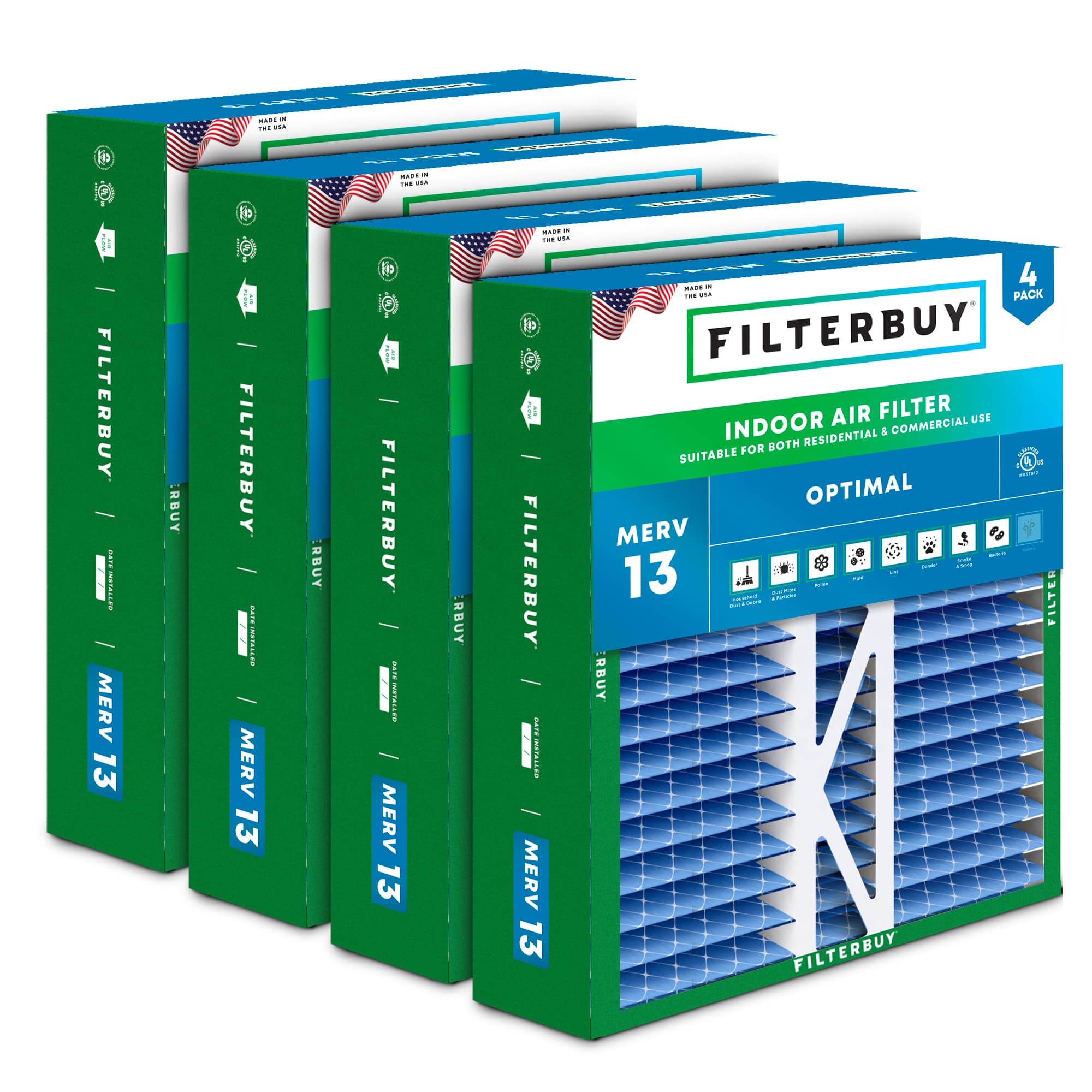
Tip: Ensure you buy the exact air filter size for your system. Certain brands have precise dimensions that only fit their specific models. See related filters
Actual Size: 15.38x21.88x5.25
 Free Delivery
  Factory-Direct Low Prices, Made in the USA
 Hassle-Free Returns & Free Exchanges
RESIDENTIAL AND/OR COMMERCIAL USE
Change Every 3 Months
Tip: Ensure you buy the exact air filter size for your system. Certain brands have precise dimensions that only fit their specific models. See related filters
Actual Size: 15.38x21.88x5.25
Free Delivery Factory-Direct Low Prices, Made in the USAHassle-Free Returns & Free ExchangesRESIDENTIAL AND/OR COMMERCIAL USE
Change Every 3 Months
Tip: Ensure you buy the exact air filter size for your system. Certain brands have precise dimensions that only fit their specific models. See related filters
Actual Size: 15.38x21.88x5.25
Free Delivery Factory-Direct Low Prices, Made in the USAHassle-Free Returns & Free ExchangesRESIDENTIAL AND/OR COMMERCIAL USE
Change Every 3 Months
At Filterbuy, we don't cut corners—we craft high-quality air filters right here in the USA and ship them to your doorstep for free. No delays, no gimmicks—just clean air, made easy. With thousands of five-star reviews and filters built for real life & every HVAC system, it's no wonder why over 4 million families trust Filterbuy.

Proudly Made In The USA

Fast, Free Shipping on Every Order

Premium Materials That Go The Distance

85,000+ 5-Star Reviews From Happy Customers

Save Up to 70% Per Filter with Packs


Measure length × width × depth with a tape measure to find the actual size.

Round up each dimension to the nearest whole number to get the nominal size. Example: 15.38x21.88x5.25 in → 16X22X5 nominal.

Search by nominal size on our site for the best fit.


5″ filters give you maximum filtration with minimal maintenance — lasting up to 12 months while handling higher MERV ratings without restricting airflow.
Sizing note:

If the filter you buy doesn't fit, we'll send you a better size.
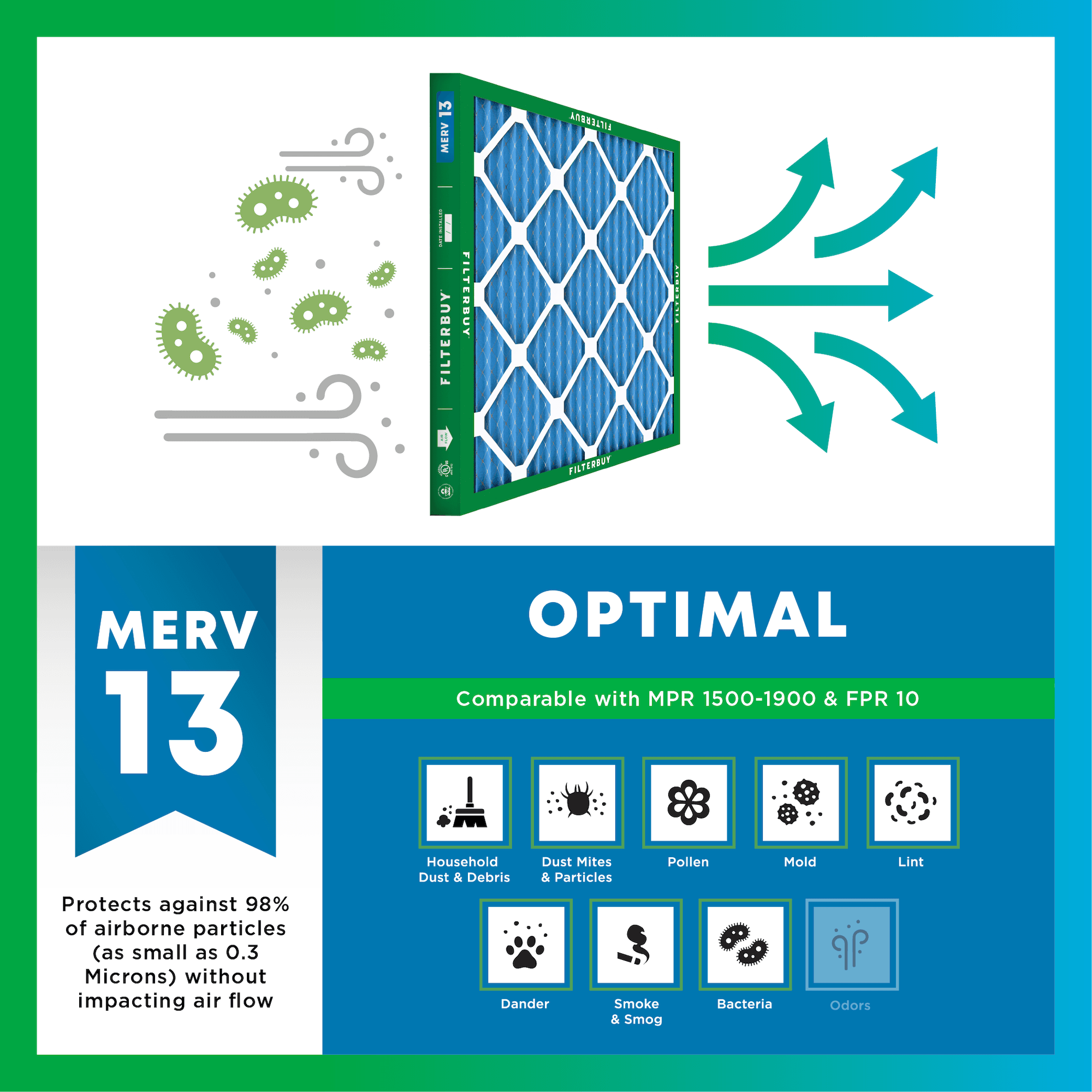
MERV stands for Minimum Efficiency Reporting Value—but don't let the technical name fool you. It's just a way to rate how well an air filter traps stuff like dust, pollen, pet dander, and smoke. The higher the MERV number, the more particles it catches—and the cleaner your air will be.

Comparable to:FPR: 4-7
MPR: 600-1000
 Dust & Debris
 Dust Mites & Particles
 Pollen
 Mold
Mold Lint
Lint Dander
Comparable to:FPR: 6-9
MPR: 1200-1550
Dust & DebrisDust Mites & ParticlesPollenMoldLintDander Smoke & Smog
Comparable to:FPR: 10
MPR: 1900-2800
Dust & DebrisDust Mites & ParticlesPollenMoldLintDanderSmoke & Smog Bacteria


We build every Filterbuy filter to deliver reliable 90-day performance—thanks to smart design and premium materials that do the heavy lifting. Here's what makes the difference:
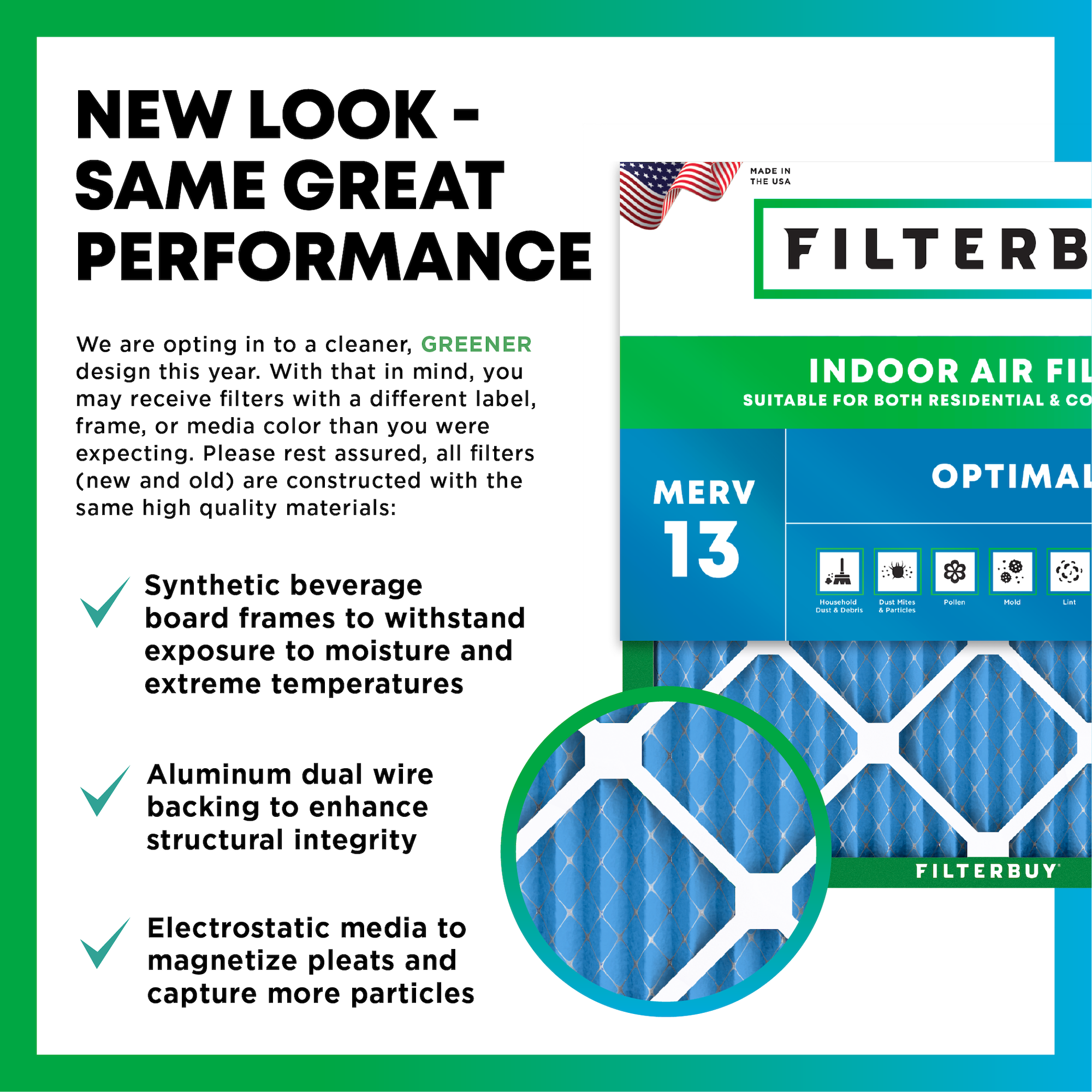
More pleats = more surface area to capture dust and debris, keeping your air cleaner longer.
Pleats are magnetized to attract and trap microscopic particles—like pet dander, pollen, and smoke.
Engineered to resist warping in extreme temperatures and high humidity.

A layer of metal reinforcement keeps pleats evenly spaced and structurally sound—no sagging, even at high airflow.
Assembled with care. Built to perform. Ships fast, free, and reliably from our U.S. facilities.

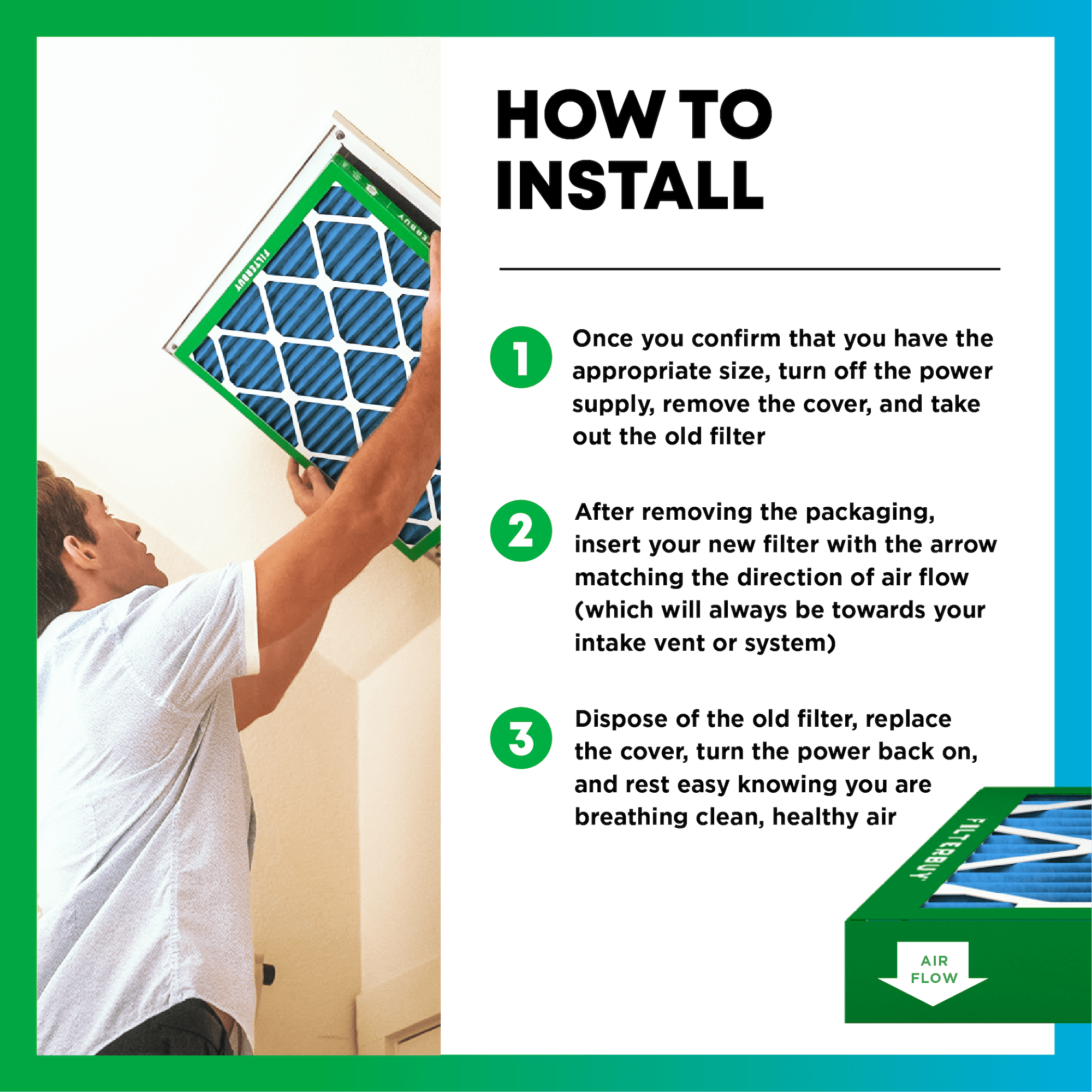
Turn Off Your HVAC SystemSafety first.

Remove The Old FilterLook for the airflow arrow and make note of the direction.

Slide In Your New FilterArrow should point toward the system (same direction as before).

Turn Your System Back OnAnd enjoy the fresh, clean air.

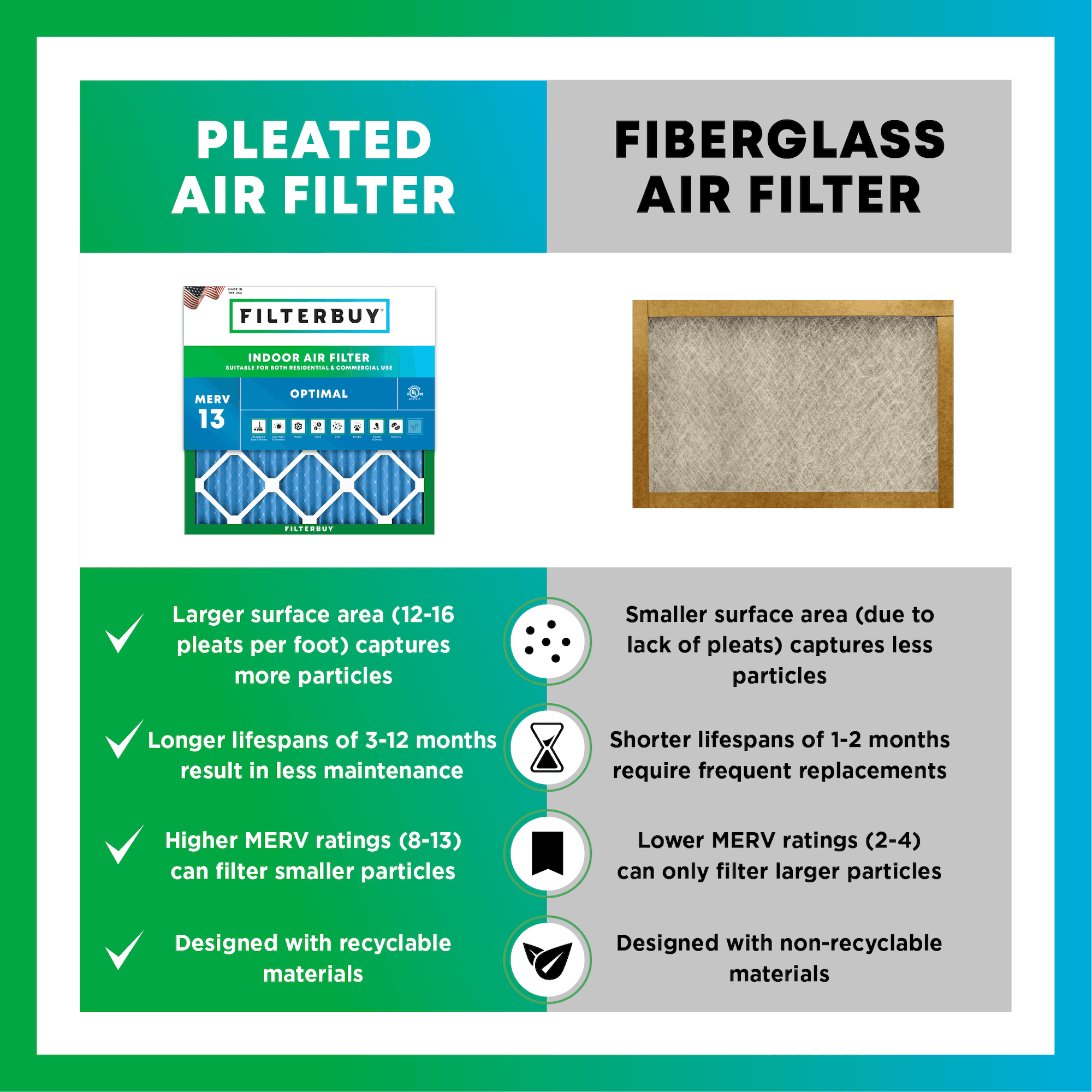
Not all air filters are created equal. Pleated filters don't just last longer—they actually clean your air better. Here's how they stack up:

Efficiency:
High (MERV 8–13) – Traps more particles
Lifespan:
90 days – Long-lasting performance
Air Quality:
Excellent – Cleaner, healthier air
Materials:
Recyclable and durable

Efficiency:
Low (MERV 4 or less) – Misses small stuff
Lifespan:
30 days or less – Replace often
Air Quality:
Minimal – Basic protection only
Materials:
Thin, flimsy, and not recyclable
Pleated filters are a no-brainer—more protection, less hassle, and better air for your home.
Changing your filter on time keeps your HVAC system running efficiently—and helps protect your lungs from dust, allergens, and airborne irritants. Here's how often to swap it out based on your needs:

For most homes without pets or special air quality concerns. Great for general upkeep and energy efficiency.

Shedding fur, dander, and allergy triggers can build up fast. Changing your filter every two months helps keep the air fresher and symptoms at bay.

For households affected by smoke, pollution, or respiratory conditions, monthly changes ensure maximum protection.

| Nominal Size | 16X22X5 |
| Actual Size | 15.38 x 21.88 x 5.25 inches |
| Filter Type | Pleated |
| Media | Electrostatically Charged |
| Frame | Beverage Board |
| MERV Ratings Available | 8, 11, 13 |
| Lifespan | Up to 12 Months |
| Origin | Made in USA |
Pull the filter out of your BDP media cabinet right now. Look at it. If it's been in there longer than a year, or if you bought it from a hardware store shelf without checking the MERV rating, there's a good chance your system has been cycling the same dust, dander, and fine particles through your home — and calling it filtered air.
We've manufactured filters for over a decade and shipped to more than two million households. The most common thing we hear from BDP owners after switching to MERV 13 isn't surprising. It's 'why didn't I do this sooner?' The gap between what a standard filter catches and what a MERV 13 catches isn't marginal. It's 98% particle capture versus considerably less, and you feel the difference — in fewer allergy flare-ups, in dust that stops piling up on furniture the week after a change, in an HVAC coil that isn't fighting a layer of buildup.
Upgrading your 16x22x5 BDP air filter to MERV 13 takes under five minutes to install, lasts up to 12 months in a BDP 5-inch system, and is one of the clearest value decisions in home maintenance. Here's exactly what you need to know.
A MERV 13 16x22x5 BDP air filter is a high-efficiency replacement filter built for BDP HVAC systems with a 5-inch deep media cabinet. It carries a nominal size of 16x22x5 inches and actual dimensions of 15.38" × 21.88" × 5.25". At MERV 13, it captures 98% of airborne particles — including dust, pollen, pet dander, mold spores, smoke, bacteria, and virus-carrying aerosols — without restricting airflow in the BDP 5-inch cabinet, which was engineered to handle this efficiency rating by design. Filterbuy manufactures this filter 100% in the USA with electrostatically charged pleated media, reinforced wire backing, and a humidity-resistant frame. It lasts up to 12 months in a 5-inch system and is equivalent to MPR 1500/1900 and FPR 10. For most households, change every 6 to 12 months; every 2 to 3 months in homes with pets; monthly for allergy sufferers or wildfire-zone residents.
The 16x22x5 is a nominal size. The actual filter dimensions are 15.38" × 21.88" × 5.25". Order by nominal size; the actual dimensions ensure the filter seats flush in your BDP 5-inch cabinet without bypass gaps.
MERV 13 captures 98% of airborne particles. Dust, pollen, pet dander, mold spores, smoke, smog, bacteria, and virus-carrying aerosols — that's the full picture of what it's pulling out of your home's air.
BDP's 5-inch cabinet is built for MERV 13. The deep media design gives Filterbuy's filter room to work at high efficiency without restricting your blower. MERV 13 isn't a stretch spec for this system. It's the right spec.
Filterbuy's 16x22x5 MERV 13 filter is 100% USA-made and ships in 24 hours. Electrostatically charged pleated media, reinforced wire backing, and a humidity-resistant frame. Reliable up to 90 days in most homes, up to 12 months in 5-inch deep-media systems.
MERV 13 equals MPR 1500/1900 and FPR 10. Same protection level, different rating systems. If you've seen either of those numbers on packaging, you were looking at MERV 13-equivalent performance.
Change frequency depends on your household conditions. Standard homes: every 6 to 12 months. Homes with pets: every 2 to 3 months. Respiratory concerns, wildfire zones, or high-smog areas: monthly. Auto Delivery manages this automatically.
The swap takes under five minutes. Off, open, remove, insert (arrow toward the blower), close, on. That's the installation from start to finish.
The 16x22x5 is the nominal size — the rounded label number printed on the filter frame and your system's cabinet. Filterbuy manufactures this filter to actual dimensions of 15.38" × 21.88" × 5.25" so it slides cleanly into the slot without forcing. Always order by nominal size; the slightly smaller actual size gives you a proper fit inside your BDP media cabinet.
Size precision matters more than most people think. A filter that's even a fraction too small lets unfiltered air bypass the media entirely, which defeats the whole point of having a filter. One that's too large risks a bent frame and an improper seal at the cabinet. The right fit means the full filter face is working — pulling air through the media rather than around it.
The BDP 5-inch deep media cabinet gives you a real advantage. Standard 1-inch filters can struggle at higher MERV ratings because there isn't enough media depth to handle the particle load without restricting airflow. The 5-inch cabinet solves that problem by design. In our experience manufacturing these systems, it's one of the few residential cabinet formats that genuinely supports MERV 13 without a meaningful pressure drop — and the depth means filters last significantly longer, with reliable performance up to 12 months in typical household conditions.
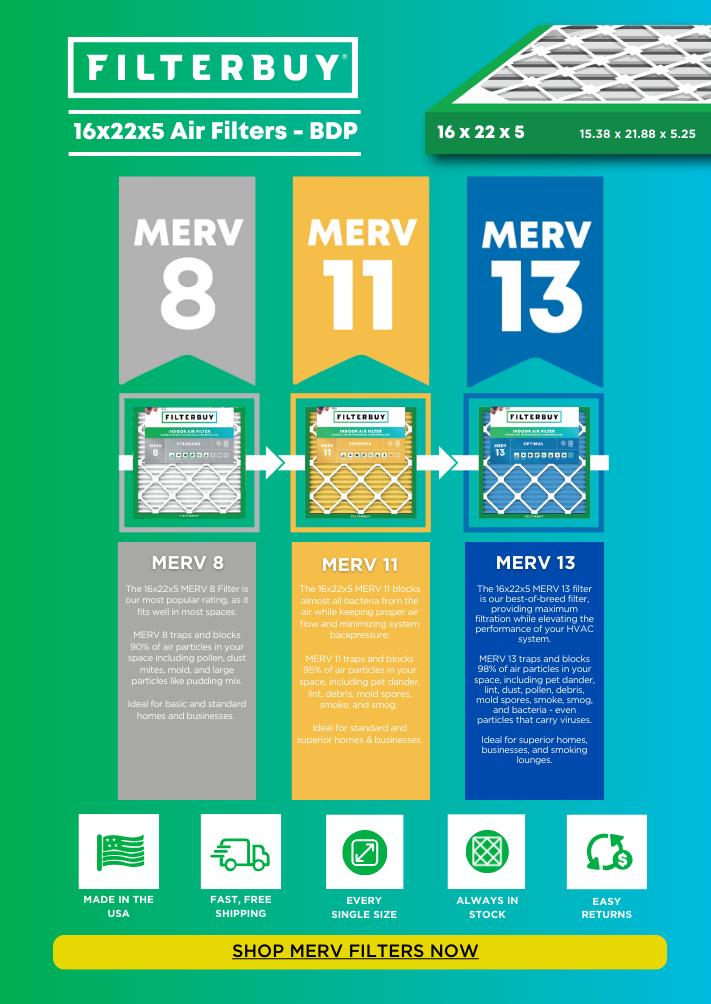
MERV — Minimum Efficiency Reporting Value — is the filter rating standard established under ASHRAE Standard 52.2. The scale runs from 1 to 16. Higher number, finer capture, cleaner air. For your BDP system, the differences between tiers look like this:
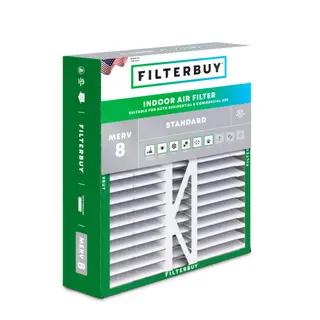
MERV 8 (Standard): Catches common household dust, lint, and pollen. Pet dander, mold spores, fine dust, bacteria, and virus-carrying aerosols mostly pass through.
MERV 11 (Superior): Adds pet dander and some mold capture. Fine smoke particles, smog, and most airborne pathogens still get through.
MERV 13 (Optimal): Captures 98% of airborne particles — dust, pollen, pet dander, mold spores, smoke, smog, bacteria, and virus-carrying particles. The highest efficiency rating recommended for residential HVAC use.
The jump from MERV 11 to MERV 13 is where allergies, pets, young children, and respiratory concerns become the deciding factor. MERV 13 pulls particles in the 0.3 to 1.0 micron range — the size class that includes airborne viral aerosols and fine combustion particles from traffic, wildfires, and nearby industry.
MERV 13 is also equivalent to MPR 1500/1900 and FPR 10 — the top tiers from two other rating systems you'll see on filter packaging. Different names, same level of protection.
The long-term effects of poor indoor air quality on human health reach further than most homeowners expect — from aggravated asthma and allergy symptoms to cardiovascular strain and cognitive fatigue with chronic exposure. The air inside your home is shaped by the filter you put in it.
MERV 13 on the label doesn't guarantee the same thing from every manufacturer. Construction quality determines whether that rating holds up in real-world conditions. Here's what Filterbuy builds into every 16x22x5 MERV 13 filter at our American facilities:
Electrostatically charged pleated media: More pleats mean more capture surface. We charge the media electrostatically so it actively attracts and holds microscopic particles — pet dander, pollen, fine smoke — rather than relying on passive collision alone.
Reinforced wire backing: Metal reinforcement holds pleat spacing even under high airflow. The pleats stay spaced, the media stays engaged, and performance holds from installation through the full replacement cycle.
Humidity- and heat-resistant frame: Filterbuy builds this filter to handle the actual conditions inside HVAC systems — from Alabama summer humidity to Utah winter dry-heat swings. Warping isn't an option.
100% manufactured in the United States, ships in 24 hours: Every filter comes out of our domestic facilities. No imported components, no extended lead times.
Up to 12-month performance in 5-inch systems: That's 300% longer than a standard fiberglass filter, with higher filtration efficiency throughout the entire replacement window.
The failure point we see most often in competitor filters isn't the media — it's the frame. A sagging or improperly sealed frame creates gaps where unfiltered air slips past the media entirely, which makes the MERV rating meaningless in practice. Filterbuy's beverage board frame with dual wire backing was designed specifically to close those gaps, because a filter that doesn't seal isn't protecting anyone, regardless of what's printed on the box.
You don't need a technician for this. Here's how to do it:
Turn off your HVAC system. Set the thermostat to off before opening the media cabinet. This keeps the system from pulling unfiltered air during the swap.
Find and open your BDP 5-inch media cabinet. It's typically mounted on the air handler or furnace return-air side. Open the cabinet door or panel.
Remove the old filter. Check the airflow arrow direction before pulling it out. Slide it straight out and bag it for disposal — don't shake it. Shaking releases trapped particles back into the air.
Insert the new 16x22x5 MERV 13 filter. The airflow arrow should point toward the system — toward the blower, away from the return air. Slide it in until the frame seats flush against the cabinet.
Close the cabinet and restore power. Set the thermostat back to your normal setting. Done.
You're the one protecting your family's air. That five-minute swap is one of the most direct things you can do for your family's health — and your HVAC system's longevity. Your BDP cabinet was built for this filter. Now it's running the way it was supposed to.
The 5-inch cabinet gives your filter more room to load up before airflow is affected, which means longer change intervals than what you'd get with a standard 1-inch filter. How long depends on your home:
Standard household, no pets: Every 6 to 12 months. The 5-inch MERV 13 handles normal dust and pollen load comfortably in this window.
Homes with pets: Every 2 to 3 months. Pet dander and hair accelerate loading. More frequent changes keep allergen levels down and keep your system running efficiently.
Allergy sufferers, respiratory concerns, wildfire zones, or high-smog areas: Monthly. Not over-maintenance — just appropriate care given the air quality conditions.
The easiest way to stay on schedule is our Auto Delivery subscription: 5% off every order, and your next filter arrives before you need it. Your family's air quality shouldn't hinge on whether the filter made it onto your shopping list.
"What we've learned from manufacturing filters for more than two million households is that the air quality problems people chalk up to seasonal allergies or 'just how our house is' are often a filter problem — and switching to MERV 13 is the single fastest way to find out whether that's true in yours."
- Filterbuy Team
We've spent over a decade manufacturing filters and working with more than two million households on indoor air. These are the authoritative sources that shape our product development, our filtration standards, and the guidance we give every customer. Every link below is a .gov or .org source — verified, current, and worth bookmarking.
1. U.S. EPA: Introduction to Indoor Air Quality
The EPA's thorough introduction to what causes indoor air quality problems, how pollutants build up in home environments, and why filtration and ventilation are your primary defenses. A foundational read for any homeowner serious about what their family breathes.
2. U.S. EPA: The Inside Story — A Guide to Indoor Air Quality
An EPA publication covering the full range of indoor air pollution sources — from combustion byproducts and VOCs to biological contaminants and building materials — with specific action steps for reducing exposure in your home.
3. U.S. EPA: Indoor Air Quality (IAQ) Main Resource Hub
The EPA's central IAQ portal: current research findings, fact sheets, publications, and regional contact information. The most current federal guidance on indoor pollutant exposure, health effects, and mitigation strategies.
4. ASHRAE: Filtration and Disinfection FAQ (Standard 52.2 Overview)
ASHRAE's official FAQ on air filtration and disinfection, grounded in ANSI/ASHRAE Standard 52.2 — the test method that defines the MERV rating system and the engineering authority behind every MERV number on every filter sold in the United States.
5. U.S. EPA: Volatile Organic Compounds' Impact on Indoor Air Quality
VOC concentrations indoors are consistently higher than outdoors — often two to five times higher, and in some cases up to ten times. This EPA resource shows why VOCs are a persistent indoor air quality challenge and which common household products drive the exposure.
6. CDC: Air Pollutants — Particle Pollution and Respiratory Health
The CDC's guidance on how particulate matter — especially fine PM2.5 — affects respiratory health. The link between airborne particle exposure and asthma, COPD, and cardiovascular stress is documented here in plain terms.
7. U.S. EPA: Indoor Air Quality Exposure and Characterization Research
Current EPA research on how indoor air pollutants are generated, transported, and concentrated in living spaces — including findings on wildfire smoke infiltration and microbial contamination after severe weather. Directly relevant if you're choosing MERV 13 for a high-risk environment.
1. Americans spend approximately 90% of their time indoors — where concentrations of some pollutants are often 2 to 5 times higher than typical outdoor concentrations.
Source: U.S. EPA: Report on the Environment — Indoor Air Quality
2. ASHRAE Standard 52.2 establishes MERV 13 as the recommended minimum filtration efficiency for buildings concerned with capturing infectious aerosols and fine particulate matter in the 0.3–1.0 micron range.
Source: ASHRAE: Filtration and Disinfection FAQ
3. Exposure to indoor air pollutants — including particulate matter, VOCs, and biological contaminants — has been associated with respiratory diseases including asthma, COPD, and lung cancer, with the greatest effects attributable to particulate matter.
Source: CDC STACKS: Pulmonary Health Effects of Air Pollution
We obsess over one thing at Filterbuy: what it actually takes to make indoor air meaningfully cleaner. Not a little cleaner. Cleaner in the way that shows up in how your family sleeps, how your allergies hold up in spring, and how long your HVAC runs before it needs maintenance.
Our honest take, grounded in manufacturing data and what we've tracked across millions of customer households: if you have a BDP system with a 5-inch media cabinet, running anything less than a MERV 13 filter is leaving filtration performance on the table. The cabinet was built for it. The system can handle it. And the particle capture difference at MERV 13 versus a standard filter isn't a marginal upgrade — it's a categorical shift in what's getting cleaned out of your air.
You can't see what circulates through your home. You won't feel the difference between 65% filtration and 98% filtration on any given Tuesday. But the effects accumulate. Dust settles on coils. Allergen loads climb. HVAC components wear faster. The family members most at risk from airborne particles — children, older adults, anyone managing a respiratory condition — live with the outcome of every filter choice you make.
Installing this filter takes five minutes and costs less than dinner out. The protection runs continuously for up to a year. A decade of manufacturing refinement went into making it work. That's the kind of trade worth making — and it's one of the few home maintenance decisions where the results are ones you can literally breathe.
Everything you need is already here. Here's how to move from reading to breathing better air:
Confirm your filter size. Your nominal size is 16x22x5 (actual: 15.38" × 21.88" × 5.25"). If you want to double-check, pull the current filter and measure length × width × depth, then round up to the nearest whole number.
Select MERV 13 and pick your quantity. For most BDP 5-inch systems, a 6-pack covers up to two years at a standard change interval — and saves up to 19% per filter versus buying one at a time.
Set up Auto Delivery and save 5%. Choose your interval: every 6 months for standard households, every 2 to 3 months if you have pets. Your filters arrive before you need them, which means the schedule runs itself.
Install your first filter today. Follow the five steps above. The whole job takes under five minutes. When you're done, your BDP system is running with MERV 13 protection — and your family's air is already better than it was an hour ago.
Mark your next change date. Write it on the filter frame, drop a calendar reminder, or skip all of it if you're on Auto Delivery — we track it for you.
Pro Tip: After installation, angle a flashlight at your return air vent a few hours in. The reduction in visible airborne dust compared to your old filter makes the MERV 13 difference visible. The invisible, finally visible.
The 16x22x5 is the nominal size — the rounded number used for ordering and identification. Filterbuy builds this filter to actual dimensions of 15.38" × 21.88" × 5.25" so it slides into the filter slot cleanly without forcing the frame. Always order by nominal size. The smaller actual dimensions ensure the filter seats flush inside your BDP media cabinet for a proper, bypass-free fit.
Yes. BDP systems with a 5-inch media cabinet are designed to handle MERV 13 filtration without meaningfully restricting airflow. The cabinet gives high-efficiency filter material room to operate at normal system airflow rates. Thin 1-inch MERV 13 filters can create pressure drop problems in systems not designed for them, but the 5-inch design handles higher ratings without that tradeoff. If you have any doubt about your specific BDP model, check your system documentation or call a qualified HVAC technician before making the switch.
MERV 8 handles standard household dust, lint, and pollen. MERV 11 adds pet dander and some mold spore capture. MERV 13 goes further — fine smoke particles, smog, bacteria, and virus-carrying aerosols, all at a 98% efficiency rate. The difference between 11 and 13 is categorical, not incremental: MERV 13 captures particles in the 0.3 to 1.0 micron range, which is where airborne pathogens and fine combustion particles live. For homes with allergy sufferers, pets, or anyone with respiratory concerns, that's the range where the filter choice matters most.
Standard households without pets: every 6 to 12 months. Homes with pets: every 2 to 3 months to stay ahead of dander and hair loading. Households with allergy sufferers, respiratory conditions, or exposure to wildfire smoke or high smog: monthly for maximum protection. The 5-inch cabinet extends filter life compared to a standard 1-inch filter, but air quality conditions in your specific home drive how quickly the filter loads.
MPR (Microparticle Performance Rating) and FPR (Filter Performance Rating) are proprietary rating systems used by specific manufacturers and retailers. Both MPR 1500/1900 and FPR 10 represent the top efficiency tier in their respective systems, and both map to MERV 13 performance under the universal ASHRAE Standard 52.2 benchmark. If you've seen those numbers on filter packaging and weren't sure how they stack up: they're equivalent. MERV is the universal standard; the others are brand-specific translations of the same measure.
Fiberglass filters are flat-panel designs with very little surface area. Once particle loading builds up, airflow restriction increases fast — which is why most fiberglass filters are rated for 30 days. Filterbuy's pleated MERV 13 filter uses a folded media design that creates far more capture surface within the same nominal dimensions. Add electrostatic charge that actively attracts particles and a reinforced frame that holds pleat spacing under load, and you get a filter that keeps performing long after a fiberglass model would have failed. In a 5-inch BDP cabinet, that advantage translates to months of reliable protection.
Yes. The 16x22x5 nominal size appears across multiple HVAC brands with 5-inch media cabinets — including Goodman, Amana, Coleman, Electro-Air, Day & Night, York, Gibson, and others. All Filterbuy 16x22x5 MERV 13 filters are manufactured in the USA, available in single units or multi-packs, and ship with Auto Delivery options. If your brand or size isn't listed on our site, our team cuts custom filters to any dimension.
Get your 16x22x5 BDP MERV 13 filter from Filterbuy — American-made, free shipping, and an Auto Delivery option so the air your family breathes stays clean without you having to think about it again.

