Tip: Ensure you buy the exact air filter size for your system. Certain brands have precise dimensions that only fit their specific models. See related filters
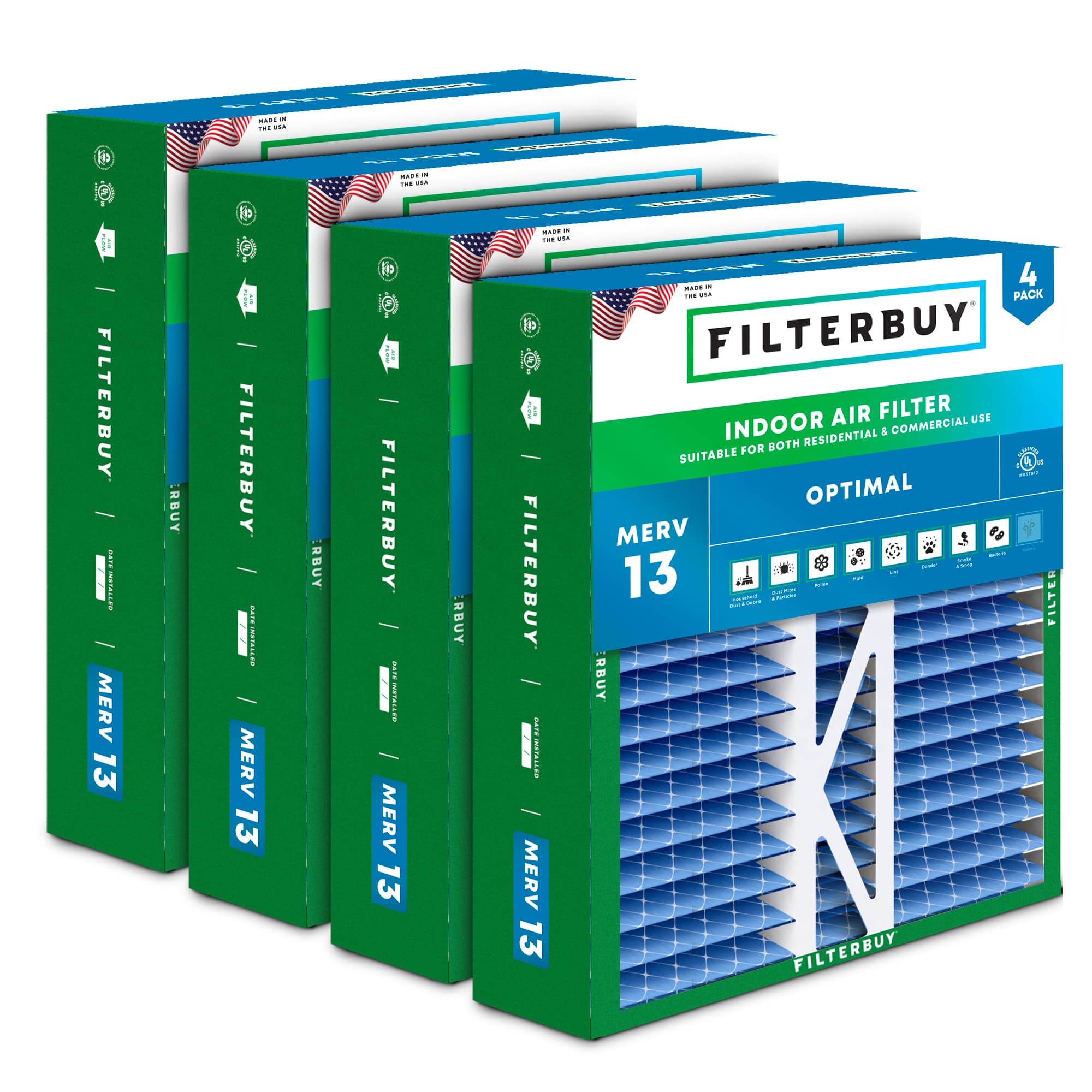
Actual Size: 15.38x21.88x5.25"
 Free Delivery
  Factory-Direct Low Prices, Made in the USA
 Hassle-Free Returns & Free Exchanges
RESIDENTIAL AND/OR COMMERCIAL USE
Change Every 3 Months
Tip: Ensure you buy the exact air filter size for your system. Certain brands have precise dimensions that only fit their specific models. See related filters
Actual Size: 15.38x21.88x5.25"
Free Delivery Factory-Direct Low Prices, Made in the USAHassle-Free Returns & Free ExchangesRESIDENTIAL AND/OR COMMERCIAL USE
Change Every 3 Months
Tip: Ensure you buy the exact air filter size for your system. Certain brands have precise dimensions that only fit their specific models. See related filters
Actual Size: 15.38x21.88x5.25"
Free Delivery Factory-Direct Low Prices, Made in the USAHassle-Free Returns & Free ExchangesRESIDENTIAL AND/OR COMMERCIAL USE
Change Every 3 Months
At Filterbuy, we don't cut corners—we craft high-quality air filters right here in the USA and ship them to your doorstep for free. No delays, no gimmicks—just clean air, made easy. With thousands of five-star reviews and filters built for real life & every HVAC system, it's no wonder why over 4 million families trust Filterbuy.

Proudly Made In The USA

Fast, Free Shipping on Every Order

Premium Materials That Go The Distance

85,000+ 5-Star Reviews From Happy Customers

Save Up to 70% Per Filter with Packs


Measure length × width × depth with a tape measure to find the actual size.

Round up each dimension to the nearest whole number to get the nominal size. Example: 15.38x21.88x5.25" in → 16X22X5 nominal.

Search by nominal size on our site for the best fit.


5″ filters give you maximum filtration with minimal maintenance — lasting up to 12 months while handling higher MERV ratings without restricting airflow.
Sizing note:

If the filter you buy doesn't fit, we'll send you a better size.
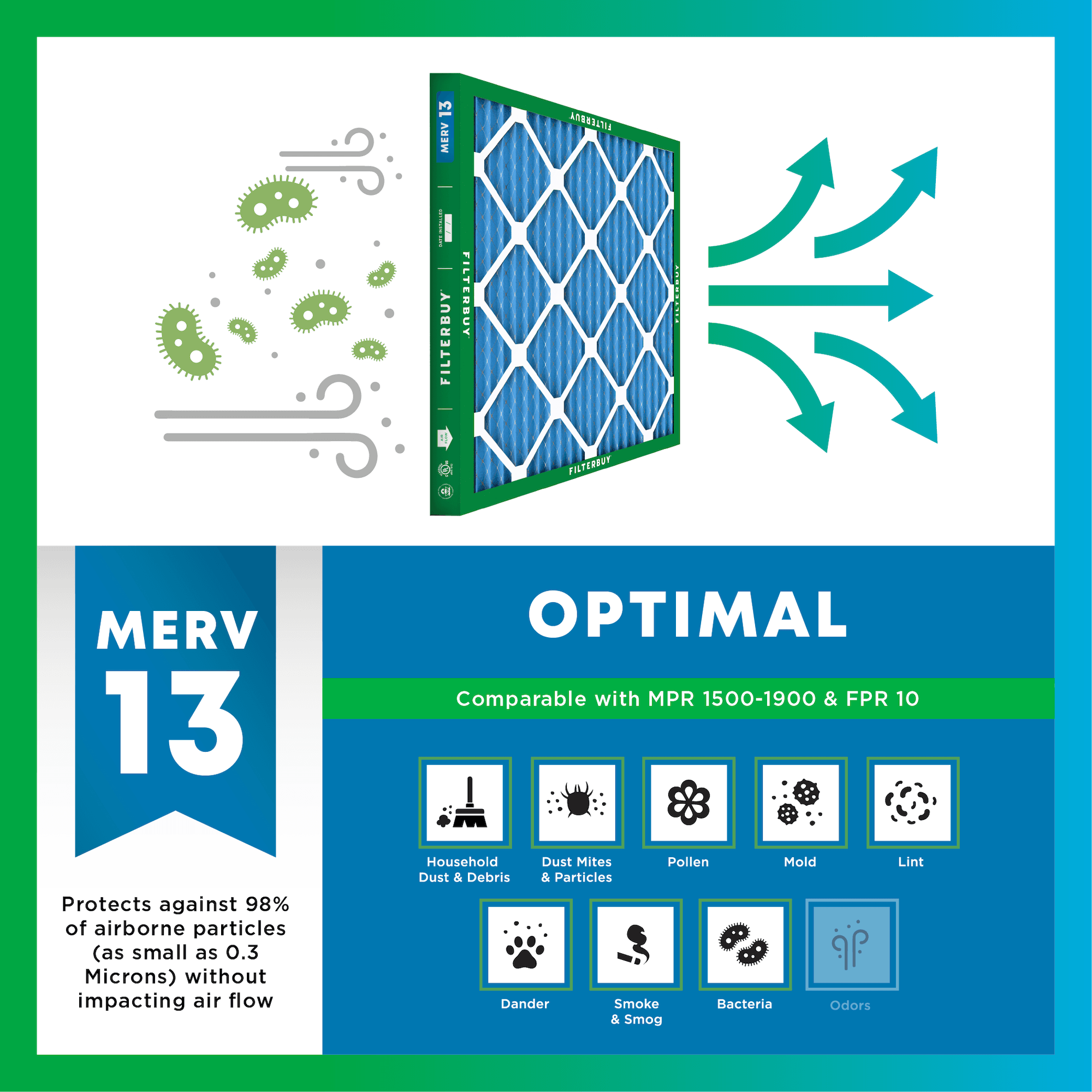
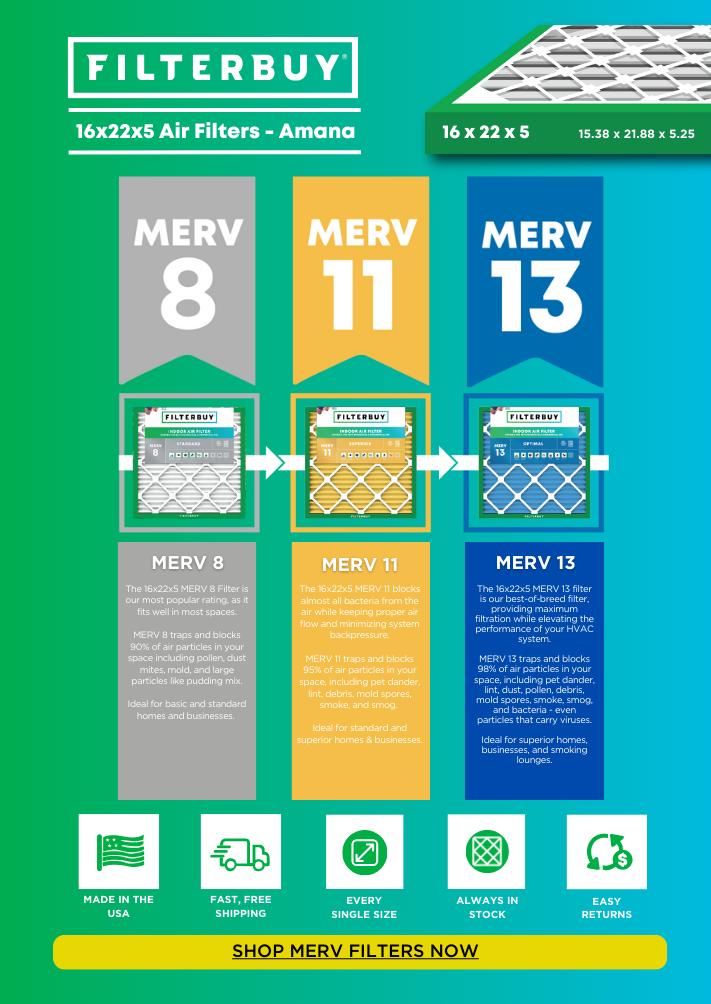
MERV stands for Minimum Efficiency Reporting Value—but don't let the technical name fool you. It's just a way to rate how well an air filter traps stuff like dust, pollen, pet dander, and smoke. The higher the MERV number, the more particles it catches—and the cleaner your air will be.

Comparable to:FPR: 4-7
MPR: 600-1000
 Dust & Debris
 Dust Mites & Particles
 Pollen
 Mold
Mold Lint
Lint Dander
Comparable to:FPR: 6-9
MPR: 1200-1550
Dust & DebrisDust Mites & ParticlesPollenMoldLintDander Smoke & Smog
Comparable to:FPR: 10
MPR: 1900-2800
Dust & DebrisDust Mites & ParticlesPollenMoldLintDanderSmoke & Smog Bacteria


We build every Filterbuy filter to deliver reliable 90-day performance—thanks to smart design and premium materials that do the heavy lifting. Here's what makes the difference:
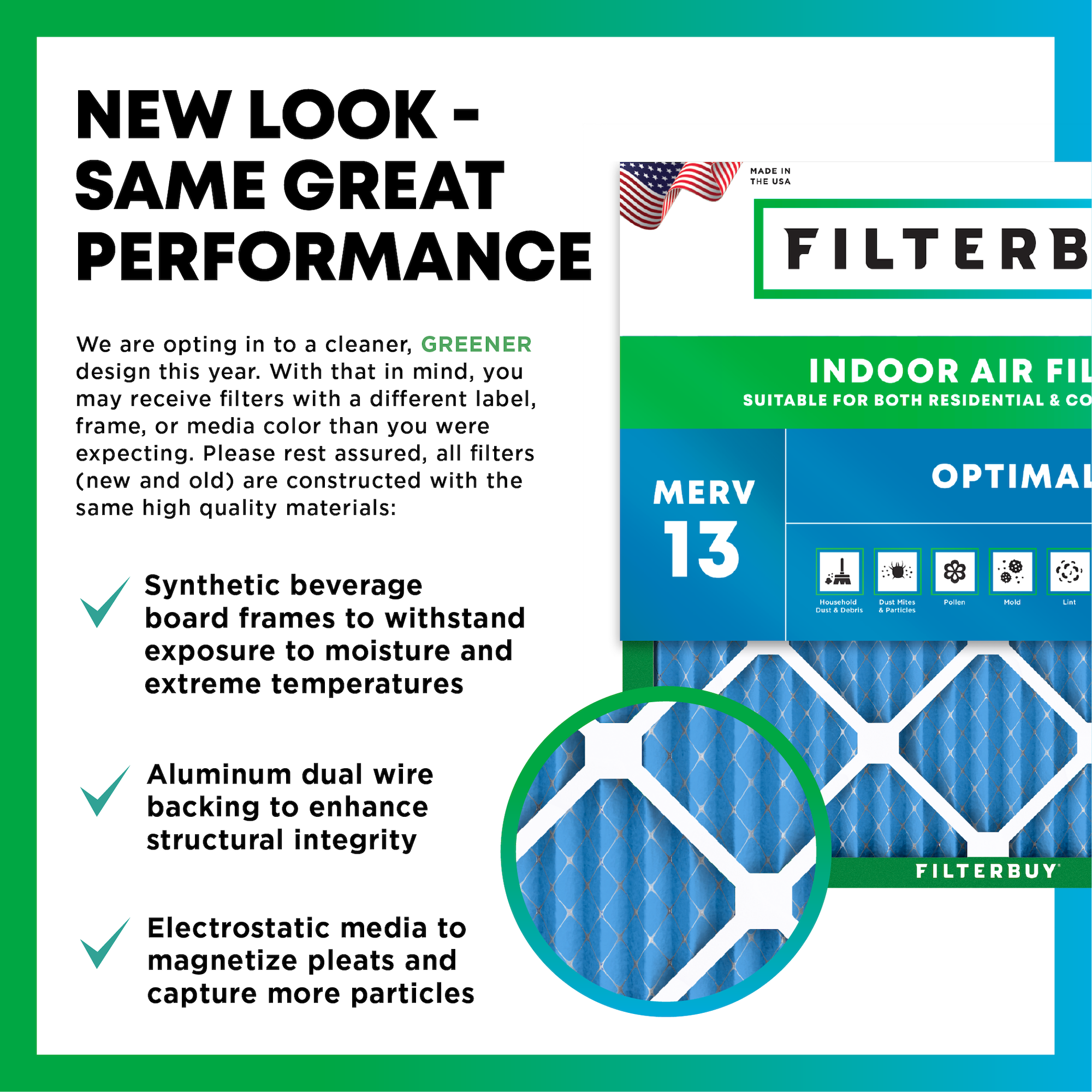
More pleats = more surface area to capture dust and debris, keeping your air cleaner longer.
Pleats are magnetized to attract and trap microscopic particles—like pet dander, pollen, and smoke.
Engineered to resist warping in extreme temperatures and high humidity.

A layer of metal reinforcement keeps pleats evenly spaced and structurally sound—no sagging, even at high airflow.
Assembled with care. Built to perform. Ships fast, free, and reliably from our U.S. facilities.

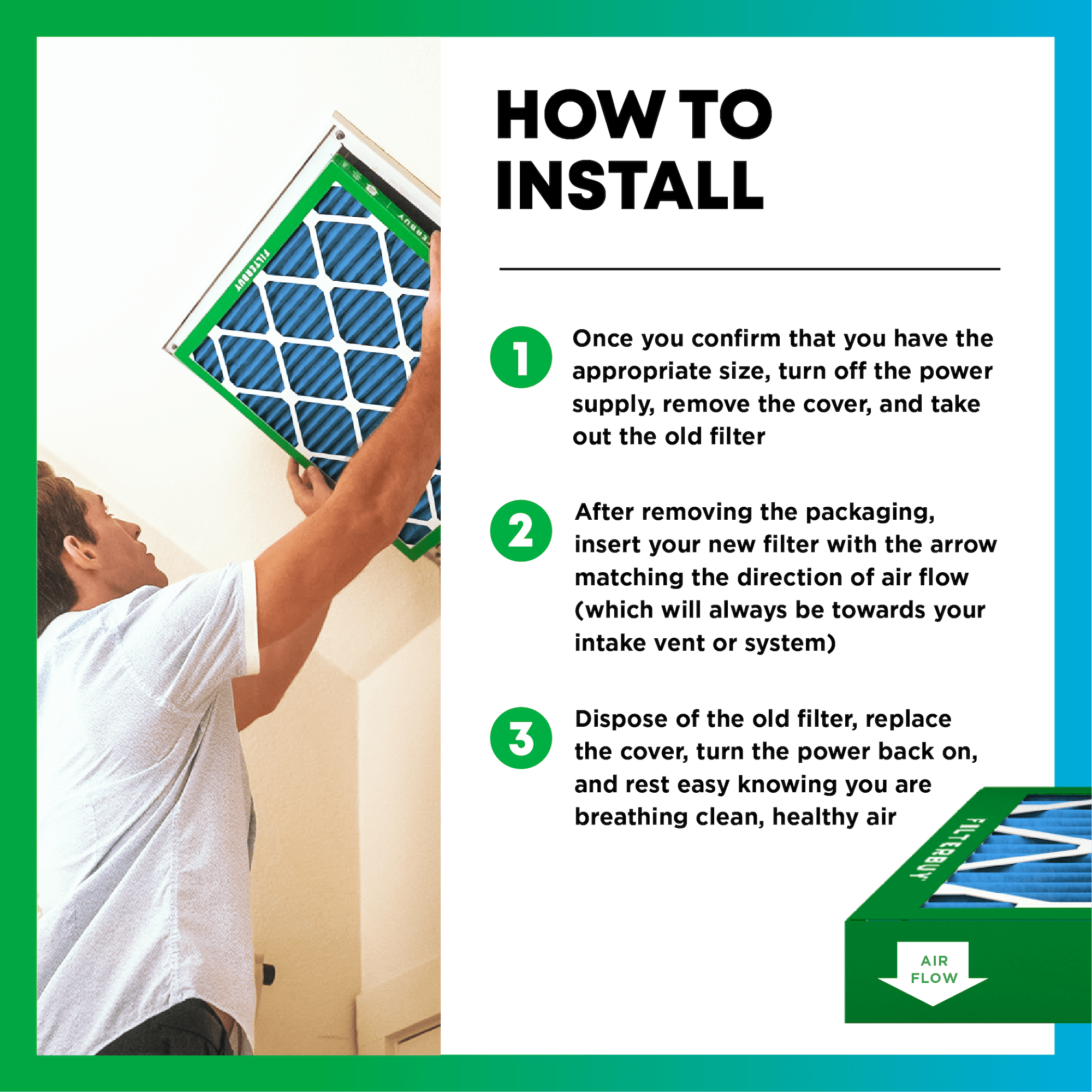
Turn Off Your HVAC SystemSafety first.

Remove The Old FilterLook for the airflow arrow and make note of the direction.

Slide In Your New FilterArrow should point toward the system (same direction as before).

Turn Your System Back OnAnd enjoy the fresh, clean air.

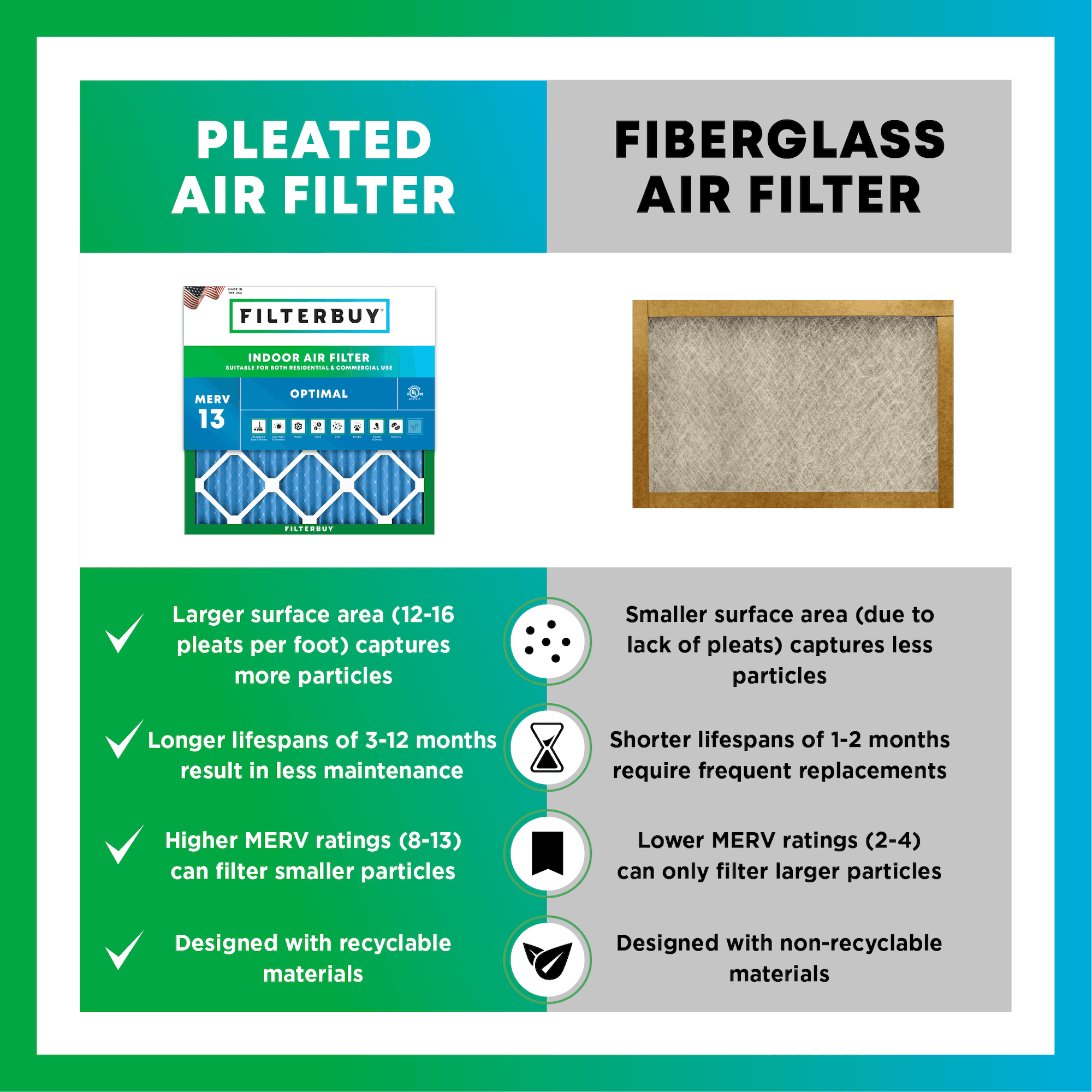
Not all air filters are created equal. Pleated filters don't just last longer—they actually clean your air better. Here's how they stack up:

Efficiency:
High (MERV 8–13) – Traps more particles
Lifespan:
90 days – Long-lasting performance
Air Quality:
Excellent – Cleaner, healthier air
Materials:
Recyclable and durable

Efficiency:
Low (MERV 4 or less) – Misses small stuff
Lifespan:
30 days or less – Replace often
Air Quality:
Minimal – Basic protection only
Materials:
Thin, flimsy, and not recyclable
Pleated filters are a no-brainer—more protection, less hassle, and better air for your home.
Changing your filter on time keeps your HVAC system running efficiently—and helps protect your lungs from dust, allergens, and airborne irritants. Here's how often to swap it out based on your needs:

For most homes without pets or special air quality concerns. Great for general upkeep and energy efficiency.

Shedding fur, dander, and allergy triggers can build up fast. Changing your filter every two months helps keep the air fresher and symptoms at bay.

For households affected by smoke, pollution, or respiratory conditions, monthly changes ensure maximum protection.

| Nominal Size | 16X22X5 |
| Actual Size | 15.38 x 21.88 x 5.25" inches |
| Filter Type | Pleated |
| Media | Electrostatically Charged |
| Frame | Beverage Board |
| MERV Ratings Available | 8, 11, 13 |
| Lifespan | Up to 12 Months |
| Origin | Made in USA |
If you’ve installed a MERV 13 16x22x5 Amana filter, you’ve already chosen high-efficiency protection for your home’s air—but at Filterbuy, we’ve seen firsthand that performance depends on how it’s maintained. One of the most common questions we hear from busy homeowners is: How do I keep this filter working at its best without constantly thinking about it?
Based on what our manufacturing and air-quality teams observe every day, this guide distills practical, real-world maintenance insights specific to MERV 13 16x22x5 Amana filters—helping you maintain strong airflow, reduce system strain, and protect your family’s air quality with minimal effort.
A MERV 13 16x22x5 Amana filter is a deep-pleated, high-efficiency HVAC filter designed to capture fine airborne particles like allergens, smoke, and dust while maintaining steady airflow in compatible Amana systems. From our experience manufacturing 5-inch filters, the added depth means longer service life, slower clogging, and more consistent performance—making it a smart choice for homeowners who want cleaner air without frequent filter changes.
MERV 13 16x22x5 Amana filters deliver high-level air protection by capturing fine airborne particles.
Replacing your filter every 6–12 months matters more than frequent checking.
5-inch filters clog more slowly and help maintain consistent airflow.
Leaving a high-efficiency filter in too long can reduce performance and strain your system.
Automating reminders or delivery makes filter maintenance effortless for busy homeowners.
A MERV 13 16x22x5 Amana filter is built to capture fine airborne particles like allergens, smoke, and dust—but from our experience manufacturing and testing high-efficiency filters, performance depends on timely, simple maintenance. Most busy households should plan to replace this filter every 6–12 months, with shorter intervals for homes with pets, allergies, or heavy HVAC use.
Pay attention to early warning signs we commonly see reported by homeowners, including reduced airflow, longer heating or cooling cycles, excess dust, or worsening allergy symptoms. These signals often mean the filter is doing its job—but nearing capacity.
To keep maintenance effortless, set a replacement reminder when installing a new filter and perform a quick visual check every few months. These small, proactive steps help preserve airflow, reduce system strain, and ensure your filter continues protecting your home’s air—without demanding constant attention.
Even a high-capacity 16x22x5 MERV 13 filter can underperform if a few common maintenance mistakes go unchecked. From what we see across thousands of filter orders and customer conversations, these are the issues that come up most often—and they're all easy to avoid.
The biggest mistake is simply forgetting to replace the filter on schedule. A MERV 13 filter packed beyond capacity doesn't just stop filtering effectively—it restricts airflow and forces your HVAC system to work harder, which can increase energy costs and accelerate wear on the blower motor. Setting a calendar reminder or subscribing to a scheduled delivery takes this off your plate entirely.
Another frequent issue is installing the filter with the airflow arrow pointing the wrong direction. Every Filterbuy filter is printed with a directional arrow that should point toward the blower motor or return duct. Reversing it compromises the filter media's layered construction and reduces particle capture efficiency from day one.
Other mistakes we commonly see reported include running the system with no filter during a replacement gap, purchasing a slightly off-size filter and forcing it into the housing, and neglecting to inspect the filter cabinet for gaps or air bypass around the edges. A filter that doesn't seat flush allows unfiltered air to slip past—defeating the purpose of a MERV 13 rating altogether.
Your MERV 13 16x22x5 Amana filter faces different demands depending on the season, and adjusting your maintenance habits accordingly can extend filter life and keep indoor air quality consistently high without extra effort.
During peak cooling and heating months—typically summer and winter—your HVAC system runs longer cycles, which pulls more air and particulates through the filter at a faster rate. These are the periods when we recommend performing a quick visual inspection at least once a month. If the filter media appears visibly gray or matted with debris, it's time for a replacement regardless of how many months it's been installed.
Spring and fall tend to bring their own challenges. Pollen season can load a MERV 13 filter faster than normal, especially in homes where windows are opened frequently or where outdoor air infiltration is high. Pet owners should also account for seasonal shedding cycles, which can noticeably accelerate filter loading during spring.
A practical year-round approach we recommend to busy homeowners is a simple quarterly check paired with a standing replacement schedule every 6–9 months. Write the install date directly on the filter frame with a marker so there's never any guesswork. This one habit, combined with a brief visual inspection when you swap out seasonal décor or adjust your thermostat, keeps maintenance nearly invisible while protecting both your air quality and your HVAC system's efficiency.
“From what we see in our manufacturing and performance testing every day, most airflow issues aren’t caused by the HVAC system itself—they’re caused by high-efficiency filters that were left in just a little too long. When a MERV 13 filter is replaced on time, it protects both your air quality and your system far more effectively than homeowners expect.”
When it comes to protecting your home’s air, clarity matters. Below are trusted, expert-backed resources we regularly reference at Filterbuy to help homeowners understand filtration performance, system compatibility, and real-world maintenance—so you can make confident, informed decisions without the guesswork.
Why it matters: Confirms whether a MERV 13 filter is the right fit for your household and HVAC system.This EPA guidance helps homeowners balance stronger filtration with proper airflow—an essential first step before upgrading your filter.
Why it matters: Explains exactly what a MERV 13 filter captures—and why that matters for your family.This breakdown makes the invisible visible, showing how higher MERV ratings improve protection against allergens, smoke, and fine particles.
https://www.epa.gov/indoor-air-quality-iaq/what-merv-rating
Why it matters: Connects high-efficiency filtration to healthier indoor environments.Public health experts highlight MERV 13 filters as a powerful tool when outdoor air or ventilation options are limited.
https://www.cdc.gov/niosh/ventilation/prevention/air-cleanliness.html
Why it matters: Addresses a common homeowner concern—airflow and system strain.This resource explains how properly sized MERV 13 filters can deliver cleaner air without sacrificing system efficiency.
https://basc.pnnl.gov/resource-guides/high-merv-filters
Why it matters: Reinforces trust in how MERV filters are tested and evaluated.This specification outlines the standards behind filter performance claims, helping homeowners understand what “quality” really means.
https://www.doa.nc.gov/pc-stc-031a-s4130-1pdf-standard-specification-air-filters/open
MERV 13 filters capture ~85%+ of particles in the 1–3 micron range.This includes many everyday allergens and fine pollutants. In our experience, this is the particle range where homeowners notice the most meaningful improvement in indoor air quality.
Source: ASHRAE (.org) https://www.ashrae.org/technical-resources/filtration-and-disinfection-faq
We see this advantage most clearly during wildfire season, when deeper filters maintain cleaner indoor air longer than thinner alternatives.
Source: U.S. Environmental Protection Agency (.gov) https://nepis.epa.gov/Exe/ZyPURL.cgi?Dockey=P101HCVK.txt
Performance varied based on airflow and filter surface area—supporting why 5-inch filters clog more slowly and deliver steadier results over time.
Source: CDC / NIOSH (.gov) https://blogs.cdc.gov/niosh-science-blog/2023/02/03/diy-filtration/
From our first-hand experience working with high-efficiency filters in real homes, one truth stands out: a MERV 13 16x22x5 Amana filter performs best when it’s maintained with intention—not when it’s forgotten.
On paper, MERV 13 filtration delivers strong particle capture and proven air-quality improvements.
In practice, results depend on proper fit, timely replacement, and consistent airflow.
Deeper 5-inch air filters reward proactive homeowners by lasting longer and clogging more slowly.
These filters don’t need constant attention—but they do need timely replacement.
Replacing them too late creates airflow restrictions, even with premium filtration.
Replacing them on schedule delivers cleaner air without stressing your HVAC system.
High-performance air filtration isn’t about doing more. It’s about doing one important thing well—choosing the right filter and replacing it before performance drops. When you do, your system works quietly in the background, protecting the air your family breathes every day.
Turn smart filter knowledge into simple action:
Confirm your size and compatibility Make sure your system uses a 16x22x5 filter and supports MERV 13 filtration.
Set a replacement reminder Plan to replace your filter every 6–12 months, based on pets, allergies, and HVAC use.
Choose a quality replacement filter Select a MERV 13 16x22x5 filter made for Amana systems to ensure proper fit and airflow.
Do quick airflow checks Inspect airflow and the filter a few times a year to catch issues early.
Automate future replacements Use auto-delivery or subscriptions to stay on schedule without extra effort.
A:
Captures fine particles like allergens, smoke, and dust.
Targets pollutants standard filters often miss.
Improves everyday indoor air when replaced on time.
A:
Typical range: 6–12 months.
Replace sooner if you have pets or allergies.
Timing matters more than the exact calendar date.
A:
Not when properly sized and maintained.
Most airflow issues come from overused filters.
5-inch depth helps maintain steady airflow.
A:
Weaker airflow from vents.
Longer heating or cooling cycles.
Increased dust or allergy symptoms.
A:
Yes, when manufactured to precise dimensions.
Proper fit matters more than brand name.
Quality media ensures consistent performance.
Keeping up with filter maintenance is easy when the right replacement shows up at your door before you need it. Browse our MERV 13 16x22x5 Amana-compatible filters and set up a delivery schedule that fits your household—so one less task ever makes it to your to-do list.

