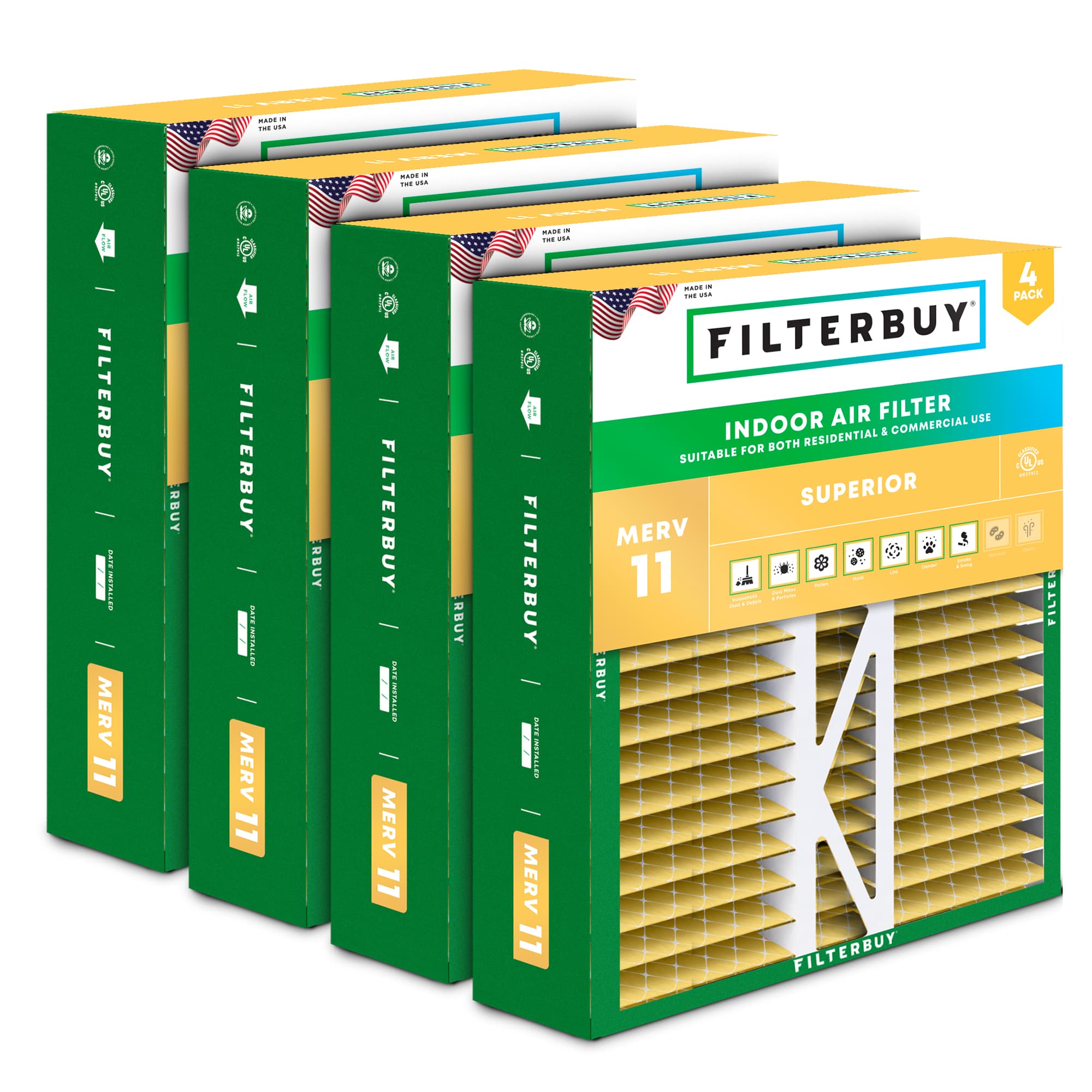
Tip: Ensure you buy the exact air filter size for your system. Certain brands have precise dimensions that only fit their specific models. See related filters
Actual Size: 15.38x21.88x5.25"
 Free Delivery
  Factory-Direct Low Prices, Made in the USA
 Hassle-Free Returns & Free Exchanges
RESIDENTIAL AND/OR COMMERCIAL USE
Change Every 3 Months
Tip: Ensure you buy the exact air filter size for your system. Certain brands have precise dimensions that only fit their specific models. See related filters
Actual Size: 15.38x21.88x5.25"
Free Delivery Factory-Direct Low Prices, Made in the USAHassle-Free Returns & Free ExchangesRESIDENTIAL AND/OR COMMERCIAL USE
Change Every 3 Months
Tip: Ensure you buy the exact air filter size for your system. Certain brands have precise dimensions that only fit their specific models. See related filters
Actual Size: 15.38x21.88x5.25"
Free Delivery Factory-Direct Low Prices, Made in the USAHassle-Free Returns & Free ExchangesRESIDENTIAL AND/OR COMMERCIAL USE
Change Every 3 Months
At Filterbuy, we don't cut corners—we craft high-quality air filters right here in the USA and ship them to your doorstep for free. No delays, no gimmicks—just clean air, made easy. With thousands of five-star reviews and filters built for real life & every HVAC system, it's no wonder why over 4 million families trust Filterbuy.

Proudly Made In The USA

Fast, Free Shipping on Every Order

Premium Materials That Go The Distance

85,000+ 5-Star Reviews From Happy Customers

Save Up to 70% Per Filter with Packs


Measure length × width × depth with a tape measure to find the actual size.

Round up each dimension to the nearest whole number to get the nominal size. Example: 15.38x21.88x5.25" in → 16X22X5 nominal.

Search by nominal size on our site for the best fit.


5″ filters give you maximum filtration with minimal maintenance — lasting up to 12 months while handling higher MERV ratings without restricting airflow.
Sizing note:

If the filter you buy doesn't fit, we'll send you a better size.
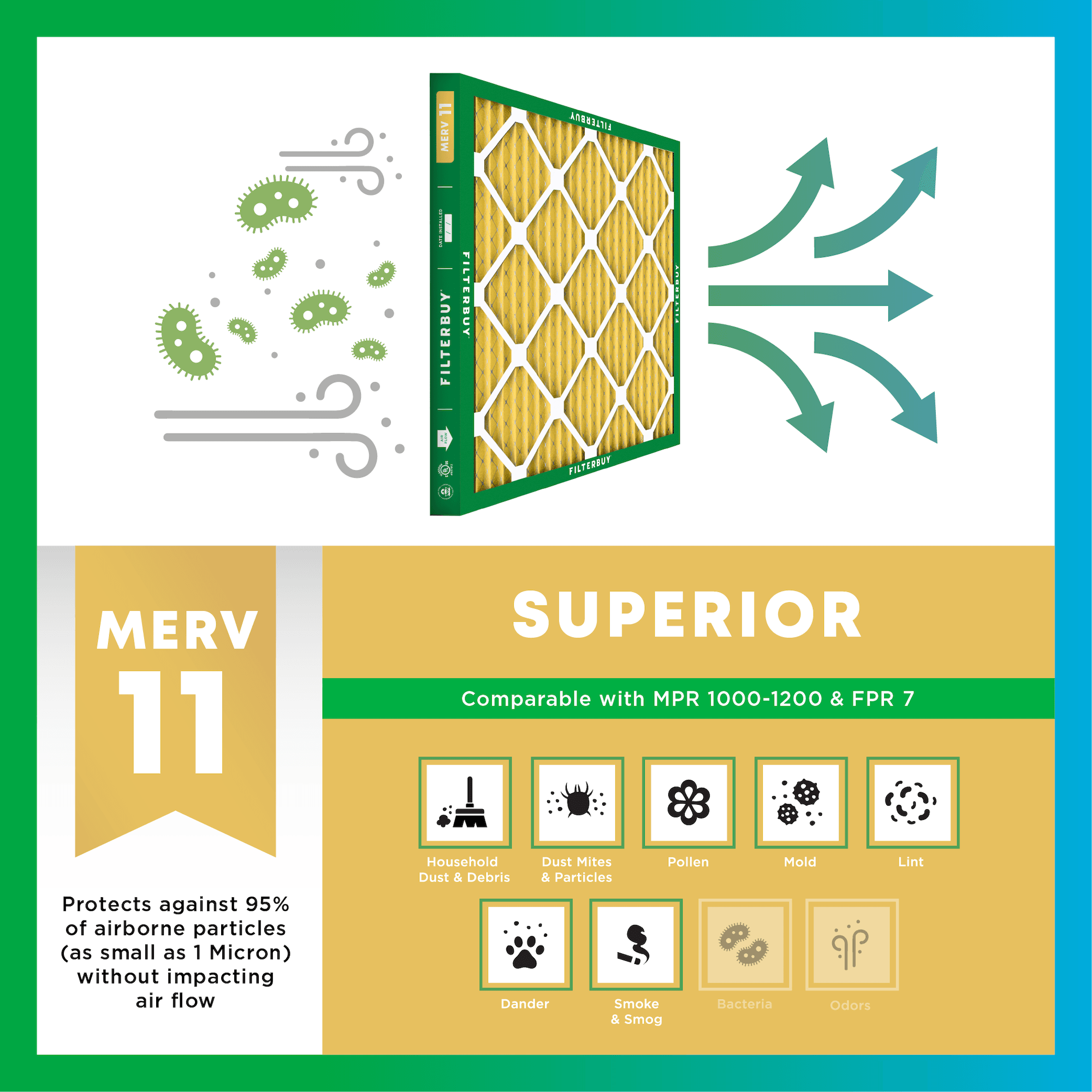
MERV stands for Minimum Efficiency Reporting Value—but don't let the technical name fool you. It's just a way to rate how well an air filter traps stuff like dust, pollen, pet dander, and smoke. The higher the MERV number, the more particles it catches—and the cleaner your air will be.

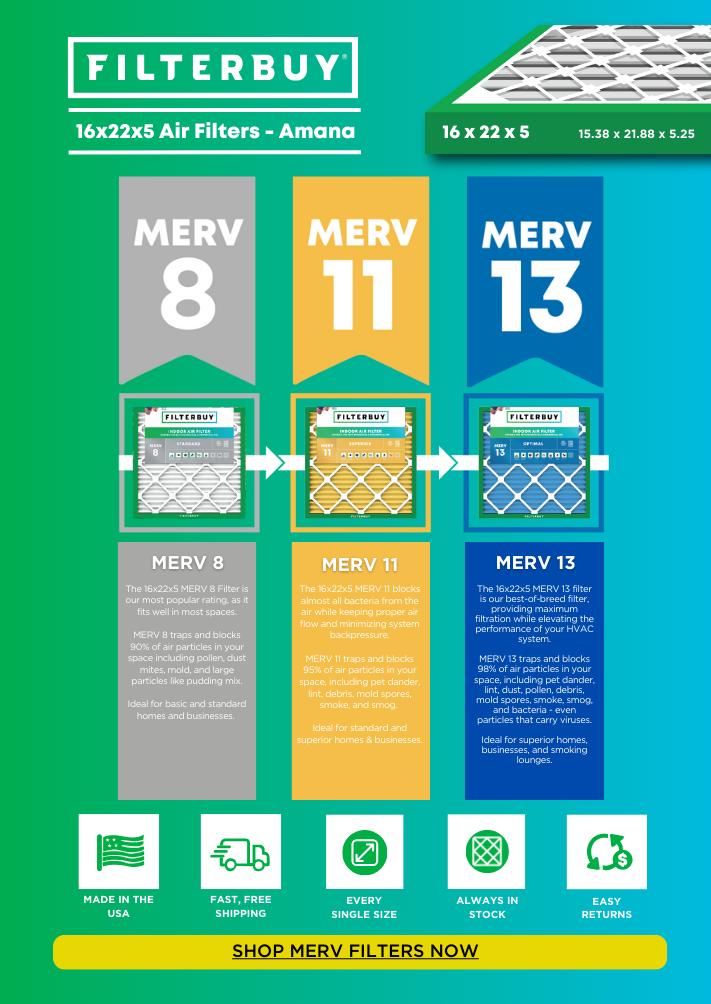
Comparable to:FPR: 4-7
MPR: 600-1000
 Dust & Debris
 Dust Mites & Particles
 Pollen
 Mold
Mold Lint
Lint Dander
Comparable to:FPR: 6-9
MPR: 1200-1550
Dust & DebrisDust Mites & ParticlesPollenMoldLintDander Smoke & Smog
Comparable to:FPR: 10
MPR: 1900-2800
Dust & DebrisDust Mites & ParticlesPollenMoldLintDanderSmoke & Smog Bacteria


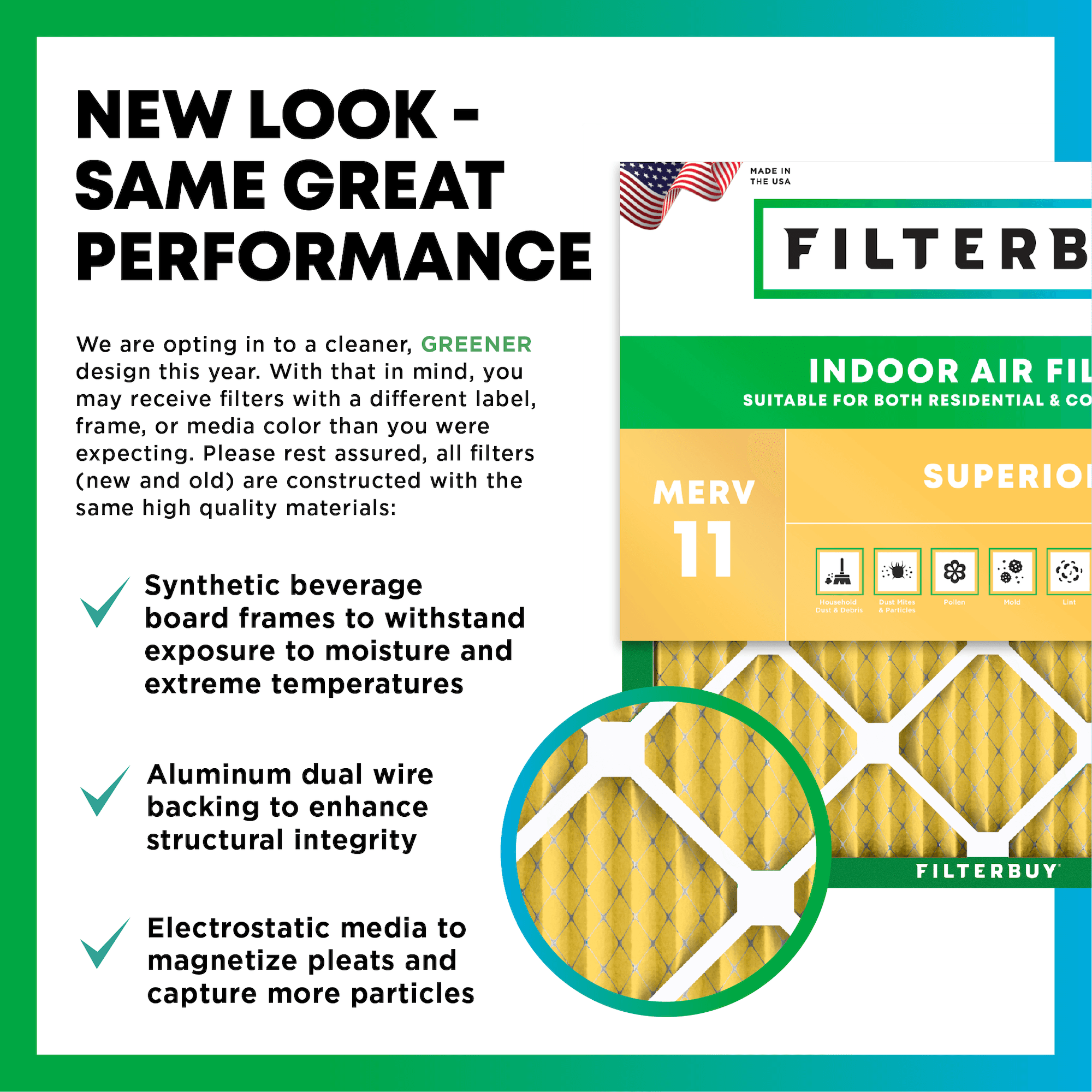
We build every Filterbuy filter to deliver reliable 90-day performance—thanks to smart design and premium materials that do the heavy lifting. Here's what makes the difference:
More pleats = more surface area to capture dust and debris, keeping your air cleaner longer.
Pleats are magnetized to attract and trap microscopic particles—like pet dander, pollen, and smoke.
Engineered to resist warping in extreme temperatures and high humidity.

A layer of metal reinforcement keeps pleats evenly spaced and structurally sound—no sagging, even at high airflow.
Assembled with care. Built to perform. Ships fast, free, and reliably from our U.S. facilities.

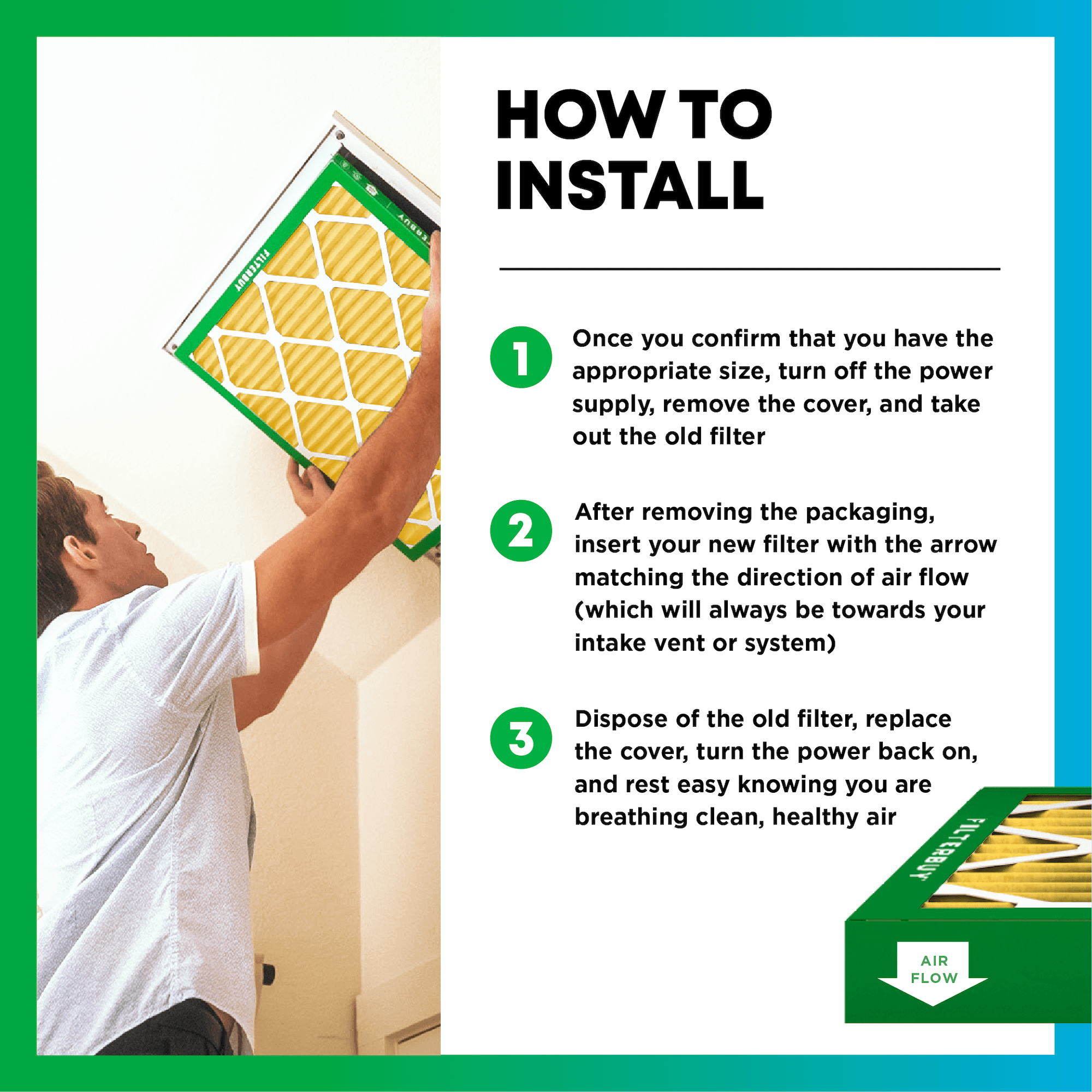
Turn Off Your HVAC SystemSafety first.

Remove The Old FilterLook for the airflow arrow and make note of the direction.

Slide In Your New FilterArrow should point toward the system (same direction as before).

Turn Your System Back OnAnd enjoy the fresh, clean air.

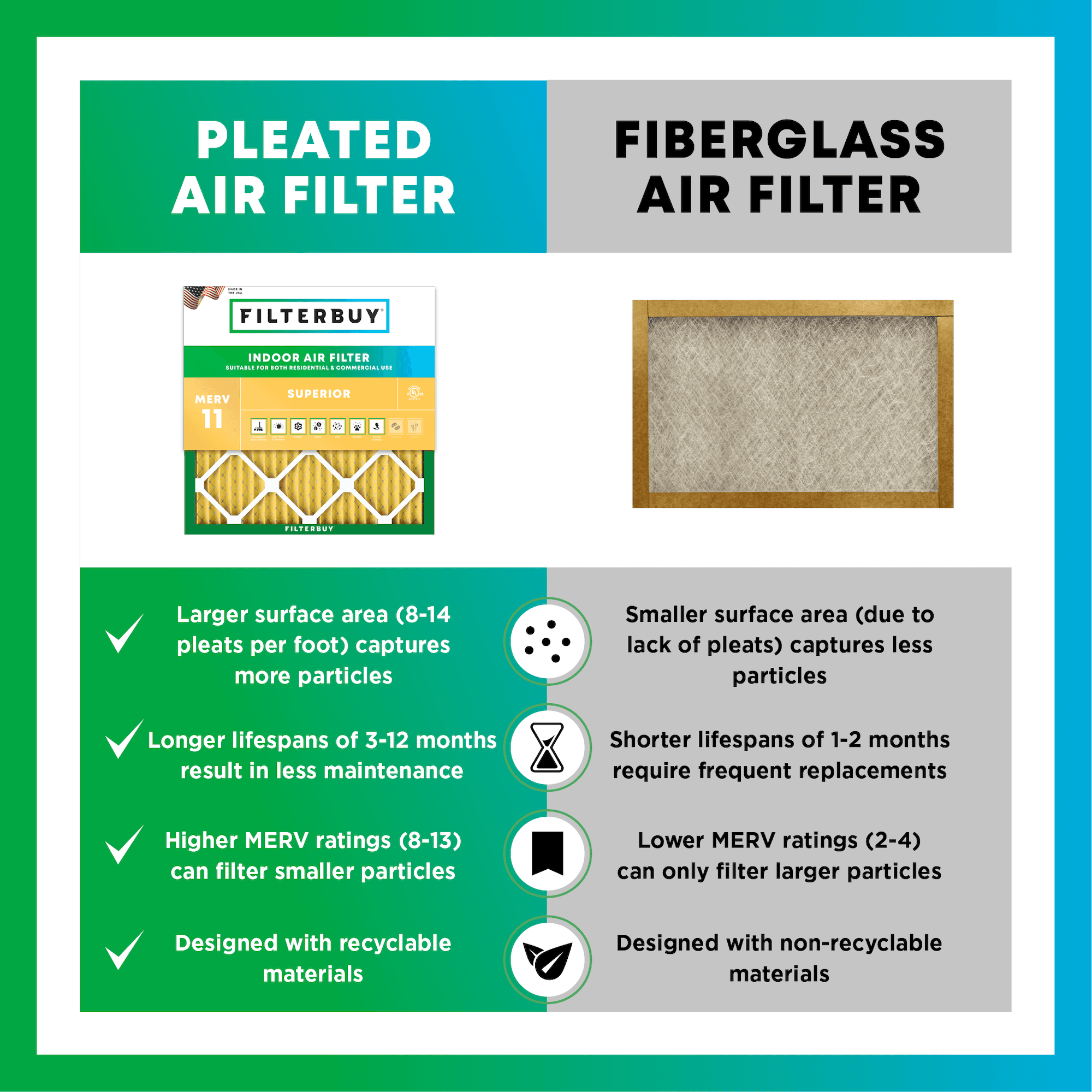
Not all air filters are created equal. Pleated filters don't just last longer—they actually clean your air better. Here's how they stack up:

Efficiency:
High (MERV 8–13) – Traps more particles
Lifespan:
90 days – Long-lasting performance
Air Quality:
Excellent – Cleaner, healthier air
Materials:
Recyclable and durable

Efficiency:
Low (MERV 4 or less) – Misses small stuff
Lifespan:
30 days or less – Replace often
Air Quality:
Minimal – Basic protection only
Materials:
Thin, flimsy, and not recyclable
Pleated filters are a no-brainer—more protection, less hassle, and better air for your home.
Changing your filter on time keeps your HVAC system running efficiently—and helps protect your lungs from dust, allergens, and airborne irritants. Here's how often to swap it out based on your needs:

For most homes without pets or special air quality concerns. Great for general upkeep and energy efficiency.

Shedding fur, dander, and allergy triggers can build up fast. Changing your filter every two months helps keep the air fresher and symptoms at bay.

For households affected by smoke, pollution, or respiratory conditions, monthly changes ensure maximum protection.

| Nominal Size | 16X22X5 |
| Actual Size | 15.38 x 21.88 x 5.25" inches |
| Filter Type | Pleated |
| Media | Electrostatically Charged |
| Frame | Beverage Board |
| MERV Ratings Available | 8, 11, 13 |
| Lifespan | Up to 12 Months |
| Origin | Made in USA |
If your MERV 11 16x22x5 Amana filter is clogging sooner than expected, that’s not a defect—it’s a signal. Based on what we see every day as an American air-filter manufacturer, early replacement almost always points to hidden airflow stress, elevated indoor pollutants, or system imbalance. In this guide, we share real-world insights from Filterbuy’s testing and customer data to help you spot the warning signs early, understand why they’re happening, and take the right next step to protect your HVAC system and the air your family breathes.
The MERV 11 16x22x5 Amana air filter is a high-capacity pleated filter designed specifically for compatible Amana HVAC systems. Its 5-inch depth provides significantly more filtration media than standard 1-inch filters, which translates to longer service life and greater particle-holding capacity. At the MERV 11 rating, this filter captures particles between 1.0–3.0 microns at 65–79% efficiency — including pollen, dust mite debris, mold spores, pet dander, and fine dust. This makes it an ideal choice for households that need better-than-basic air quality without the airflow restriction that comes with higher-rated MERV 13+ filters. The 16x22x5 is an uncommon size, so confirming your Amana unit's exact dimensional requirements before purchasing is essential to ensure a proper seal and optimal performance.
Early replacement is a signal. A MERV 11 16x22x5 Amana filter clogging early points to higher indoor pollutants or airflow stress.
Deep-pleat filters work constantly. They capture fine particles nonstop, especially in homes with pets, allergies, or long runtimes.
Airflow matters. A clogged filter reduces comfort, efficiency, and system performance.
Your home sets the schedule. Replacement timing should match real conditions, not a generic timeline.
Listening early prevents bigger problems. Filter changes are one of the simplest ways to protect your air and HVAC system.
Pull your filter out and hold it up to a light source. A functioning MERV 11 filter allows some light to pass through. If the media appears uniformly gray or dark and blocks light almost entirely, the filter is saturated beyond its effective capacity — regardless of how many months it has been installed. You may also notice dust accumulating faster on furniture, shelves, and around supply registers. This is one of the earliest and most reliable household indicators that filtration efficiency has dropped. Allergy or asthma symptom flare-ups among household members — particularly after a period of relief following the last filter change — are another strong signal the filter is no longer trapping particles at its rated MERV 11 level.
A clogged 16x22x5 filter restricts airflow and forces your system to compensate. Watch for these performance signals:
Longer run cycles. The system runs more frequently or for extended periods to reach your thermostat setting.
Weak airflow from vents. Reduced output at registers means the blower is fighting against a blocked filter.
Unexplained energy cost increases. A dirty filter can raise HVAC energy consumption by 5–15%, which often shows up on utility bills before other symptoms become obvious.
Short cycling. The system turns on and off rapidly, indicating the unit may be overheating due to restricted airflow.
For a definitive answer, an inexpensive differential pressure gauge measures the static pressure drop across your filter. When your reading approaches the manufacturer's maximum allowable threshold, the filter needs immediate replacement — even if it has only been installed for a few weeks.
Certain conditions push your 16x22x5 Amana filter past its limits faster than the standard replacement timeline. Pets in the home can cut filter life by 30–60% depending on breed and number of animals. Nearby construction or renovation projects saturate filters rapidly with drywall dust and particulates. Spring and fall pollen surges load MERV 11 media faster than winter months, and wildfire smoke events can overwhelm a filter in days rather than months. Homes that keep the fan set to "ON" rather than "AUTO" pull air through the filter around the clock, accelerating saturation significantly.
Replacing your Amana filter early when these signs appear is not wasteful. It is the most cost-effective way to protect a system that costs thousands to repair or replace. A fresh MERV 11 16x22x5 filter restores full airflow, maintains rated filtration efficiency, and keeps your HVAC equipment operating within its designed parameters.
“After manufacturing and evaluating millions of filters, we’ve learned that early clogging isn’t a flaw—it’s your filter reacting to higher-than-normal particle loads in the home. When a deep-pleat MERV 11 fills up fast, it’s often the first visible sign that your air—and your system—are under extra strain.”
Not every home needs the same level of filtration. This comparison breaks down MERV 8 vs. MERV 11 vs. MERV 13 so you can balance clean air, airflow, and system efficiency with confidence.
Source: Filterbuy
URL: https://filterbuy.com/brand/amana-air-filters/amana-16x22x5-air-filters/
The EPA explains how HVAC filters reduce dust, allergens, and airborne particles—reinforcing why choosing the right MERV rating is about health, not just maintenance.
Source: U.S. Environmental Protection Agency (EPA)
This resource shows how your HVAC filter works alongside ventilation and air cleaners to create cleaner, safer indoor air throughout your home.
Source: U.S. Environmental Protection Agency (EPA)
URL: https://www.epa.gov/indoor-air-quality-iaq/air-cleaners-and-air-filters-home
ASHRAE—the authority on HVAC standards—explains how filtration efficiency impacts airflow, helping homeowners avoid filters that strain their system.
Source: ASHRAE
URL: https://www.ashrae.org/technical-resources/filtration-and-disinfection-faq
This is the industry standard that defines how MERV ratings are tested, so you know MERV 11 performance is measured—not guessed.
Source: ASHRAE
URL: https://www.ashrae.org/File%20Library/Technical%20Resources/COVID-19/52_2_2017_COVID-19_20200401.pdf
A helpful overview that puts MERV 11 into context, showing where it sits on the filtration spectrum and why it’s a popular choice for homes.
Source: Educational Reference
URL: https://en.wikipedia.org/wiki/Minimum_efficiency_reporting_value
Indoor air carries most of the load
Americans spend about 90% of their time indoors, where some pollutants can be 2–5× higher than outdoor levels.
Why it matters: This explains why deep-pleat *MERV 11 filters often clog earlier than expected—they’re filtering nearly nonstop.
Source: U.S. EPA – Indoor Air Quality https://www.epa.gov/report-environment/indoor-air-quality
CDC-referenced data shows up to 36% allergen sensitization in certain U.S. populations due to indoor exposure.
What we see firsthand: Filters pulled early are often packed with fine allergen particles long before visible dust becomes a concern.
Source: CDC / ATSDR – Environmental Triggers of Asthma https://archive.cdc.gov/www_atsdr_cdc_gov/csem/asthma/environmental_triggers_of_asthma.html
The average U.S. household spends over $2,200 per year on energy, with nearly half going to heating and cooling.
Our insight: An overloaded filter is one of the most common—and preventable—causes of early HVAC efficiency loss.
Source: ENERGY STAR (EPA) – Heating & Cooling Guide https://www.energystar.gov/ia/partners/publications/pubdocs/HeatingCoolingGuide%20FINAL_9-4-09.pdf
After manufacturing millions of air filters and speaking with homeowners daily, one thing is clear: filters don’t clog early without a reason.
A MERV 11 16x22x5 Amana filter that fills up fast is usually doing its job—capturing more airborne contaminants than normal.
In our experience, early replacement is often the first visible signal of higher indoor pollutants, airflow stress, or changing home conditions.
Why that matters:
Ignoring early clogging can quietly strain your HVAC system.
Paying attention helps protect airflow, efficiency, and comfort.
Acting early keeps small air quality issues from becoming expensive problems.
Our opinion: Changing a filter early isn’t over-maintenance—it’s informed homeownership. When you listen to what your filter is telling you, you’re not just maintaining equipment; you’re actively protecting the air your family breathes every day.
If your MERV 11 16x22x5 Amana filter is clogging early, take action with these simple steps:
Check monthly
Look for dark pleats or heavy dust.
Don’t rely on the calendar alone.
Replace early when needed
Weak airflow or stuffy rooms = change it.
Early replacement protects your system.
Adjust to your home
Pets, allergies, or renovations = faster buildup.
Update your schedule accordingly.
Confirm fit and rating
Use the exact 16x22x5 size.
Make sure your system supports MERV 11.
Watch for patterns
Repeated early clogging may signal duct leaks or high dust levels.
Treat it as an air quality clue.
Keep spares on hand
Having replacements ready makes early changes easy.
A:
Typical range: 3–6 months
In our experience, homes with pets or allergies often need earlier changes.
The air in your home—not the calendar—sets the schedule.
A:
Most modern Amana systems handle MERV 11 well.
Issues usually come from poor fit or installation, not the rating itself.
A:
Dust and pollen
Pet dander and mold spores
Fine airborne debris we regularly see in returned filters
A:
Higher indoor particle loads
Pets, seasonal allergens, or renovations
Duct leaks or long HVAC runtimes
Early clogging is a signal, not a defect.
A:
Reduced airflow and comfort
Higher energy use
Added strain on HVAC components
Early replacement helps prevent bigger issues.
Don't wait for rising energy bills or declining air quality to tell you what your filter already shows — replace it now and keep your HVAC system running at peak performance. Browse our full selection of MERV 11 16x22x5 Amana replacement filters and get fast, direct-to-door delivery from the manufacturer you can trust.

