
Wildfire Smoke From Hundreds of Miles Away Is Reaching the Bay Area: Without Triggering a Spare the Air Alert
August 7, 2026
Air Quality Update | August 7, 2026 | 2 min read
AQI Spotlight: Pacific Northwest Smoke Reaches the Bay Area, But Stays Below Spare the Air Territory
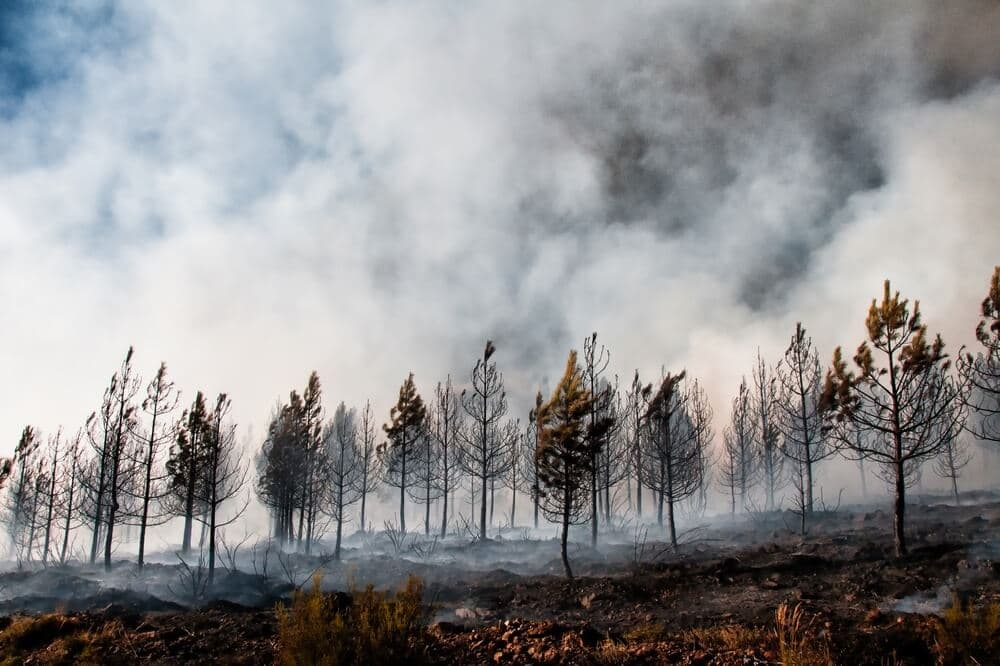
Smoke from wildfires burning hundreds of miles away in Oregon and Washington has drifted into the Bay Area for a full week, hazing skies without crossing the threshold that triggers a Spare the Air Alert. The gap between "advisory" and "alert" is exactly the kind of nuance that leaves people unsure whether to worry.
How is smoke from Pacific Northwest fires reaching the Bay Area?
The Bay Area Air District first issued a smoke advisory on August 4 and has extended it repeatedly since, most recently through Friday, August 7, as unpredictable amounts of smoke continue drifting south and settling at varying altitudes over the region.
Wildfire smoke can travel enormous distances once it lifts into the upper atmosphere, and this week's plume, originating from dozens of uncontained fires across Oregon and Washington, has been carried well beyond the Pacific Northwest itself, reaching hundreds of miles down the coast into Northern California.
Why hasn't a Spare the Air Alert been issued?
The Air District has been explicit that pollutant levels are not expected to exceed the national 24-hour health standard for fine particulate matter, which is the threshold that triggers a Spare the Air Alert.
An advisory is a lower-tier notice: it tells residents that hazy skies and the smell of smoke are possible and that air quality could turn unhealthy at times, without the region crossing into alert-level pollution as a daily average.
What does "advisory but no alert" actually mean day-to-day?
It means outdoor conditions can look and smell smoky, while official readings stay in a more moderate range overall; ground-level smoke levels are hard to predict and can shift within hours as the plume moves.
The Air District has pointed residents to the EPA's real-time Fire and Smoke Map rather than a single area-wide number, since conditions in one part of the Bay Area can differ noticeably from another on the same day.
That's also true indoors: outdoor readings that look only moderate on a citywide monitor don't guarantee indoor air matches it, especially in a home without a sealed HVAC system or a filter rated for fine particles.
How long is this expected to last?
The advisory has already been extended twice, moving from an original window through August 4 and 5 to now cover through Friday, August 7, as the source fires remain uncontained. Any further extension will depend on conditions upwind in Oregon and Washington, where the smoke originates.
Prep your home on hazy-but-moderate days
An advisory without an alert doesn't mean indoor air takes care of itself. A few steps worth taking now:
- Set your car and home HVAC vents to recirculate mode when smoke is visible outside.
- Check the EPA's Fire and Smoke Map for your specific area rather than relying on a single area-wide reading.
- Switch to a MERV 13 filter, the EPA-recommended rating for wildfire smoke, if your system can support it.
Sources: Bay Area Air Quality Management District, NBC Bay Area, The Press Democrat.