
Record Dust Storms Push Phoenix Air Quality to Extremes
August 11, 2026
Air Quality Update | August 10, 2026 | 2 min read
AQI Spotlight: Back-to-Back Record Dust Storms Hit Phoenix Air Quality
Phoenix was hit by two of the most intense dust storms the region has seen in years last week, pushing pollution levels far above normal. Here's what happened and how dust storms affect the air you breathe indoors.
What happened in Phoenix?
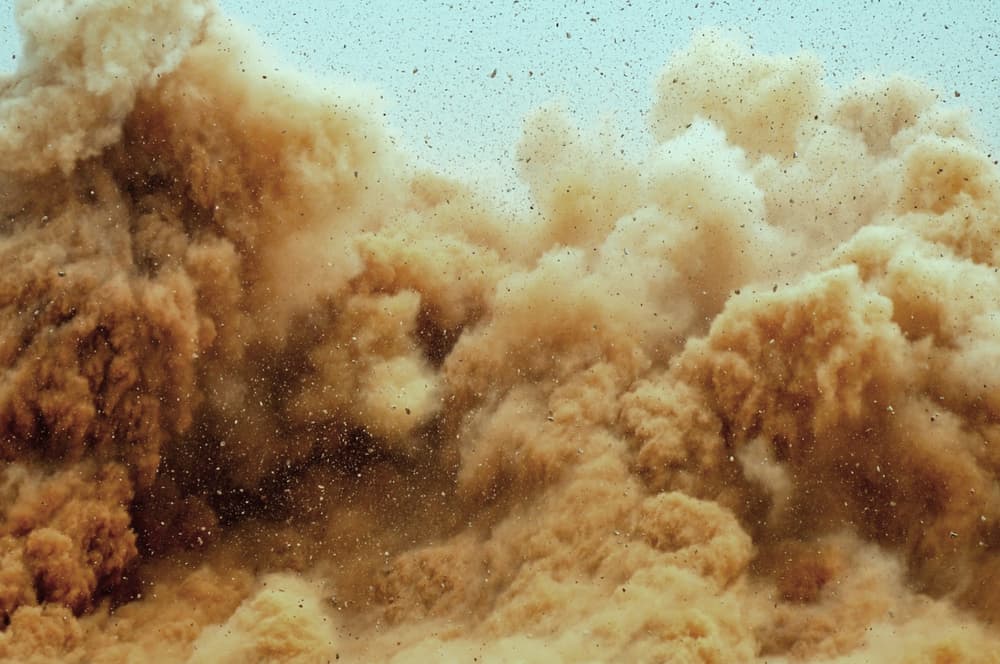
Two late-night dust storms, known as haboobs, swept across the Phoenix area last week, each reaching Category 5 — the highest level on the Phoenix Dust Storm Scale developed by Arizona State University researchers. Both storms reduced visibility to about half a mile. According to the Associated Press, they were only the fifth and sixth storms in 16 years of record-keeping to reach that severity level. The first storm, which struck late Monday, lingered for a record 16 hours.
How bad did air quality get?
During an earlier dust storm the same week, air pollution readings across the Phoenix metro soared to more than 14 times above normal, according to the Arizona Department of Environmental Quality. Most monitors read above 200 micrograms per cubic meter of particulate pollution, well past the normal level of below 50; some readings topped 300, and one exceeded 700. The high readings triggered a health advisory and an automatic no-burn day across the Valley.
Why did the dust linger so long?
An ASU researcher who helped build the Phoenix Dust Storm Scale said weeks of hot, dry conditions made dust easier to lift, and because these storms weren't followed by rain, the dust stayed at high concentrations for hours instead of settling quickly. Cloud cover also helped trap the dust closer to the surface.
How is dust different from wildfire smoke?
Dust storms and wildfire smoke both spike outdoor pollution, but they're made of different particle types — dust is typically coarser (PM10), while smoke skews toward the finer PM2.5 particles. Both can infiltrate homes through doors, windows, and gaps in the building envelope, and both put extra load on an HVAC system's filter.
Prep your home for dust storm season
Dust storms can develop with little warning. A few steps to take now:
- Set your HVAC system to recirculate mode when a dust storm is approaching.
- Keep an eye on real-time air quality maps for your area.
- Switch to a MERV 13 filter, the EPA-recommended rating for capturing fine particulate pollution, if your system can support it.
Sources: KTAR News, Arizona Department of Environmental Quality, Associated Press.