
Fine Particle Air Pollution Linked to Worsening Gum Disease, New Study Finds
September 1, 2026
Health & Wellness | September 1, 2026 | 2 min read
Fine Particle Air Pollution Linked to Worsening Gum Disease, New Study Finds
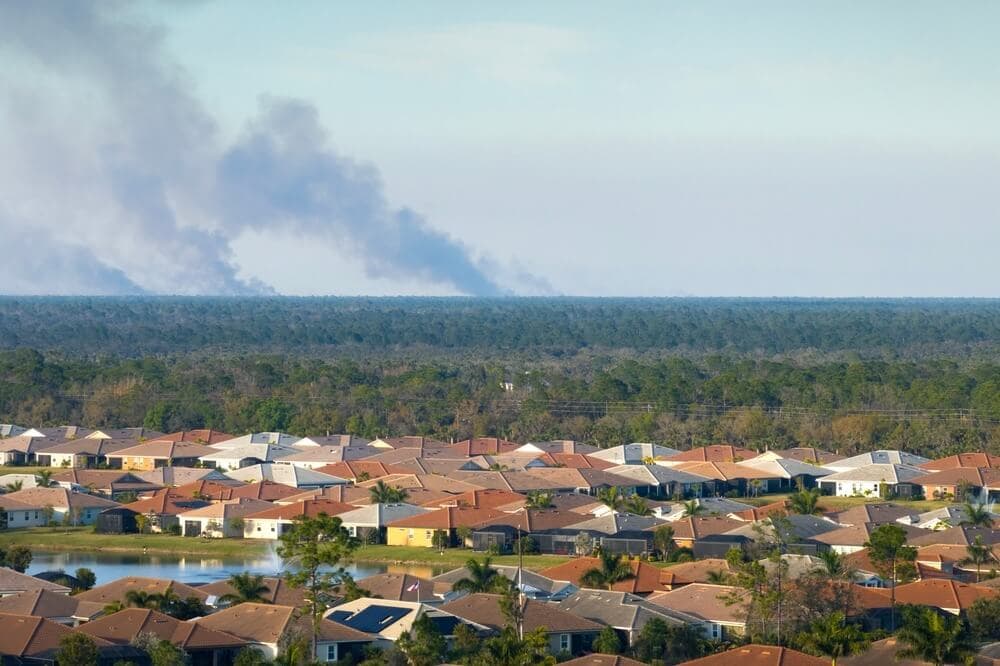
Air pollution is already tied to asthma, heart disease, and lung damage. Now, a new laboratory study out of Brazil adds another organ to that list: your mouth. Researchers found that fine particulate matter (PM2.5), the same pollutant behind hazy skylines and wildfire smoke advisories, can inflame oral tissue and speed up the bone loss that drives periodontal (gum) disease.
The findings, published August 19, 2026 in the journal Air Quality, Atmosphere & Health, add lab evidence to a growing body of human research linking dirty air to poor oral health, and they're a reminder that the air you breathe indoors matters just as much as what's happening outside.
What did the new study find?
Researchers from São Paulo State University (UNESP) and the University of São Paulo (USP), led by UNESP dentistry professor Luis Carlos Spolidorio, exposed lab mice to real polluted air collected from a busy avenue in São Paulo, one of the world's most traffic-congested cities. Even without any artificially induced gum inflammation, the exposed mice developed measurable changes: thickened oral tissue, elevated keratin buildup, higher counts of activated mast cells (immune cells tied to inflammation), and increased oxidative stress. In mice with existing periodontal inflammation, PM2.5 exposure sped up alveolar bone loss, the bone that anchors teeth in place.
"What we didn't expect to observe were such significant changes in oral tissues," Spolidorio said, noting the study is among the first to show a direct biological mechanism, not just a statistical correlation, linking air pollution to oral tissue damage.
How does air pollution reach your gums?
The research team pointed to two pathways. Fine particles inhaled through the nose and mouth can land directly on oral tissue, triggering local inflammation on contact. Those same particles also enter the bloodstream, driving systemic inflammation and oxidative stress that shows up in tissue throughout the body, including the gums.
This lab finding lines up with human data. A 2023 cohort study cited in a 2024 Frontiers in Public Health review found that long-term PM2.5 exposure was associated with a measurably higher risk of periodontitis, and that people who already had gum disease showed an even sharper inflammatory response to particle exposure than people with healthy gums. The same review linked PM2.5 to a higher risk of dental caries and, in a Taiwanese population study, a higher likelihood of oral cancer at elevated pollution levels.
Is this just an outdoor, big-city problem?
No. One of the more practical points researchers and public health agencies keep making is that outdoor pollution doesn't stay outdoors. The U.S. Environmental Protection Agency notes that outdoor PM2.5 readily infiltrates homes through doors, windows, and gaps in a building's envelope, and once inside, it lingers, since most homes don't exchange indoor and outdoor air quickly enough to clear it out. Indoor sources, including cooking, candles, and secondhand smoke, add to that particle load. So a "good" outdoor air quality day doesn't automatically mean the air inside your home is clean, and a smoky or high-pollution day outside can mean hours of elevated exposure indoors unless that air is actively filtered.
What does the research mean for your health at home?
The study's authors were clear that this is animal research, and more human trials are needed before drawing firm conclusions about individual risk. They also stressed that daily habits still matter. Brushing, flossing, and regular dental checkups remain the foundation of gum health, and no filter or purifier replaces them. But the researchers also noted that "good habits alone cannot provide complete protection" from airborne pollutants, pointing to cleaner air, both outdoors and inside the home, as a necessary complement to oral hygiene.
How much PM2.5 reaches you indoors comes down to your filter
You can't control what's in the air outside. Indoor air is different because your HVAC system cycles the air in your home repeatedly whenever it runs, and all of it passes through one filter on the way.
A few things worth doing now:
- Check what your current filter is actually rated to capture. PM2.5-sized particles need at least a MERV 13 to be reliably trapped.
- Match the rating to your household: MERV 8 covers most homes, MERV 11 suits allergy and pet households, MERV 13 is the step up for smoke and fine particles, and odor-eliminating options add carbon for cooking and musty odors.
- If you run a 4-inch filter, log the install date. Filterbuy 4-inch filters last 6 to 12 months.
- Ensure the filter sits flush in the slot, since gaps let air bypass the media entirely.
- Keep standard 1-inch filters on a 1- to 3-month replacement schedule.
Sources: Air Quality, Atmosphere & Health (Springer), FAPESP Research Foundation, Air Quality News, Earth.com, Frontiers in Public Health, U.S. EPA, Indoor Particulate Matter.