
Bug Fire Merges With Fred Mountain, Tops 60K Acres
August 12, 2026
Wildfire Update | August 12, 2026 | 2 min read
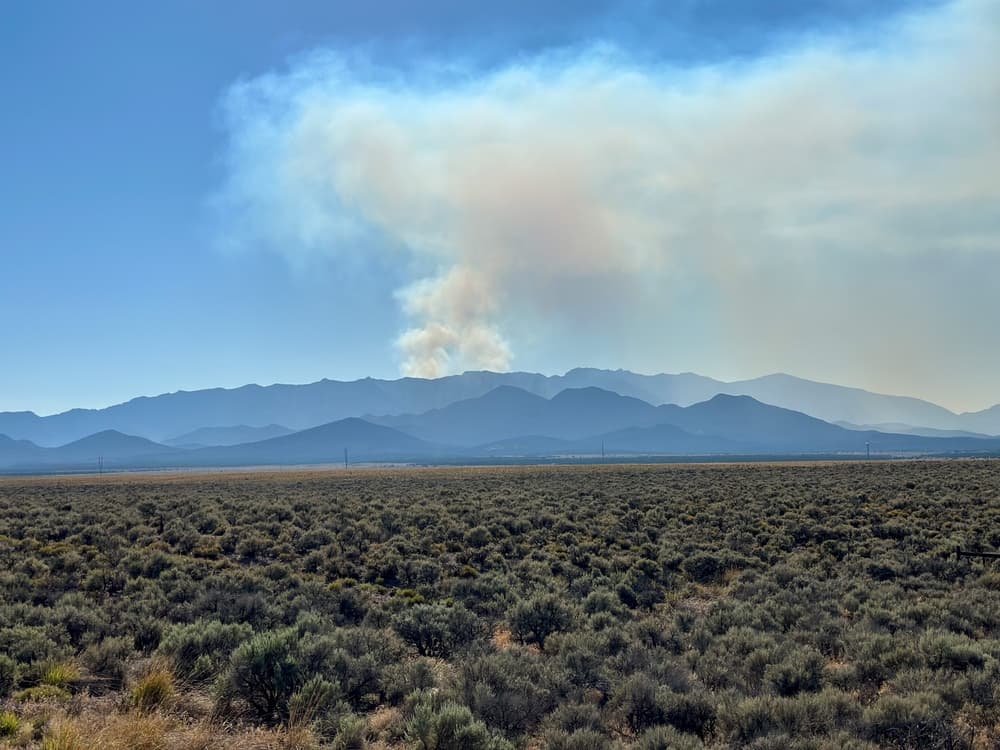
Wildfire Spotlight: The Bug Fire Merges With Fred Mountain Fire, Tops 60,000 Acres North of Reno
The Bug Fire has merged with a second blaze along the California-Nevada border, creating one large, fast-growing fire near Reno. Here's the latest on size, containment, and what's driving it.
What's the latest on the Bug Fire?
The Bug Fire, which ignited August 8 near Hallelujah Junction on the California-Nevada border, has merged with the nearby Fred Mountain Fire. Officials are now tracking the two as a single combined fire perimeter. As of August 12, the merged fire has burned approximately 61,800 acres and is 4% contained, according to the Bureau of Land Management-Nevada, which has taken over command of the incident.
Where is it burning, and who's affected?
The fire is burning north of Reno along the California-Nevada border, in the North Valleys area of Washoe County. It has forced mandatory evacuations for an estimated 5,000 to 6,000 residents, including in the Cold Springs and Lemmon Valley areas.
Why is it growing so fast?
Extremely dry fuel, hot conditions, and strong afternoon winds have driven rapid fire movement, with officials warning that similar conditions are expected to continue pushing significant growth. Nevada Gov. Joe Lombardo declared a state of emergency for Washoe County due to the pace and scale of the fire.
How does this fit into the bigger picture?
Nevada is in the middle of a severe, months-long drought, with critically dry vegetation across the state. The national fire preparedness level currently sits at its highest tier, meaning firefighting resources nationwide are heavily committed, and officials warn the potential for new large fires in the region remains above normal in the days ahead.
Prep your home before smoke arrives
Wildfire smoke can travel well beyond the fire zone. A few steps to take now:
- Set your HVAC system to recirculate mode when smoke is in the area.
- Keep an eye on real-time air quality maps for your area.
- Switch to a MERV 13 filter, the EPA-recommended rating for wildfire smoke, if your system can support it.
Sources: Bureau of Land Management-Nevada, National Interagency Fire Center, KOLO, News 4.