
The Big Grass Fire Is Now Nearly 400,000 Acres: and Its Smoke Comes From a Different Kind of Fuel
August 7, 2026
Wildfire Update | August 7, 2026 | 2 min read
Wildfire Spotlight: Big Grass Fire Nears 400,000 Acres on the Oregon-Idaho Border
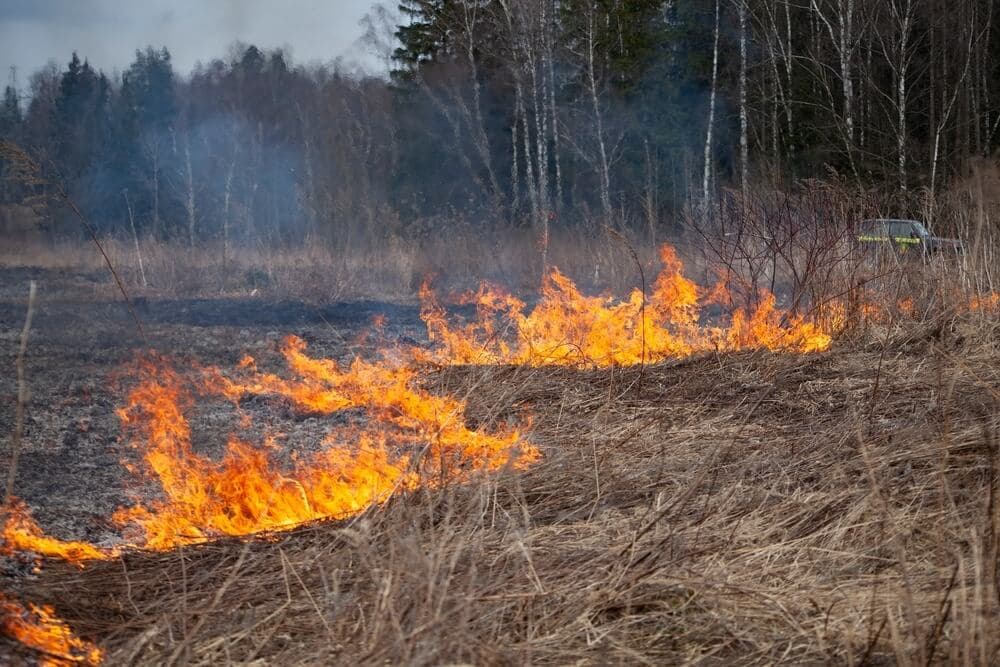
While most Northwest wildfire coverage this week has centered on Spokane and Portland, the largest active fire footprint in the region is a rangeland fire most of the country hasn't heard of. The Big Grass Fire, burning across the Oregon-Idaho border, has grown into one of the biggest wildfires in the country this year, and it's burning a different kind of fuel than the timber fires driving headlines elsewhere.
How large has the Big Grass Fire grown?
The Big Grass Fire, burning across Malheur County, Oregon, and Owyhee County, Idaho, had burned approximately 387,475 acres and was 39% contained as of August 6. It ignited in mid-July during a lightning strike and expanded rapidly through dry grass and sagebrush terrain, at one point standing as the largest active wildfire in the country.
Level 3 "Go" evacuation orders have remained in effect for Pleasant Valley, South Mountain, and Jordan Valley due to road closures caused by the fire, and Idaho's governor deployed the Idaho National Guard to support firefighting efforts in Owyhee County.
Why does a rangeland fire matter for air quality coverage?
Most of the wildfire smoke making national news this week is coming from timber fires burning through forested terrain, like the fires near Spokane and the Grasshopper Fire near Mount Hood. The Big Grass Fire is burning grass and sagebrush instead of trees, which changes the smoke it produces even though the fire itself is enormous.
What's different about smoke from a grass and sagebrush fire?
Grass and rangeland fires typically burn faster and at lower intensity than timber fires, consuming fuel quickly rather than smoldering for extended periods. That tends to produce a shorter, more intense pulse of smoke rather than the dense, lingering haze associated with slow-burning forest fires.
The particulate matter released is still fine enough to require the same filtration response, but the smoke plume from a rangeland fire can clear from a given area faster once the fire front passes, even as it may spike sharply while nearby.
Is this fire likely to affect air quality outside the immediate area?
The Big Grass Fire is burning in a rural, sparsely populated stretch of the Oregon-Idaho border, so its smoke plume has drawn far less national search interest than the Spokane or Portland events despite its size.
Nearby communities in Owyhee and Malheur counties are the most directly affected by smoke and ash, while broader regional impact depends on wind direction carrying the plume toward more populated areas.
Prep your home if smoke reaches you
Rangeland fire smoke can spike quickly even where skies looked clear the day before. A few steps to take if it moves your way:
- Set your HVAC system to recirculate mode when smoke is visible or forecast for your area.
- Monitor local air quality readings rather than relying on conditions in a nearby city.
- Switch to a MERV 13 filter, the EPA-recommended rating for wildfire smoke, if your system can support it.
Sources: IQAir, KTVB, NW FireWatch, Idaho News.