
Belgium's Largest Wildfire on Record Pushes Toward the German Border
August 17, 2026
Wildfire Update | August 17, 2026 | 2 min read
Wildfire Spotlight: Belgium's Biggest Blaze on Record Nears Germany as Rain Finally Offers a Break
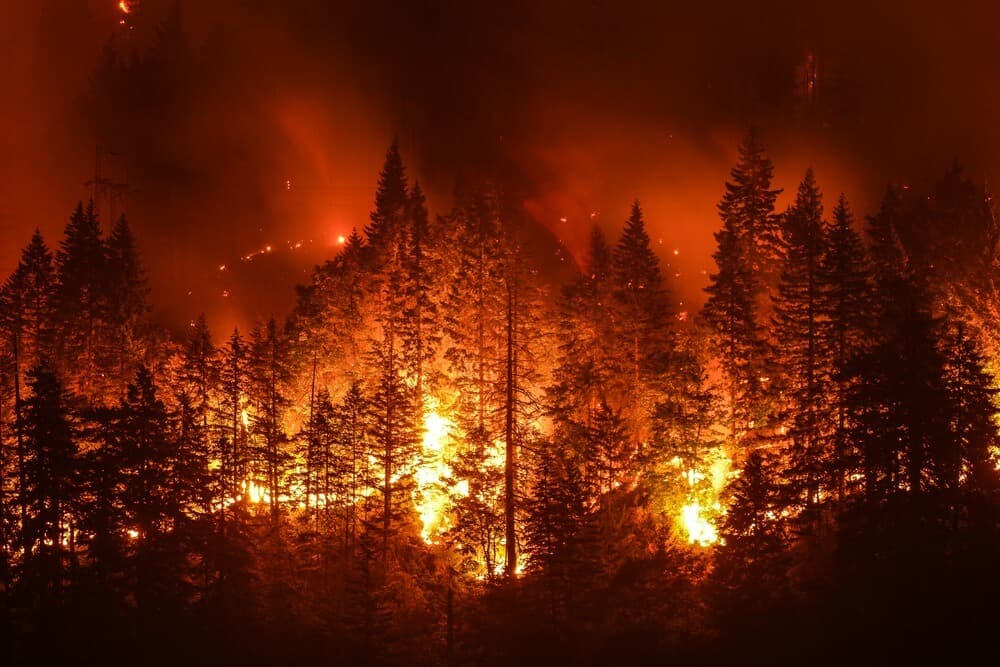
A wildfire tearing through Belgium's High Fens nature reserve has become the largest ever recorded in the country. It has forced evacuations and sparked a cross-border firefighting effort, with smoke now drifting toward Germany and Luxembourg. Here's what's fueling the fire, who's on the front lines, and how this week's rain changed the picture.
How big is the fire, and where is it burning?
The blaze started Friday, August 14, in the High Fens (Hautes Fagnes), a nature reserve of peat bogs, heathland, and pine forest in Belgium's Liège province, near the German border.
By Sunday, it had spread across roughly 3,000 hectares (about 7,400 to 7,500 acres), an area about half the size of Manhattan.
That makes it Belgium's biggest wildfire on record, more than double the previous mark of roughly 1,400 hectares set in 2011, according to the European Forest Fire Information System.
Is the fire moving into Germany?
The fire's leading edge has been pushing east toward the border. By Sunday, the German town of Monschau reported that flames had come within about 3 kilometers (1.9 miles) of its territory.
Officials there don't expect the fire to cross into Germany, but they asked residents in three districts to leave temporarily due to the heavy smoke.
Just across the border in Luxembourg, authorities noticed a distinct smell of burning and said they were keeping a close watch, though they had found no significant health impact as of Sunday.
What did the response look like?
More than 250 firefighters and emergency workers from Belgium, Germany, Luxembourg, and the Netherlands were on the ground by Sunday.
That number climbed to around 500 by Monday. The effort brought together Dutch helicopters, water-bombing aircraft, the Belgian army, and even local farmers who used their tractors to help carve out containment lines.
About 600 residents of the nearby towns of Waimes and Bütgenbach were evacuated Saturday as winds shifted and smoke spread.
By Sunday afternoon, crews had brought two of the fire's fronts, both heading toward Jalhay and Monschau, under control. Still, the blaze as a whole had not yet been contained.
What changed by Monday?
The weather finally shifted in the firefighters' favor. The fire had erupted on the heels of a heat spike that drove temperatures to around 37°C (98.6°F) on Friday, following weeks of little rain.
By Monday, up to 9 millimeters of rain had fallen over eastern Belgium, and temperatures had dropped to about 19–20°C. The added humidity helped crews hold their lines, and overnight spread stayed limited.
Officials had not yet released an overall containment figure.
How does this fit into Europe's wildfire summer?
The Belgian fire is just one part of a much larger story. Two people died Sunday as flames swept through the Greek island of Salamina. A wildfire in Spain's Aragón region has scorched tens of thousands of hectares. And France was fighting its third major fire of the summer in the Landes region.
Scientists point to human-caused climate change, which has made the hot, dry conditions behind these fires more likely, helping them spread faster and burn longer.
"We would never have imagined that Belgium would be affected by a fire of this scale. Now, we have to face the facts," Karim Bouarfa, a fire brigade captain who worked through the height of the blaze, told Reuters. "I think we will have more and more of them, so it is up to us to prepare ourselves as best as possible."
Prep your home while wildfire smoke is in the air
Smoke from a fire this size can travel hundreds of miles and seep into homes far beyond the burn zone, even with doors and windows shut. Here are a few steps to take when smoke is nearby:
- Set your HVAC system to recirculate mode while smoke lingers in the area.
- Watch real-time air quality maps for your location.
- Switch to a MERV 13 filter, the EPA-recommended rating for wildfire smoke, if your system can handle it.
Sources: Reuters, Al Jazeera, France 24, ABC News, IQAir, European Forest Fire Information System.