July 7, 2026
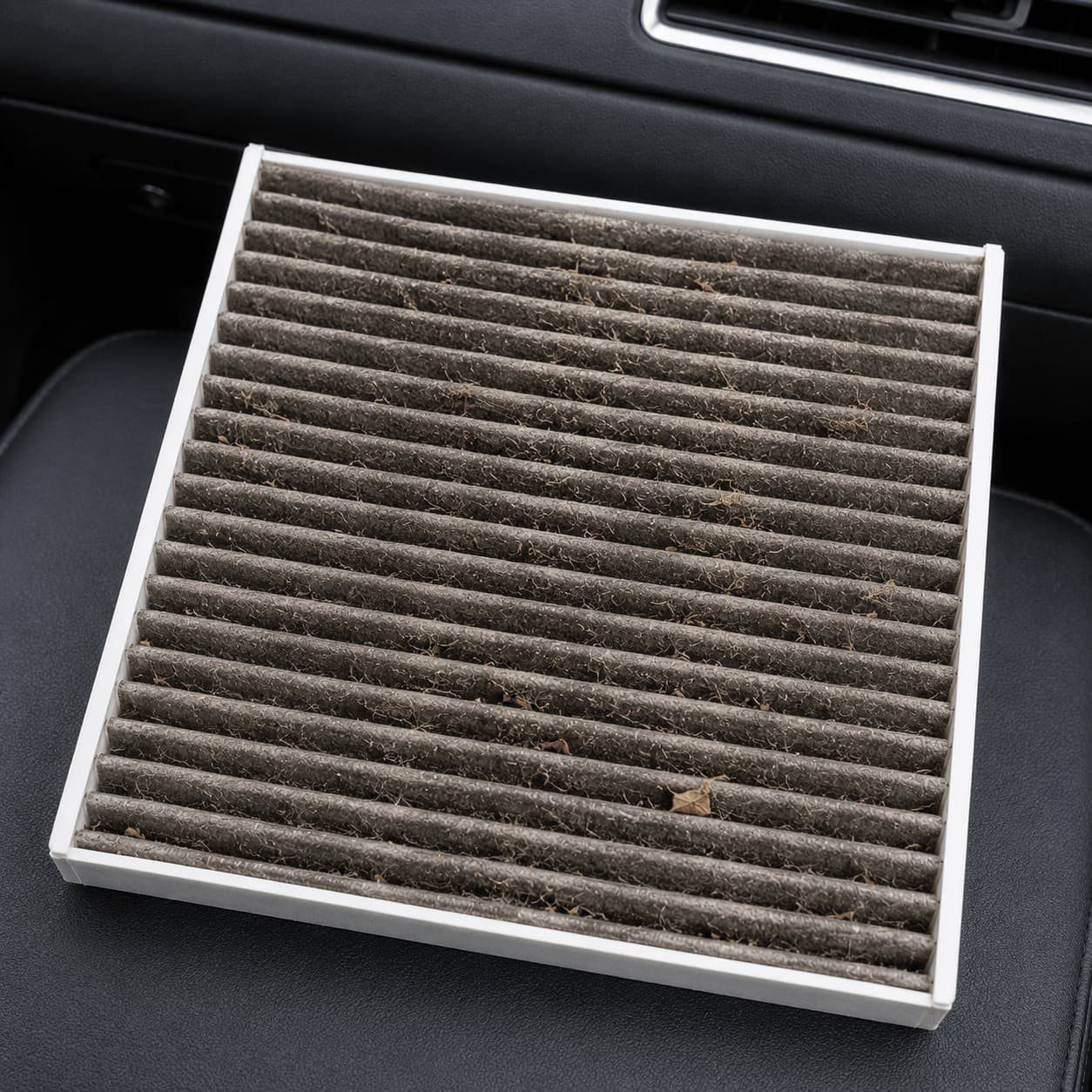
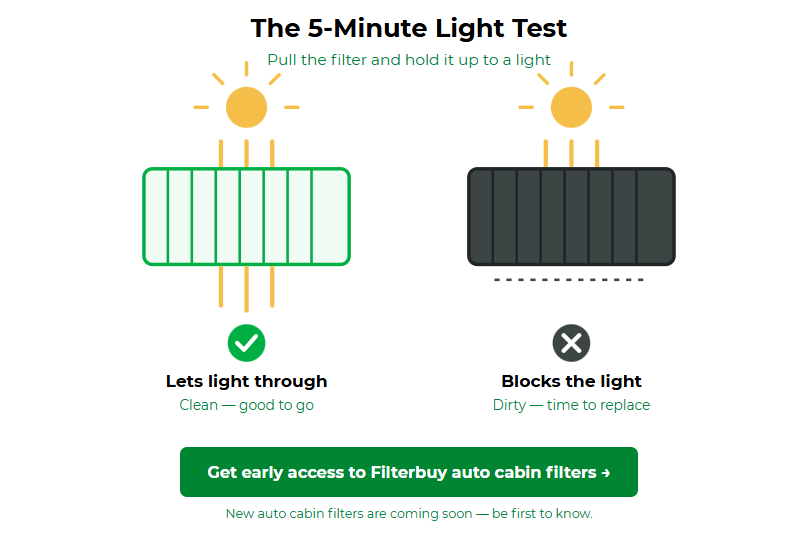
The fastest check takes five minutes: pull the filter and hold it up to a light. A clean filter is white and lets light through; a dirty one looks gray, brown, or black and blocks the light. If little to no light passes through, it's time for a new one. Most manufacturers suggest replacing it every 15,000 to 30,000 miles, sooner if you drive on dirt roads or in dusty, high-pollen areas.
Watch for these 7 warning signs:
The filter looks visibly dirty or discolored
Sluggish or weak acceleration
Jerking or hesitation when you press the gas
Rough idle or engine misfires
The check engine light comes on
Stalling (a possible contributor, rarely the only cause)
Trouble starting or running hot (least likely, worth ruling out)
Here's the quick light test that settles it at a glance:
Not sure which filter fits your vehicle? Answer a few quick questions and we'll match you to the right one.
Your car’s air filter is cheap, easy to replace, and incredibly easy to forget. But when it gets clogged with dirt and debris, it starves your engine of oxygen, leading to sluggish acceleration, rough idling, and even misfires.
Before you pay a mechanic to diagnose these symptoms, check your filter first. Here are 7 clear signs it’s time for a replacement.
A clogged air filter can negatively impact your car's performance by reducing airflow to the engine.
Common symptoms of a dirty air filter include sluggish acceleration, rough idling, and even engine misfires.
Regularly inspecting and replacing your air filter is a quick, inexpensive maintenance task that can prevent bigger engine problems.
Checking your air filter should be one of the first steps in diagnosing performance issues before consulting a mechanic.
A brand-new air filter is white or light cream in color. The pleated paper folds are clean, dry, and clearly defined. Hold it up to a light source and you'll see light passing through easily.
A dirty one tells a completely different story. The paper turns gray, brown, or black. The pleats mat together, clogged with fine dust, road grime, or debris. Hold it up to the light: if you can't see any light filtering through, it's past due for replacement. You might also spot physical debris like leaves, insects, or grit lodged in the folds.
This visual check alone is often enough to make the call. If it looks dirty, it is dirty. Replace it.
Start here. If you haven't checked your filter recently and you're experiencing any performance issues, pull the air box cover and take a look. A heavily discolored filter (particularly one that's gone dark gray or black) is a straightforward sign that it's time for a new one.
Most manufacturers recommend replacement every 15,000 to 30,000 miles, but if you drive regularly on dirt roads, in construction zones, or in high-pollen areas, you may need to change it more frequently.
Check your owner's manual for the specific interval recommended for your vehicle. Filterbuy offers a wide range of replacement engine air filters sized to fit most makes and models, so finding the right one is quick and straightforward.
Press the gas pedal and notice the response. A healthy engine reacts quickly and pulls with authority. A starved one hesitates.
When airflow is restricted, the engine can't produce its full potential power output. Horsepower depends on the volume of oxygen reaching the combustion chamber, and the result is acceleration that feels soft, delayed, or unresponsive.
A 2009 study by Oak Ridge National Laboratory (ORNL), commissioned by the U.S. Department of Energy and EPA (OSTI ID 948545), found that acceleration performance improved measurably on all test vehicles when a clogged air filter was replaced with a clean one. That's a government-backed, peer-reviewed finding, not just a mechanic's rule of thumb.
Yes. Jerking during acceleration is one of the more noticeable symptoms of a restricted air filter. When the engine isn't receiving sufficient oxygen, combustion becomes uneven. The result can feel like a brief stutter or lurch when you press the accelerator, especially at lower speeds or during initial takeoff.
This happens because the air-to-fuel ratio gets thrown off. The engine control unit attempts to compensate, but under severe restriction, combustion timing becomes inconsistent, and you feel it through the steering wheel and seat.
If your car jerks during acceleration and you haven't checked the air filter recently, it's the first thing to inspect. Other possible causes include faulty spark plugs or a clogged fuel injector, but a clogged filter is the easiest and cheapest fix to rule out first.
A healthy engine at idle is smooth and steady: a consistent hum with no vibration. When the air-fuel mixture is off due to restricted airflow, combustion in one or more cylinders can become irregular. That produces a rough, uneven idle that you'll feel as a vibration or hear as a choppy, stumbling engine note.
Over time, a rich-running condition (too much fuel relative to air) causes incomplete combustion, which deposits carbon residue on spark plugs. Carbon-fouled plugs compound the problem. Now you have both restricted airflow and reduced ignition efficiency contributing to misfires.
Carbon deposits from prolonged operation with a restricted filter can trigger fault codes through your vehicle's onboard diagnostic system. Common culprits include misfires (codes P0300 to P0312) and mass airflow sensor readings that fall outside expected parameters.
A check engine light has dozens of potential causes, so the filter isn't necessarily the reason. Still, it's worth inspecting before paying for a diagnostic scan. If the light appeared alongside any of the other symptoms on this list, start with the filter.
A clogged air filter can contribute to stalling, though it's rarely the sole cause. In severe cases, extreme restriction disrupts the combustion process enough to cause the engine to cut out, particularly at idle, when airflow demand is lowest and the margin for error is smallest.
That said, stalling has a long list of potential causes: a malfunctioning idle air control valve, a dirty throttle body, a failing fuel pump, or vacuum leaks, to name a few. A dirty air filter is worth checking, but don't stop there if a filter replacement doesn't resolve the issue.
These are less direct connections, and it's important to be precise here.
A severely clogged filter can contribute to rough running and incomplete combustion, which generates excess heat in the combustion chamber. Whether that results in a rising coolant temperature depends on the severity of the restriction and other factors. Overheating is more commonly caused by coolant leaks, a failing thermostat, or a malfunctioning water pump. A dirty filter alone is unlikely to overheat a well-maintained engine.
Similarly, a clogged filter is rarely the reason a car won't start. A no-start condition far more commonly points to a dead battery, a failing starter, or a fuel delivery issue. Still, if your car is struggling to start and you're experiencing other symptoms on this list, it costs nothing to check the filter first.
Myth: A dirty air filter kills your gas mileage.
For modern fuel-injected vehicles, this is not accurate. A 2009 DOE/ORNL study (OSTI ID 948545) tested three late-model passenger vehicles and found no significant effect on fuel economy from a clogged filter.
Modern engine control systems use closed-loop feedback to maintain the correct air-to-fuel ratio regardless of intake restriction. Fuel consumption at steady-state driving doesn't increase even when the filter is heavily clogged.
The performance hit shows up in acceleration, not at the pump.
The exception is older, carbureted engines (typically pre-1980s). These use open-loop control and can see a 2 to 6% drop in fuel economy with a dirty filter, and up to 14% with an extremely clogged one, though at that point the car becomes nearly undrivable anyway.
Myth: A dirty air filter will definitely cause stalling, overheating, or a no-start.
A clogged filter can be a contributing factor in some cases, but it is not a reliable diagnosis for any of these conditions. Each has many more common causes. Always rule out the filter first, then investigate further if the problem persists.
Checking your air filter takes less than five minutes and requires no tools in most vehicles:
Locate the air box: It's typically a black plastic housing connected to a large intake tube, sitting prominently in the engine bay.
Open the housing: Unclip the metal clips or remove the screws holding the lid down.
Remove the filter: Lift it out carefully to avoid shaking debris back into the intake.
Inspect it: Hold it up to a light source. A filter that significantly blocks light, or one that's visibly gray, brown, or black, needs replacing.
Check for physical debris: Insects, leaves, and grit are common in filters that haven't been changed in a while.
For step-by-step guidance on fitting a new one, see our full guide on how to change a car air filter. If you're unsure how frequently your specific vehicle needs a new filter, check out how often to replace your car's air filter.
A dirty air filter is one of the most cost-effective fixes in automotive maintenance. A Filterbuy replacement filter typically runs between $15 and $30, installs in minutes, and can restore the responsive, smooth performance your engine is supposed to deliver.
If you're experiencing rough idling, weak acceleration, or jerking during takeoff, don't wait. Check the filter first. It might be all you need.
Browse Filterbuy replacement air filters.
Yes, a dirty air filter can cause jerking during acceleration. When airflow to the engine is restricted, combustion becomes uneven, leading to hesitation or lurching, particularly when pressing the accelerator from a standstill. Other potential causes include worn spark plugs or a clogged fuel injector, so if a filter replacement doesn't resolve the issue, have the vehicle inspected.
A dirty air filter is visibly discolored (typically gray, brown, or black) with clogged, matted pleats. A clean filter is white or off-white with defined paper folds. Holding the filter up to a light source is the easiest test: if little to no light passes through, it's time for a replacement. Filterbuy replacement filters are available in a wide range of sizes to fit most vehicles.
Yes. A restricted air filter reduces the oxygen available for combustion, which directly impacts acceleration and engine responsiveness. However, in modern fuel-injected vehicles, it does not significantly reduce fuel economy at steady-state driving speeds, according to a 2009 DOE/ORNL study (OSTI ID 948545).
A severely clogged air filter can be a contributing factor to stalling, particularly at idle. However, stalling has many causes, including a dirty throttle body, faulty idle air control valve, or fuel system issues, so a filter alone is rarely the definitive diagnosis. Check the filter first, then investigate further if stalling persists.
No, not in modern fuel-injected vehicles. A 2009 DOE/ORNL study (OSTI ID 948545) found no significant impact on fuel economy from a clogged air filter in fuel-injected cars with closed-loop engine control. The performance loss appears in acceleration, not steady-state fuel consumption. This only differs for older, carbureted engines.
Yes. A restricted air filter can cause engine misfires due to an imbalanced air-fuel mixture, which produces a rough idle and vibration. Prolonged operation with a dirty filter can also foul spark plugs with carbon deposits, compounding the problem.
