July 7, 2026
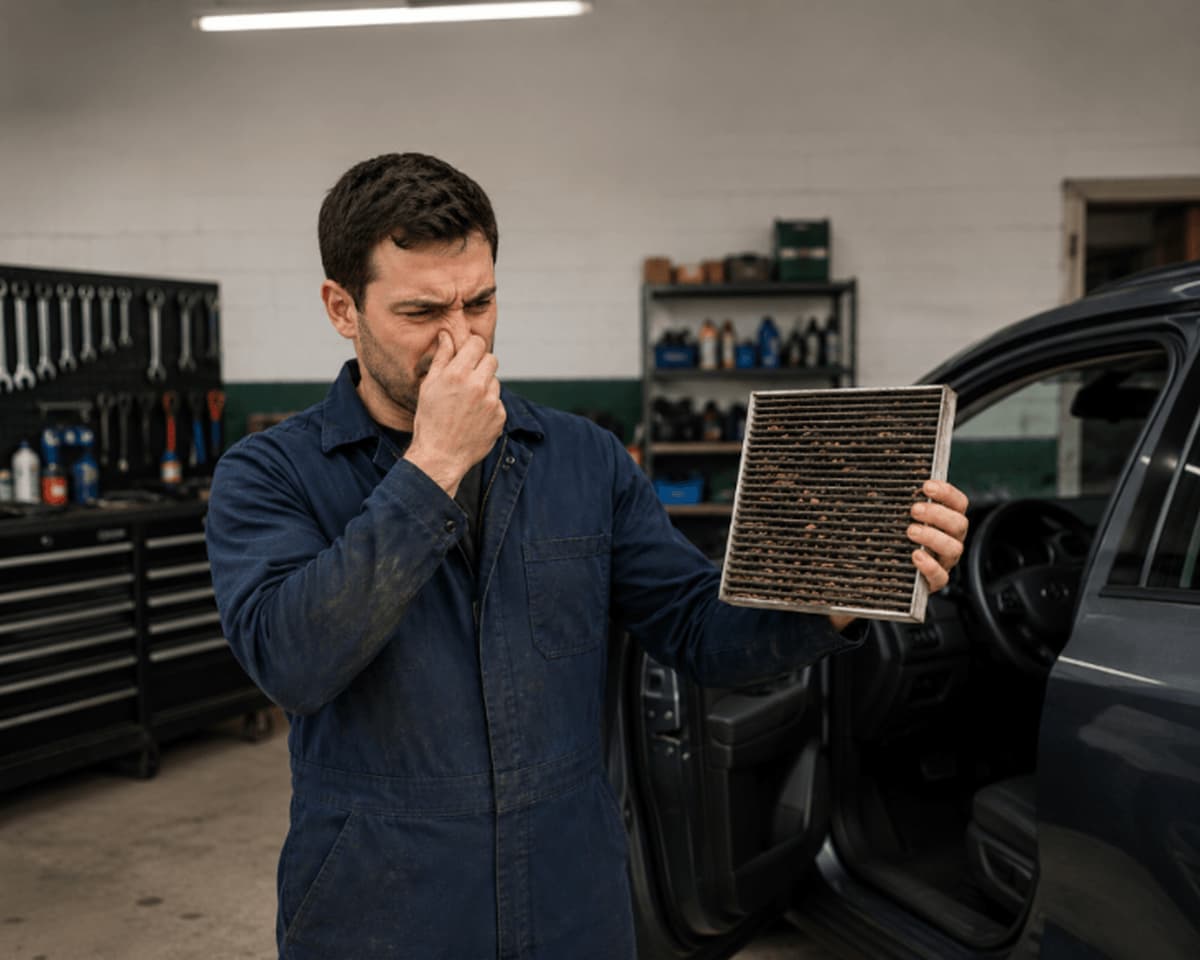
A dirty engine air filter won’t affect your car’s AC — but a dirty cabin air filter will. The cabin air filter cleans the air flowing into your vents, so when it clogs with dust and debris, airflow drops and your AC feels weaker.
The fix is usually simple. Your cabin filter is inexpensive, easy to reach, and often a 10-minute swap — and you can find the right cabin air filter for your car in a couple of clicks.
Engine air filter — feeds the engine. No effect on your AC.
Cabin air filter — feeds your vents. A clog here is what weakens your AC.
Not sure which one your car takes? Take the quick match quiz below.

Answer 3 quick questions and we’ll match you to the right cabin air filter.
A clogged engine air filter does not affect your car's air conditioning. However, a clogged cabin air filter will impact your AC's performance. When the cabin air filter gets clogged with dust and debris, it restricts airflow to the vents, making the AC feel less powerful. Thankfully, replacing a cabin air filter is typically an inexpensive and easy fix.
Cabin Air Filter: This is the filter related to your car's AC system. A clogged cabin air filter can restrict airflow, making your AC feel weaker and less effective. Replacing it regularly ensures optimal air circulation and efficiency.
Engine Air Filter: While this filter impacts engine performance and fuel efficiency, it has no direct effect on your AC.
Regular maintenance of both filters is essential, but know which one affects different systems in your car for better troubleshooting and care.
When someone searches “does the air filter affect the AC in a car,” they're usually thinking of a single filter. The truth is, your car has two completely separate air filters, each doing a completely different job. Both pick up dirt over time. Both need replacing. But their effect on your AC system couldn't be more different.
Mechanics see this confusion constantly. A driver notices weak airflow from the vents, assumes their air filter is dirty, checks the engine air filter, and either finds it clean or replaces it without solving the problem. The cabin air filter, tucked away behind the glovebox, gets overlooked entirely.
The engine air filter lives in the engine compartment and does one job: it filters the air pulled into the engine for combustion. Every internal combustion engine needs a precise air-to-fuel mixture to run. The engine air filter keeps dust, sand, and debris out of the engine.
That's it. The air passing through the engine air filter never reaches your cabin or your AC vents. It feeds the engine, and only the engine.
So if your engine air filter is clogged or dirty, you might notice reduced acceleration, engine misfires, black exhaust smoke, or a check engine light. What you won't notice is any change in how cold or how strongly your AC blows.
The cabin air filter is a different story. This filter sits inside the passenger compartment, usually behind the glovebox, under the dashboard, or sometimes under the hood, depending on the vehicle model. Every bit of air that enters your cabin through the heating, ventilation, and air conditioning (HVAC) system passes through this filter first.
It blocks dust, pollen, insects, leaves, fungal spores, and even fine diesel soot from entering the cabin. When it's clean, air flows freely, and your vents deliver strong, consistent airflow. When it's clogged, it creates a bottleneck: you start to feel reduced airflow from the vents, notice musty odors, or find dust settling on your dashboard faster than it should.
A missing cabin air filter creates the opposite problem: unfiltered air floods the HVAC system, allowing fungal spores and bacteria to colonize the foam insulation inside the ductwork. This can lead to symptoms ranging from a runny nose and itchy eyes to serious respiratory issues in sensitive individuals.
| Engine Air Filter | Cabin Air Filter | |
|---|---|---|
| Location | Engine compartment | Behind glovebox / under dashboard |
| Job | Filters air for engine combustion | Filters air entering the cabin via HVAC |
| Effect on AC airflow | None | Direct: a clogged filter reduces vent airflow |
| Replacement interval | Per owner's manual; varies by driving conditions | Every 15,000–30,000 miles, or per your owner's manual |
| Symptoms when dirty | Reduced acceleration, misfires, check engine light | Weak vent airflow, musty smell, dusty cabin |
A clogged cabin air filter is one possible reason your AC feels weak, but it's not the only one. Before assuming the filter is the culprit, it's worth considering a few other common causes:
Low refrigerant: If the system has a slow leak, refrigerant levels will drop, and cooling performance will suffer. This requires a professional to diagnose and recharge.
Failing blower motor: The blower motor is the component that pushes air through the vents. If it's worn or failing, airflow will be weak regardless of how clean the filter is.
Compressor issues: A compressor that isn't engaging properly can cause the AC to blow air that isn't cold enough.
Clogged condenser or evaporator: Debris buildup on either component reduces the system's ability to cool air efficiently.
Replacing the cabin air filter is a logical first step. It's inexpensive, easy to check, and often DIY-friendly. But if swapping the filter doesn't improve airflow, the problem likely lies elsewhere in the AC system and warrants a mechanic's inspection.
To learn how to replace the cabin air filter yourself, check out our step-by-step guide.
Your cabin air filter is one of the most overlooked service items on a car. Most drivers know to change their engine air filter, but the cabin filter rarely comes up until something goes wrong. Most automotive experts recommend replacing it every 15,000 to 30,000 miles, though dusty environments or heavy pollen seasons may call for more frequent changes.
If your AC airflow has been feeling sluggish, a fresh cabin filter is one of the easiest and most affordable fixes you can try. Not all filters perform the same, so it helps to understand the difference between a cheap and a quality cabin filter and how Filterbuy compares to brands like Fram before you buy. To stay ahead of it, you can even set up a cabin air filter subscription so a fresh one always arrives on schedule.
Replace your cabin air filter with Filterbuy. For more guides on keeping your car's air clean, browse the Filterbuy resource center.
No, the engine air filter does not affect your car's AC. It only filters air for the engine and has no connection to your cabin or vents. The cabin air filter is what controls AC airflow. It cleans every bit of air that enters your car through the HVAC system, so when it gets clogged, vent airflow drops and your AC feels weaker. If your AC isn't blowing as strongly as it should, the cabin air filter is the first thing worth checking.
A dirty cabin air filter will not stop your car's AC from working, but it can make it feel that way. When the filter is heavily clogged, airflow through the vents drops significantly, leaving you with weak, sluggish output that's easy to mistake for a broken AC. The fix is simple: replace the cabin air filter. If airflow doesn't improve after that, the issue likely runs deeper. A fully non-functioning AC points to causes like low refrigerant, a failing compressor, a blocked condenser, or a damaged evaporator, none of which a filter change will fix. At that point, a qualified mechanic should inspect the full HVAC system.
The cabin air filter is the only filter that controls airflow from your car's vents. Located inside the passenger compartment, it filters every bit of air that enters the cabin through the HVAC system before it reaches you. A clogged cabin filter, packed with dust, pollen, or debris, directly reduces airflow from your vents. The engine air filter, by contrast, filters air for engine combustion only. It has no physical connection to the cabin, the vents, or the AC system, and replacing it will not improve vent airflow.
Replace your cabin air filter every 15,000 to 30,000 miles under normal driving conditions. If you drive in dusty areas, live somewhere with heavy pollen, or frequently park outside, aim for every 15,000 miles. In clean, low-traffic conditions, 30,000 miles is a reasonable upper limit. Always check your owner's manual for the interval specific to your vehicle; recommendations vary by make and model. When in doubt, inspect the filter visually: if it looks dark, matted, or clogged with debris, replace it regardless of mileage.
The cabin air filter is most commonly found behind the glove box. Open the glove box, press in the sides to release the retaining tabs, and lower it down to expose the filter housing. In other vehicles, it may sit under the dashboard on the passenger side or near the base of the windshield under the hood. Location varies by make and model. Check your owner's manual if you're unsure where to look. Most cabin air filters require no tools and take under 10 minutes to swap out.
