
Ice Storm Warning: What It Means and How to Prepare Your Home
October 8, 2026
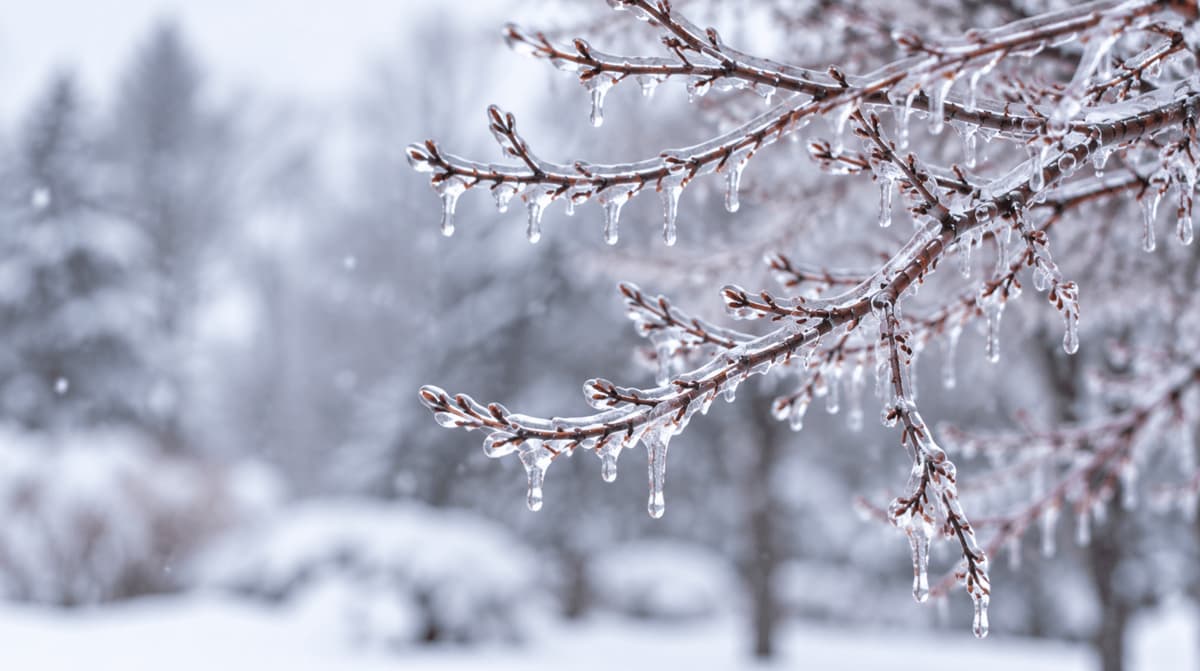
An ice storm warning means the National Weather Service expects damaging ice, usually 1/4 inch or more, within the next 24 to 48 hours. Plan for power outages that could last days, since most furnaces, heat pumps, and boilers need electricity to run.
Before the ice hits, test your carbon monoxide detectors and put in a fresh air filter with a spare on the shelf, because carriers can't reach iced-over streets.
Take the quick quiz below to find the right filter for your home.
Shop Air Filters Before The StormPleated MERV 8, 11, and 13 filters in more than 600 sizes.
Answer a few quick questions and we'll match you to the right filter before the storm arrives.
TL;DR
An ice storm warning is a National Weather Service alert that freezing rain will coat your area in damaging ice, usually 1/4 inch or more. Ice that heavy snaps branches and power lines, so plan for an outage that could last days. Before the ice arrives, learn whether your heat runs without power and set up a safe backup plan, starting with working carbon monoxide detectors.
Key Takeaways
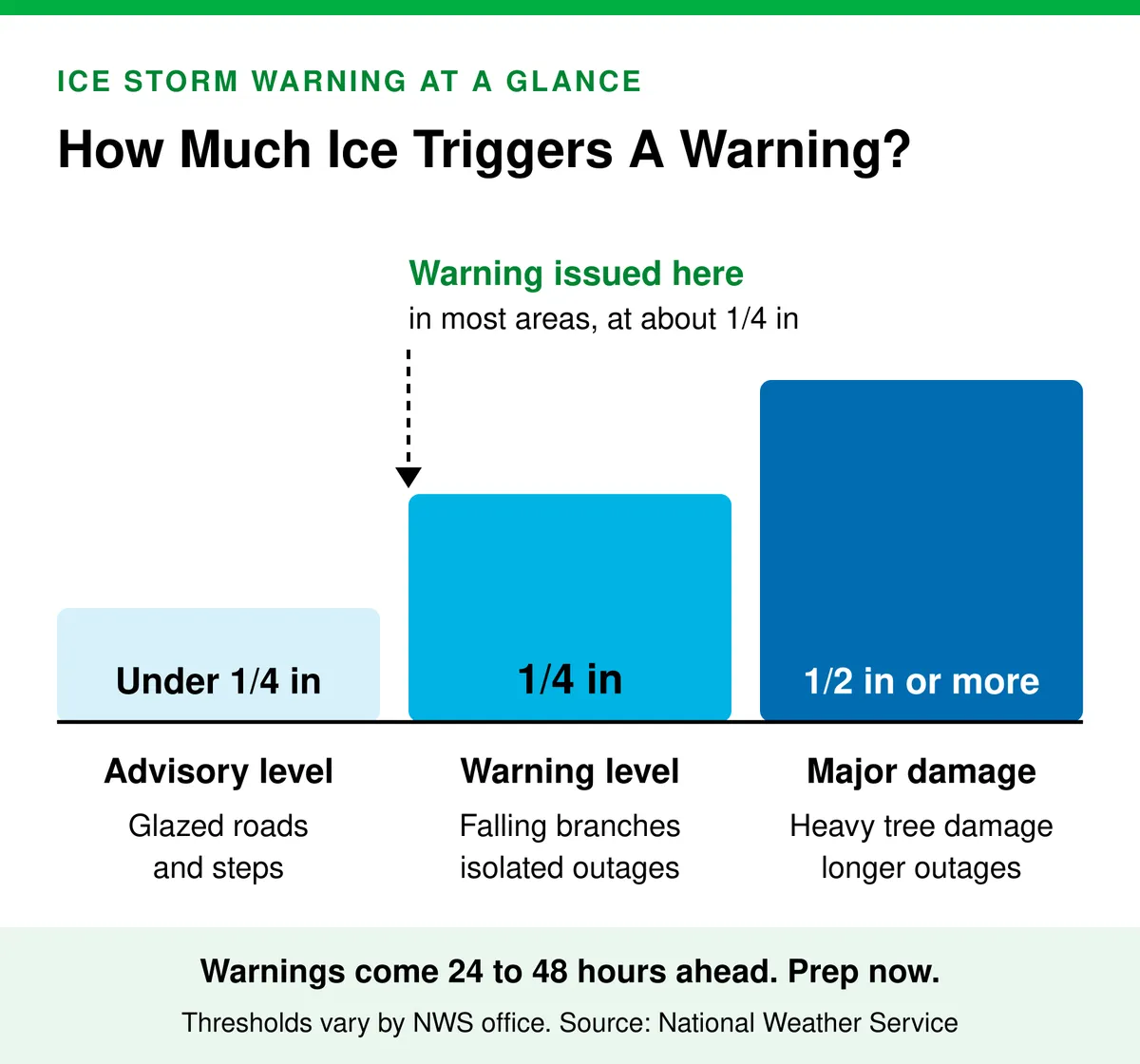
Most areas get an ice storm warning when at least 1/4 inch of ice is expected, while places like southern New England wait for 1/2 inch.
Most furnaces, heat pumps, and boilers need electricity, so losing power usually means losing central heat, even when the gas is still on.
Never run a generator, grill, or camp stove indoors. The CDC says generators belong at least 20 feet from doors, windows, and vents.
Your phone won't buzz: Ice Storm Warnings haven't triggered Wireless Emergency Alerts since 2013.
The riskiest moment for your HVAC comes after the storm, so clear iced vent pipes and check the outdoor unit before you turn the heat back on.
What Does an Ice Storm Warning Mean?
An ice storm warning is the National Weather Service's (NWS) alert for a dangerous freezing rain event. It means forecasters expect about 1/4 inch of ice or more, typically within the next 24 to 48 hours. At that thickness, ice can pull down tree limbs and power lines, and widespread outages often follow.
The exact trigger depends on where you live, since each local NWS office sets the criteria for its area. NWS Indianapolis issues the warning for a quarter inch of ice, for example, while NWS Boston waits for a half inch in southern New England. Forecasters also consider timing and likely damage before they decide.
Don't count on your phone to warn you. Ice Storm Warnings stopped triggering Wireless Emergency Alerts in November 2013, according to the NWS. Once a Winter Storm Watch goes up, follow weather.gov or a NOAA Weather Radio.
Ice Storm Warning vs. Watch, Advisory, and Winter Storm Warning
An ice storm warning focuses on ice: freezing rain is the main threat, and it will reach warning-level amounts. You won't see an "ice storm watch," because the early heads-up comes as a Winter Storm Watch. Lighter icing falls under a Winter Weather Advisory, which replaced the old Freezing Rain Advisory in 2017.
NWS Winter Alerts Compared
Source: National Weather Service watch, warning, and advisory criteria. Thresholds vary by local NWS office.
For snow-driven alerts, see Filterbuy's guide to winter storm watch vs. warning.
How Much Ice Causes Damage?
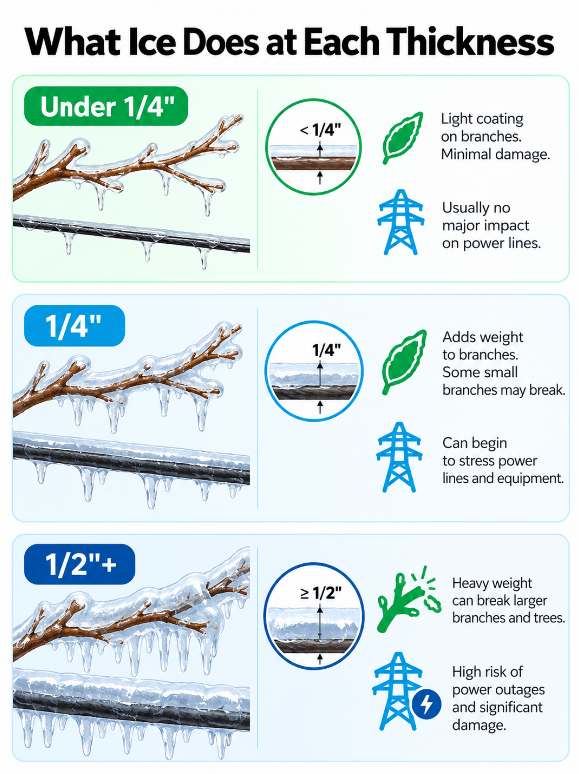
For most communities, damage starts at about a quarter inch of ice.
What Ice Does at Each Thickness
Source: National Weather Service ice storm warning criteria.
Will Your Heat Work During an Ice Storm Power Outage?
If you rely on central heating, probably not. Nearly every modern furnace, heat pump, and boiler needs electricity to run its blower, igniter, controls, or circulator pump. Even a gas furnace with full gas service shuts down once the power goes out.
Which Heating Systems Run Without Power
Confirm how your equipment behaves with the owner's manual or a licensed HVAC technician.
Filterbuy's take: the hardest moment for your HVAC comes when power returns. We've built pleated air filters in our U.S. plants since 2013, so we look at an ice storm from inside the furnace cabinet. The ice itself rarely damages the equipment. The trouble comes afterward, when the system runs for hours to reheat a cold house through a smoke-clogged filter, with vent pipes still capped in ice. So a filter swap belongs on the prep list as well as the cleanup list. Here's how often to change your air filter.
"Most furnaces I get called to after a winter outage aren't broken. The vent pipe is buried in snow, or a breaker tripped when the power came back, so clear the vents and check the breaker before you book a service call."
— David Clark, Licensed HVAC Technician, Filterbuy HVAC Solutions
How to Prepare Your Home Before an Ice Storm
Start preparing when the Winter Storm Watch is issued, well before the first drops freeze.
Test your carbon monoxide and smoke detectors. The CDC recommends battery-operated or battery-backup CO detectors near every sleeping area.
Change your air filter and keep a spare. We cut every Filterbuy filter to order and ship within 24 hours, but no carrier can reach an iced-over street. Order before the warning goes out, and find your filter size if the frame is worn.
Set up a warm room. Pick an interior room with few windows and gather blankets there. Close off unused rooms and roll towels against drafty door gaps.
Protect your pipes. The American Red Cross advises holding the thermostat at the same temperature day and night, and never below 55°F if you leave home. Open the sink cabinets on exterior walls and let faucets on exposed pipes drip.
Charge and stock up. Charge phones and power banks, and gather flashlights, batteries, water, medications, and a weather radio. If anyone in your home relies on powered medical equipment, line up backup power or a place to go now.
Plan your generator setup. Choose a spot outside at least 20 feet from doors, windows, and vents. FEMA warns never to power house wiring by plugging a generator into a wall outlet.
Locate your outdoor HVAC parts. Note where your heat pump and furnace vent pipes sit, so you can find them under ice later.
What to Do During an Ice Storm
Stay home and stay warm, and keep every fuel-burning device where it belongs.
Heat safely. Never warm your home with a gas oven or stove, the CDC warns. Give space heaters 3 feet of clearance and switch them off when you leave the room. Filterbuy's space heater safety guide covers the rest.
Keep generators and grills outside. According to the CDC, fuel-burning devices give off carbon monoxide, an odorless gas that kills more than 500 Americans each year. Headache, dizziness, weakness, nausea, and confusion are common early signs of CO poisoning, per the California Department of Public Health. Filterbuy makes air filters, so we'll say it plainly: no air filter removes carbon monoxide. Only a battery-backed CO alarm can warn you.
Watch your indoor air. A sealed-up house traps smoke from candles and fireplaces, so use flashlights and follow Filterbuy's fireplace air quality tips. Before you air the house out, check your local air quality. Read more on winter indoor air quality.
Turn the thermostat off if the power goes out, and unplug sensitive electronics to protect them from the surge when service returns.
Keep the fridge closed. A closed refrigerator keeps food cold for roughly 4 hours, and a full freezer holds for roughly 48 hours, or 24 if half full, per USDA guidance.
Stay off the roads and away from downed lines. Glazed pavement can look merely wet. Treat every fallen wire as live and report it.
What to Do After the Ice Storm
Bring the heat back in order, starting with the cheapest checks. Following Filterbuy's restart order keeps a buried vent or a tripped breaker from turning into a service call.
Clear furnace vent pipes. High-efficiency furnaces vent through white plastic pipes on an outside wall, and ice over those openings shuts the furnace down. Clear them by hand, or see how to clear a frozen furnace vent pipe safely.
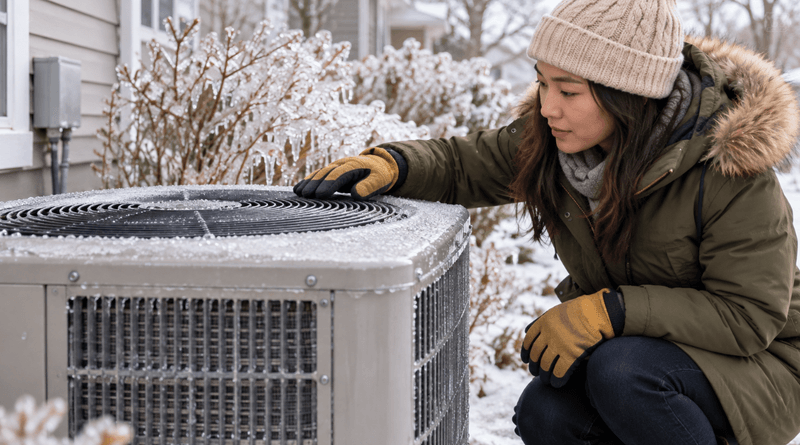
Free the heat pump. A little frost is normal, but a unit encased in ice can't move air. Never chip the ice away with a tool, warns New Hampshire Electric Co-op; melt it gently with water instead.
Wait for steady power. Give the grid a few minutes, check the furnace breaker, then restart the thermostat. After a long, freezing outage, many heat pump makers call for a warm-up period on emergency heat, so check your manual.
Check your filter the day heat returns. If you burned wood for days, it may already look gray. Filterbuy's rule during heavy fireplace use is a fresh filter every 30 days, and Filterbuy auto-delivery keeps one on hand.
Watch for leaks. Frozen pipes can split quietly and start leaking once they thaw.
Get Ready Before the Next Ice Storm Warning
Filterbuy makes pleated MERV 8, 11, and 13 filters in more than 600 sizes at its U.S. plants. Find your filter size before the next watch, or let Filterbuy auto-delivery keep a spare on your shelf all winter.
Supporting Statistics
More than 90% of southwestern Kentucky lost power during the January 2009 ice storm. Cities waited about a week for power, and some rural areas waited weeks. Filterbuy's take: plan for an outage that lasts days. Source: National Weather Service Paducah
Kentucky logged 144 carbon monoxide poisoning cases in the two weeks after that storm. Kerosene heaters, generators, and propane heaters caused them, and rates ran highest where the most ice fell. Filterbuy's take: a safe backup heat plan matters as much as the furnace. Source: CDC-led study in Public Health Reports
Water damage and freezing claims averaged $15,400 per claim from 2019 to 2023. About 1 in 60 insured homes files one each year. Filterbuy's take: a steady thermostat and dripping faucets cost far less than a burst pipe. Source: Insurance Information Institute
Frequently Asked Questions
How Long Does an Ice Storm Warning Last?
The warning covers the window when freezing rain is expected, which the alert lists under "When." Slick roads and outages often linger for days after it ends.
What Is the Difference Between Freezing Rain and Sleet?
Sleet is rain that refreezes into ice pellets before it lands, so it bounces and piles up like snow. Freezing rain stays liquid until it touches a surface at or below 32°F, then freezes into a glaze on roads, trees, and power lines, per the NWS. That glaze drives an ice storm warning and the outages that follow.
Is It Safe to Drive During an Ice Storm Warning?
Avoid it if you can. Crashes on snowy, slushy, or icy pavement kill more than 1,300 people and injure more than 116,800 in the U.S. each year, according to the Federal Highway Administration. If you must go out, wait until crews have treated your route, and expect bridges and overpasses to ice over first.
Can I Run My Furnace on a Generator?
Often, yes. A gas furnace blower draws roughly 300 to 875 running watts, which many portable generators can handle, while a heat pump usually needs a standby unit. Connect it only through an electrician-installed transfer switch. Filterbuy's guide to heating your home in a winter power outage covers sizing.
Should I Cover My Heat Pump Before an Ice Storm?
Don't wrap it. Heat pumps are built to sit outdoors, and a full cover traps moisture and blocks airflow. See how to get your heat pump ready for winter.
Glossary
Freezing rain: Rain that falls as liquid and freezes on contact with surfaces at or below 32°F, leaving a glaze of ice.
Ice Storm Warning: An NWS alert that damaging freezing rain, usually 1/4 inch of ice or more, is expected.
Sleet: Rain that refreezes into ice pellets before reaching the ground, unlike freezing rain, which freezes on contact.
National Weather Service (NWS): The U.S. federal agency, part of NOAA, that issues weather forecasts, watches, and warnings.
Carbon monoxide (CO): An odorless, colorless gas from burning fuel that can cause poisoning and death indoors.
Emergency heat: A heat pump thermostat setting that shuts off the outdoor unit and runs only the backup heat.