
Blizzard Warning: What It Means and Where One Is Active Now
October 2, 2026
What Does a Blizzard Warning Mean?
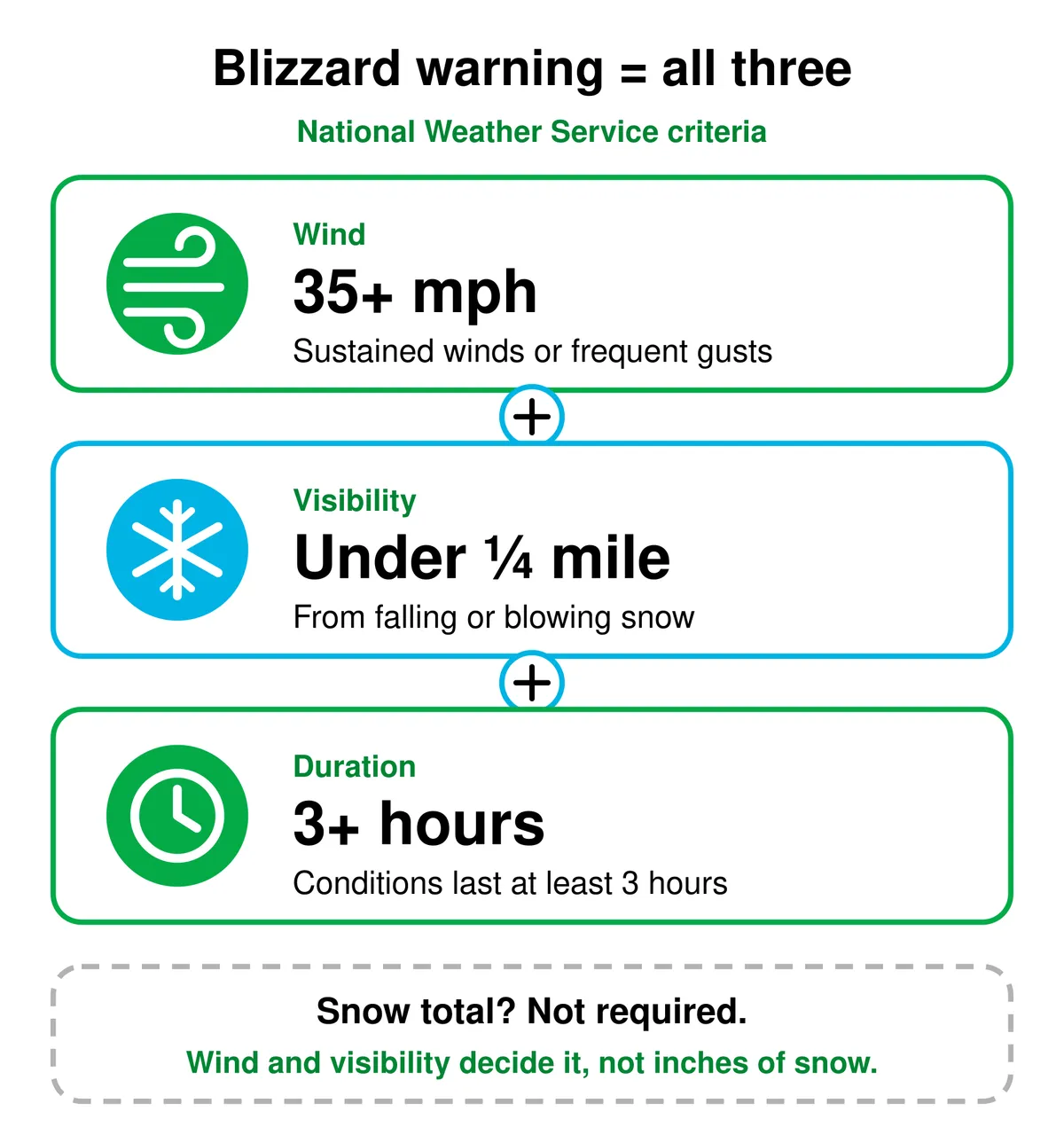
A blizzard warning means the National Weather Service expects winds of 35 mph or more, plus snow that cuts visibility below ¼ mile, for at least three hours. Wind and visibility decide it, not how many inches of snow fall.
Most warnings go out 12 to 36 hours ahead, so you still have time to prep. Your furnace is about to run for hours, and a clogged filter can trip its safety shutoff mid-storm. Swap yours now, or take the quick quiz below to find your match.
Find Your Filter Before the Storm
Every filter is cut to order and ships within 24 hours.
Not sure which filter you need?
Answer a few quick questions and we'll match you to your filter.
TL;DR
A blizzard warning is a National Weather Service (NWS) alert for sustained winds or frequent gusts of 35 mph or more, combined with falling or blowing snow that cuts visibility below a quarter mile for at least three hours. Wind and visibility decide it, not how much snow falls. If one covers your area, finish preparing, stay off the roads, and keep your furnace vents clear and your filter fresh.
Key Takeaways
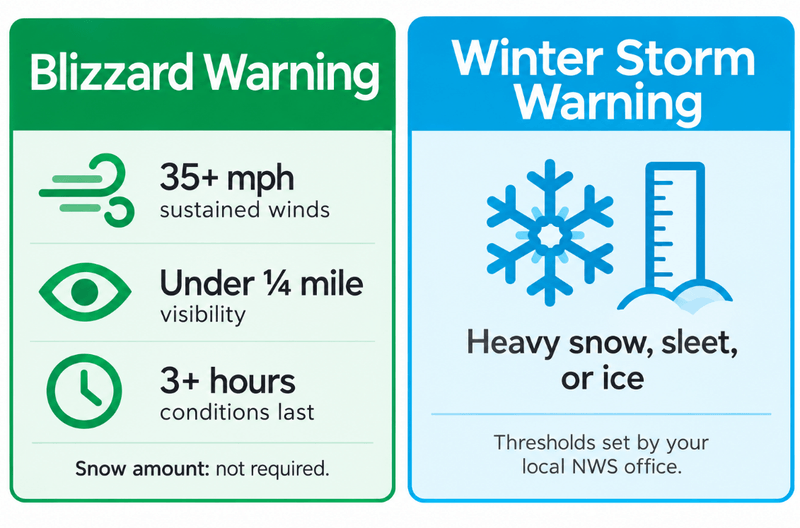
Blizzard warnings depend on wind (35+ mph) and visibility (under ¼ mile) lasting 3+ hours, not on inches of snow.
Winter storm warnings depend mainly on snow or ice accumulation, with thresholds set by each local NWS office.
Starting on or about October 1, 2026, NWS can flag extreme, historic blizzards with "Particularly Dangerous Situation" wording.
What a blizzard threatens at home depends on how you heat it, from buried vent pipes to a heat pump smothered in snow.
Where Is a Blizzard Warning Active Right Now?
The quickest way to see every blizzard warning in effect is the National Weather Service active alerts map. Tap any highlighted county to read the full warning. An empty map is normal outside late fall through early spring. For your own address, enter your ZIP code at weather.gov.
What Is a Blizzard Warning?
NWS issues a blizzard warning when sustained winds or frequent gusts reach 35 mph or more and falling or blowing snow keeps visibility below ¼ mile for at least three hours (NWS Burlington). Three parts of that definition surprise people:
The amount of snow doesn't matter. Two inches of powder in a 45 mph wind can qualify, while a foot of snow falling straight down cannot.
Snow doesn't even have to be falling. NWS Cleveland calls the blizzard warning "in a category by itself" and notes that snow does not need to be falling (NWS Cleveland). Wind lifting snow that's already on the ground creates a ground blizzard.
There's no temperature requirement. Still, a 35 mph wind over subfreezing air pushes wind chills well below zero.
Most blizzard warnings go out 12 to 36 hours ahead, once forecasters are about 80% confident the storm will arrive (NWS Burlington).
Blizzard Warning vs. Winter Storm Warning: What's the Difference?
A blizzard warning is about wind and visibility, while a winter storm warning is about how much snow or ice will pile up. Stronger wind can upgrade a winter storm warning to a blizzard warning.
What Is a "Particularly Dangerous Situation" Blizzard Warning?
A Particularly Dangerous Situation (PDS) blizzard warning is how NWS flags a storm of extreme, historic severity. Under Service Change Notice 26-52, forecasters can add PDS wording starting on or about October 1, 2026, when they're highly confident a storm will be that severe (NWS SCN 26-52). If you see that phrase, plan for days without power and slow emergency response.
What to Do Before a Blizzard: A Timeline Checklist
Don't wait for the warning. Start as soon as a Winter Storm Watch mentions blizzard conditions, because the warning itself may give you only 12 hours.
When a watch mentions blizzard conditions (36–48 hours out)
Stock at least three days of ready-to-eat food, water, medications, and pet supplies (NWS and FEMA via WeatherBug).
Fill your gas tank and charge your power banks. Pack a car kit with blankets, a flashlight, food, and a first aid kit.
Check your furnace filter. If it looks gray or is due soon (here's how often to change your air filter), swap it now, since a clogged filter can trip the furnace's safety shutoff mid-storm. Filterbuy's rule of thumb: if you can't remember your last change, it's already overdue.
Order a spare now. Filterbuy cuts every filter to order and ships within 24 hours, but deliveries stall once roads close. With auto-delivery, you get a reminder three days before each shipment, so a spare is always on hand.
When the blizzard warning is issued (12–36 hours out)
Find your furnace and water heater vent pipes, and mark them with a tall stake so you can locate them under the snow.
Test your carbon monoxide (CO) and smoke alarms, and put fresh batteries in each one.
If you have a portable generator, plan to run it at least 20 feet from the house, with the exhaust pointed away from doors and windows (Delaware State Fire Marshal).
In the final hours
Let faucets on exterior walls drip, open the cabinet doors under your sinks, and bring pets inside.
Pro Tip: Snap a photo of your vent pipes today, while you can still see them. Once drifts cover them, the photo tells you where to dig. Filterbuy reviewer and licensed HVAC technician David Clark does the same with filter slots: "Homeowners bring me the old filter and ask what to buy. I ask for a photo of the empty slot instead." (Filterbuy's filter sizing guide)
What a Blizzard Threatens Depends on How You Heat Your Home
A blizzard threatens each heating system differently. Drifts can bury a high-efficiency furnace's side-wall vents or smother a heat pump, and a power outage stops nearly any system.
Sources: NYSERDA, Filterbuy, and the Delaware State Fire Marshal.
The heat pump guidance comes from NYSERDA, New York State's energy agency and Filterbuy's winter heat pump prep guide.
How Does a Blizzard Affect Your Home's Air and Heating System?
At Filterbuy, we think of a blizzard as a stress test for your heating system. Everyone is sealed inside while the furnace runs for hours, the same reason indoor air quality gets worse in winter. Particles from cooking and pets have nowhere to go but your filter.
Filterbuy's filter-change guidance says a filter can usually last its full 90 days in winter, unless the furnace runs most of the day. A blizzard is that exception, so check the filter before and after the storm.
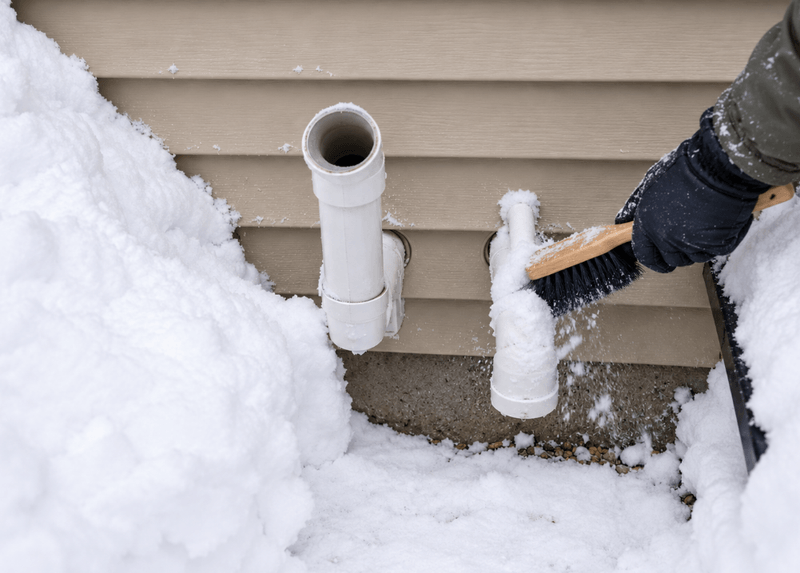
Vent pipes: When snow drifts over furnace and gas appliance exhaust, combustion gases, including carbon monoxide, can back up into the home (CT Department of Public Health). That's why the Filterbuy team, in its winter carbon monoxide safety guide, calls airflow "the most overlooked safety factor in winter home protection."
Filter rating: Filterbuy makes filters from MERV 8 up to MERV 13. For most homes, a MERV 8 or MERV 11 filter balances capture and airflow, but check your manual before going higher.
What Should You Do During and After a Blizzard?
While the storm blows, stay inside and off the roads until the warning expires. If you get stranded in a vehicle, stay with it, run the engine and heater for only 10 minutes each hour, and keep the tailpipe clear (CDC).
Once the wind dies down:
Clear snow from every exterior vent and from the gas meter. If you have a heat pump, brush off the outdoor unit too.
Clear your car's tailpipe before you start the engine.
If your CO alarm goes off, or anyone gets a headache or feels dizzy, get outside right away and call 911.
Hold your furnace filter against a sheet of white paper. If it looks gray by comparison, replace it.
Supporting Statistics: What the Research Says About Blizzard Risks
1. Carbon monoxide poisoning peaks in December and January, and 80% of exposures reported to poison centers happen at home. CDC researchers counted 14,448 U.S. deaths from unintentional CO poisoning between 2005 and 2018. Source: CDC researchers, Annals of Emergency Medicine (2022), via NIH
2. Winter home fires are 8% of all U.S. fires but cause 30% of fire deaths. In 22% of the larger winter home fires, no smoke alarm was present. Source: U.S. Fire Administration, Winter Residential Building Fires
3. More than 1,300 people die each year in crashes on snowy or icy pavement, and another 116,800 are injured. Source: Federal Highway Administration, Snow and Ice
Frequently Asked Questions
How long does a blizzard warning last?
It covers the whole stretch of expected blizzard conditions: at least three hours, and often 12 to 24 or more.
Is there a blizzard watch?
Not anymore. In 2017, NWS folded the Blizzard Watch into the Winter Storm Watch, which now mentions blizzard conditions when they're possible (NWS Central Region).
Will my furnace work if the power goes out?
Usually not. Gas furnaces and heat pumps both need electricity, so plan a warm room before the storm hits.
Should I change my air filter before a blizzard?
Yes, if it's dirty or due soon. Your furnace is about to run far longer than usual.
About the author: Michelle Wan is Brand Manager and Air Quality Writer at Filterbuy, working directly with its U.S. manufacturing team. Reviewer: David Clark is a Licensed HVAC Technician with Filterbuy HVAC Solutions.
Glossary
Blizzard: Sustained winds or frequent gusts of 35+ mph with snow cutting visibility below ¼ mile for 3+ hours.
Ground blizzard: Blizzard conditions created when wind blows snow that's already on the ground.
Particularly Dangerous Situation (PDS): Extra NWS warning wording for storms of extreme, historic severity.
National Weather Service (NWS): The NOAA agency that issues official U.S. weather warnings.
Carbon monoxide (CO): A colorless, odorless, poisonous gas produced when fuel burns incompletely.
High-efficiency furnace: A gas furnace that vents through plastic (PVC) pipes, often low on a side wall.
Emergency heat: A heat pump setting that bypasses the outdoor unit and runs backup heat.
MERV rating: Minimum Efficiency Reporting Value, a 1–16 scale for how well a filter captures particles.
Ready for blizzard season? Your filter size is printed on the frame of your current filter, so jot it down. Then find your exact size among Filterbuy's 600+ U.S.-made sizes, set up auto-delivery, and check the live air quality in your area.