
Plano Real-Time AQI Tracker


Get Alerts For Unhealthy AQI In Your Area
When air quality in your area reaches unhealthy levels, we'll send you a quick alert, along with expert tips on how to reduce your exposure.
What's Actually In Plano Air Today?
What High AQI Means for Your Lungs in Plano
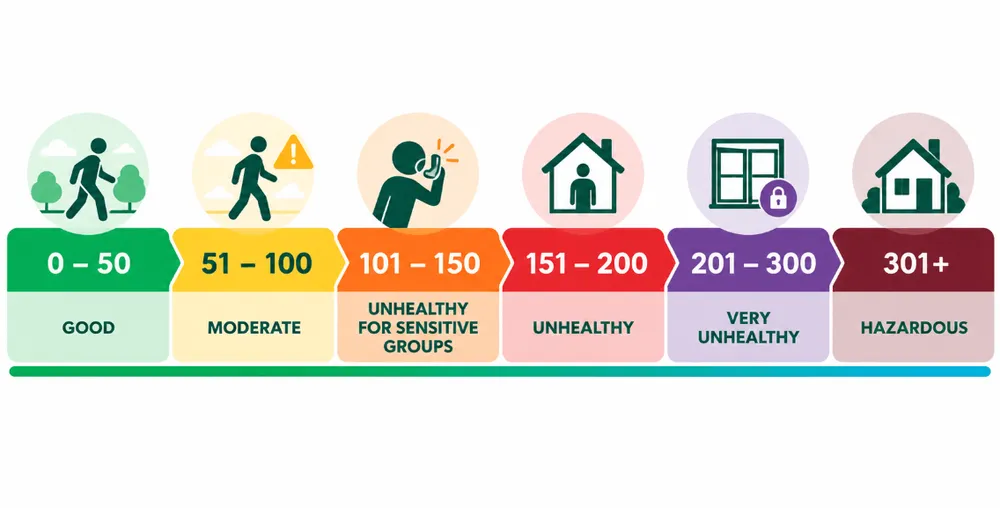
How to Read AQI
The Air Quality Index (AQI) measures how polluted the air is and how it may affect your health.
0–50 (Good): Air quality is satisfactory.
51–100 (Moderate): Acceptable, but some pollutants may pose minor concerns.
101–150 (Unhealthy for Sensitive Groups)
151–200 (Unhealthy)
201–300 (Very Unhealthy)
301+ (Hazardous)
Moderate
Still okay for most, but if you have asthma or allergies, take it easy and avoid long outdoor workouts.
Shop MERV 11 filters→What's the Right Filter for Your AQI Level?


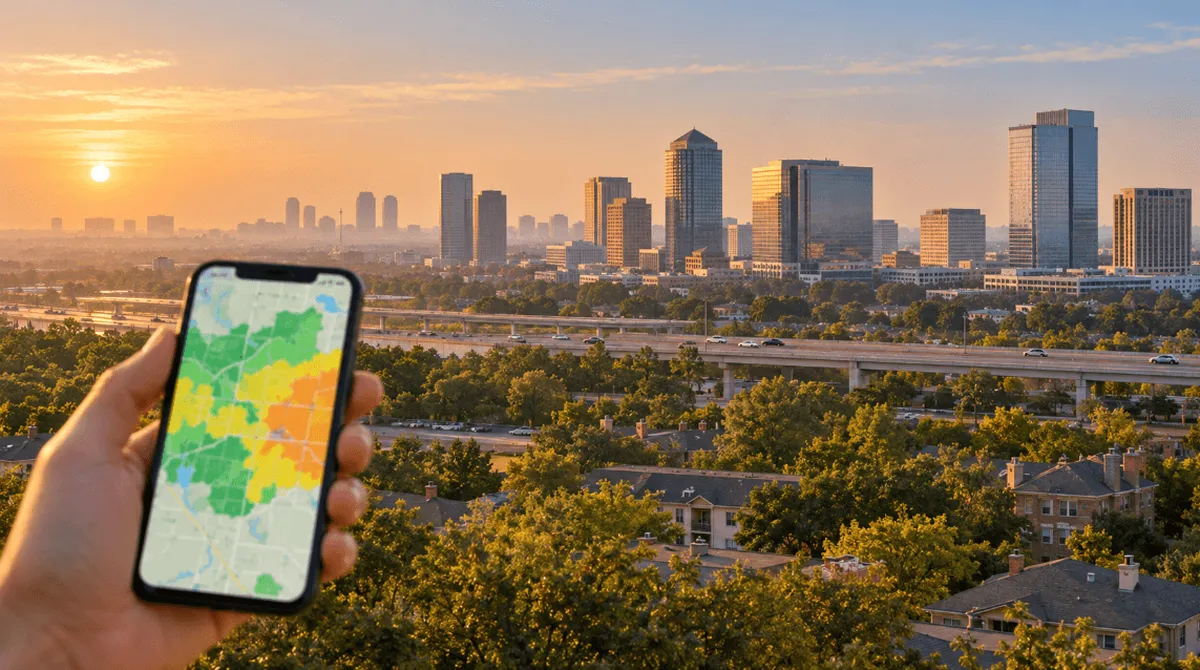
Check Today's Live Real Time Air Quality Index AQI Map in Plano, TX Now
TL;DR
The live AQI map above shows Plano's air quality now in the EPA's six color categories. Ozone drives most bad days from spring to fall, and smoke brings sharper particle spikes. At 100, Filterbuy recommends MERV 13 in the HVAC, the fan set to On, portable HEPA cleaners and a closed house.
Reading Plano's Live AQI Map: What to Look at First
Ozone is a gas that forms outdoors on sunny afternoons and breaks down fairly quickly indoors. Fine particulate matter, or PM2.5, means tiny smoke and exhaust particles that drift inside and stay airborne until filtered.
Key Takeaways
Ground-level ozone causes most of Plano's unhealthy air days, peaking April to June and again August to October.
Plano sits downwind of the Dallas core when ozone-season winds blow from the south.
Collin County's Frisco monitor shared the region's highest ozone design value, 83 ppb, at the end of 2025, against a 70 ppb federal standard.
The EPA recommends a MERV 13 or higher filter in the HVAC during smoke events.
Filterbuy’s action line is AQI 100, where its four home steps begin.
Plano AQI Ranges and the Action Each One Calls For
Find the map's color below; the categories come from AirNow guidance. Filterbuy’s action line is AQI 100. That is still the top of the EPA's Moderate range, so you act at the line rather than after it. From 100 up, Filterbuy recommends a MERV 13 filter in the HVAC, the fan set to On, a portable HEPA air cleaner in each occupied room, and a closed-up house. See what counts as a good AQI.
Categories and ranges per EPA AirNow. Filterbuy's action line starts at AQI 100.
When the Plano Number Seems Off: Averaging and Station Distance
When the sky looks worse than the number, timing is often why: the EPA's NowCast weights recent hours but can still lag what you see. Older apps may also disagree, since the EPA revised PM2.5 breakpoints in May 2024 (see how the AQI is calculated).
Distance is the other reason. TCEQ, the Texas Commission on Environmental Quality, runs the region's monitors, and a Plano reading is estimated from the closest ones. When sky and number disagree, I compare two or three nearby stations, then the AirNow Fire and Smoke Map, which tracks particles only and won't flag ozone.
Can You Safely Be Outdoors in Plano Right Now?
It depends on the color showing. AirNow guidance says sensitive groups should limit time outside at orange, and everyone at red. Those groups include people with asthma, heart disease or lung disease, plus children and older adults. Anyone with those conditions should follow their doctor's plan.
Ozone builds through the afternoon, so run early.
Plano Air Quality Forecasts, Ozone Action Days and Alerts
TCEQ publishes the daily DFW air quality forecast and declares Ozone Action Days. NCTCOG, the North Central Texas Council of Governments, tracks the March to November ozone season, and the City of Plano's air quality page links the same alerts.
Alerts usually come a day ahead. TCEQ flags 5 a.m. to 8 a.m., when commute traffic meets early sunlight, as the window that sets up afternoon ozone, so on alert days exercise early and skip the drive-through. Filterbuy’s air quality alert checklist covers the home side.
Plano Air by Neighborhood and ZIP Code
Homes near US 75 and the tollways sit closer to traffic exhaust than blocks beside Arbor Hills or Oak Point Park. Plano also reaches into Denton County, which posted the metro’s worst ozone record in State of the Air 2026: 27.8 unhealthy days a year.
Traffic context only. Use the live map for current readings.
Enter your ZIP above, or see Filterbuy’s air quality by ZIP code guide. Nearby, compare the Dallas AQI map or Garland AQI map, or the Texas air quality map.
The Pollutants Behind Plano's Readings
The AQI reports the worst of five pollutants each hour, usually ozone or PM2.5 in Plano. Ozone forms when vehicle and industrial emissions react in sunlight. TCEQ's conceptual model for Dallas-Fort Worth shows it peaking twice a year, and finds ozone-season winds blow mostly from the south and southeast. Plano sits directly north of downtown Dallas, so its afternoon air has often crossed the metro core first.
PM2.5 lingers indoors, so closed windows alone are not enough on particle days (see how PM2.5 differs from PM10).
Plano and Collin County Against the Rest of North Texas
Collin County is one of nine counties the EPA classifies as Serious nonattainment for ozone. NCTCOG, which tracks the design value, reported that 2025 ended at 83 ppb, set at Frisco and Fort Worth Northwest, and State of the Air 2026 ranked the metro ninth worst for ozone.
Smoke and Dust Spikes Over Plano
Most particle spikes blow in from elsewhere, such as smoke from Mexico or summer Saharan dust. When smoke arrives, check AirNow and TCEQ first and follow any official advice to stay in or relocate. From 100 up, Filterbuy recommends these steps, in order:
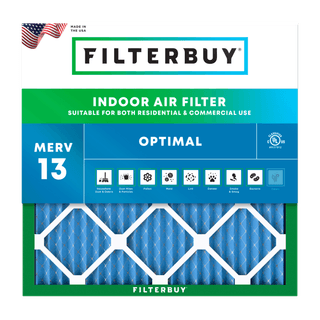
Put a MERV 13 filter in the HVAC. The EPA recommends MERV 13 or higher during smoke and notes most furnaces and HVAC systems can use one without equipment problems if the filter is replaced often.
Set the thermostat fan to On. Auto only filters while the system heats or cools.
Run a portable HEPA air cleaner in each occupied room, bedrooms first.
Close the house up, and skip candles and frying while smoke lingers.
Check the filter during the event and replace it once it looks dark brown or black, which the EPA notes can come early. Keep a spare.
EPA cleaner-air-room guidance sizes each portable cleaner at a smoke CADR of at least two-thirds of the room's square footage, so a 300 sq ft bedroom needs about 200. Pick a CARB-certified unit, which makes little or no ozone, and skip ionizers.
Filterbuy doesn’t sell portable air cleaners. With central air, MERV 13 treats the whole house while a portable unit works one room harder. In homes without ducts, a portable HEPA cleaner is the main defense.
Filtration reduces particles but doesn't remove smoke gases. See Filterbuy’s guide to MERV filters for wildfire smoke and Plano wildfire and smoke map, plus AirNow's smoke guidance.
Finding the Filter in a Plano Home Built During the Boom
Plano grew from 72,331 residents in 1980 to about 299,000 in 2025, according to the City of Plano, so most homes were built with central air. The real question is where your filter sits.
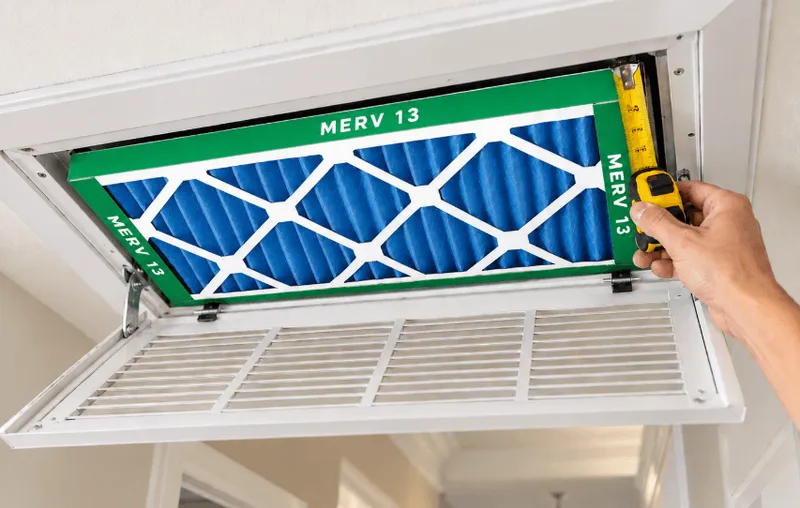
Check every return before you order: filters sit at the air handler or behind a wall or ceiling grille, and some homes have two. Filterbuy’s customer service team often hears of a hallway-ceiling filter that was never changed. Our guides to finding your HVAC air filter and choosing a MERV rating help, as does the air filter sizes chart.
“Count the returns before you count the filters. Measure each slot so the new filter fits snugly, and write the change date on the frame so the second filter never gets forgotten.”
David Clark, Licensed HVAC Technician
About 36% of Plano’s housing was multi-family in 2021, per the City, and renters rarely pick the filter. Ask management which MERV the unit uses, and keep a portable HEPA cleaner for smoke days.
Filterbuy's Take on Plano's Air
Filterbuy has made more than 50 million U.S. filters since 2013, and its technicians work in Texas homes.
Plano’s ozone often arrives already formed. On south-wind days, timing matters most.
Filters catch particles, not gases. Against ozone, closing up and timing do most of the work.
Filters are worth buying before you need them. A MERV 13 bought in March is ready when the first smoke arrives.
“Much of Plano’s bad air arrives on the wind. Watch the pollutant label as closely as the color, and have a MERV 13 in the closet before ozone season.”
Michelle Wan, Brand Manager and Air Quality Writer, Filterbuy
Picking a Filter for the AQI Plano Is Showing
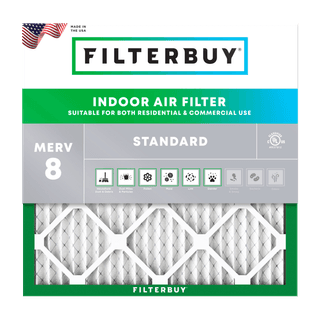
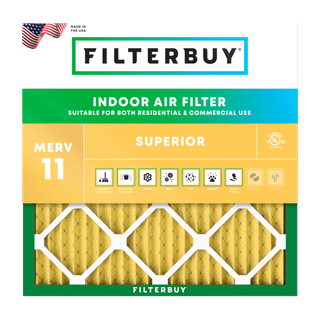
For smoke, and whenever the map reaches 100, Filterbuy recommends MERV 13. Below 100, MERV 8 or 11 covers everyday needs (see which MERV rating fits a high-AQI day).
Order the tier in your exact size so it fits snugly in the slot.
Filterbuy also makes the Odor Eliminator carbon filter. Filterbuy ships free and cuts over 600 sizes, and auto-delivery keeps a spare coming.
Supporting Statistics
1. 20% fewer ozone days. DFW exceedance days fell from 60 to 48 between 2012 and 2022: progress, though alert days remain.
Source: TCEQ
2. Nearly half of NOx. On-road vehicles produce nearly half of the region’s nitrogen oxides, a key ingredient in ozone.
Source: City of Plano
3. 90% indoors. Americans spend about 90% of their time indoors, where some pollutants run 2 to 5 times higher.
Source: U.S. EPA
Frequently Asked Questions
Glossary
AQI (Air Quality Index): The EPA’s 0 to 500 air quality scale.
Ozone (O3): A lung irritant formed when pollutants react in sunlight.
PM2.5: Particles 2.5 micrometers or smaller, including smoke and soot.
NowCast: The EPA method for current AQI.
Design value: The three-year ozone statistic used to judge compliance.
Ozone Action Day: A TCEQ alert issued when weather favors unhealthy ozone.
CADR: Clean air delivery rate, used to size portable air cleaners.
Nonattainment: An EPA label for an area missing a federal air standard.
Filterbuy: A U.S. air filter maker founded in 2013.
MERV: Minimum Efficiency Reporting Value, the 1 to 16 filter capture rating.
HEPA: A filter standard for portable air cleaners, not for home HVAC systems.