
Why Does My AC Smell Musty and How to Remove It?
August 19, 2026

A musty AC smell almost always means moisture is sitting somewhere it should not be, and mold or mildew has started growing in it. The usual spots are the evaporator coil, the ductwork, a blocked condensate drain, or a dirty filter. Clear the drain line and put in a clean filter, and the smell usually clears with it.
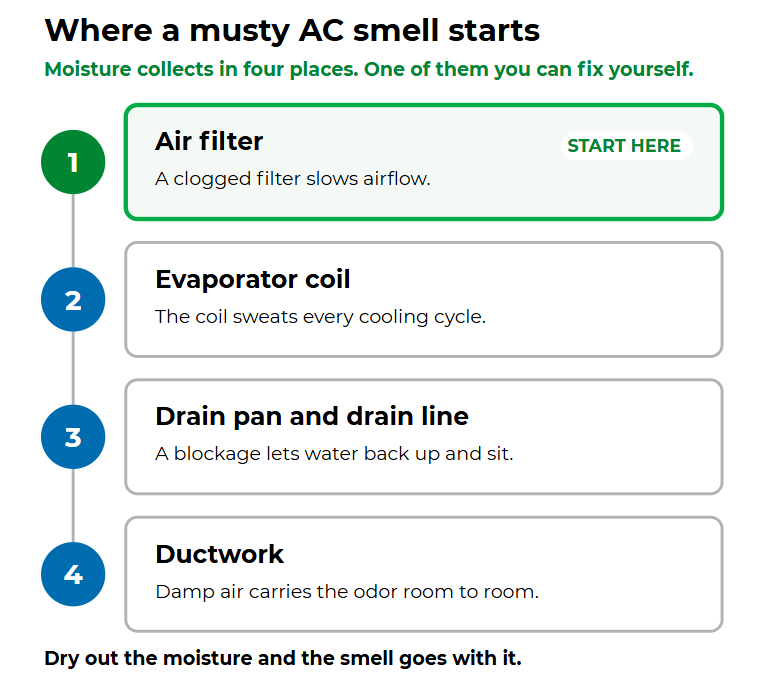
Moisture collects in four places:
Air filter. A clogged filter slows airflow, so the coil stays wet longer.
Evaporator coil. The coil sweats every cooling cycle.
Drain pan and drain line. A blockage lets water back up and sit.
Ductwork. Damp air carries the odor room to room.
The filter is the one you can change yourself in about two minutes, so start there. You can shop filters by size or take the match quiz below.
Answer 3 quick questions and we will match you to the right filter for your system.
You come home, flip on the AC, and within seconds there's that smell. Damp. Earthy. Somewhere between a wet towel left in a gym bag and an old basement. It's not overwhelming, but it's definitely there. And it definitely wasn't there last summer.
Here's the thing: that smell isn't random, and it's not just “how old AC units are.” It's a signal. Your system is telling you exactly where to look. Once you understand what's causing it, fixing it is usually faster and cheaper than you'd expect.
Key Takeaways
A musty or damp smell from your AC unit is not normal and shouldn’t be ignored.
The odor is a sign of underlying issues, such as mold, mildew, or excess moisture in the system.
Identifying the source of the smell can often lead to straightforward and cost-effective solutions.
Addressing the problem early can prevent further damage to your AC unit and improve the air quality in your home.
Where That Musty Smell Is Actually Coming From
Mold and mildew need two things to grow: moisture and a surface to cling to. Your AC system, unfortunately, provides both in abundance.
As your air conditioner cools your home, it pulls warm, humid air across a cold evaporator coil. That process naturally produces condensation. Water that’s supposed to drip into a drain pan and exit through the condensate drain line. When any part of that system gets disrupted, moisture lingers, and lingering moisture becomes mold.
The four most common culprits of the musty smell near your AC:
Mold or mildew on the evaporator coil or inside ductwork. This is the most common source of that musty odor and usually develops gradually over a season or two.
A clogged condensate drain line. When algae, dirt, or debris block the drain line, water backs up into the drain pan, creating the perfect breeding ground for mold.
A dirty or clogged air filter. A clogged filter restricts airflow across the coil. Less airflow means the coil stays wetter for longer, accelerating mold growth.
High indoor humidity. In humid climates, excess moisture in the air can overwhelm your system's ability to dehumidify effectively, especially if the unit is oversized for the space.
AC Smell Diagnostic Chart
Not all AC smells are the same. Here's how to tell what you're dealing with:
| Smell | Likely Cause | Fix |
|---|---|---|
| Musty or earthy | Mold/mildew on coil, in ducts, or in drain pan | Clean condensate drain line; replace filter; schedule coil cleaning |
| Rotting or sewage | Dead animal in ducts, or a dry P-trap on nearby drain | Call a professional to inspect ductwork |
| Sudden onset (was fine before) | Recent weather change causing moisture spike, or filter just hit its limit | Check and replace the filter first; inspect drain line |
| Burning or electrical | Dust burn-off on startup, or a wiring/motor issue | If it doesn't clear in minutes, turn off the unit and call an HVAC technician |
| Gas or chemical | Refrigerant leak or gas line issue nearby | Leave the home and call a professional immediately |
If your smell is musty, keep reading. The next two sections cover the exact fixes.
The 10-Minute Fix Most People Skip: Cleaning The Condensate Drain Line
The condensate drain line is a PVC pipe that runs from your indoor air handler to a drain or to the outside of your home. Over time, algae and debris build up inside it, creating a blockage. When that happens, water backs up, and mold follows fast.
Here's how to clean it yourself:
Locate the drain line. Look for a white PVC pipe (usually 3/4 inch in diameter) near your indoor air handler. It typically exits through a wall or floor.
Find the access point. Most drain lines have a T-shaped vent cap near the air handler. Remove the cap.
Clear visible blockages. Use a wet/dry vacuum to suction out any buildup from the end of the drain line that exits outside your home. Run it for 1 to 2 minutes.
Flush the line. Pour 1 cup of undiluted white vinegar (or a diluted bleach solution of 1 part bleach to 16 parts water) into the access point. Let it sit for 30 minutes, then flush with warm water.
Repeat every few months. Setting a quarterly reminder keeps algae from building back up.
This single step eliminates the musty smell in many cases. If water is actively pooling around your indoor unit, the clog may be severe enough to need a professional flush.
Check Your Filter First. It Might Be The Whole Problem.
Before anything else, pull out your air filter and take a look at it. If it's visibly gray, clogged with dust, or hasn't been replaced in more than 90 days, restricted airflow is almost certainly making your moisture problem worse.
A clogged filter forces your AC to work harder to pull air across the evaporator coil. The coil gets colder than it should, moisture accumulates faster, and conditions for mold growth improve significantly. It's a chain reaction that starts with something as simple as an overdue filter change.
Filterbuy's MERV-rated filters are built to capture airborne particles without choking your system's airflow, so your coil stays drier, and your air stays cleaner. Replacing your filter takes two minutes, costs a few dollars, and can meaningfully reduce how often musty smells come back. Check your filter size and swap it out if it's overdue.
How To Stop The Musty Smell From Coming Back
Fixing the smell once is satisfying. Not having to deal with it again is better. These habits make a real difference:
Replace your air filter on schedule. Every 60 to 90 days for standard filters; more often if you have pets or allergies. Filterbuy makes it easy to set up auto-delivery so you never forget.
Set your AC fan to “auto,” not “on.” When the fan runs continuously, it blows air over a wet coil between cooling cycles, spreading moisture throughout the ductwork. “Auto” lets the coil dry between cycles.
Use a dehumidifier in humid areas. If you live somewhere with high summer humidity, a standalone dehumidifier takes pressure off your AC and keeps indoor moisture levels below the 50 to 60 percent threshold where mold thrives.
Schedule annual professional inspections. A technician can clean the evaporator coil, check refrigerant levels, and catch small problems before they turn into expensive ones.
Keep the outdoor unit clear. Leaves, grass, and debris around the condenser restrict airflow and reduce your system's efficiency, which in turn affects how well it manages indoor humidity.
Start With Changing Your Filter Today
You don't need to overhaul your entire HVAC system to get rid of a musty smell. In most cases, clearing the condensate drain line and replacing a clogged filter is enough to solve the problem and keep it from coming back.
Pull your filter out today. If it looks anything less than clean, replace it with a new one from Filterbuy and set a reminder to do it again in 60 to 90 days. That one habit does more to prevent musty AC smells than almost anything else you can do.

Frequently Asked Questions
Why Does My AC Smell Musty All Of A Sudden?
A sudden musty smell usually means something recently changed: your filter hit capacity and is restricting airflow, the condensate drain line just became fully blocked, or a spike in outdoor humidity overwhelmed your system. Start by replacing the filter and checking the drain line for standing water.
What Does Mold Smell Like In An AC Unit?
Mold in an AC unit smells damp, earthy, and musty, similar to wet soil or a damp basement. The smell is usually most noticeable when the system first turns on and tends to circulate through the home as air moves through the vents.
How Do I Get Rid Of A Musty Smell In My Air Conditioner?
Clear the condensate drain line using a wet/dry vacuum and a white vinegar flush, replace the air filter, and set the fan to “auto.” If the smell persists after those steps, the evaporator coil likely needs professional cleaning.
Can A Dirty Air Filter Cause A Musty AC Smell?
Yes. A clogged air filter restricts airflow across the evaporator coil, causing excess moisture to accumulate. That moisture creates the conditions mold needs to grow, which then produces the musty smell you're noticing.
Is It Safe To Run My AC If It Smells Musty?
Running the AC with a musty smell can circulate mold spores throughout your home, which can aggravate allergies and respiratory issues. It's best to address the cause before continuing regular use, especially if anyone in the household has asthma or mold sensitivities.
Why Does My AC Smell Musty Only When It First Turns On?
When the system sits idle, moisture on the coil or in the drain pan can foster brief bursts of mold activity. That concentrated smell releases when airflow starts up again. If the smell fades within a few minutes, the issue is likely minor. If it lingers, there's an active source of mold that needs attention.
How Do I Clean The Condensate Drain Line Myself?
Locate the PVC drain line near your air handler, find the access cap, and use a wet/dry vacuum to suction out blockages from the exterior end. Then pour 1 cup of white vinegar into the access point, wait 30 minutes, and flush with warm water. Repeat every 2 to 3 months to prevent buildup.
When Should I Call A Professional Instead Of DIY-ing A Musty AC Smell?
Call a professional if water is pooling around your indoor unit, if the musty smell persists after you've cleaned the drain line and replaced the filter, or if you suspect mold inside the ductwork or on the evaporator coil. Coil cleaning and duct remediation require specialized equipment.
What's The Difference Between A Musty Smell And A Burning Or Gas Smell From My AC?
A musty smell points to mold or mildew: unpleasant, but manageable. A burning smell may indicate dust burn-off on startup (usually harmless if brief) or a motor and electrical issue (turn the unit off if it persists). A gas or chemical smell is a safety emergency. Leave the home and call a professional immediately.