
Which MERV Rating Should I Use?
June 3, 2026
MERV tells you how small a particle your air filter can capture. Most homes need MERV 8, 11, or 13. Use the quick answer below to pick yours, then see the full MERV chart, a side-by-side comparison, and how MPR and FPR ratings convert to MERV.
Quick answer: what MERV rating should I use?
- MERV 8 for most homes: dust, lint, and pollen, with the least airflow resistance.
- MERV 11 for homes with pets or more dust: adds pet dander and mold spores.
- MERV 13 for smoke, smog, and the finest particles, if your system can handle it.
- MERV 10 Odor Eliminator for household odors: pleated media plus activated carbon.
Before you upgrade, check your HVAC manual for the highest MERV rating your system supports.
Take the 3-question filter quizWhat is a MERV rating?
MERV stands for Minimum Efficiency Reporting Value. It's a 1-to-16 scale from ASHRAE Standard 52.2 that measures how well an air filter captures particles from 0.3 to 10 microns. The higher the MERV rating, the smaller the particles the filter can capture, and the more it slows airflow. That trade-off is why the highest rating isn't always the best choice for a home.
MERV rating chart
The MERV scale is grouped into four bands. Homes typically use MERV 8 to 13.
| MERV | Particle size it targets | What it captures | Where it's used |
|---|---|---|---|
| 1–4 | 10+ microns | Large dust, lint, carpet fibers | Fiberglass filters, window units |
| 5–8 | 3–10 microns | Dust, pollen, mold spores | Standard home filters (MERV 8) |
| 9–12 | 1–3 microns | Finer dust, pet dander | Upgraded home filters (MERV 10, MERV 11) |
| 13–16 | 0.3–1 micron | Fine particles, including smoke and smog | High-efficiency home filters (MERV 13); 14–16 mostly commercial |
MERV 8 vs. MERV 11 vs. MERV 13
Here's how the three most common home ratings compare, plus MERV 10.
| MERV 8 | MERV 10 (Odor Eliminator) | MERV 11 | MERV 13 | |
|---|---|---|---|---|
| Capture rate | 90% | 92% | 95% | 98% |
| Captures | Dust, lint, pollen | Dust, pollen, plus odors via carbon | Adds pet dander, mold spores | Adds smoke and smog particles |
| Airflow resistance | Lowest | Low to moderate | Moderate | Highest of the four |
| Best for | Everyday filtration, older systems | Cooking and pet odors | Pets, dusty homes | Smoke, city pollution |
| Shop MERV 8 | Shop MERV 10 | Shop MERV 11 | Shop MERV 13 |
MERV 8 vs. MERV 11: which is better?
MERV 11 captures smaller particles, like pet dander. MERV 8 is easier on airflow. If you have pets and your system supports it, go with MERV 11. If not, MERV 8 covers most homes. For the full breakdown, see MERV 8 vs. MERV 11.
MERV 11 vs. MERV 13: which is better?
MERV 13 is the only rating in our lineup rated to capture smoke and smog particles. The EPA recommends MERV 13, or the highest rating your system can handle, during wildfire smoke events. MERV 11 is the better fit if you don't deal with smoke and want a little less airflow resistance.
What about MERV 12, 14, and higher?
MERV 12 sits between 11 and 13 and is less common for homes. MERV 14 to 16 filters are mostly used in commercial buildings. Their extra airflow resistance can be too much for many residential systems, so check your system's specs before going above MERV 13.
MPR and FPR to MERV conversion
Some store brands use their own rating scales instead of MERV. Here's how they compare:
| MERV | Comparable MPR | Comparable FPR |
|---|---|---|
| MERV 8 | MPR 700 | FPR 5 |
| MERV 10 | MPR 1000 | FPR 6 |
| MERV 11 | MPR 1200 | FPR 7 |
| MERV 13 | MPR 1500–1900 | FPR 10 |
MPR is a 3M rating and FPR is a The Home Depot rating. Filterbuy is not affiliated with or endorsed by 3M or The Home Depot.
How to choose the right MERV rating for your home
- Check your system's limit. Your HVAC manual or the manufacturer's site may list a maximum MERV rating or filter resistance spec.
- Think about your home. Pets, smokers, nearby construction, and wildfire smoke all point toward a higher rating.
- Start where you're comfortable. If you can't find your system's limit, start with MERV 8 or 11.
- Watch for signs the rating is too high. Weaker airflow from vents, rooms that don't reach temperature, a system that runs almost nonstop, or a filter that bows in. If you see these, step down a rating or ask an HVAC technician.
Whatever rating you choose, fit and freshness matter as much as MERV. Buy the exact size printed on your current filter, and change it on schedule.
Frequently asked questions
What MERV rating is best for a home?
MERV 8 to 13 covers most homes. MERV 8 for everyday filtration, MERV 11 for pets, and MERV 13 for smoke, as long as your system supports it.
Is MERV 8 good enough?
For many homes, yes. It captures dust, lint, and pollen with the least strain on your system. Step up if you have pets, smoke, or more dust than usual.
Is MERV 11 too high for my home?
Not for most residential systems. If you have an older system or can't confirm its limit, check the manual or start with MERV 8.
Do higher MERV filters restrict airflow?
Yes. Denser media captures smaller particles but takes more effort to push air through. That's why matching the rating to your system matters.
What is the highest MERV rating?
The ASHRAE scale goes up to MERV 16. For homes, MERV 13 is usually the practical top end.
Does MERV rating change how often I replace my filter?
A little. Higher MERV filters can fill up faster in dusty or pet-heavy homes. Check monthly and replace a 1-inch filter about every 90 days, or sooner if it looks dirty.
Still deciding between ratings?
Answer three quick questions and we'll match you to the right MERV and size.
Take the filter quizWant to learn more? Read all about MERV ratings or which air filter is best for your home.
Your air filter's MERV rating determines how well it cleans the air in your home — but a higher number isn't always better. This guide helps you quickly find the right rating for your household, your HVAC system, and your health needs.
Which MERV rating do you need?
Most homes need MERV 8, 11, or 13. Here's how to choose.
Particles 3+ microns
Pet dander · Mold spores
Particles 1+ microns
Smoke · Bacteria · Viruses
Particles 0.3+ microns
Quick decision guide
Always check your HVAC manual for its maximum MERV rating before upgrading.
Replace filters every 90 days — or every 60 days if you have pets or heavy use.
What is MERV?
MERV stands for Minimum Efficiency Reporting Value, a standard that measures how effectively an air filter captures particles. The scale runs from 1 to 16, where higher numbers mean the filter can trap smaller particles. Think of it as your filter's report card for cleanliness.
MERV (Minimum Efficiency Reporting Value) is the official standard developed by the American Society of Heating, Refrigerating and Air-Conditioning Engineers (ASHRAE) through their Standard 52.2 test method. According to the EPA, MERV ratings measure a filter's ability to capture particles between 0.3 and 10 microns in size—a range that includes everything from large dust particles down to bacteria and some viruses. The Department of Energy's Zero Energy Ready Home program requires MERV 8 minimum, while ASHRAE recommends MERV-13 for managing airborne virus concentrations.
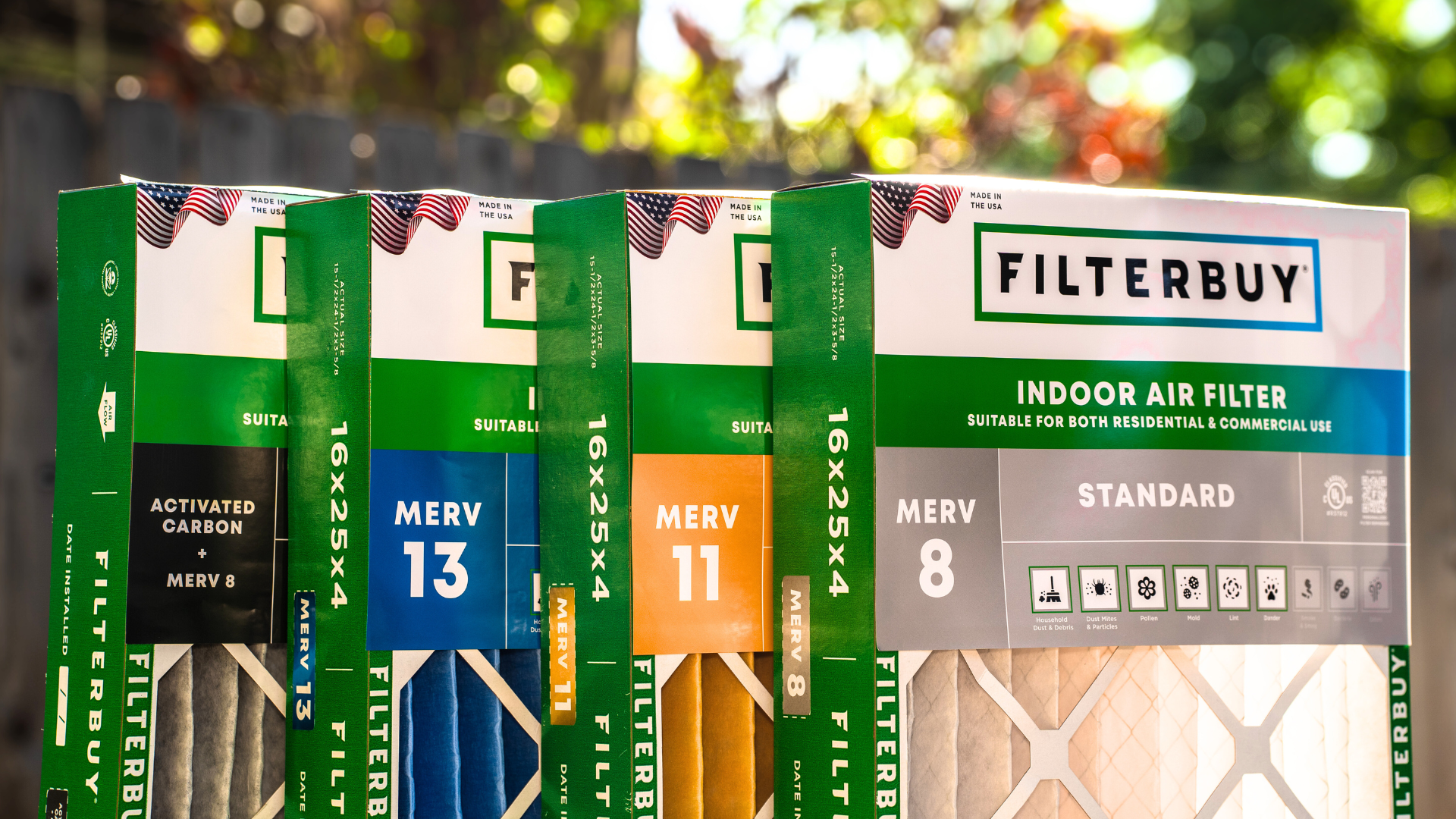
Understanding MERV Ratings
Understanding the MERV rating breakdown can help you choose the right air filter for your needs. Each rating reflects the filter's ability to capture different sizes of particles, ensuring your indoor air quality meets your household's requirements.
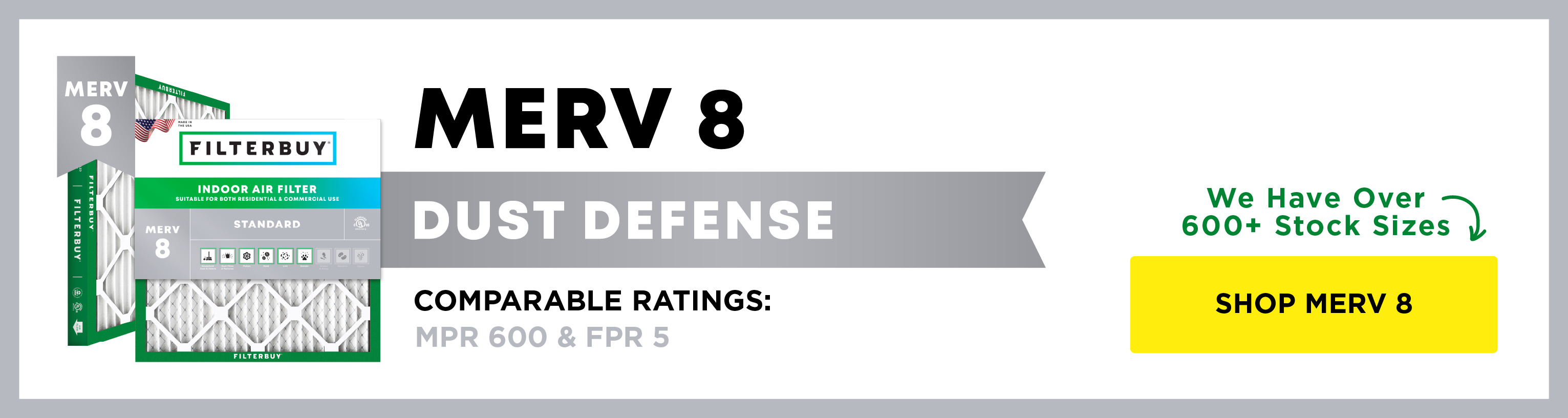
MERV 8: Standard Performance
MERV 8 filters capture dust, pollen, and larger particles down to about 3 microns. They're perfect for basic home filtration without putting extra strain on your HVAC system. Most homeowners find MERV 8 filters strike the right balance between air cleaning and system efficiency.
Best for: Average homes without significant air quality concerns, older HVAC systems, budget-conscious homeowners
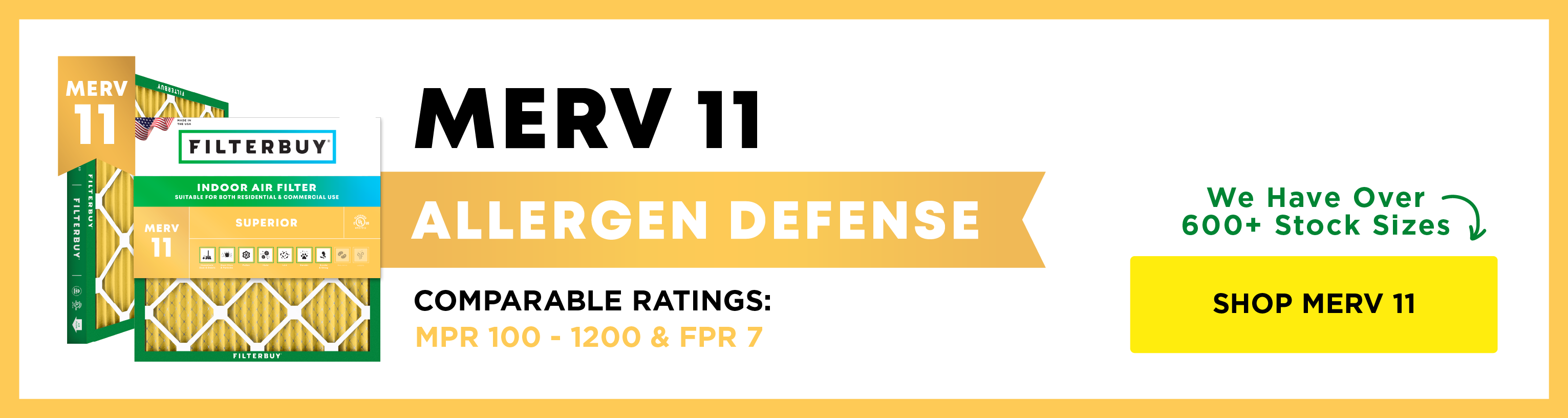
MERV 11: Superior Performance
MERV 11 filters step up the game by catching smaller particles including pet dander, dust mites, and some bacteria. If you have pets or mild allergies, this upgrade makes a noticeable difference in your home's air quality.
Best for: Pet owners, mild allergy sufferers, homes with moderate air quality concerns
MERV 13: Optimal Performance
MERV 13 filters offer the highest efficiency for residential use, capturing particles as small as 0.3 microns. These filters excel at removing smoke, bacteria, and even some viruses from your air. They're the best MERV filter for allergies and health-sensitive environments.
Best for: Severe allergy sufferers, homes with smokers, health-sensitive individuals, areas with poor outdoor air quality
Note: MERV ratings above 13 are typically designed for hospitals and commercial buildings. For most homes, MERV 14+ filters can actually restrict airflow too much and damage your HVAC system.
Pro Tip from Our Manufacturing Team:
After producing filters for over a decade, we've seen countless HVAC systems struggle with the wrong MERV rating. Here's how to check compatibility:
Check your HVAC manual (or look up your model online)
Look for "maximum MERV rating" or "filter resistance specifications"
If you can't find the manual: Start with MERV 8 and monitor your system for 30 days
Watch for warning signs: Increased energy bills, reduced airflow, system cycling frequently
Red Flags Your MERV Rating Is Too High:
Your energy bill increased by more than 15% after switching filters
Rooms feel stuffier than before
Your AC or furnace runs constantly
The filter gets dirty much faster than expected
If you're unsure, our customer support team has helped over many homeowners find the perfect filter. Call us or chat with an expert.
How to Choose the Right MERV Rating?
Check your HVAC compatibility first. Your system's manual will specify the maximum MERV rating it can handle. Using a filter that's too restrictive can reduce airflow and strain your equipment.
Consider your health needs. Severe allergies or respiratory conditions may warrant MERV 13 filters, while healthy households often do fine with MERV 8 or 11.
Factor in pets and lifestyle. Pet owners, smokers, or homes near construction sites benefit from higher MERV ratings to handle the extra particles.
Think about your local air quality. Areas with high pollen counts, wildfire smoke, or pollution may need more filtration power.
Budget for replacement costs. Higher MERV filters typically cost more upfront but may last longer, balancing out the investment.
Quick Decision Guide: Which MERV Rating Do You Need?
For most homeowners, MERV 8 to 13 covers all residential needs effectively. Here's a quick decision guide:
Choose MERV 8 if:
You have a new home with good ventilation
No one in your household has allergies or asthma
You don't have pets
You want the most affordable option
Your HVAC system is older (pre-2010)
Choose MERV 11 if:
You have pets (especially cats or dogs that shed)
Someone has mild to moderate allergies
You want better overall air quality
Your HVAC system is less than 15 years old
Choose MERV 13 if:
Someone has severe allergies or asthma
You have a newborn or elderly family members
You live in an area with wildfires or high pollution
Someone in your home has a compromised immune system
You want hospital-grade filtration
Remember, the best air filter is one that fits your system properly and gets changed regularly. A MERV 8 filter changed every 90 days outperforms a clogged MERV 13 filter any day.
Quick Answers
Which MERV rating should I use for my home? Most homes should use MERV 8-11 for standard filtration, while homes with severe allergies, asthma, or immune-compromised individuals should use MERV 13. Always verify your HVAC system can handle your chosen rating by checking the manufacturer specifications.
What is MERV rating? MERV (Minimum Efficiency Reporting Value) is the industry standard developed by ASHRAE that measures air filter effectiveness on a scale of 1-16, with higher numbers capturing smaller particles down to 0.3 microns.
What's the difference between MERV 8, 11, and 13? MERV 8 captures basic dust and pollen (3+ microns), MERV 11 adds pet dander and mold spores (1-3 microns), and MERV 13 captures bacteria, smoke, and some viruses (0.3+ microns). Each step up provides finer filtration but increases airflow resistance.
Can MERV 11 damage my HVAC system? MERV 11 is safe for modern HVAC systems (2010+) but may restrict airflow in older units (pre-2010). Check your system manual for maximum MERV rating specifications before upgrading.
How often should I change my MERV filter? Replace MERV 8-13 filters every 90 days for optimal performance, or every 60 days in homes with pets, heavy use, or air quality concerns.
Why Homeowners Trust Filterbuy
Filterbuy makes choosing the right MERV rating simple with American-made filters in every size, fast, free shipping, and expert guidance. With over 85,000 five-star reviews, homeowners trust Filterbuy for reliable air filters that keep their families breathing clean air. Whether you need MERV 8, MERV 11, or MERV 13, we have the perfect filter for your home HVAC system.
Key Takeaways
MERV ratings range from 1-16, with higher numbers providing finer filtration
MERV 8 filters handle basic dust and pollen for most homes
MERV 11 filters offer better protection for pet owners and mild allergy sufferers
MERV 13 filters provide the highest efficiency for health-sensitive households
Frequently Asked Questions
Is MERV 11 Too High for Home?
No, MERV 11 is not too high for most modern homes. MERV 11 filters work perfectly in HVAC systems manufactured after 2010. However, older systems (pre-2010) may struggle with the increased air resistance.
Check your compatibility:
Modern systems (2010+): MERV 11 is ideal
Older systems (2000-2010): Start with MERV 8, upgrade cautiously
Very old systems (pre-2000): Stick with MERV 8
Tip: We've found that 95% of homeowners with systems less than 10 years old can safely use MERV 11 filters without any performance issues.
What Is the Best MERV Rating to Use?
The right MERV rating for you would depend on what your requirements are. Make a list of what your concerns are then use the chart to decide. For most homes, a rating of MERV 8-13 is a good start to keep your air healthy.
Does MERV 11 Restrict Airflow?
It depends. A MERV 11 filter can restrict your airflow more than filters with lower ratings. This isn't a problem per se, but it will force your HVAC system to work harder if it's not designed to handle it.
How Do I Choose My MERV Rating?
Take into account the air quality in your home, any allergies you may suffer from and also how powerful your HVAC system is when deciding on a MERV rating. Long-story-short, higher ratings catch more particles but can restrict airflow and efficiency.
Does MERV 11 Hurt Your HVAC?
MERV 11 won’t hurt your HVAC unit unless your system is not designed to handle higher MERV ratings. In this case, a higher air filter like MERV 11 could potentially damage it. You should check the maximum MERV rating that your system allows on your unit’s manual.
Do I Need a MERV 11 Filter?
You may not need a MERV 11 filter or higher unless you have specific air quality issues or allergies. For the average household, a MERV 8 air filter can be good enough. You’ll want to think about factors like how often you want to change your filters and what type of material do you want filtered out of your air.
What Is the Best MERV Rating for a Residential Home?
The best MERV filter for a home is typically between 8 and 13. With the right media, this strikes a good balance of air filtration and efficiency.
Do Higher MERV Filters Restrict Airflow?
The higher a MERV filter, the more it filters the air with better efficiency. This means that a higher MERV will restrict airflow. However, unless your system is older, this might not be an issue for your home. It depends on how much filtration is important to you over system energy efficiency. Decreased airflow means the system could be working harder.
What Is Better MERV 8 or 11?
In general MERV 11 is a better filter than MERV 8. However, whether MERV 8 or 11 is better for your home solely depends on your needs. MERV 11 filters out more particles but can restrict airflow more than MERV 8.
Can An Old Furnace Handle MERV 11?
It depends on your system. A MERV 11 filter can be difficult for an old furnace to manage. You should ensure you check the specifications of your system before adding a high MERV filter.
How Often Do You Change MERV 11 Filters?
Generally 1-3 months. The frequency for changing MERV 11 filters depends on your home's air quality and your HVAC system usage, but generally, you should change them every 3 months.
Does A Higher MERV Make the AC Work Harder?
Potentially, yes. The higher MERV rating could make your AC work harder, as the filter is more dense and the system will have to work harder to push the air through the filter. This may decrease the lifespan and efficiency of the system if your unit isn’t built to handle this type of filter.