
Jersey City Real-Time AQI Tracker


Get Alerts For Unhealthy AQI In Your Area
When air quality in your area reaches unhealthy levels, we'll send you a quick alert, along with expert tips on how to reduce your exposure.
What's Actually In Jersey City Air Today?
What High AQI Means for Your Lungs in Jersey City
How to Read AQI
The Air Quality Index (AQI) measures how polluted the air is and how it may affect your health.
0–50 (Good): Air quality is satisfactory.
51–100 (Moderate): Acceptable, but some pollutants may pose minor concerns.
101–150 (Unhealthy for Sensitive Groups)
151–200 (Unhealthy)
201–300 (Very Unhealthy)
301+ (Hazardous)
Moderate
Still okay for most, but if you have asthma or allergies, take it easy and avoid long outdoor workouts.
Shop MERV 11 filters→What's the Right Filter for Your AQI Level?

Check Today's Live Real Time Air Quality Index AQI Map in Jersey City, NJ Now
TL;DR
The live map above shows Jersey City's air quality right now, using New Jersey Department of Environmental Protection (NJDEP) monitors. Filterbuy, a U.S. air filter manufacturer, runs this city's air quality and smoke maps. In our view, ozone is a timing problem and Canadian wildfire smoke is a filtration problem. Once the AQI reaches 100 or smoke moves in, put a MERV 13 filter in your HVAC system, set the fan to On, run a portable HEPA cleaner in each occupied room, and close the house up.
Key Takeaways
Hudson County is part of a federal ozone nonattainment area, which EPA reclassified to Serious in 2024.
Canadian wildfire smoke caused five of New Jersey's six Unhealthy-or-worse particle days in 2023.
Filterbuy's rule for Jersey City: time your day around ozone, and act on smoke once the AQI hits 100.
How to Read Jersey City's Live AQI Map Before You Head Out
The number on the map is Jersey City's Air Quality Index right now, on EPA's 0 to 500 scale. Its color gives the AQI color category, and the pollutant label shows what's driving it. Check the pollutant first; ozone and smoke need different responses.
Those readings come from NJDEP's Bureau of Air Monitoring via EPA AirNow. The Filterbuy team traced which stations feed the Jersey City number (Table 2). For smoke, watch the Jersey City Firehouse station, where NJDEP's 2025 ambient air monitoring network plan lists a continuous analyzer for PM2.5, the fine particles in smoke and soot. Filterbuy's New Jersey live AQI map shows the wider picture.
What Each AQI Color Asks of You in Jersey City
Each AQI color band pairs with a Jersey City action and a filter step.
Category names and ranges are EPA's. Filterbuy's action line is 100, the top of Moderate. The current value comes from the live map above.
Is the Air in Jersey City Safe to Breathe Today?
Past 100 on the AQI scale NJDEP uses, sensitive groups should cut back, and above 150, everyone should. U.S. Census Bureau figures put 19.7% of residents under 18 and 11.8% at 65 or older, so nearly one in three is in an age group EPA treats as sensitive.
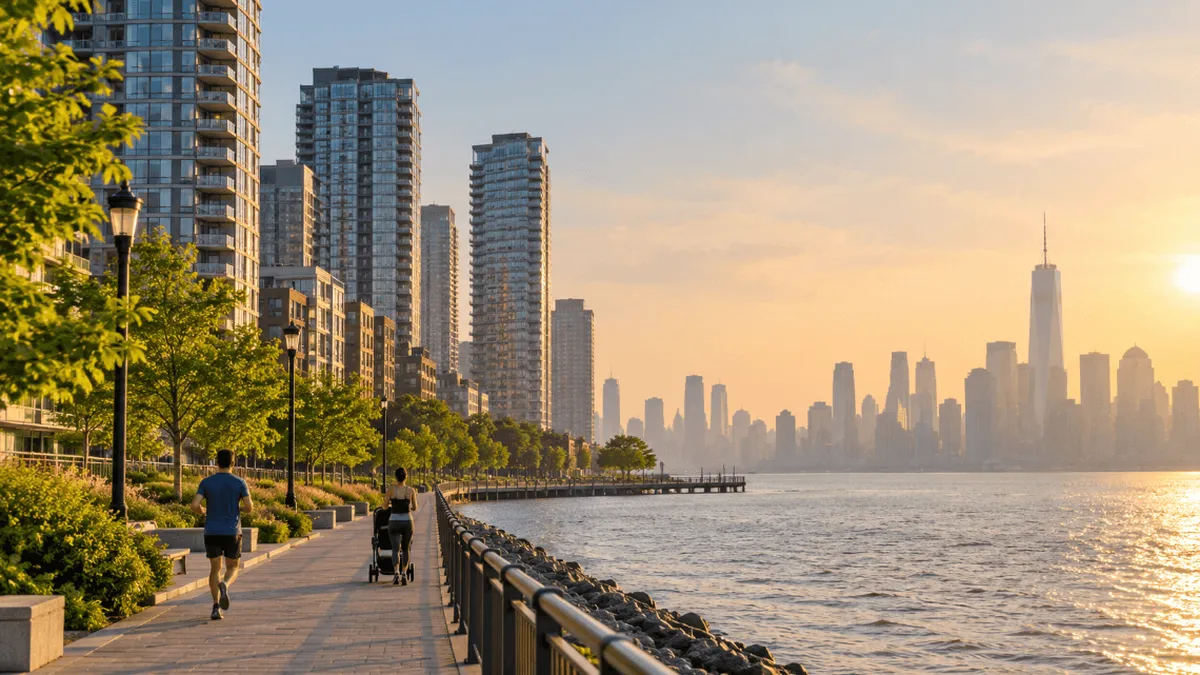
When ozone is behind the number, a morning run on the Hudson River Waterfront Walkway beats an afternoon one. Smoke can linger all day, so waiting rarely helps.
Why the Jersey City Number Can Trail What You See Over the Hudson
AirNow reports a NowCast AQI, which blends several recent hours and so lags. Filterbuy tested this by running EPA's formula against a modeled smoke plume. The reading trailed each hour's actual level by up to 42 AQI points as the plume arrived, then ran up to 79 points high as it cleared. So close up once haze dims the Manhattan skyline, and expect the number to stay high for hours afterward.
On June 7, 2023, NJDEP's event analysis found a surface trough along the I-95 corridor pulled smoke to the ground. If you can smell smoke, it has reached your block.
Where Jersey City Residents Get Air Quality Forecasts and Alerts
NJDEP publishes next-day ozone and particle forecasts. EnviroFlash, from EPA and NJDEP, emails or texts them. Filterbuy's alert sign-up flags unhealthy readings by ZIP code.
NJDEP calls a Code Orange for sensitive groups or a Code Red for everyone; on red days, move practice and errands indoors.
Why Air Quality Shifts from Block to Block in Jersey City
Nitrogen dioxide and diesel soot run highest beside heavy traffic, so a citywide number can hide street-level differences. Tunnel traffic funnels along 12th and 14th Streets on Route 139, which NJDOT describes as the approach to the Holland Tunnel. Homes near those streets or Tonnele Circle may breathe dirtier air than the map shows.
NJDEP's overburdened communities page shows whether your block group gets extra permit review under state law.
Source: NJDEP network plans and air quality reports. Coverage can change yearly.
What's Really in the Air Over Jersey City?
Most of the region's bad summer air pollution days come from ground-level ozone. Hudson County sits in the New York-area ozone nonattainment area, which EPA moved from Moderate to Serious in July 2024, according to the Federal Register.
Fine particulate matter (PM2.5) comes largely from combustion such as wildfire smoke and diesel exhaust.
How Jersey City Air Compares with Other U.S. Metros
Summer smog, not year-round soot, is Jersey City's weak spot. The American Lung Association's State of the Air 2026 findings for New Jersey rank the New York-Newark metro 12th worst in the nation for ozone, with an F grade and the worst result east of Texas.
Particles look better: a passing grade for year-round levels and a D for short-term spikes. See the Hudson County report card, or compare Filterbuy's Newark live AQI map with its New York City live AQI map.
Canadian Wildfire Smoke and Jersey City's Worst Air Days
Wildfire smoke now drives New Jersey's worst particle days. NJDEP's 2023 air quality report traced five of the state's six Unhealthy or Very Unhealthy particle days that year to Canadian fires, on June 6 to 8 and June 29 to 30.
When smoke rolls in, check AirNow and NJDEP guidance first. Then close the house up, with no candles or frying, and follow EPA's steps to set up a cleaner air room. Outdoors, wear an N95, since cloth masks won't filter smoke. Follow the plumes on Filterbuy's Jersey City wildfire and smoke map.
When Jersey City's Air Is Most Likely to Turn
Our map work shows a predictable calendar:
May through September: Ozone builds on hot, sunny afternoons, so plan morning workouts.
June through August: Canadian smoke often arrives in multiday waves, as during the July 15 to 17, 2026 Code Red. Stock a spare MERV 13 filter before June.
March to May and late October to November: New Jersey's local fire seasons, when a northwest wind can carry in smoke from the New Jersey Highlands.
Cleaner Indoor Air in a Jersey City Brownstone, Walk-Up, or Tower
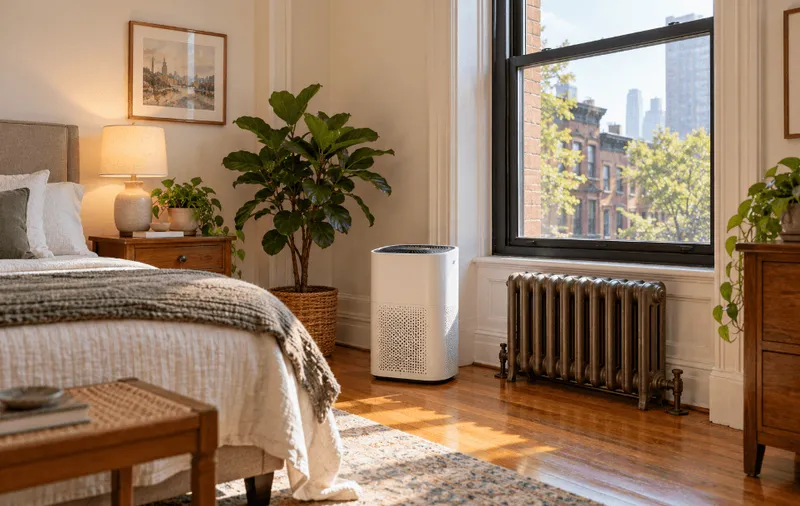
Most people here rent: Census data show just 27.9% of Jersey City homes are owner-occupied. Without ducts, as in many prewar walk-ups, a portable HEPA cleaner becomes the primary defense. EPA's sizing rule calls for a smoke clean air delivery rate (CADR) of at least two-thirds of the room's square footage, so a 300-square-foot bedroom needs a CADR near 200. Pick a CARB-certified model, since EPA advises against cleaners that produce ozone. Older Hudson County buildings often need sizes big-box stores never stock, so Filterbuy cuts custom air filters. If you rent, two moves are yours:
Before June, ask management which MERV rating the system takes and when filters were last changed.
When smoke arrives, close the fresh-air vent on any window or through-wall AC unit.
Filterbuy's Take: Plan Around Ozone, Filter Against Smoke
Filterbuy has made air filters in the USA since 2013 and serves more than two million households. Whenever smoke reaches the Northeast, customers who normally reorder every 90 days check filters early because the media has already turned gray.
"Running Filterbuy’s AQI maps, the thing that still catches people here is that our worst air days have nothing to do with New Jersey. You watch a fire in Ontario decide what your Tuesday looks like." – Michelle Wan, Air Quality Writer, Filterbuy
Which Air Filter Fits the Jersey City AQI?
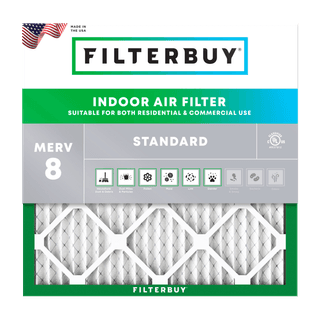
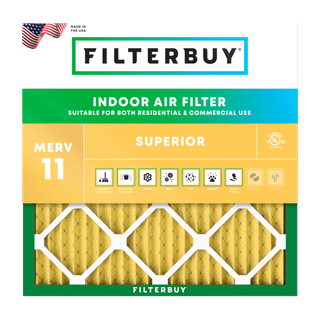
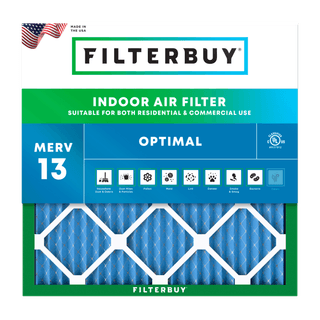
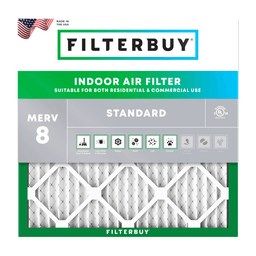
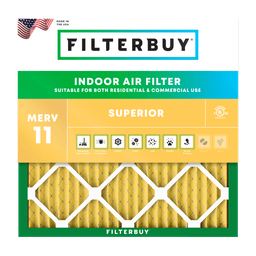
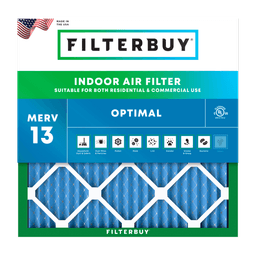
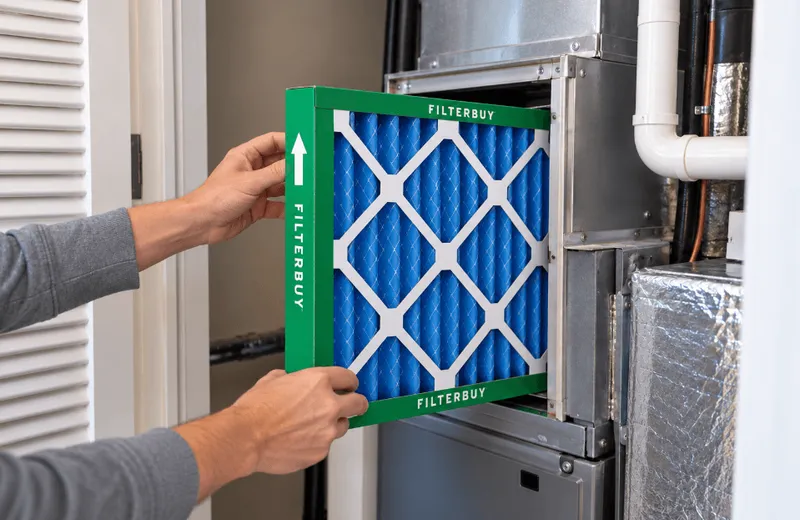
For wildfire smoke, choose a MERV 13 filter. EPA recommends MERV 13 or higher in central systems during smoke events and notes that most HVAC systems handle it when the filter is replaced often. Filterbuy's trigger is an AQI of 100, when we tell customers to switch. On cleaner days, a MERV 8 filter or MERV 11 filter covers dust and pollen; see which MERV rating fits each AQI level.
Outside smoke season, Filterbuy's standard advice is a new filter every 90 days. Smoke loads filters faster, so check yours during an event and replace it once it looks dark brown or black, which can be well before that. Auto-delivery keeps a spare on hand. A portable HEPA cleaner is a second layer, not a substitute: MERV 13 treats the whole house, and HEPA works one room harder (MERV 13 versus HEPA for smoke).
"The mistake I see most in Hudson County isn’t the wrong filter. It’s the right filter sitting in a system that only runs when the thermostat calls for cooling. On a smoky day that can be twenty minutes an hour, which means you’re breathing unfiltered air for the other forty." – David Clark, Licensed HVAC Technician, Filterbuy
Supporting Statistics
12th worst for ozone. The New York-Newark metro, including Hudson County, ranks 12th worst nationally.
81.9% more asthma ER visits. New York State, outside New York City, saw this jump at the June 7, 2023 smoke peak.
About 50% less indoor PM2.5. EPA says a high-efficiency HVAC filter may achieve this with the fan running continuously.
Frequently Asked Questions
Glossary
Air Quality Index (AQI): EPA's 0 to 500 scale for daily air pollution.
NowCast: The AirNow method that blends recent hourly readings into a current AQI.
PM2.5: Fine particles 2.5 micrometers or smaller, found in smoke and diesel exhaust.
Ground-level ozone: A gas formed when sunlight reacts with emissions.
NJDEP: New Jersey's environmental agency.
Code Orange / Code Red: NJDEP alert levels: orange for sensitive groups, red for everyone.
Nonattainment area: A region that misses a national air quality standard.
Overburdened community: A New Jersey Environmental Justice Law designation for block groups.
MERV: A 1 to 16 rating of how well an HVAC filter captures particles.