
Jersey City, NJ Live Wildfire Smoke Map
Get Alerts For Wildfires In Your Area
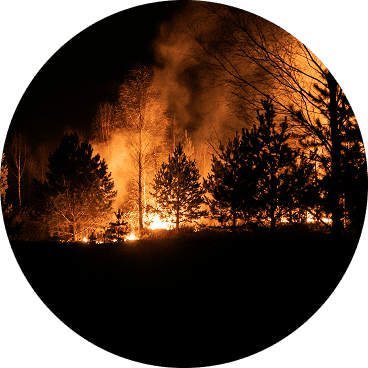
The moment a wildfire starts near you, you'll get an instant alert and simple tips to reduce your smoke exposure.
What's In The Smoke
30xSmaller than a human hair
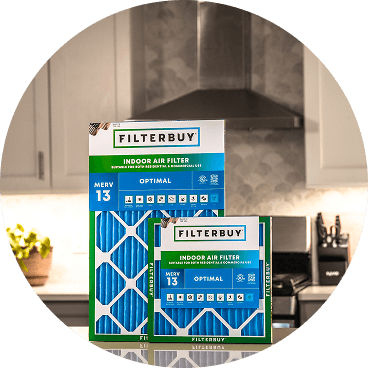
Fine enough to reach deep into the lungs. A MERV 13 is built to capture it.
How Far It Travels


It Doesn't Stay Local
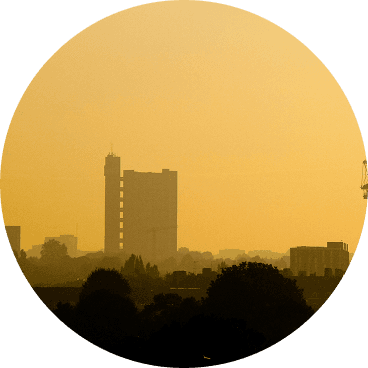
Smoke rides the wind far downwind — you can get smoky air with no fire nearby.
What To Do During A Smoke Event
Simple steps to reduce indoor exposure.
- Stay In, Close UpShut windows and doors to keep smoke out.
- Set Fan To "On"Keeps air cycling through your filter, not just when heating or cooling.
- Recirculate AirSwitch off fresh-air intake so you're not pulling smoke in.
- Run A MERV 13Built to capture the fine PM2.5 in smoke.
- Add A PurifierExtra filtration for the room you use most.
- Wear an N95 if OutsideFits snug to block fine particles — a cloth mask won't.


The Best Air Filter For Wildfire Smoke
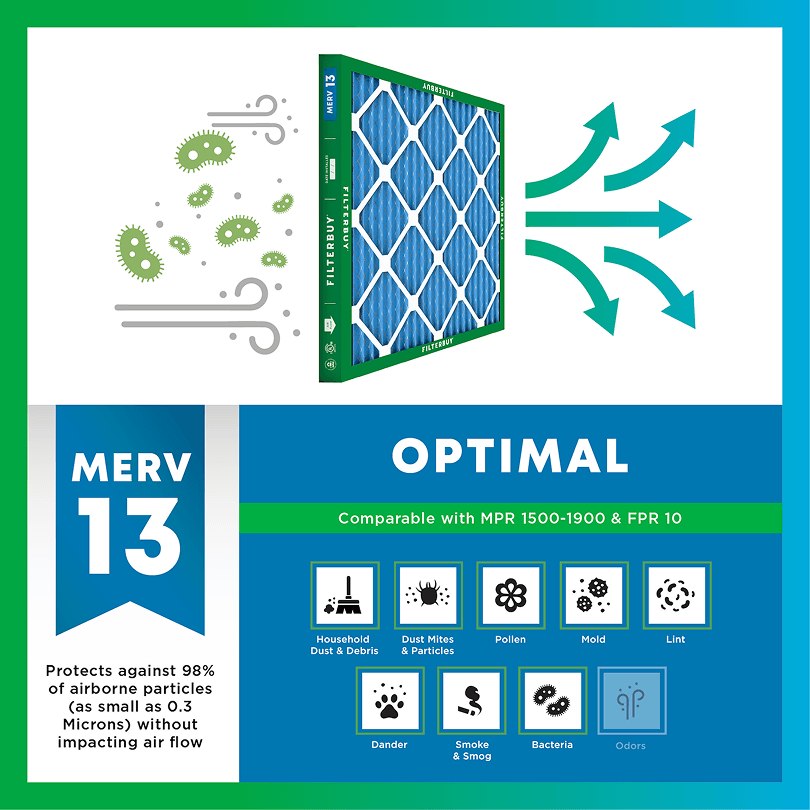
During smoke events, the EPA recommends upgrading to a MERV 13 filter — or the highest-rated filter your system can handle — to help reduce the fine particles smoke brings indoors. MERV 13 is the level most home HVAC systems can run while still capturing PM2.5, the fine particulate that makes up the bulk of wildfire smoke.
- Captures PM2.5 particles
- Blocks ash, soot, and smoke odor
- Keeps your indoor air safe—even when the outdoor air is dangerous
- Meets the EPA's recommended rating for filtering fine wildfire smoke particles.

Wildfire Smoke FAQs
Facts About Wildfires
Over 70,000 wildfires burn in the U.S. every year.
Wildfire smoke can travel 1,000+ miles, affecting states that aren't even near the blaze.
Exposure to wildfire smoke can worsen asthma, trigger heart issues, and lead to ER visits.
Indoor air can hold more fine particles during wildfire events unless it's properly filtered.
The EPA advises using MERV 13 filters or portable HEPA air cleaners during wildfire smoke events.
Don't Wait Until The Smoke's Inside.
Use the live wildfire smoke tracker and upgrade your air filters today to protect your lungs and your home.
Shop Filters For Smoke Protection
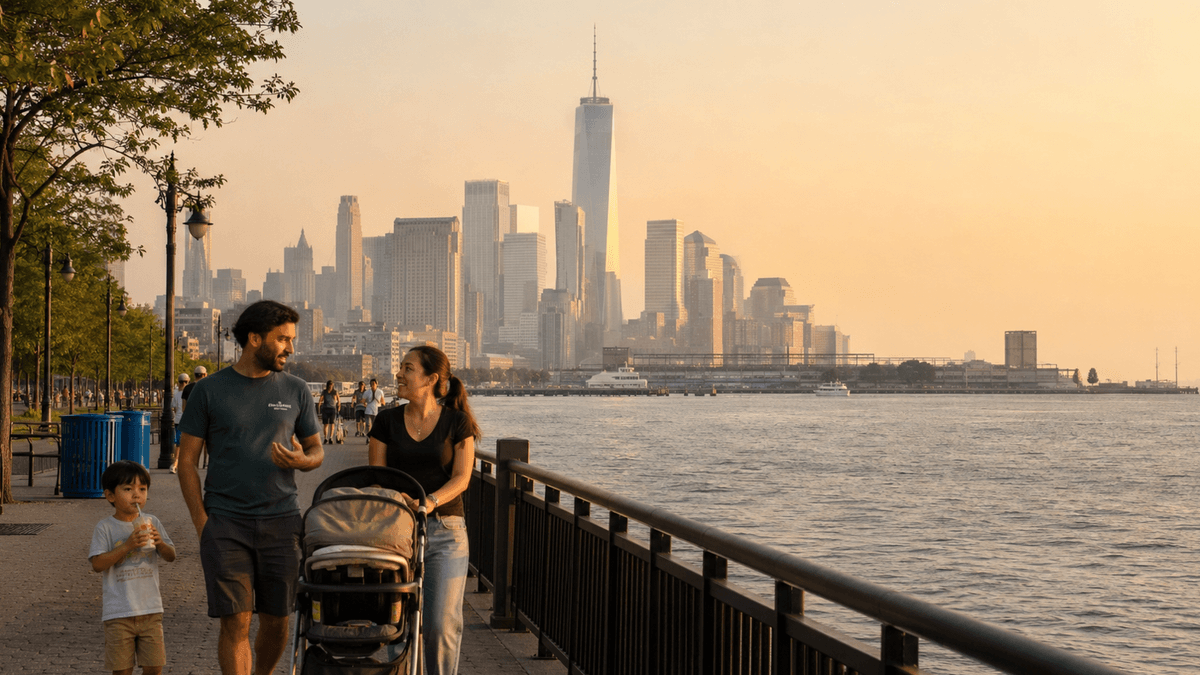
Live Jersey City, NJ Forest Wildfire & Smoke Map Today: Local Air Quality Tracking & Indoor Protection Solutions from Filterbuy.com's Air Obsessed Experts
By Michelle Wan · Reviewed by David Clark, Licensed HVAC Technician · Published August 2, 2026 · Updated August 2, 2026, 2026
If Jersey City's sky looks wrong today, the fire is somewhere else. Hudson County has almost nothing left to burn. It just sits downwind of three fire regions. Filterbuy has made air filters in the USA since 2013, and we run the live AQI maps for cities across the country, including this one. From both sides of that work, the pattern never changes: this city doesn't get flames; it gets particulate.
TL;DR
Nearly all of Jersey City's wildfire smoke is transported in, usually from Canadian fires hundreds of miles upwind. The map worth watching tracks plumes and particle levels, not fire perimeters.
Key Takeaways
Jersey City has no real wildland fuel, so a “local wildfire” rarely means local flames.
Smoke travels farther than fire. In July 2026, smoke from 800+ Canadian fires triggered a New Jersey Code Red air quality alert.
New Jersey's own fire seasons are spring and fall. NJDEP recorded a 22% rise in wildfires in 2025, and 99.6% were human-caused.
PM2.5 is the hazard, fine enough to reach the bloodstream. The EPA recommends MERV 13 filters during smoke events.
An HVAC filter only works while the blower runs. Set the fan to ON, not AUTO.
Is There a Forest Wildfire Burning in or Near Jersey City Today?
Jersey City has no forest wildfire of its own, and rarely does. It is 21 square miles of dense development with no forest to carry a wildland fire. When wildfire affects the city, it arrives as smoke from 30 to 500-plus miles off.
The nearest terrain that burns is the New Jersey Highlands, 30 miles northwest. In November 2024, the Jennings Creek Wildfire burned about 5,000 acres on the West Milford–Orange County line and killed one firefighter. Satellite imagery tracked its plume southeast over New York City, cutting airport visibility to four miles. No Jersey City home was in its path. It was purely a smoke event.
Where Does Jersey City's Wildfire Smoke Come From?
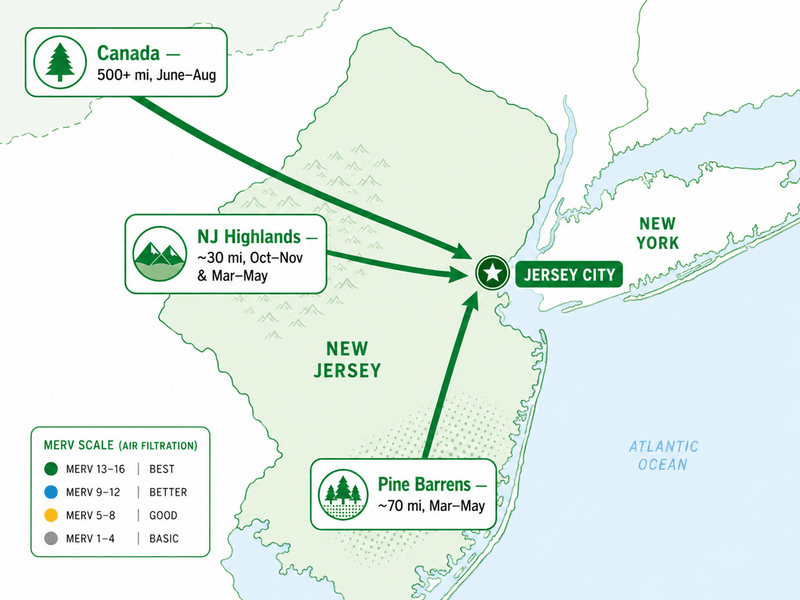
Smoke reaches Jersey City through three corridors, each with its own distance and season. We built this model because no local source sorts Hudson County's smoke by origin, and origin tells you how long it lasts. The northern corridor matters most: Canadian smoke arrives in multi-day waves, not passing afternoons.
Filterbuy's three-corridor model, built from NJDEP, NOAA, and EPA data:
Table 1 — Three-corridor Model
Source: Filterbuy analysis of NJDEP, NOAA, and EPA public data.
Distance alone tells you little. The 2025 Jones Road Wildfire burned 14,949 acres in Ocean County, yet its effect here came down to wind direction.
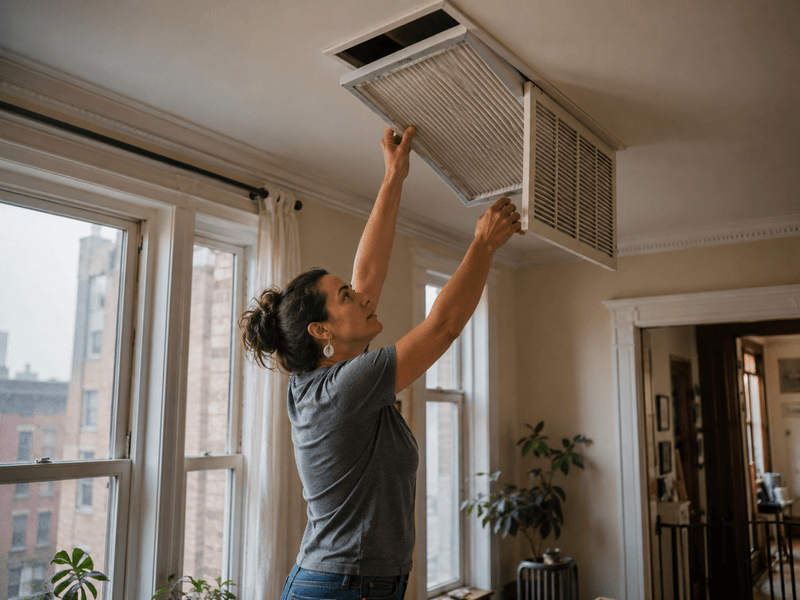
Running Filterbuy’s AQI maps, the thing that still catches people here is that our worst air days have nothing to do with New Jersey. You watch a fire in Ontario decide what your Tuesday looks like.
Michelle Wan, Filterbuy
How Do You Read the Live Wildfire and Smoke Map?
Filterbuy's map stacks three layers, each answering a different question:
Fire detections: satellite hotspots. A cluster 500 miles northwest matters more than a two-acre brush fire in Bergen County.
Smoke plumes: NOAA's Hazard Mapping System outlines where smoke is drifting. This layer tells you what's coming.
AQI monitors: readings come from NJDEP's Jersey City Firehouse station via EPA AirNow. This is the air you're actually breathing.
Plume maps show smoke aloft, which doesn't always mix to street level. If you can smell smoke outside, it has reached ground level.
For the full AQI color scale, see our live air quality index map for Jersey City, or track fires nationwide on our live wildfire and smoke map.
How Do You Keep Wildfire Smoke Out of a Jersey City Home?
What works depends more on your building than the AQI. Three setups cover most of Hudson County:
Central forced-air HVAC: install a MERV 13 filter, close the windows, set the fan to ON so air keeps cycling through it. The most effective option available.
Window AC or mini-split: close the fresh-air damper so it recirculates, and add a portable cleaner in the bedroom.
Radiator heat, no central air: common here. Weatherstrip, shut windows, run one portable air cleaner in the room where you sleep.
No filter makes a hundred-year-old building airtight. The goal is dose reduction, not zero exposure.
What If You Rent, or Your Building Controls the HVAC?
Roughly seven in ten Jersey City households rent, and in many buildings the filter sits behind a locked mechanical room door. Three levers remain. Ask management which MERV rating the system takes and when filters were last changed, ideally before fire season rather than during it. Seal what you control: window gaps, the unit door, any through-wall AC vent. Then run a portable air cleaner in the bedroom, the one filtration lever entirely yours.
Which Air Filter Actually Captures Wildfire Smoke?
MERV 13 is the residential standard for wildfire smoke, the first rating that reliably captures PM2.5. MERV 8 protects equipment from dust and lint but does little against smoke. Our MERV rating guide compares all four grades.
Older Hudson County buildings often take sizes big-box stores never stock, which is much of why we make 600-plus sizes and cut custom ones. Smoke's odor and gases aren't particles either, so no MERV rating removes them. That takes activated carbon, which our Odor Eliminator filters layer onto pleated media. Filters also load fast in smoke: one that normally lasts 90 days can grey out in weeks. Check monthly.
Confirm your system handles MERV 13. Most built in the last twenty years do; if yours is older, or has a one-inch slot on a long duct run, watch for reduced airflow and rising pressure drop, and consult a technician.
The mistake I see most in Hudson County isn’t the wrong filter. It’s the right filter sitting in a system that only runs when the thermostat calls for cooling. On a smoky day that can be twenty minutes an hour, which means you’re breathing unfiltered air for the other forty.
David Clark, Licensed HVAC Technician, Filterbuy
Essential Resources: 6 Tools to Bookmark Before the Next Smoke Day
Each is worth bookmarking to see what's heading our way.
See Every Fire and Smoke Plume on One Federal Map
Fire detections, NOAA plumes, and PM2.5 monitors in one view. Plumes are hidden by default. Toggle on “NOAA Smoke Plumes” in settings.
Check Whether New Jersey Itself Is Burning Today
Official statewide fire danger and burning restrictions. Check when smoke smells local.
Read the Actual Monitor Nearest Your Block
The state network, including the Jersey City Firehouse station: Hudson County's own reading, not a regional average.
Source: NJDEP Bureau of Air Monitoring
Watch Canada's Fire Season, Because It Sets Your Summer
Canada's national fire situation report and active counts. Canadian fires drive our worst days, so this shows what's coming.
Set Up One Room That Stays Breathable
Federal guidance for sealing one room and running a portable air cleaner. Best if you have no ductwork.
Get Alerted Instead of Checking All Day
New Jersey's daily forecast plus EnviroFlash, which texts or emails you when air quality turns.
Supporting Statistics
Three findings behind the advice on this page:
Wildland fires produced 52% of all U.S. fine particle pollution. Smoke is the country’s largest PM2.5 source.
Source: U.S. EPA, 2020 National Emissions Inventory
A high-efficiency filter cuts indoor PM2.5 by about 50%, but only with the fan running. A low-efficiency filter still cuts it about 24% running non-stop.
Source: U.S. EPA, Strategies to Reduce Exposure Indoors
More than 706,000 New Jersey children breathe unhealthy air. The New York–Newark metro, including Hudson County, ranks 12th worst for ozone.
Frequently Asked Questions
Why Trust This Page
Filterbuy is a family-owned U.S. air filter manufacturer, building in American plants since 2013 and shipping factory-direct in 600-plus sizes. We also operate the live AQI and smoke maps this page is built on. Michelle Wan wrote it; David Clark, a licensed HVAC technician, reviewed it. Every outside figure links to a federal agency or nonprofit.
Glossary
AQI (Air Quality Index)
The EPA's 0–500 scale for outdoor air pollution; higher is worse.
PM2.5
Fine particles 2.5 microns or smaller, the main health hazard in wildfire smoke.
MERV
The 1–16 scale rating how much particulate an HVAC filter captures. MERV 13 is the EPA-recommended level for smoke.
NOAA HMS
NOAA's Hazard Mapping System, which produces the satellite-derived smoke plume outlines on wildfire maps.
NJDEP / NJFFS
New Jersey's environmental agency, which issues the state's air quality alerts, and its Forest Fire Service, which sets fire danger ratings.
Subscribe to wildfire smoke alerts for Jersey City, NJ, to get a heads-up before the next event reaches your area.